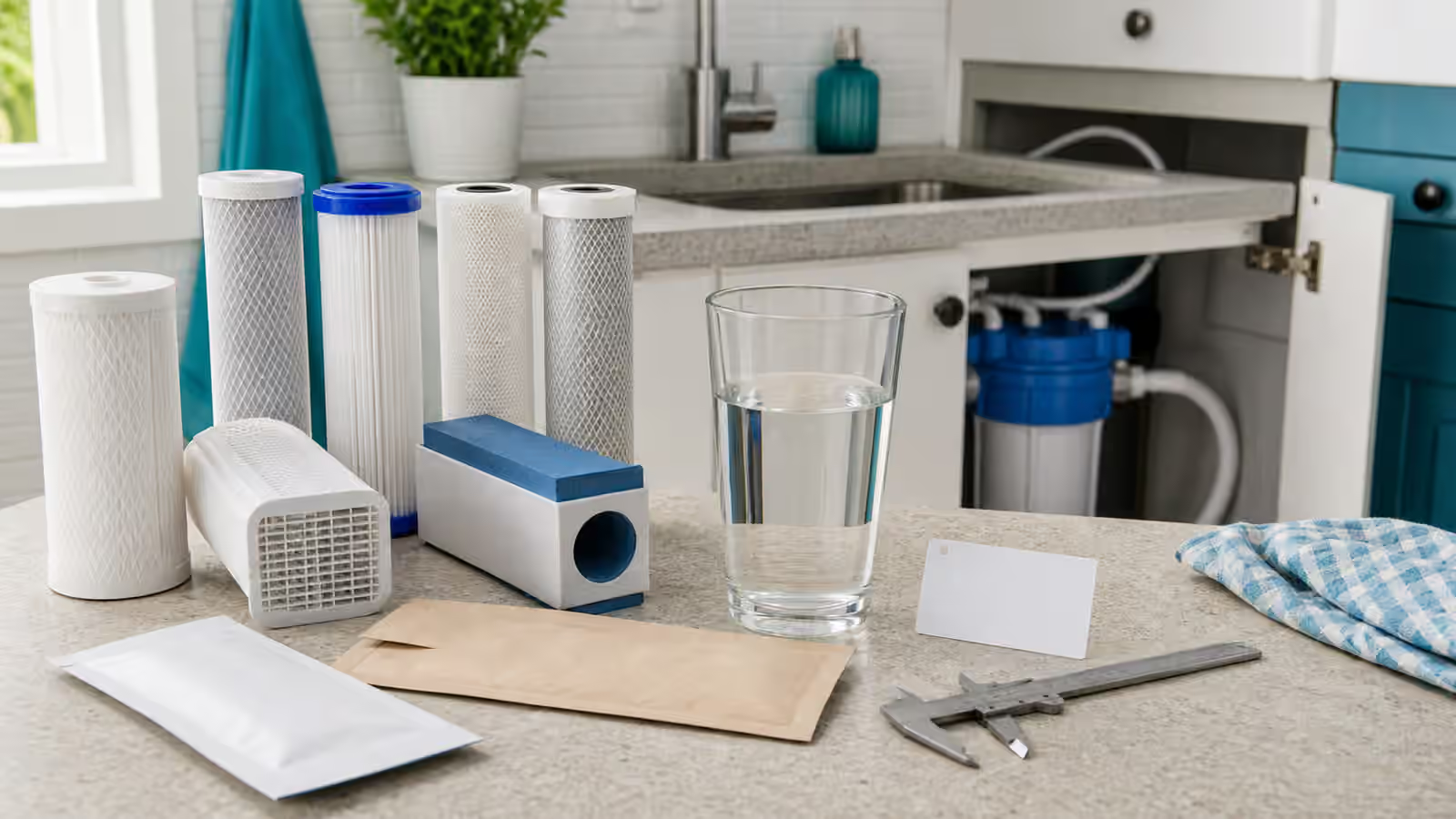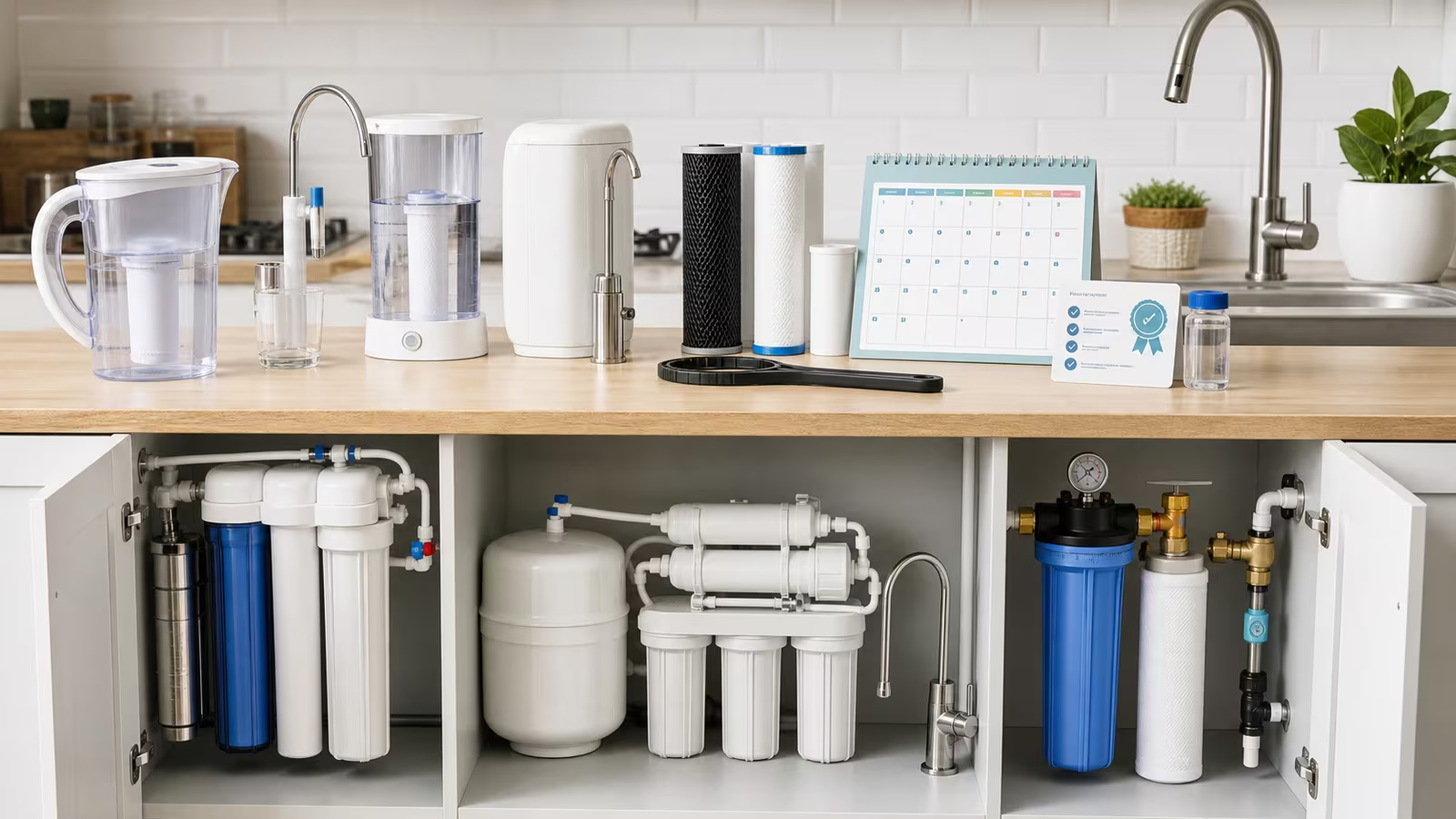
A water filter claim is only useful when you can connect it to an exact product. “Certified” is stronger than vague “tested to” language, but even certification needs careful reading. Match the model, standard, contaminant, cartridge, capacity, and instructions.
Clear Water Lab helps with everyday water decisions, reports, testing, certification checks, and maintenance. It is not medical advice, legal advice, or a substitute for local boil-water notices, certified lab results, utility instructions, or health department guidance.
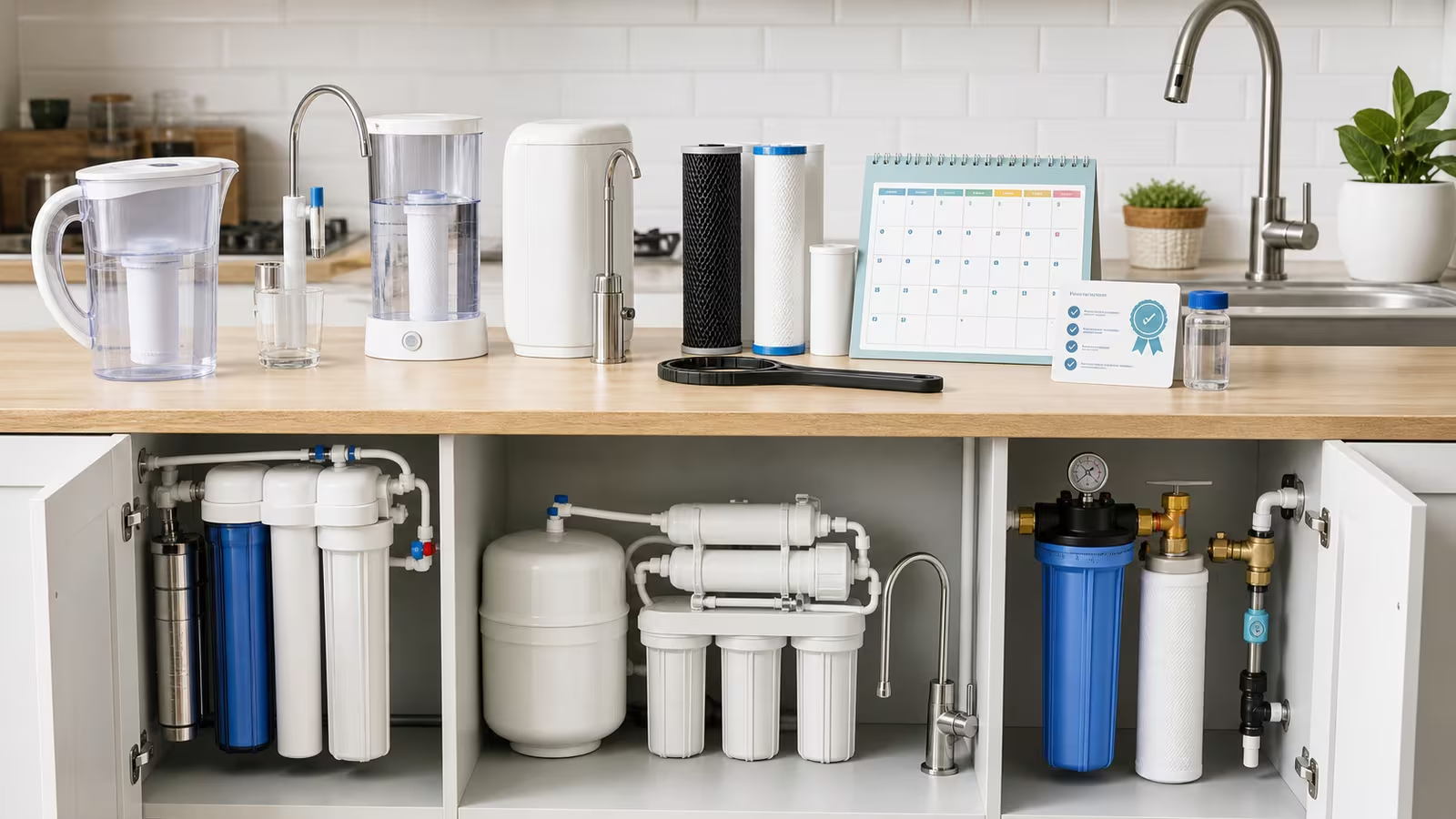
The model number is the truth test
The strongest filter claim is not the boldest claim. It is the claim you can trace. “Certified” is stronger than a vague phrase like “tested to” because certification gives you a listing to check. But even that word is only useful if you match the exact product. A brand name is not enough. A family of filters is not enough. The model in the listing should match the model you plan to buy, and the replacement cartridge should match the cartridge you will actually install.
This is a small detective exercise, not a legal drama. Open the certifier’s database, search the model number, and read the contaminant claims as if you are checking a recipe. Which standard is listed? Which contaminants are named? What capacity is stated? Which cartridge is required? Are there installation conditions or notes that affect the claim? The answers may feel fussy, but they are the difference between evidence and label mood.
The claim also needs to match your question. A filter certified for chlorine taste and odor is not automatically certified for lead. A device with a PFAS-related claim may not cover every PFAS compound in every context. A reverse osmosis system can have broad capability, but the exact listing still matters. The point is not to distrust every manufacturer. The point is to let the public listing do the job it was built to do.
What this helps you decide
This helps you decide whether a product claim is strong enough to trust for your actual water concern.
Plain definitions
| Term | Plain meaning |
|---|---|
| Certified | A recognized certification body has evaluated and listed the product for specific requirements and claims. |
| Tested to | A weaker phrase unless it is tied to a current certification listing. It may mean a lab test, not active certification. |
| Model number | The exact product identifier. Brand name alone is not enough. |
| Replacement element | The cartridge or membrane that may carry the actual performance claim. |
Decision criteria
| Question | Useful next move |
|---|---|
| Exact model | Search by model, trade name, and manufacturer. Similar names are not enough. |
| Exact contaminant | Lead, PFOA, PFOS, total PFAS, arsenic, nitrate, VOCs, chlorine taste, and microplastics are different claims. |
| Exact standard | Check whether the listing is for NSF/ANSI 42, 53, 58, 401, 55, P231, or another relevant standard. |
| Exact cartridge | The housing and cartridge must match the listing and replacement instructions. |
| Rated life | Capacity and replacement schedule are part of the practical claim. |
Common mistakes
- Trusting a marketplace title that says NSF without checking the listing.
- Finding a certified component and assuming the assembled system has the same claim.
- Searching only the brand name and missing the model or cartridge details.
- Ignoring installation and replacement instructions after purchase.
Try this next
- Copy the manufacturer, brand, model number, cartridge number, and any standard listed on the product page.
- Search NSF certified drinking water treatment units search , WQA certified product listings , and IAPMO R&T Product Listing Directory .
- Confirm the exact contaminant reduction claim and standard.
- Save a screenshot or PDF of the listing with the replacement cartridge requirement.
- Set the replacement reminder before the first glass.
Safety and source check
If you cannot verify the exact product and claim, treat the claim as unproven for health-effect decisions. Choose another product or ask the certification body or manufacturer for the current listing.
Related Fondsites path
- NSF/ANSI 42 vs 53 vs 58 vs 401
- Filter Replacement Schedules
- PFAS in Drinking Water
- Lead in Drinking Water
A claim-checking ritual that takes ten minutes
Before buying, take a photo or note of the exact model number from the product page, manual, or package. Search that number in NSF, WQA, or IAPMO listings. If you cannot find it, search the cartridge number too. Read the listing slowly enough to separate the standard from the contaminant. Then compare the listing with the reason you are buying. If your concern is lead, the listing should name lead. If your concern is PFAS, look for the PFAS-related claim that applies. If your concern is taste, an aesthetic claim may be sufficient, but do not let that claim drift into a health promise.
After installation, keep the same ritual alive. Write the cartridge model and replacement date somewhere you will see it. If the system has an indicator light, treat it as helpful but not magical. If the household uses more water than expected, if flow slows dramatically, or if the manual gives a capacity limit, the calendar alone may not be the whole story. Certification claims assume the device is used as instructed.
The hardest part is resisting almost-right matches. A product page may show one model while the replacement cartridge in stock is slightly different. A marketplace listing may combine reviews from multiple versions. A refrigerator may accept several compatible filters with different claims. Slow down at those moments. Compatibility does not always mean the same contaminant reduction.
A verified claim is not glamorous. It is a chain: source concern, exact model, exact standard, exact contaminant, exact cartridge, exact maintenance rule. When each link is visible, the purchase becomes calmer. You are no longer hoping the filter is generally impressive. You are choosing a device because it has a specific, checkable job.