UV water treatment is easy to misunderstand because it looks clean and technical. A lamp inside a chamber can be a useful microbiological treatment stage when the water is clear, the unit is sized correctly, power is reliable, and maintenance actually happens. It is not a filter for lead, PFAS, nitrates, arsenic, hardness, sediment, chlorine taste, or every unknown problem in a glass. For background, see NSF — Standards for Water Treatment Systems .
Clear Water Lab helps with everyday water decisions, reports, testing, certification checks, and maintenance. It is not medical advice, legal advice, or a substitute for local boil-water notices, certified lab results, utility instructions, or health department guidance.
UV is a treatment stage, not a shortcut
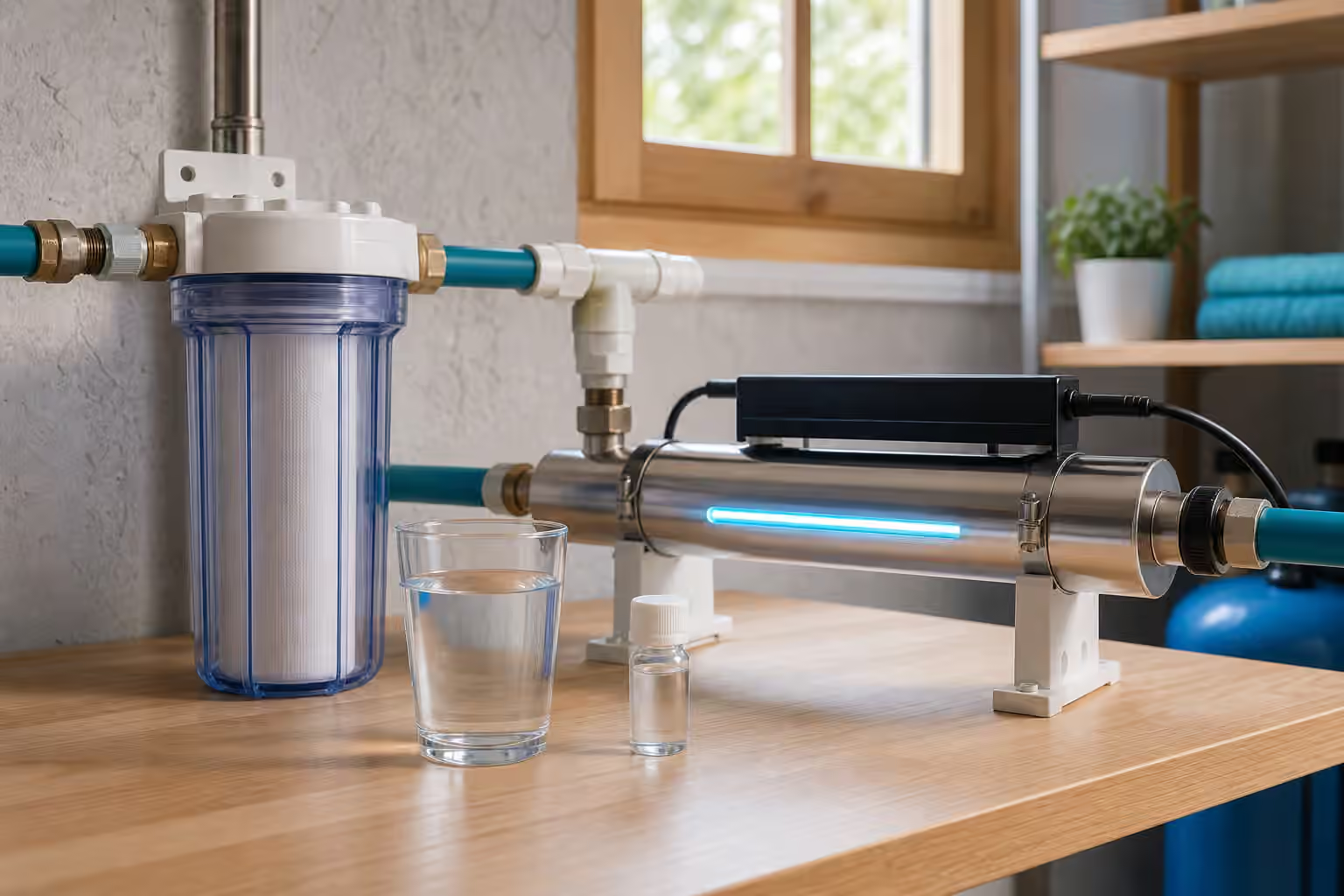
Ultraviolet treatment works by exposing flowing water to light inside a chamber. The goal is not to strain water through a physical screen. The goal is to deliver enough UV exposure to certain microorganisms under the conditions the equipment was designed for. That distinction matters because people often call every device a filter. UV is better understood as a disinfection stage that belongs in a sequence, usually after the water has already been clarified and before it reaches the taps where treated water is needed.
That makes UV narrower than many sales conversations imply. It does not remove dissolved chemicals. It does not pull metals out of water. It does not reduce nitrates, arsenic, PFAS, salt, hardness minerals, or chlorine by itself. It does not make cloudy water clear. It also does not prove that a private well, tank, or small system has been tested properly. If the concern is a named contaminant, the decision belongs with lab evidence and a device that has the right verified claim. The habit from How to Verify a Water Filter Claim on NSF, WQA, or IAPMO still applies, even though UV equipment is not chosen in quite the same way as a pitcher or carbon cartridge.
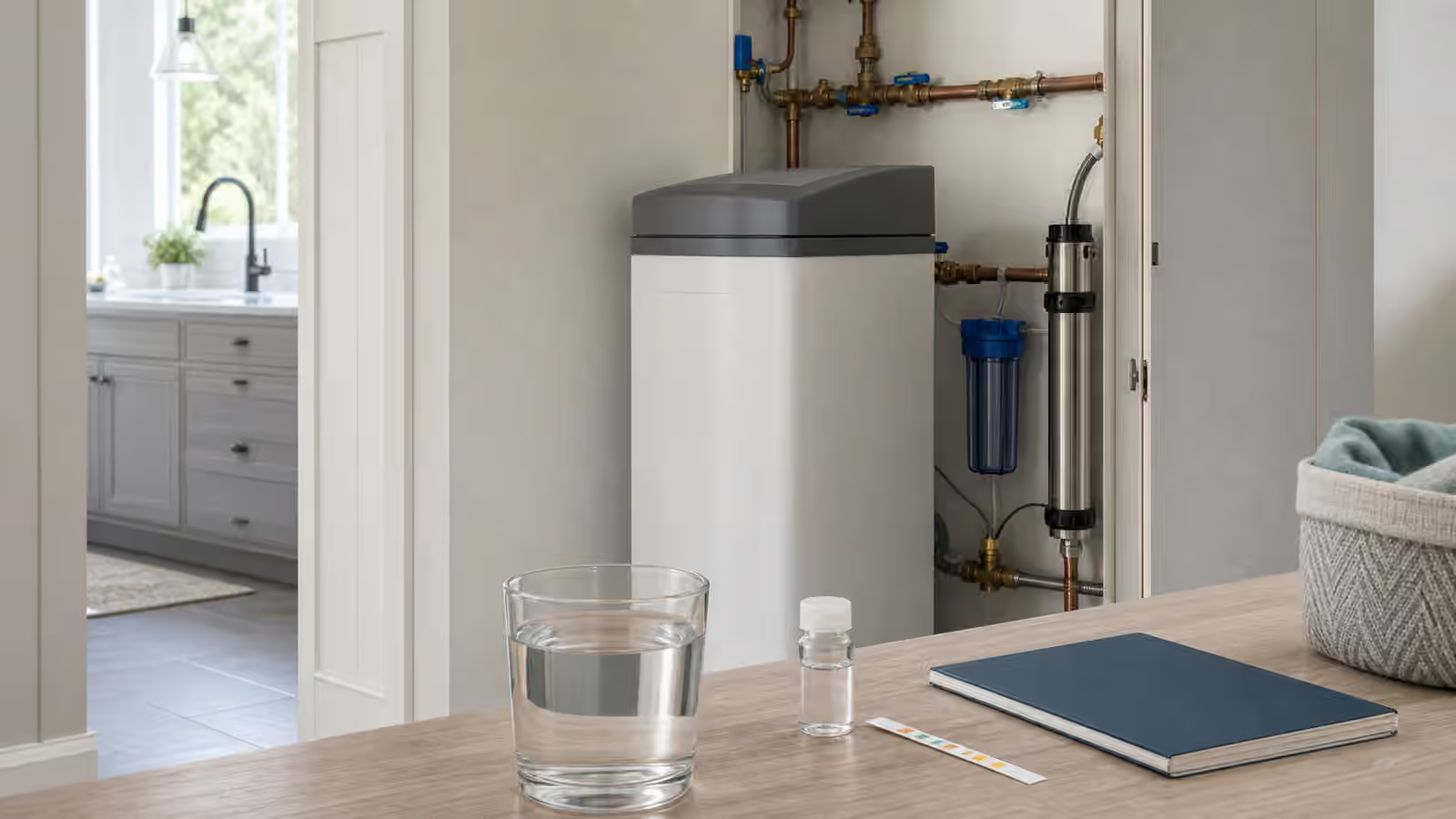
The useful question is where UV fits in the water route. A home water route starts at the source, passes through plumbing, storage, pressure equipment, prefilters, treatment stages, fixtures, and maintenance habits. UV can sit in that route as one defined step. It should not erase the rest of the map. If the source is public water and there is no microbiological concern, UV may be unnecessary complexity. If the source is a private well with a recurring bacteria concern, UV may be part of a design after testing and local guidance. If the system is an RV or tiny home with tanks and changing fill points, UV is only one part of a chain that also includes source judgment, tank care, sediment control, and power.
Clear water matters before the lamp turns on
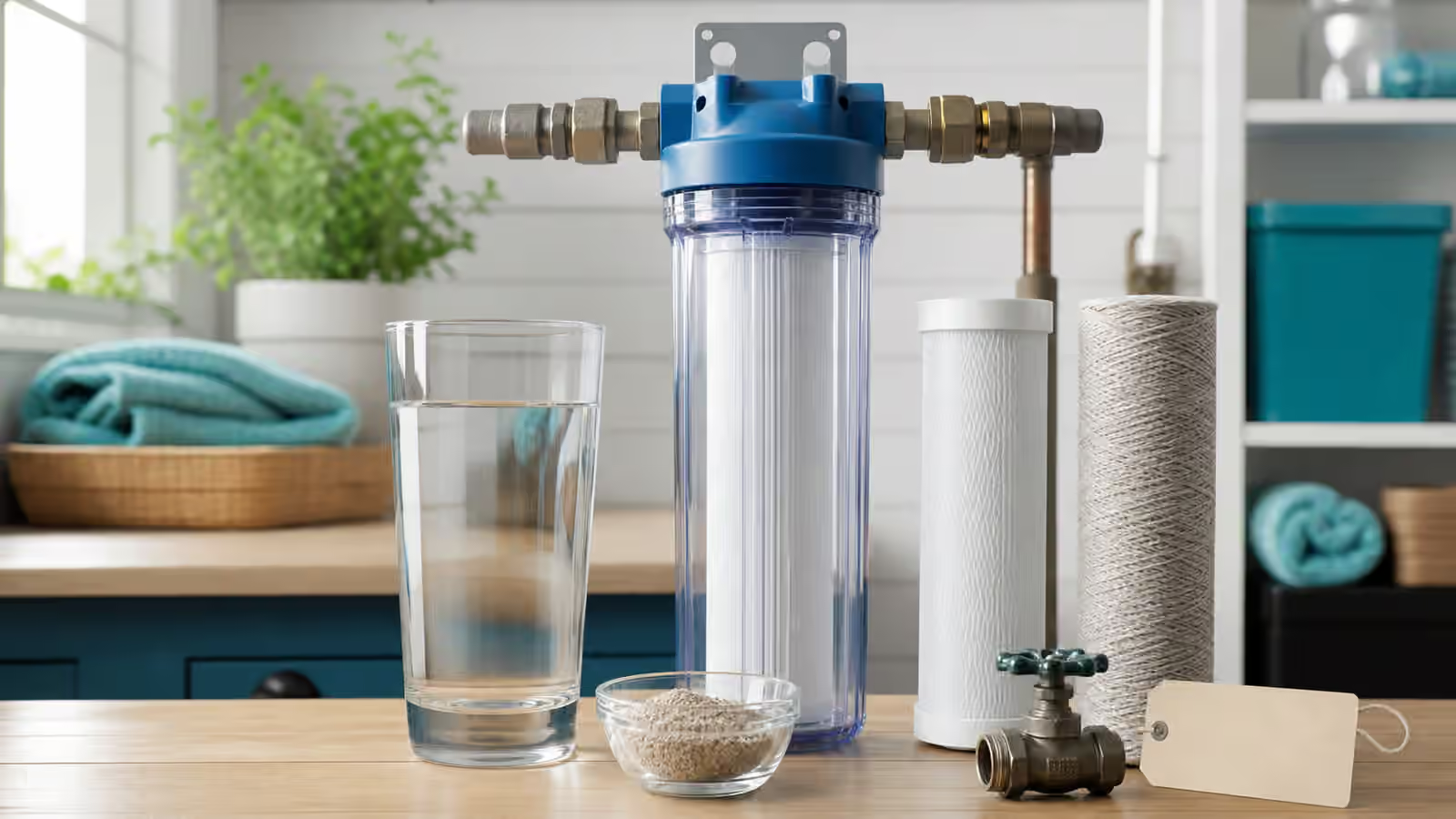
UV light needs a clear path through the water. Fine sediment, turbidity, iron staining, organic matter, or scale can interfere with exposure. That is why UV systems are often paired with upstream sediment filtration and, in some cases, other treatment that improves clarity before the water reaches the chamber. The prefilter is not decorative. It protects the UV stage from being asked to shine through water that physically blocks or scatters light.
This is where Sediment, Rust, and Cloudy Water becomes a practical companion. If water is cloudy, rusty, sandy, or full of black specks, the first move is not to admire the lamp. The first move is to understand the clue. Is the cloudiness trapped air, well sediment, water-heater debris, utility work, a failing cartridge, or a faucet aerator full of old material? A UV chamber downstream from unresolved turbidity can create confidence that the system has not earned.
Hardness and iron can also turn into maintenance problems. Scale on a quartz sleeve can reduce how much light reaches the water. Iron staining can dirty housings and sleeves. A system that looks powerful on installation day may perform differently after months of ordinary water chemistry. The maintenance story starts before the UV unit, because prefilters, softening, iron treatment, or other stages may be needed to keep the UV chamber in a condition where it can do its assigned job. That does not mean every home needs a complicated stack of devices. It means the water itself decides whether UV can be simple.
The same logic applies to flow. Water moving too quickly through a chamber may not receive the exposure the unit is rated to provide. A household cannot fix undersizing by hoping the lamp is bright enough. The model, flow rate, plumbing layout, water clarity, and manufacturer instructions have to match the use. A unit sized for one small point of use is not automatically suited to a whole home. A whole-home unit is not automatically right for a tank system that has different flow, pressure, and source-water conditions. Pitcher, Faucet, Countertop, Under-Sink, RO, and Whole-Home Filters is useful here because the location of treatment is still one of the most important decisions.
Power, alarms, and lamp age are part of the treatment
UV treatment depends on power. That sounds obvious until the first outage, tripped outlet, loose plug, failed ballast, or unnoticed alarm. A carbon block cartridge can sit quietly in a housing and still have its own capacity limits, but a UV lamp is active equipment. If it is off, past its lamp life, blocked by a dirty sleeve, or running outside its design conditions, the installation may look finished while the treatment question is unresolved.
Many UV systems use lamps that keep glowing long after their effective service life has declined. A visible glow is not the same as confirmed performance. This is why lamp replacement dates matter. The household needs a calendar, a service label, or a maintenance note that is harder to ignore than a vague memory from last spring. The same discipline described in Filter Replacement Schedules belongs here, but the object is a lamp, sleeve, sensor, prefilter, and power supply rather than only a cartridge.
Alarms should be treated as water-system information, not background noise. A UV alarm may indicate lamp failure, sensor trouble, low intensity, or another condition that needs attention. Muting it without understanding the cause defeats the point of having a monitored system. In a household with a private well, tank, or small utility setup, the person responsible for water should know what the alarm sounds like, where the shutoff or bypass is, what the service instructions say, and when alternate water or local guidance is needed.
Maintenance also includes cleaning. A quartz sleeve can become coated even when the lamp still works. Housings can collect residue. Prefilters can clog and reduce flow. A system installed in a tight, awkward corner may be technically correct but practically neglected because every service visit is a nuisance. Good design leaves room to remove a sleeve, replace a lamp, change a prefilter, inspect fittings, and see whether the system is operating normally. Access is not a luxury. It is what lets the treatment stage stay real after the invoice is gone.
Where UV makes the most sense
UV tends to be most relevant when the water plan has a specific microbiological reason for it and the rest of the system supports that reason. Private wells are the clearest everyday example. A well owner may receive a bacteria result, repair a well component, disinfect the well, retest, and then consider treatment design with qualified local help. UV can be part of that design, but it should follow evidence rather than replace it. Nitrates, Arsenic, and Private Wells is a better starting point than a product page because wells need lab-based decisions before equipment decisions.
Small systems can also make UV tempting. RVs, tiny homes, cabins, boats, and hauled-water setups often combine changing sources, hoses, tanks, pumps, sediment, storage time, and limited space. UV may be useful in some of those systems, especially when the unit is selected for the actual flow and maintained carefully. But the tank still has to be cleaned. The hose still has to be appropriate. The source still matters. The system still needs power. The Tiny Home and RV Water Basics guide is the natural companion because it treats the whole chain as visible equipment rather than pretending one device carries every decision.
City water usually starts from a different place. Public systems already have treatment and reporting responsibilities, and the household’s first evidence is often the report, a utility notice, or a building-specific plumbing question. A UV unit under a sink will not solve lead from old plumbing, PFAS in a report, chlorine taste, hardness, or sediment from a disturbed main. In most ordinary city-water cases, the better first move is to read the report, name the concern, and choose a treatment stage only if the evidence points there. How to Read Your Water Quality Report Without Getting Lost keeps that starting point grounded.
Emergencies deserve extra caution. A household UV unit should not be treated as private permission to ignore a boil-water notice, do-not-drink notice, or do-not-use instruction. Advisories are specific public instructions, and the correct action depends on the incident. Boiling, bottled water, flushing, appliance care, and vulnerable-use guidance can all differ. Does Boiling Water Remove PFAS, Lead, Chlorine, or Bacteria? and Emergency Water Basics are better tools for that moment because they keep official guidance ahead of household confidence.
A good UV decision sounds specific
A sensible UV decision is not dramatic. It names the source, the microbiological concern, the test history, the needed treatment location, the flow rate, the prefiltration, the lamp schedule, the sleeve cleaning plan, the alarm response, and the person responsible for maintenance. It also names what UV is not doing. If lead is the concern, UV is not the answer. If PFAS is the concern, UV is not the answer. If nitrate or arsenic is the concern, UV is not the answer. If taste is the concern, UV is usually the wrong place to start.
That specificity is what makes UV useful when it is useful. A clear-water, correctly sized, well-maintained UV stage can support a microbiological treatment plan. A neglected lamp behind a cloudy prefilter housing is mostly a symbol. The difference is not the shine of the equipment. It is the evidence, design, and routine around it.
Treat UV as a working part in a water system, not as a badge of purity. Put it after the water has been understood, before the taps that need that treatment, and inside a maintenance routine that someone will actually keep. That quieter view makes the equipment less mysterious and the household decision much stronger.