An under-sink filter is a small plumbing project before it is a water-quality project. The box may focus on contaminant claims, cartridge life, and polished faucets, but the daily success of the setup depends on cabinet space, shutoff access, tubing routes, leak visibility, flow rate, and whether someone can replace the cartridge without emptying half the kitchen. The best filter on paper can become the wrong filter when it does not fit the cabinet or the household routine. For background, see NSF — Standards for Water Treatment Systems .
Clear Water Lab helps with everyday water decisions, reports, testing, certification checks, and maintenance. It is not medical advice, legal advice, or a substitute for local boil-water notices, certified lab results, utility instructions, or health department guidance.
The cabinet decides more than the brochure admits
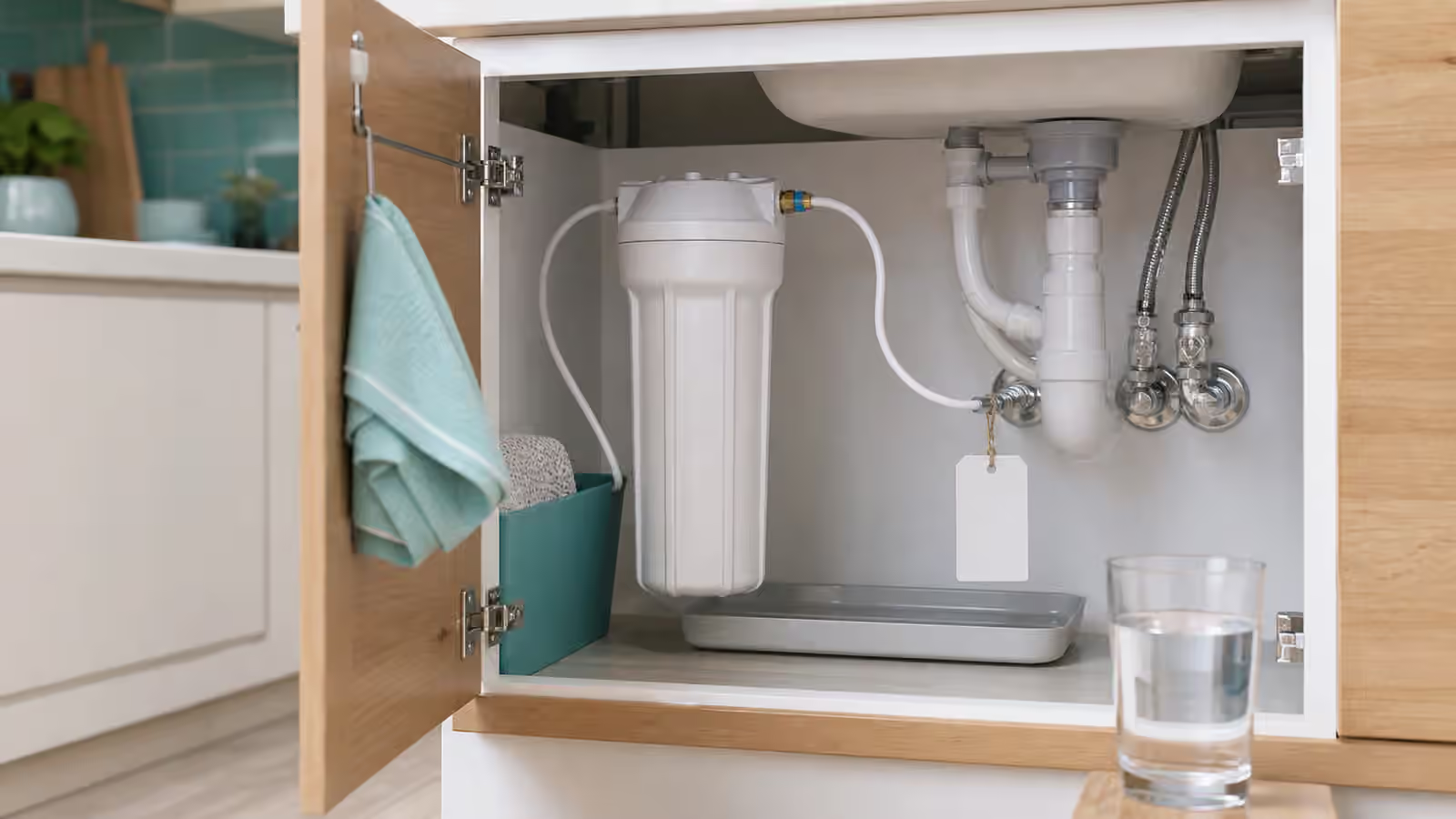
Under the sink is rarely empty. It may hold a garbage disposal, dishwasher hose, pull-down faucet hose, soap dispenser bottle, shutoff valves, drain trap, cleaning supplies, and awkward corners left by the cabinet builder. A filter housing needs room not only to hang, but also to open. A cartridge that looks compact in a photo may need several inches below the sump for removal. A reverse osmosis tank needs floor space and a route that does not kink tubing. A dedicated faucet may need a hole in the sink deck or counter, which is a very different decision for a renter than for an owner.
This is why planning should happen with the cabinet door open. Measure the vertical clearance, look for the cold-water shutoff, notice where the drain and disposal sit, and imagine the filter being serviced with wet hands on a busy weeknight. If the housing can only be reached by removing stored items, bending tubing sharply, or working blind behind a disposal, the future maintenance failure is already being designed into the system.
The guide to Pitcher, Faucet, Countertop, Under-Sink, RO, and Whole-Home Filters explains the broad device choices. Under-sink systems win when they put treatment at the drinking tap without crowding the countertop. They lose when installation complexity, landlord limits, leak risk, or cartridge access make the system harder than the problem it was meant to solve.
Claims still come before plumbing enthusiasm
A beautiful installation does not make a weak claim stronger. Before planning tubing routes, the household should know the target concern. Chlorine taste, lead, PFAS, VOCs, particulates, cyst claims, nitrate, arsenic, and dissolved solids are not the same filter problem. Some under-sink systems are simple carbon blocks. Some are multi-stage carbon and sediment systems. Some are reverse osmosis systems with storage tanks. Some are sold with broad language that must be checked against exact certified listings.
The verification habit from How to Verify a Water Filter Claim on NSF, WQA, or IAPMO is especially important under the sink because these systems feel permanent. A household may trust them more simply because installation took effort. The model number, cartridge number, standard, contaminant claim, capacity, flow rate, and replacement conditions still need to match the concern. If the concern is taste, buy for taste. If the concern is lead or PFAS, find the exact claim. If the concern is a private well result, start from the lab result and local guidance rather than a general product page.
Reverse osmosis needs its own fit check. Reverse Osmosis for Beginners covers the tradeoffs in more detail, but the cabinet-level questions are simple. Is there room for the tank? Is the drain connection appropriate? Will the household tolerate slower refill behavior? Is there a plan for prefilters, membrane replacement, post-filter changes, leak checks, and taste? RO can be useful for some dissolved contaminants, but it is not a magic cabinet object. It is equipment with water use, pressure needs, and maintenance.
Shutoffs and leak visibility are part of the design
Every under-sink plan should begin with the cold-water shutoff. If the valve is stuck, hidden, corroded, or missing, the installation is already more complicated. A filter that cannot be isolated easily during service is a poor fit for casual maintenance. A small leak during cartridge replacement is much easier to handle when the shutoff works and a towel is ready. A leak from a push fitting or housing crack is much easier to notice when the area is not packed tightly with stored bottles.
Leak detection does not require drama. A shallow tray, dry cabinet floor, accessible fittings, and occasional inspection can make ordinary problems visible early. Some households add a simple leak alarm. Others rely on visual checks after installation and after every cartridge change. The point is not to fear the system. The point is to remember that it connects pressurized water to a cabinet full of wood, stored goods, and electrical appliance cords in some kitchens.
Tubing deserves the same respect. Tight bends, rubbing against sharp cabinet edges, tension at fittings, and hoses tangled with pull-down faucet weights can create trouble. A neat route is not only about appearance. It keeps the installation serviceable and reduces the chance that daily cabinet use will disturb the system. If a product requires a drain saddle, dedicated faucet, remineralization cartridge, or tank, each added part should still be reachable after installation.
Cartridge changes should be designed before the first cartridge
Filter life is often described as months or gallons, but real households do not live in neat averages. A large family filling bottles daily may use capacity faster than expected. A low-use sink may hit the calendar limit before the gallon limit. Sediment can clog a prefilter early. Carbon taste performance may fade before a person remembers the installation date. The schedule in the manual is not decoration. It is part of the treatment claim.
Write the cartridge model and installation date where it will be seen. A blank tag under the sink is useful only if someone writes on it. A calendar reminder is useful only if replacement cartridges are available when it rings. Filter Replacement Schedules makes the broader case: a neglected filter is not the same device the certification described. Under-sink systems hide their neglect because they are out of sight. The plan has to bring the schedule back into view.
Cartridge access can also decide who maintains the system. A twist-off cartridge at chest height on an open wall is different from a sump that requires a wrench behind a disposal. A heavy RO tank can make service awkward. A housing mounted too low may not open. A housing mounted too high may be impossible to see. The right location is the one that lets the real household keep the promise without turning every replacement into a minor renovation.
Fit the system to the household, not the other way around
An under-sink filter is most useful when the concern is defined, the claim is verified, and the cabinet supports the routine. A renter may choose a countertop or faucet-mounted option instead because drilling a faucet hole or altering plumbing is not reasonable. A homeowner with a clear lead or PFAS concern may decide an under-sink certified system is worth the work. A private-well household may need treatment upstream before a drinking tap device makes sense. The same cabinet product can be sensible in one home and wrong in another.
Do not let installation effort create false confidence. The water still needs source evidence. The device still needs verified claims. The cartridge still needs replacement. The cabinet still needs leak checks. When those ordinary details are planned, an under-sink system can be quiet and effective. When they are ignored, it becomes a hidden object that everyone assumes is working because nobody wants to crawl back under the sink.
The useful purchase question is therefore practical: Can this exact system solve this exact water concern in this exact cabinet with a maintenance routine this household will actually keep? If the answer is yes, the installation has a strong foundation. If the answer is no, choose a simpler treatment location or solve the evidence gap first.