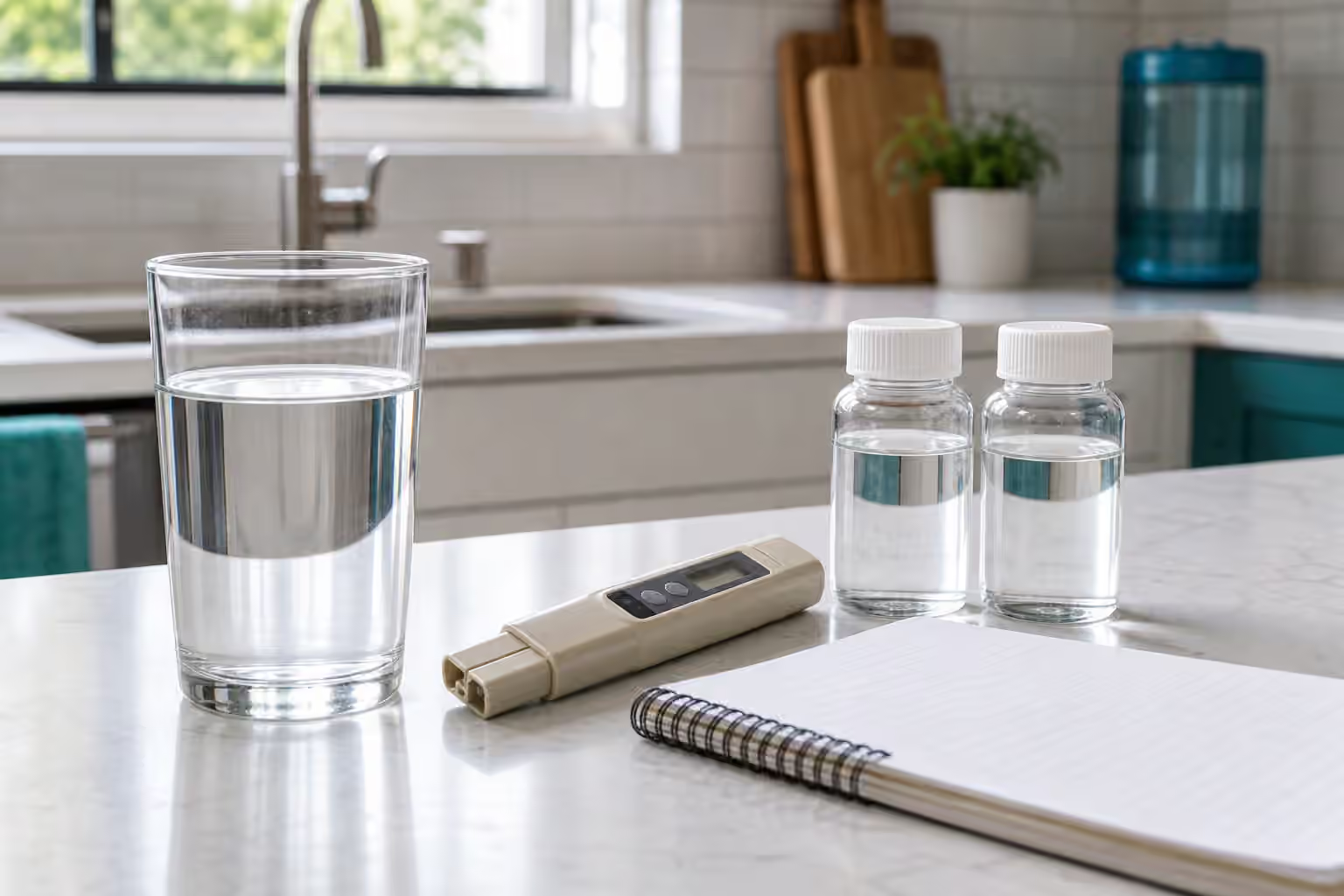
A total dissolved solids meter can be a useful little instrument when the question is narrow. It can show that one sample has more dissolved ions than another, or that a reverse osmosis membrane is changing the broad mineral load in water. It cannot tell you whether the water is safe, which substances are present, or whether a filter is certified for a named contaminant. The small screen gives a clue, not a verdict. For background, see EPA — Secondary Drinking Water Standards: Guidance for Nuisance Chemicals .
Clear Water Lab helps with everyday water decisions, reports, testing, certification checks, and maintenance. It is not medical advice, legal advice, or a substitute for local boil-water notices, certified lab results, utility instructions, or health department guidance.
The number is broad by design
A TDS meter is usually measuring electrical conductivity and estimating total dissolved solids from that conductivity. In plain terms, it is reacting to charged dissolved material in the water and translating that signal into a single number. That number may be useful when you are comparing the same source before and after treatment, or when you are watching for a large change in a system you already understand. It is much less useful when someone tries to read it like a chemical inventory.
The reason is simple. Many different dissolved substances can contribute to conductivity, and a TDS meter does not separate them. Calcium, magnesium, sodium, chloride, bicarbonate, sulfate, nitrate, and other ions can all push the reading in different ways. Two glasses with the same number can have different chemistry. Two glasses with different numbers can both be ordinary for their sources. A low number can come from effective reverse osmosis treatment, but it can also come from naturally low-mineral water. A higher number can reflect hardness minerals that make scale, but it does not automatically mean a health-effect contaminant is present.
That is why a TDS meter belongs next to Home Water Testing , not above it. Strips, meters, public reports, and certified laboratories answer different kinds of questions. The meter is strongest when it checks a mechanical change. It is weak when it is asked to replace a water quality report, a certified lab result, or a verified treatment claim.
Where the meter earns its place
The most common useful role is around reverse osmosis. A working RO membrane should reduce a large share of dissolved ions compared with the untreated feed water, so a TDS meter can help notice when the system has changed. If a household records feed water and product water after installation, then checks the same points over time, a rising product-water reading can suggest that the membrane, seals, storage tank, or maintenance schedule deserves attention. The meter does not prove which contaminant was reduced, but it can help detect a broad performance drift.
That habit works only if the comparison is honest. Measure cold water from the same points, let the system run according to the manufacturer instructions, use a clean sample cup, and write down the date, tap, filter status, and reading. A single unexplained number is easy to overinterpret. A small history from the same system is much more useful. The guide to Reverse Osmosis for Beginners is a better place to think through the membrane, prefilters, storage tank, remineralization stage, flow, and maintenance that sit behind the number.
The meter can also help with everyday taste experiments. If coffee tastes flat after a new treatment system, a TDS reading may confirm that the water has become very low in minerals. If a kettle scales quickly, a higher reading might support the idea that dissolved minerals are part of the pattern, though hardness testing is still more direct. Coffee and Tea Water and Hard Water vs Bad Water explain why minerals can be annoying in appliances while still being relevant to flavor. The meter can point you toward that conversation, but it cannot finish it.
What the number does not prove
The biggest mistake is treating low TDS as a synonym for safe water. Some contaminants of concern can be present at levels that do not move the meter in any obvious way. A TDS reading does not identify lead, PFAS, bacteria, arsenic, nitrate, pesticides, volatile organic compounds, or disinfection byproducts. It does not know whether a sample came from old plumbing, a private well, a storage tank, or a public system. It does not know whether a boil-water notice is active. When the question names a contaminant or an official advisory, the next step belongs to reports, certified lab testing, and public instructions.
The opposite mistake is treating a higher number as proof of danger. Some water has more minerals because of geology, treatment choices, or blending. Mineral content can affect scale, soap feel, appliance maintenance, taste, and brewing, but that is not the same as a safety finding. A higher reading can be completely ordinary for a source. If the number surprises you, compare it with the utility report, local hardness information, or a lab result rather than building a story from the meter alone. How to Read Your Water Quality Report is the better starting map for public water.
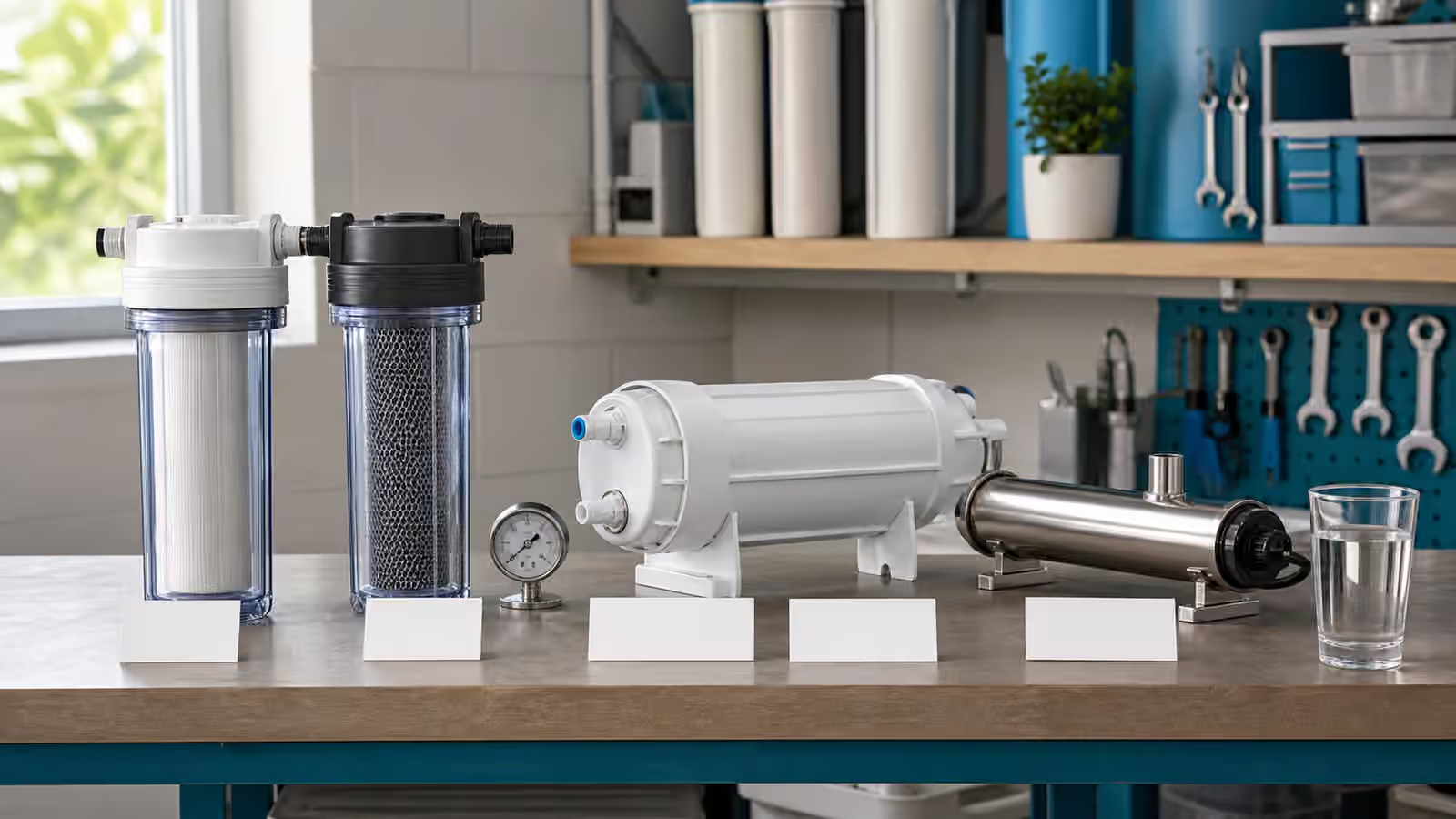
Product marketing often blurs this boundary. A demonstration may show a meter reading before and after a filter, then imply that the lower number proves the filter removed whatever the viewer fears most. That is not how filter evidence works. A carbon filter may improve chlorine taste while barely changing TDS. A softener may exchange calcium and magnesium for sodium or potassium while leaving the broad dissolved-solids reading less impressive than expected. A reverse osmosis system may lower TDS substantially, but named contaminant claims still have to be checked model by model. Filter Certifications and How to Verify a Water Filter Claim are the tools for that work.
Keep the method boring
Small meters can drift, and small sampling habits can make a reading look more meaningful than it is. Rinse the probe as directed, keep it clean, avoid touching the sample cup inside, and give the meter time to stabilize. Temperature can matter, depending on the meter and its compensation. Residue in a cup can matter. A sample taken after water has sat in plumbing all night may differ from one taken after flushing. A reading from a refrigerator dispenser may differ from a kitchen tap because the water moved through a filter, reservoir, tubing, or ice maker path.
The most useful notebook entry is plain. Record the source, tap, treatment stage, date, recent filter change, and reading. If you are checking an RO system, record both feed water and product water with the same meter during the same session. If you are troubleshooting taste, write down the taste clue beside the number, because the number alone will not remember whether the water tasted metallic, flat, chlorine-like, salty, or stale. Taste and Odor Troubleshooting gives better language for those sensory clues.
Do not chase tiny differences. Household meters are not lab instruments, and water systems vary naturally. A shift from one very close number to another may be ordinary noise. A large change in an established system is more interesting, especially if it repeats after careful sampling. The goal is not to make every glass match an ideal number. The goal is to notice when a system you depend on has changed enough to deserve maintenance, a report check, or a more specific test.
Use it as a doorway, not a destination
A TDS meter becomes valuable when it makes the next question clearer. If an RO product-water reading rises compared with the baseline, the next question is maintenance, not panic. If a very low-mineral water tastes dull, the next question may be remineralization or a different drinking-water arrangement. If a high reading sits beside scale and soap trouble, hardness or scale control may deserve attention. If the household is worried about a named contaminant, the meter should be set aside in favor of the right evidence.
That modest role is enough. A small meter can help a household see broad mineral changes, keep an eye on treatment drift, and avoid guessing during taste experiments. It becomes misleading only when it is promoted into a safety test. Treat the number as a clue written in thick marker. It can show direction, but it cannot show detail. For detail, use the right report, the right lab method, and the right certified claim.