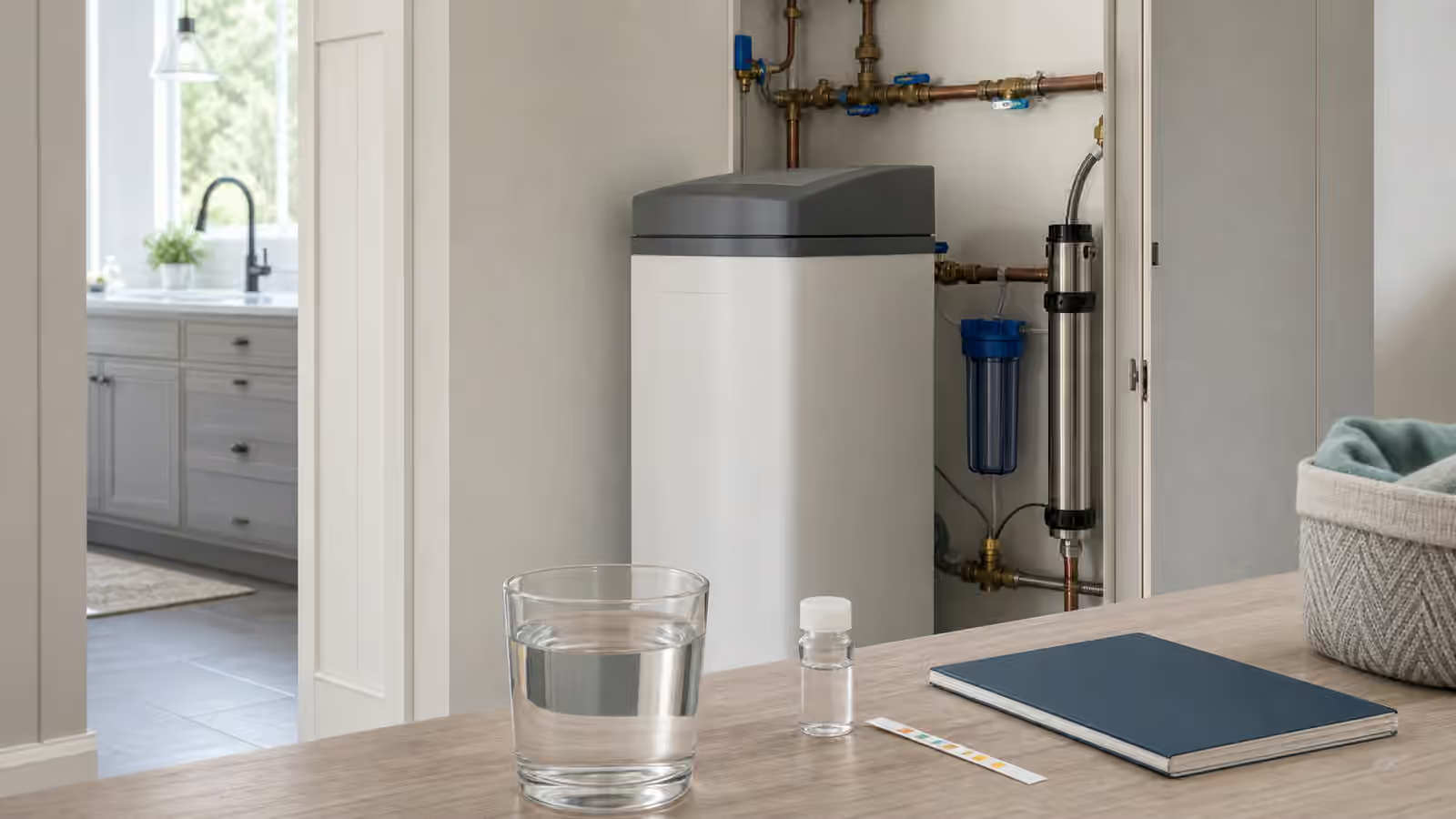
A water softener can make a home feel better without answering every drinking-water question. Showers rinse differently, kettles may scale less, fixtures can stay cleaner, and appliances may be easier to protect. At the drinking tap, though, the decision becomes more specific. Some homes serve softened water to the kitchen cold line. Some leave a hard, unsoftened branch for drinking and outdoor use. Some feed softened water into reverse osmosis. Some have plumbing that nobody has mapped since the system was installed. The right answer starts with the route. For background, see EPA — Home Drinking Water Testing .
Clear Water Lab helps with everyday water decisions, reports, testing, certification checks, and maintenance. It is not medical advice, legal advice, or a substitute for local boil-water notices, certified lab results, utility instructions, or health department guidance.
Softening changes hardness, not every concern
The first boundary is simple: a softener is mainly a hardness and scale-control device. It exchanges hardness minerals through resin and regeneration chemistry. That can be valuable for plumbing, water heaters, dishwashers, showerheads, laundry, and general comfort. It does not automatically reduce lead, PFAS, nitrate, arsenic, bacteria, chlorine taste, microplastics, or every dissolved substance someone might worry about. Water Softeners and Scale Control makes that distinction because it prevents expensive overconfidence.
At the drinking tap, softening can change taste and mouthfeel. Some people like the difference. Others find softened water flat, slippery, salty, or less appealing for coffee and tea. Those descriptions are subjective, but the plumbing behind them is real. A softener that exchanges calcium and magnesium for sodium or potassium changes the mineral balance. A person who has been comparing water by taste alone may mistake that change for contamination or assume it proves improvement. Taste is a clue, not a verdict.
Health-specific dietary questions about sodium, potassium, infants, medical conditions, or special diets should be handled with qualified guidance. Clear Water Lab can help with equipment logic, reports, testing, and filter claims, but it cannot decide a person’s medical needs. The evergreen household move is to know whether the drinking tap is softened, then use that fact in any conversation with a clinician or local professional when it matters.
Find the branch before judging the glass
Many homes are plumbed so the softener serves most indoor fixtures but not every line. The kitchen cold tap may be softened or unsoftened. The refrigerator line may follow the kitchen branch or take its own path. Outdoor taps may be bypassed. A dedicated reverse osmosis faucet may receive softened feed water even when the main kitchen faucet does not. Without a map, a household can argue about softened taste for months while drinking from a branch nobody identified.
Use the same mapping habit from New Home Water Walkthrough . Locate the main shutoff, softener bypass, water heater, kitchen cold line if visible, refrigerator supply, outdoor taps, under-sink filters, and any RO system. If labels are missing, add simple ones after confirming the route. A future cartridge change or service call becomes easier when the branch is no longer a mystery.
Testing can help, but it has to match the question. A hardness strip before and after the softener can show whether hardness is being reduced. A TDS meter may not show the story clearly because softening exchanges ions rather than simply removing everything dissolved. TDS Meter Readings explains why the number can be useful for some comparisons and misleading for others. If the question is a named contaminant, hardness testing is not enough.
Drinking filters sit beside softeners, not inside them
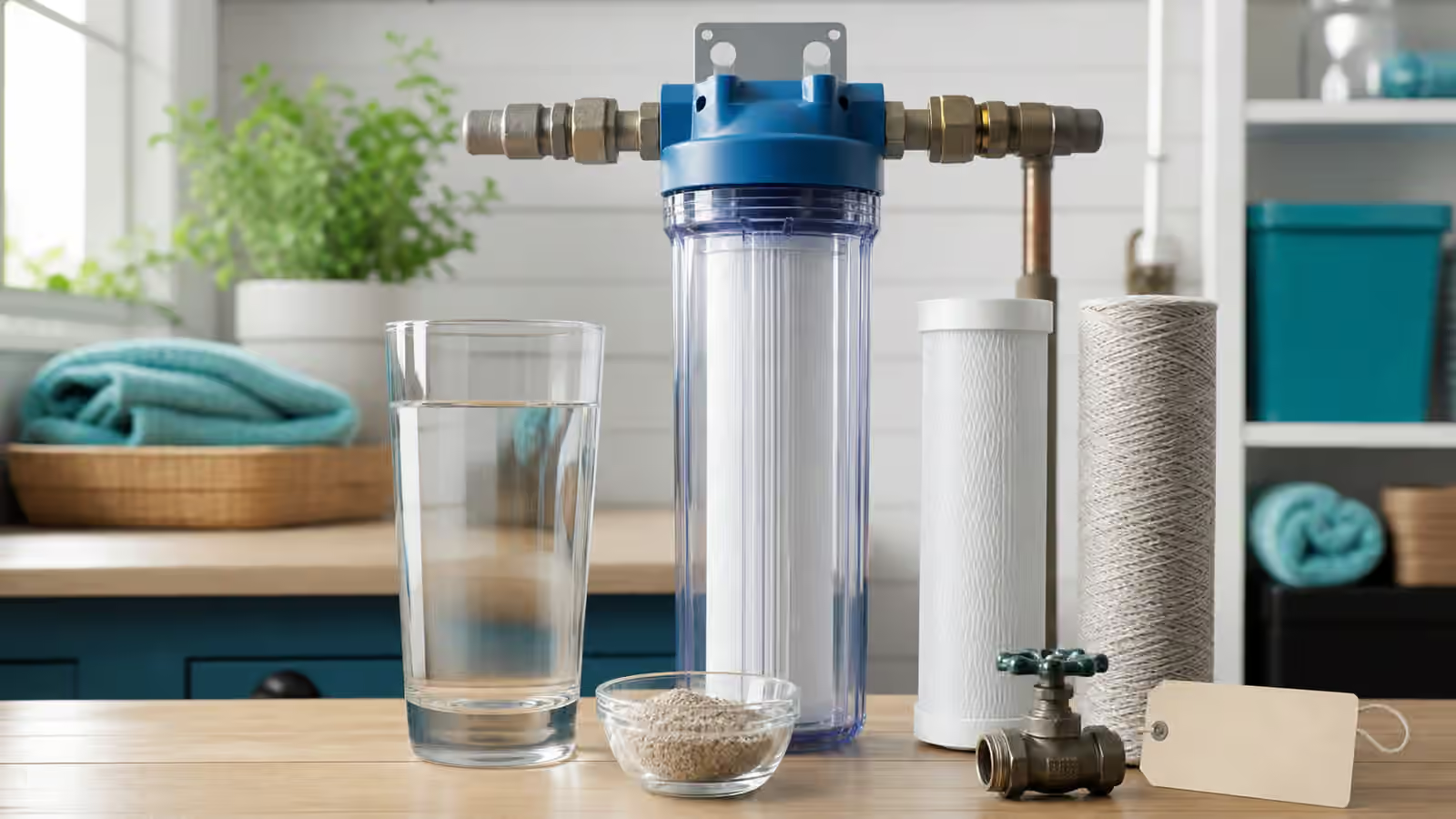
A point-of-use drinking filter can be paired with a softened home, but the claims still need to be verified. If the goal is chlorine taste, choose a carbon product with the right aesthetic claim and maintain it. If the goal is lead, PFAS, cyst reduction, VOCs, or another named substance, find the exact model and certified claim. If the goal is nitrate, arsenic, or private-well bacteria, start from lab results and local guidance. The softener does not make those decisions disappear.
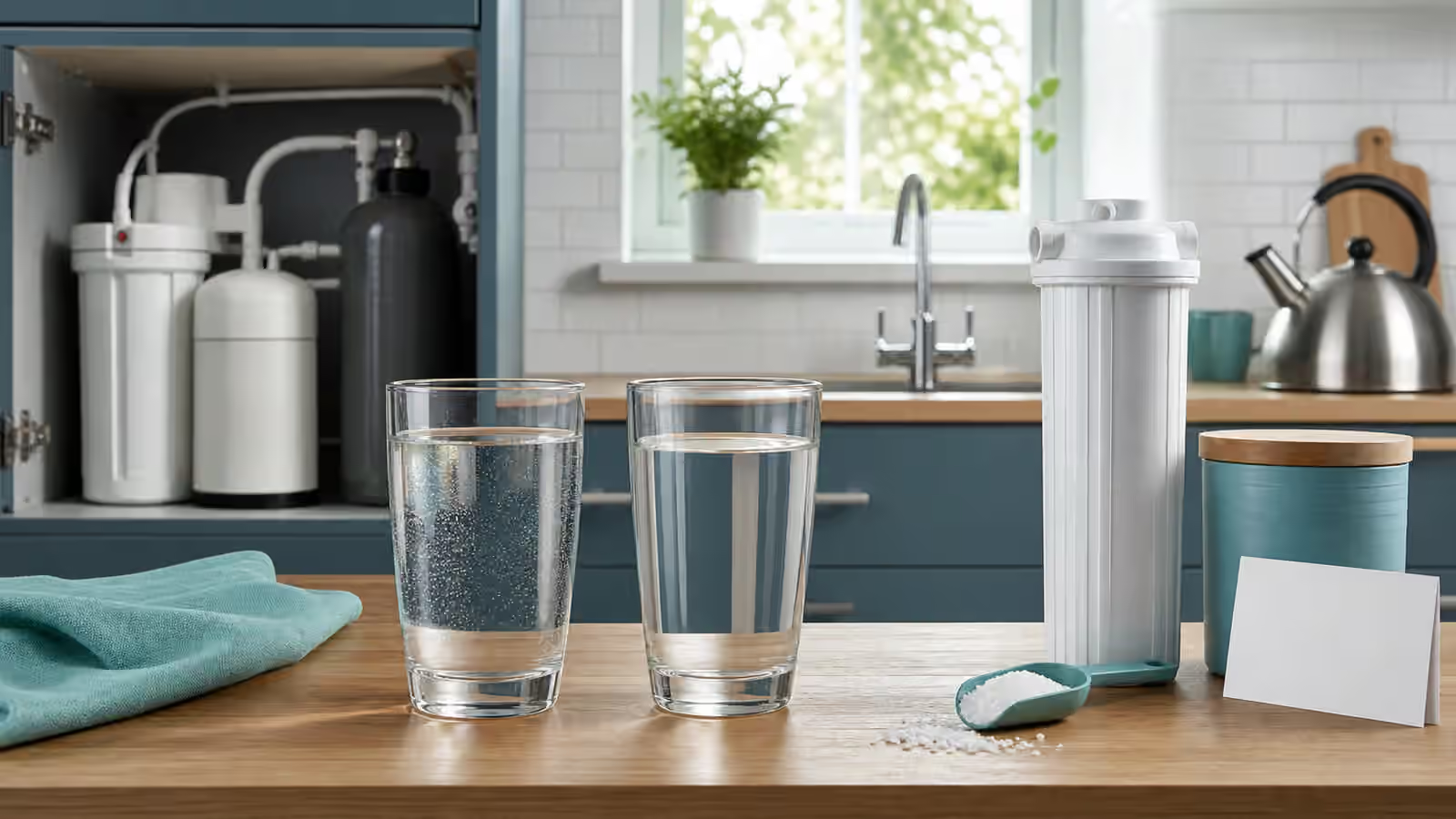
Reverse osmosis often enters the conversation because it can reduce some dissolved substances when properly certified and maintained. In hard-water homes, softened feed water may protect an RO membrane from scaling, but that arrangement has its own taste, maintenance, drain, pressure, and replacement implications. Reverse Osmosis for Beginners is the better place for that full tradeoff. The important point here is that an RO faucet is a separate treatment stage, not proof that the main kitchen tap is handled.
Coffee and tea reveal the practical side. Very hard water can scale equipment and mute flavors in some brews. Very low-mineral or heavily treated water can taste flat to some drinkers. Softened water may protect a kettle while changing extraction and flavor. Coffee and Tea Water keeps this in the realm of taste and minerals rather than safety theater. The best tasting branch may not be the same as the best appliance-protection branch.
Keep the softener record with the filter record
A softener needs maintenance just as filters do. Salt or potassium chloride supply, resin condition, settings, regeneration behavior, bypass position, service date, nearby sediment prefilters, and downstream cartridges all affect the experience at the tap. A drinking-water filter after the softener needs its own cartridge dates. A refrigerator filter needs its own schedule. If nobody writes these down, the system slowly turns into a row of equipment with unknown status.
The record should also include changes in taste, scale, pressure, or appliance behavior. If the kitchen tap suddenly tastes different, the question may be a softener setting, bypass movement, cartridge age, refrigerator filter, plumbing stagnation, or utility change. Taste and Odor Troubleshooting helps sort those clues without assuming one device explains all of them.
The calm drinking-tap decision is to separate jobs. Let the softener solve hardness where it is useful. Let verified filters solve the named drinking-water concerns they are certified and maintained to address. Let taste experiments stay honest about personal preference. Above all, find the branch. A softened home is not one kind of water everywhere, and a good water plan respects that plumbing reality.