Cloudy water, brown flecks, white grit, black specks, and rusty stains can all look like one problem when they show up in a glass. They are not one problem. Some clues come from trapped air and disappear in minutes. Some come from minerals or scale breaking loose inside plumbing. Some point toward distribution work, a water heater, a private well, a failing cartridge, or a faucet aerator that has been quietly collecting debris. For background, see EPA — Secondary Drinking Water Standards: Guidance for Nuisance Chemicals .
Clear Water Lab helps with everyday water decisions, reports, testing, certification checks, and maintenance. It is not medical advice, legal advice, or a substitute for local boil-water notices, certified lab results, utility instructions, or health department guidance.
The useful move is to slow the story down before buying equipment. A filter is only sensible after you know whether the clue is aesthetic, plumbing-related, source-related, or part of an official notice. The same glass that seems alarming at first can become much less mysterious when you watch how it clears, compare taps, check hot versus cold water, look inside the aerator, and connect the timing to utility work, well disturbance, filter age, or recent plumbing changes.
Start with how the water clears
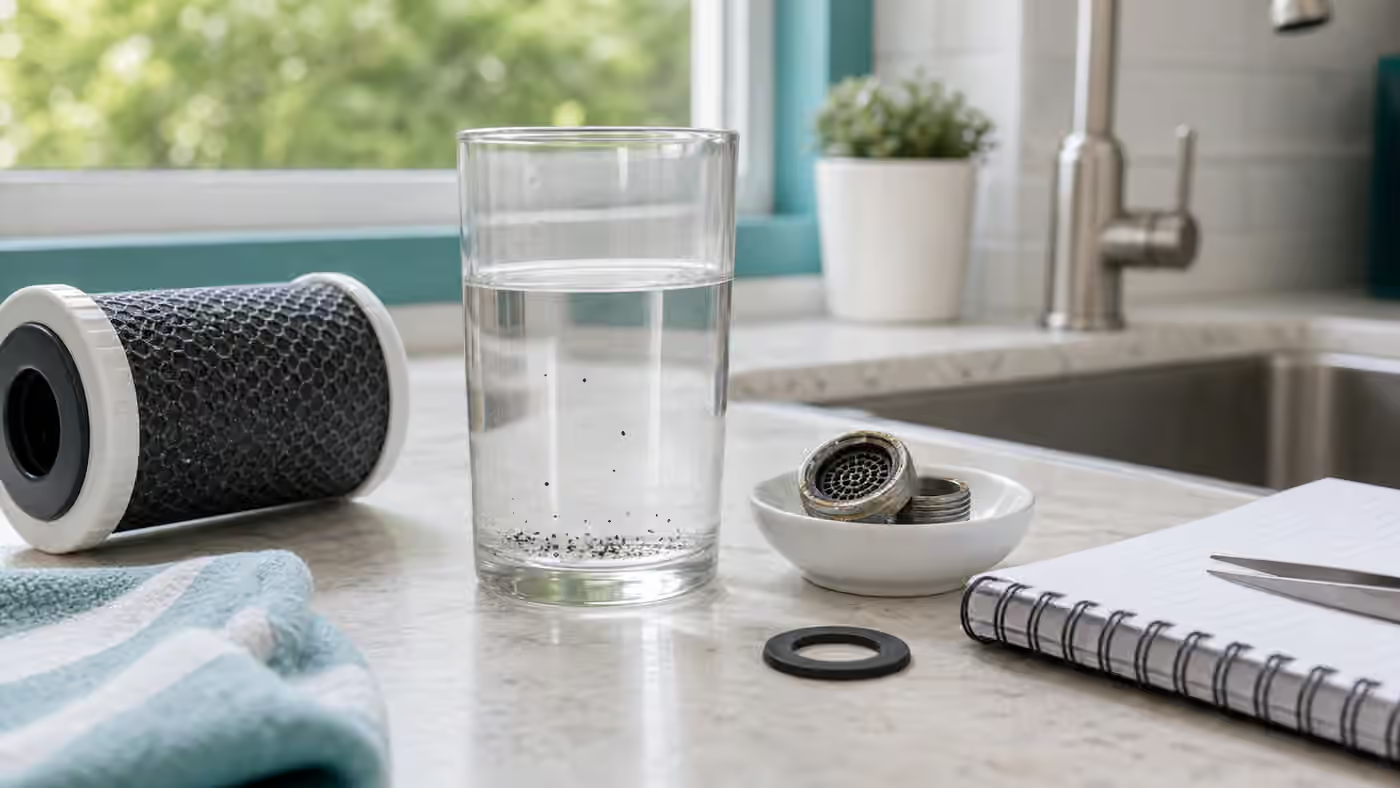
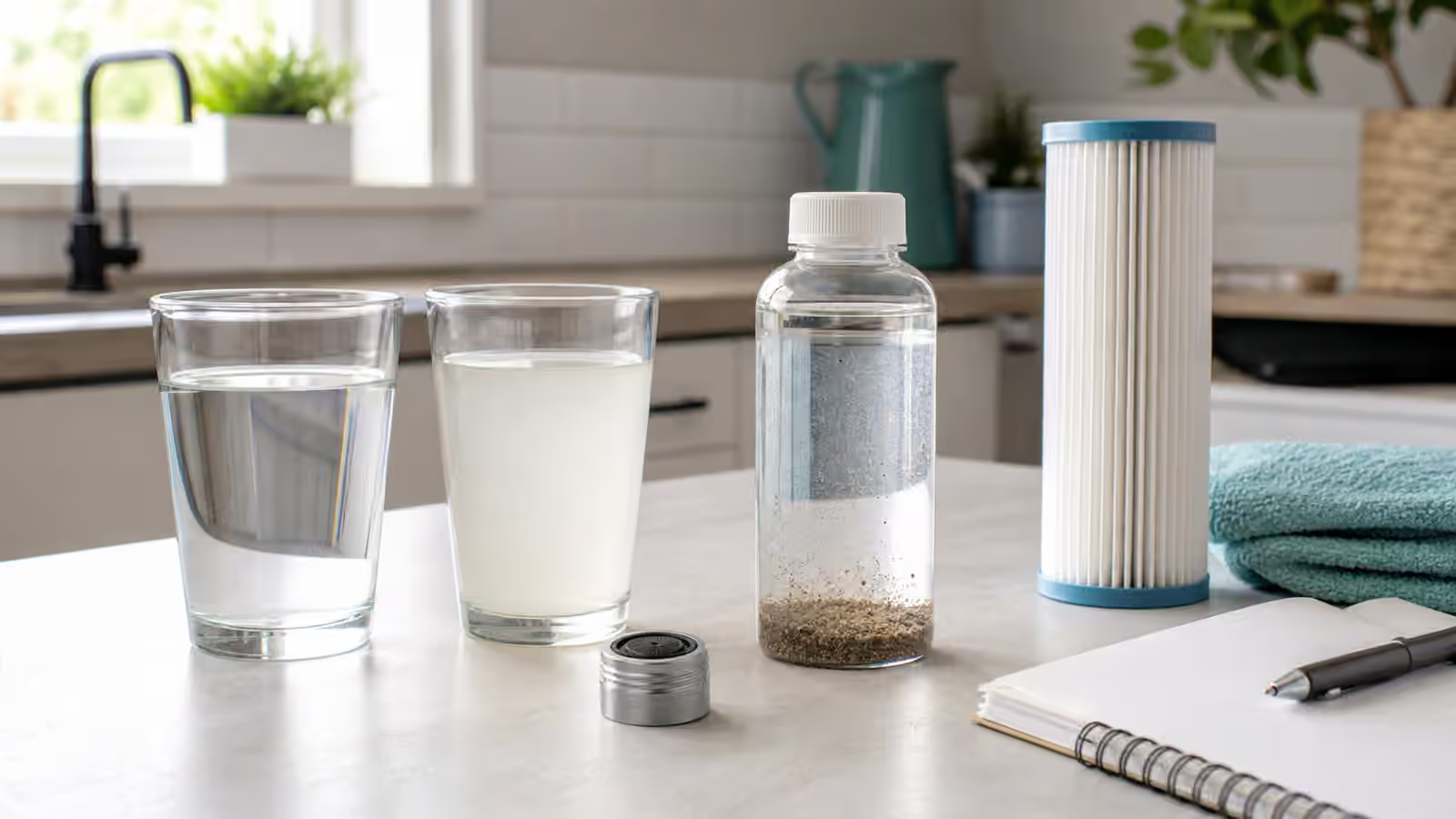
Cloudiness is often the first clue people notice because it changes the whole glass. The simplest test is visual, not technical. Fill a clear glass with cold water and set it on the counter. If the cloudiness clears from the bottom upward and the water becomes transparent after a short rest, trapped air is a likely explanation. Air can enter after pressure changes, plumbing work, or normal distribution conditions, and it can make water look milky without leaving sediment behind.
That observation is not a guarantee, but it changes the next question. Air bubbles do not usually settle as grit at the bottom of the glass. Fine particles do. If the water stays hazy, leaves a ring, forms visible flakes, or drops material to the bottom, the clue has moved from air toward turbidity, scale, rust, sediment, or other suspended material. At that point, the question is not only what the water looks like. It is where the clue appears and when it started.
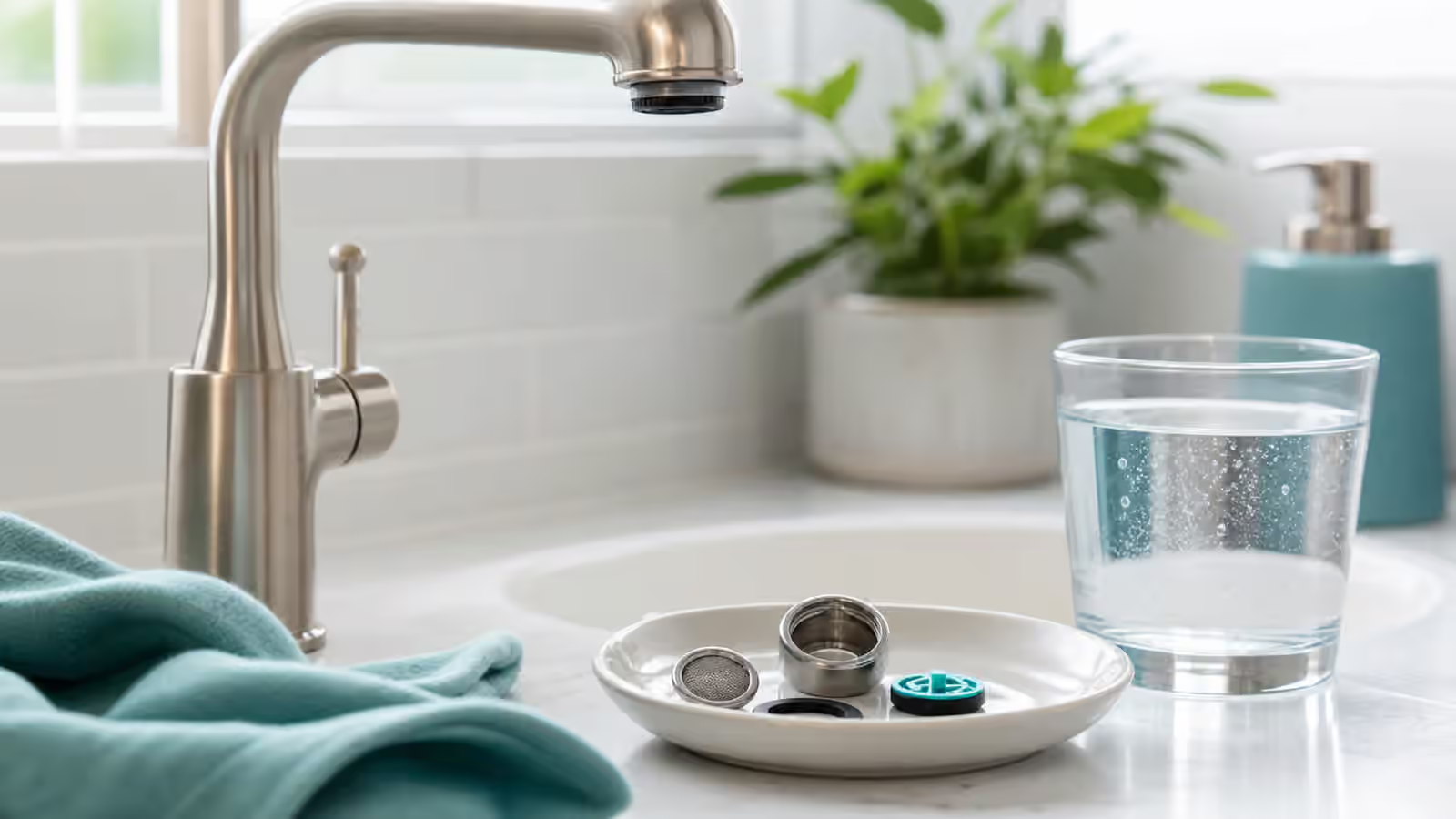
Compare first-draw water with water that has run for a minute or two. Compare the kitchen tap with a bathroom tap. Compare cold water with hot water, but treat hot-water clues as a separate plumbing question because the water heater can add its own sediment, odor, corrosion, and scale issues. If the clue appears only at one faucet, inspect the aerator before assuming the whole home has a water problem. If it appears throughout the building, especially after pressure loss or nearby work, the utility or a qualified local professional belongs in the next step.
Particles have context
The color and texture of particles can help, but they should not be treated as a home laboratory result. White grit often suggests mineral scale or fragments from plumbing and fixtures. Brown or orange material may suggest iron, rust, disturbed mains, old galvanized plumbing, or well sediment. Black specks can come from rubber parts, carbon fines from a filter, manganese in some water conditions, or debris in a faucet assembly. Sand-like particles may point toward well disturbance, a broken softener component, municipal work, or material that has accumulated in a water heater.
Those possibilities overlap, which is why pattern matters more than a single guess. If particles appear only after a filter cartridge is changed, the filter may need flushing or the cartridge may not be seated correctly. If black specks appear from a pitcher, faucet filter, or carbon device, check the product instructions and replacement schedule before assuming a new contaminant source. If gritty material appears only in hot water, look at water-heater maintenance and plumbing age. If the issue began after street work, flushing, a hydrant event, or a pressure change, contact the utility and watch for official instructions.
This is where Clear Water Lab’s other guides connect naturally. A stable mineral-scale problem belongs near Hard Water vs Bad Water , because hardness is not the same thing as contamination. A chlorine, metal, egg, plastic, or earthy taste belongs near Why Your Water Tastes Like Chlorine, Metal, Dirt, Eggs, or Plastic , because flavor and particles can share a source but still require different decisions. A city-water concern should be checked against the annual report and utility notices, which makes How to Read Your Water Quality Report a better starting point than a shopping page.
Rust is evidence, not a filter category
Rusty color is easy to turn into a product search, but rust is more useful as evidence. Orange staining can come from iron in source water, old plumbing, water mains, fixtures, or a water heater. Brown water after hydrant flushing or main repairs may look similar to a building plumbing issue even though the source is outside the home. In a private well, iron staining may travel with sediment, bacteria-related staining, local geology, or equipment problems. The look alone does not prove which one is true.
The first split is location. If rusty water appears only at one fixture, especially after the water sits, the fixture or branch line may be part of the story. If it appears only in hot water, the water heater deserves attention. If all cold taps are affected, the issue may be entering the home or coming from the supply. If neighbors see the same change at the same time, the utility side becomes more likely. Each answer points to a different next move.
The second split is timing. A brief change after utility work is different from a chronic pattern that has been slowly staining fixtures for years. Sudden brown water, pressure loss, flooding, or an official notice should be handled through utility or health department instructions rather than household filter confidence. Chronic staining may call for testing, plumbing review, or treatment design, especially for wells. A general carbon pitcher may improve taste in some cases, but it is not a serious answer to an unknown iron, rust, or sediment pattern.
Sediment filters protect equipment, but they do not certify safety
Sediment filters are useful when the target is physical particles. A pleated cartridge, spun-polypropylene cartridge, screen, or similar prefilter can protect downstream equipment from sand, grit, and larger suspended material. In whole-home setups, sediment filtration often sits before carbon, softening, UV, or other treatment so that the later stages are not asked to handle visible debris. That role is real, practical, and easy to understand.
The mistake is treating “sediment filter” as a broad safety claim. Removing grit is not the same as reducing lead, PFAS, nitrates, arsenic, bacteria, volatile organic compounds, or other specific concerns. Some particles can carry other issues, and some health-relevant contaminants are dissolved or too small for a simple sediment cartridge to address. If the concern is a specific contaminant, the answer shifts from particle removal to testing, certified reduction claims, and correct system design.
Filter ratings need care too. A nominal micron rating does not mean every particle of that size is removed. An absolute rating is a stronger kind of claim, but it still needs to be understood in context. Smaller micron ratings can catch finer material, but they may clog faster and reduce flow when the water has a heavy particle load. A larger prefilter may protect plumbing better in a gritty well system than an overly fine cartridge that plugs quickly and gets bypassed or neglected. Maintenance is not an afterthought; it is part of the treatment plan, which is why Filter Replacement Schedules belongs in the decision before the first cartridge is installed.
If sediment filtration is one stage in a larger plan, the rest of the plan should still be verified. Pitcher, Faucet, Countertop, Under-Sink, RO, and Whole-Home Filters explains the location question, and NSF/ANSI 42 vs 53 vs 58 vs 401 explains why a standard number is not a universal promise. For a specific claim, How to Verify a Water Filter Claim on NSF, WQA, or IAPMO is the safer habit than trusting a broad phrase on a box.
Wells and pipe work change the stakes
Private wells deserve a different level of caution because the household is usually responsible for testing, maintenance, and treatment decisions. Visible sediment can follow heavy rain, drought shifts, pump work, casing problems, disturbed plumbing, aging pressure tanks, or local geology. A cartridge may catch some particles and make the water look better, but clearer-looking water is not the same as a lab result. If the well has changed suddenly, if flooding has occurred, if the pump or casing has been disturbed, or if there are recurring particles with taste or odor changes, lab testing and local well guidance matter more than guessing.
That is the same logic behind City Water vs Well Water . Public systems have reporting, treatment, and utility responsibility that private wells do not share in the same way. The annual report can help public-water households understand detected contaminants, treatment context, and violations, but it usually cannot diagnose a single building’s old pipe or faucet aerator. A private well test can answer questions that no product label should be asked to answer. For wells with higher-stakes concerns, Nitrates, Arsenic, and Private Wells is a better companion than a general filter comparison.
Pipe work also changes the stakes for city water. Construction, main breaks, flushing, pressure loss, and repairs can disturb material that normally sits undisturbed in pipes. The right household action may be to follow official flushing guidance, avoid using discolored water until the utility says what to do, clean aerators afterward, or watch for a boil-water or do-not-drink notice. During official notices, household filters should not be treated as independent permission to ignore instructions. Emergency Water Basics is the place to think through that calmer backup plan before the next notice arrives.
Use the clue to choose the next step
A good sediment and cloudiness investigation ends with a narrower question, not a dramatic conclusion. If the glass clears from bottom to top and leaves no material, you may be looking at air. If the problem is isolated to one tap, clean and inspect the aerator, then compare again. If it is hot-water only, think about the water heater before choosing a drinking-water device. If particles appear after a filter change, follow the flushing and seating instructions and check whether the cartridge is due for replacement. If the clue is building-wide, sudden, rusty, or tied to pressure changes, contact the utility or a qualified local professional before treating the issue as a simple shopping decision.
For many households, the practical answer is modest. Clean an aerator, flush after utility guidance, replace an expired cartridge, document the pattern, read the report, or test the well. For others, sediment filtration can be a useful first stage that protects equipment and improves clarity. The important distinction is that visible clarity is not the whole water-quality story. A glass can look clear and still need a contaminant-specific decision, and a glass can look cloudy for a harmless reason that does not justify an expensive system.
Treat sediment, rust, and cloudiness as clues that deserve patience. The best outcome is not a more complicated setup. It is a setup matched to evidence: source water, plumbing pattern, official guidance, testing where needed, certified claims where relevant, and maintenance that the household can actually keep.