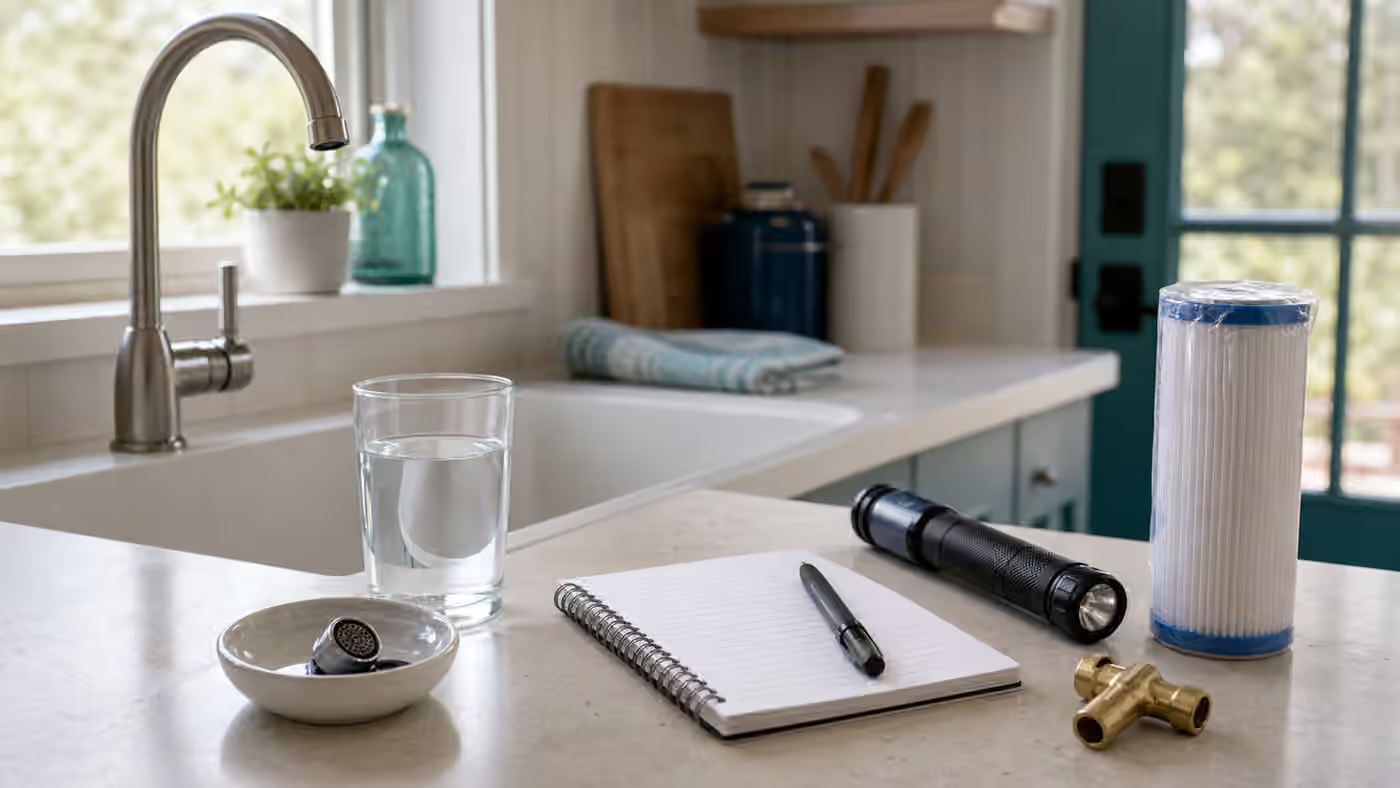
Sediment prefilters are easy to misunderstand because their job feels visible. A cartridge that catches grit looks like it is doing real work, and often it is. The mistake is letting visible dirt stand in for every water question. A sediment cartridge can protect valves, screens, carbon blocks, softeners, reverse osmosis prefilters, and UV sleeves from particles. It does not remove dissolved metals, nitrate, arsenic, PFAS, chlorine taste, or bacteria by virtue of looking busy. For background, see NSF — Standards for Water Treatment Systems .
Clear Water Lab helps with everyday water decisions, reports, testing, certification checks, and maintenance. It is not medical advice, legal advice, or a substitute for local boil-water notices, certified lab results, utility instructions, or health department guidance.
A prefilter is a protective stage
A sediment prefilter usually belongs near the beginning of a treatment route. It catches sand, silt, rust flakes, pipe scale, and other particles before they reach equipment that is less tolerant of debris. That position matters. If a carbon block plugs with grit, it may lose flow before its taste-and-odor capacity is used. If a UV sleeve fouls with particles or iron scale, light may not reach the water as intended. If a small faucet aerator is the first screen to catch every loose bit of pipe scale, one sink can look worse than the rest of the home.
The broader clue-reading path starts in Sediment, Rust, and Cloudy Water . That guide separates trapped air, visible particles, rust-colored water, mineral scale, and construction disturbance. A sediment prefilter sits downstream from that observation. It is chosen after the household has some idea what kind of particles are appearing, where they appear, and whether they are stable or tied to an event.
On private wells, a sediment stage often protects the rest of the system from sand, silt, iron particles, or material disturbed by pump cycling. On public water, it may be less central, but it can still help after older building plumbing, main work, or local pipe scale creates recurring particles. The device does not decide the source. The pattern does. Compare taps, hot and cold water, first draw and flushed water, raw and treated sample points, and the timing of the problem before assuming one cartridge will explain it.
Micron numbers need a sentence around them
Micron ratings are useful only when they are read with context. A smaller number catches finer particles, but it may also clog faster and reduce flow. A larger number may protect downstream equipment without turning into a weekly maintenance burden. The right question is not “what is the smallest cartridge I can buy?” It is “what particle problem am I trying to manage, and what pressure and flow can the system tolerate?”
Nominal and absolute ratings add another layer. A nominal rating describes a general performance level under stated conditions. An absolute rating is a stronger claim about particle size capture, but it still depends on the product, flow, installation, and maintenance. Marketing pages often compress that distinction into a single bold number. A home water plan should not. If the cartridge is protecting a UV unit, reverse osmosis system, or another treatment stage, the downstream equipment instructions may matter more than a generic filter aisle habit.
The guide to Water Treatment Stage Order is the useful companion here. Sediment is not a glamorous stage, but it can decide how well later stages behave. Placing a fine cartridge before heavy sediment can starve the house for flow. Placing no protective stage before sensitive equipment can make maintenance unpredictable. A staged approach may use a coarser first cartridge before a finer one, but that choice should come from water behavior, equipment requirements, and service access rather than from the appeal of extra housings.
The used cartridge is a record
A spent cartridge is not a lab report, but it is a record worth keeping for a moment before it goes in the trash. Its color, loading pattern, odor, texture, and change interval can tell you whether the stage is seeing steady particles, event-driven bursts, iron staining, carbon fines from another device, or a flow restriction that does not match the expected life. Photograph the first few cartridges after installation. Write down the date, housing location, cartridge type, and why you changed it.
This is especially helpful when pressure changes. If a new cartridge restores flow immediately, the restriction was probably in that stage or upstream of it. If flow stays weak, the issue may sit elsewhere: valves, pressure regulator, well pump, pressure tank, softener, aerators, or the fixture route. Water Pressure and Flow explains why filter restriction and household pressure are easy to confuse. A sediment cartridge can be the clue, but it should not be the only suspect.
The housing itself deserves attention. A clear sump can show loading, but it can also grow algae if exposed to light in some installations. An opaque sump hides the cartridge but may be more appropriate in a bright utility area. Bigger housings can improve flow and cartridge life, but they need space, shutoffs, pressure relief, a drain plan, and enough clearance to change the cartridge without turning maintenance into a cabinet wrestling match. A filter that is hard to service will eventually be neglected.
Sediment removal is not contaminant proof
Sediment can carry or hide other concerns, but removing sediment does not automatically solve them. Rust-colored particles may point toward old pipes, water heater disturbance, or iron in well water. Black particles may point toward carbon fines, rubber parts, manganese, or fixture debris. Cloudiness may be air, not sediment. A clean cartridge after a month does not prove that lead, nitrate, arsenic, PFAS, bacteria, or disinfection byproducts are absent.
This boundary matters when a salesperson or product page treats clarity as safety. Clearer water can be pleasant and can protect equipment, but named contaminants need the right evidence. For public water, begin with reports, official notices, and building-plumbing clues. For private wells, begin with an appropriate testing plan and records. For filter claims, use the exact product listing and certification path from How to Verify a Water Filter Claim . A sediment cartridge may be part of the route, not the proof of the route.
The calm habit is to give sediment its proper job. Use it to protect equipment, preserve flow, collect visible clues, and make downstream treatment more reliable. Keep the rating matched to the actual particle problem. Keep the housing accessible. Keep a change record long enough to see a pattern. Then let lab results, certified claims, and official guidance answer the questions that a cartridge full of grit cannot.