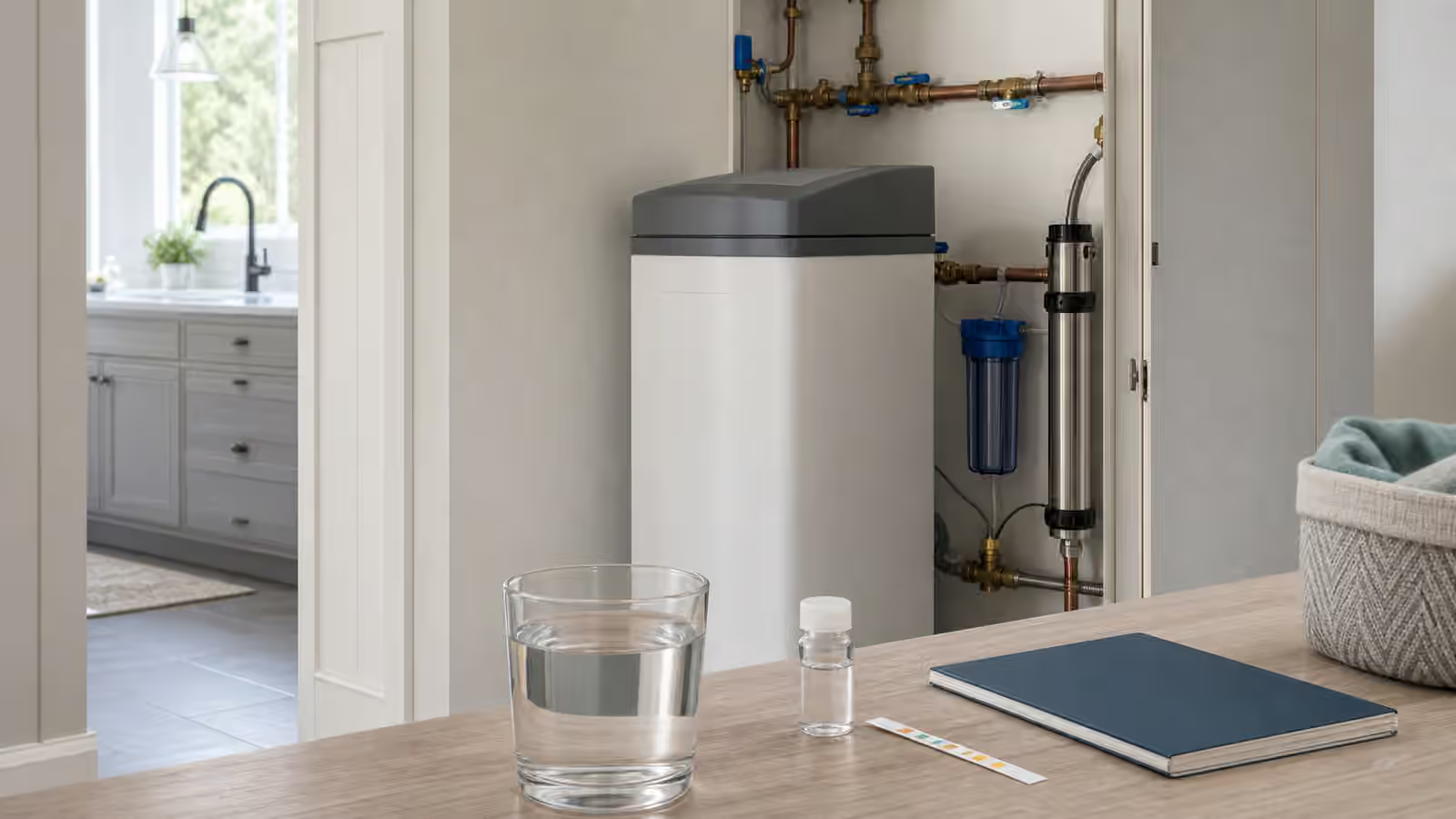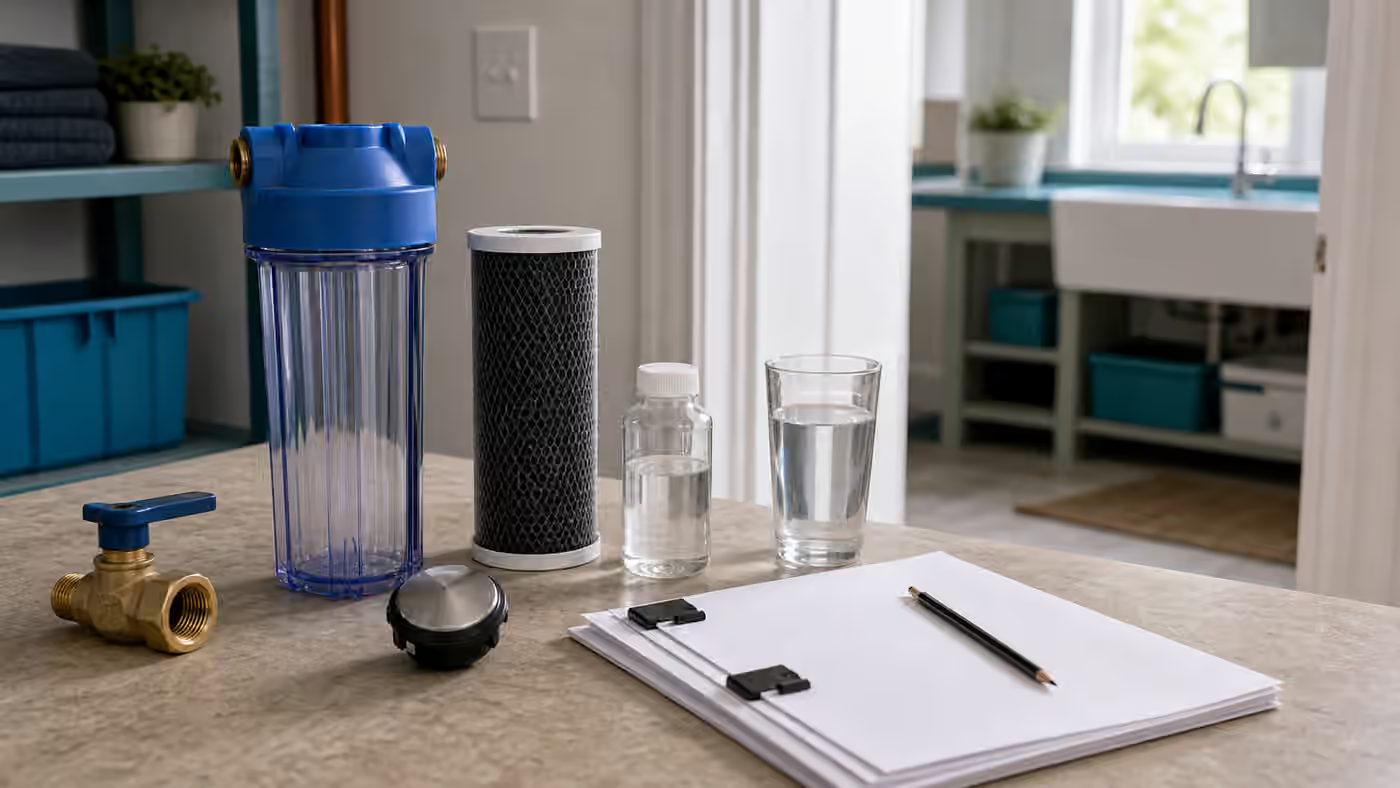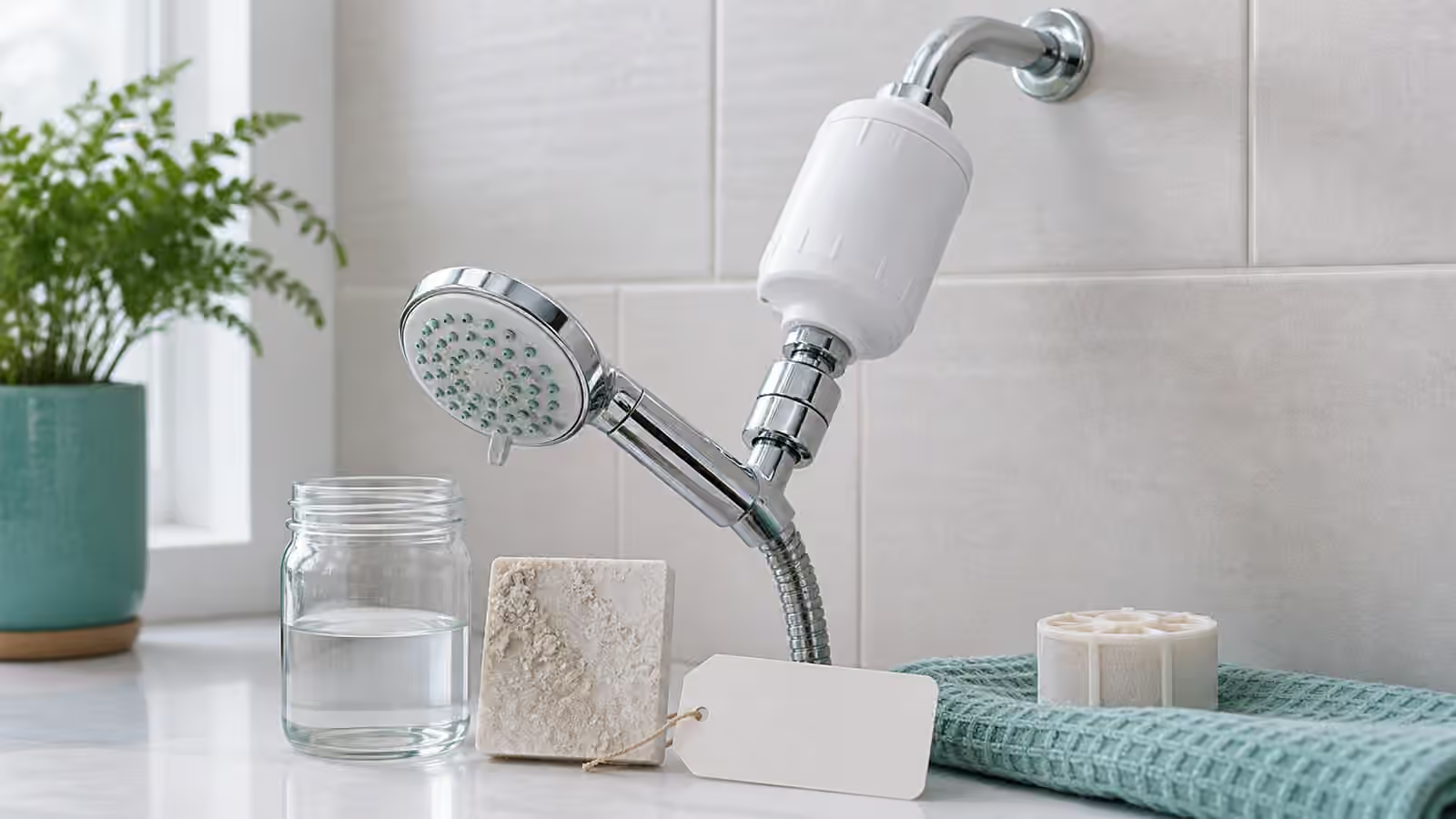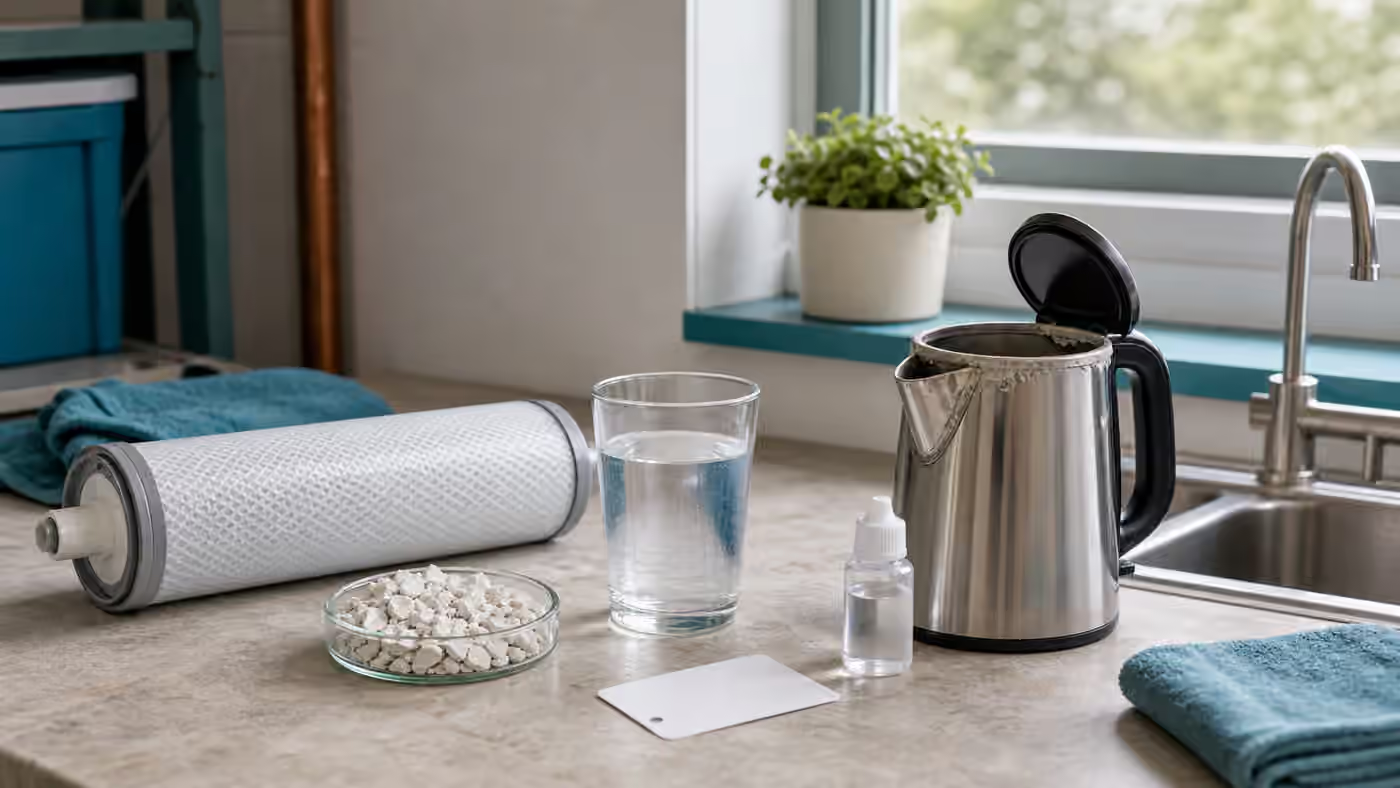
Salt-free scale conditioners sit in a confusing part of the water-treatment aisle. They are often sold near water softeners, described with scale-control language, and marketed to households that dislike salt bags, brine tanks, or the feel of softened water. Some can be useful for a narrow maintenance goal. The problem begins when a conditioner is treated as if it does the same job as an ion-exchange softener, a contaminant filter, and a lab result all at once. For background, see NSF — Standards for Water Treatment Systems .
Conditioning is not the same word as softening
A conventional ion-exchange water softener changes hardness minerals by exchanging calcium and magnesium for sodium or potassium ions. A salt-free scale conditioner usually does not remove hardness minerals in that same way. Many products are meant to change how minerals behave so scale is less likely to cling stubbornly to surfaces. That difference sounds technical, but it is the whole decision.
Water Softeners and Scale Control explains what softeners fix and what they do not. A salt-free conditioner belongs beside that guide as a separate category. If a household expects the same soap feel, hardness test result, and appliance behavior as a softener, it may be disappointed. If the goal is narrower, such as reducing some scale adhesion in a setting where a brine system is not desirable, the conversation can be more honest.
The first question is whether the problem is really hardness. White crust around faucets, a scaled kettle, spots on glassware, and a showerhead that clogs slowly all point toward minerals. Those signs can be annoying without proving the water is unsafe. Hard Water vs Bad Water is the necessary reset because scale control, taste, appliance care, and contaminant reduction are different jobs.
The test result may not look changed
Many salt-free conditioners do not make a hardness test read like softened water. That is not automatically failure, because the minerals may still be present. The practical claim is often about scale behavior, not mineral removal. A household that expects the test strip to drop dramatically can misread the device. A household that never tests hardness at all can misread the problem in the other direction and buy scale equipment for a taste issue, corrosion issue, or plumbing disturbance.
This is where the purchase should slow down. Read the claim language carefully. Does the product say it reduces scale buildup, conditions hardness minerals, inhibits scale, or softens water? Does it use a certified standard for a specific claim, or does it rely on general marketing? What water conditions are required for the device to work as claimed? Does it have flow limits, media life, prefiltration needs, or restrictions around iron, manganese, sediment, pH, or chlorine?
A conditioner may need water that is already clear enough and within a certain chemistry range. If a private well has iron staining, sediment, sulfur odor, low pH, or bacteria concerns, those issues do not vanish because a scale device was installed. Iron and Manganese in Well Water and Tap Water pH are better starting points when the clues are broader than white scale.
Scale control is a maintenance goal
The right way to judge a scale-control device is usually practical and patient. Does the kettle scale more slowly after old deposits are cleaned? Does the showerhead clog less often? Do fixtures wipe clean more easily? Does the water heater maintenance story improve over time? Those observations need a baseline. If the household installs a device without cleaning existing scale or noting the old maintenance pattern, it may not know what changed.
Old scale can remain after new treatment begins. A showerhead may need cleaning before the spray pattern reveals any improvement. A water heater can carry deposits that formed over years. A dishwasher may need detergent adjustment. A coffee machine may still need descaling because heating water concentrates minerals. Coffee and Tea Water is useful because brewing quality often exposes the difference between mineral comfort and contaminant claims.
Salt-free devices also have maintenance. Some are marketed as low maintenance, but low is not none. Media life, prefilter changes, flow direction, bypass valves, pressure drop, installation orientation, and replacement timing still matter. If a device sits after a clogged sediment cartridge or before a neglected water heater, the system will not behave like a clean product diagram.
Do not let scale language replace contaminant evidence
The biggest mistake is using a scale conditioner to answer a contaminant question. A device meant for hardness behavior is not a lead filter, PFAS filter, nitrate treatment, arsenic treatment, bacteria treatment, or boil-water advisory response. It may improve appliance maintenance and reduce some scale frustration while leaving health-effect questions untouched.
NSF/ANSI 42 vs 53 vs 58 vs 401 explains why standards and contaminant names matter. If the household concern is a specific contaminant, the answer starts with reports, lab results, and a verified claim for that contaminant. The words “whole home” and “conditioner” should not be allowed to create a broad sense of protection. The exact claim has to carry the weight.
This boundary also protects salt-free products from being blamed for work they were never designed to do. If the water tastes like chlorine, a maintained carbon device may be the relevant tool. If a well has sediment, a sediment stage may be needed before other equipment. If corrosion clues are present, pH and alkalinity may deserve testing. If the issue is hard-water scale, then a conditioner can be compared honestly with softening, descaling routines, and point-of-use choices.
A sensible decision leaves room for ordinary care
A household does not always need a whole-home device for hard water. A mild scale problem may be handled with kettle descaling, showerhead cleaning, appliance maintenance, and a drinking-water taste plan. A severe scale problem may justify a conventional softener. A household that cannot or does not want to manage salt may consider a conditioner if the claim fits the water and expectations are realistic. The answer should fit the pain.
Whole-Home vs Point-of-Use Water Treatment is a good placement guide. Scale usually affects more than one tap, but not every scale complaint deserves the same infrastructure. If the main frustration is a coffee kettle, point-of-use water for brewing may matter more than a whole-home device. If water heaters, fixtures, and appliances are suffering, entry-point treatment may be more reasonable.
The cleanest salt-free conditioner decision says what the device is expected to change and what it is not expected to change. It names hardness, scale behavior, source water limits, maintenance, and the places where old deposits must be cleaned before judging results. It also keeps contaminant concerns on a separate evidence path. That is enough. A scale conditioner does not need to become a purity story to be useful; it only needs to match the scale problem honestly.