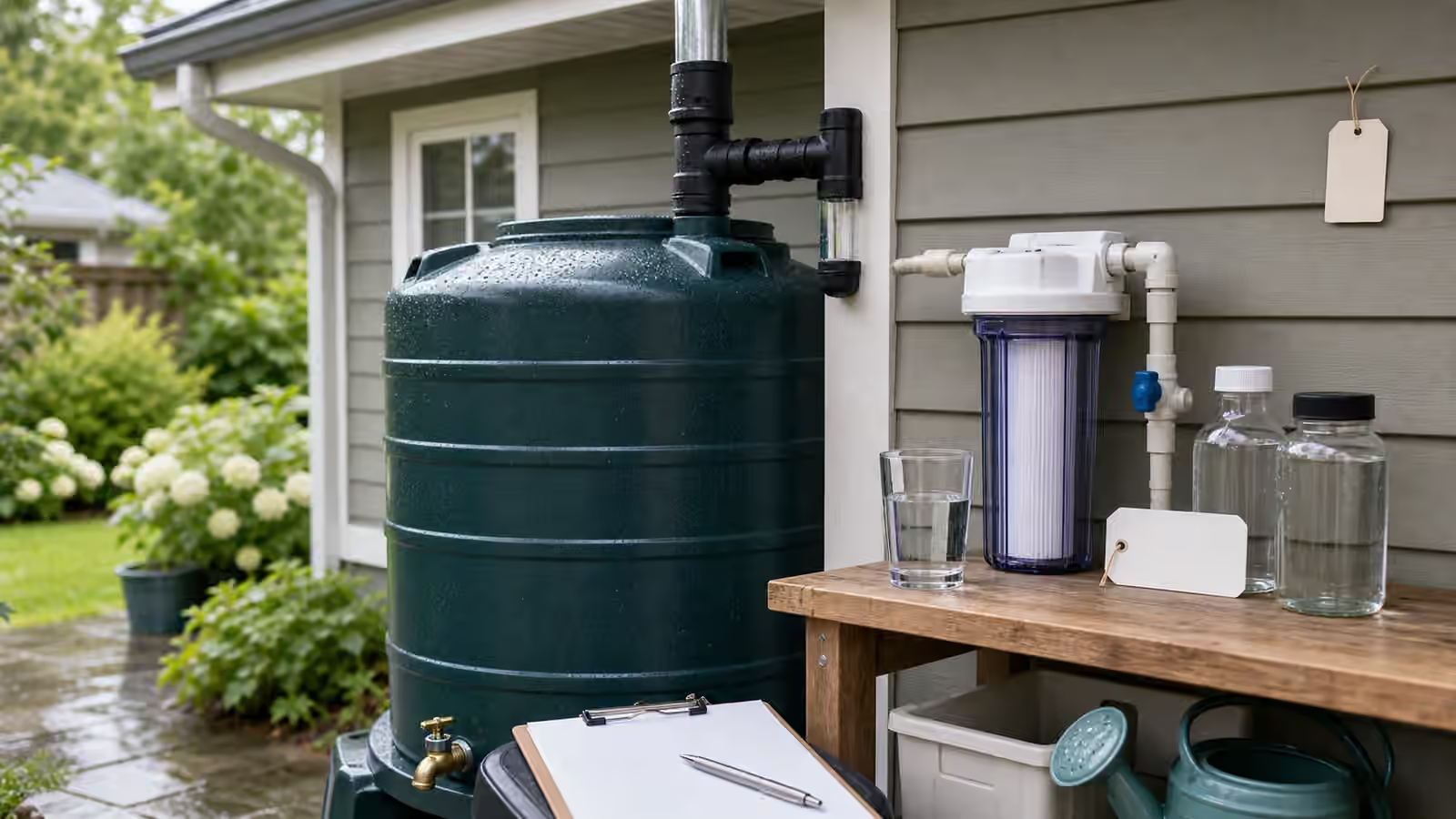
Rainwater and cistern water feel simple because the source is visible. Water falls on a roof, moves through a gutter, enters a tank, and waits for use. The visible route can be reassuring, but it also creates responsibilities that public water users may never think about: collection surfaces, debris, storage, animals, insects, stagnation, plumbing, testing, and treatment. For background, see CDC — Guidelines for Testing Well Water .
Clear Water Lab helps with everyday water decisions, reports, testing, certification checks, and maintenance. It is not medical advice, legal advice, or a substitute for local boil-water notices, certified lab results, utility instructions, or health department guidance.
Collected water starts with the collection surface
Rainwater is not just rain by the time it reaches a tank. It has touched the roof, gutters, downspouts, screens, diverters, storage tank, fittings, and any hoses or pumps downstream. Leaves, dust, pollen, roofing material residue, animal droppings, insects, and windblown debris can all become part of the collection story. A cistern is therefore not a glass falling from the sky. It is a small water system that begins above your head.
That system can be useful for irrigation, cleaning, toilet flushing, emergency non-drinking use, or other household purposes where local rules and practical design allow. Drinking use is a higher bar. It asks for appropriate collection design, protection from contamination, testing, treatment, maintenance, and local guidance. A household should not move from “this water looks clear” to “this water is drinkable” without evidence. The habit from Home Water Testing is especially important because clear appearance is not a microbiological test.
First-flush devices, screens, covered tanks, sealed openings, overflow protection, and sediment control can all reduce obvious problems, but they do not erase the need to understand use. Water for a garden has a different standard than water for cooking. Water for flushing toilets has a different standard than water for infant formula. Water kept as an emergency backup has a different maintenance story than water moving daily through a designed household system. The intended use should be named before treatment is chosen.
Storage changes water
Stored water changes because storage is an environment. Temperature, sunlight, organic matter, tank material, oxygen, insects, rodents, algae, biofilm, and time can all matter. A covered opaque tank behaves differently from an open decorative barrel. A buried cistern behaves differently from a sun-warmed container near a wall. A tank that turns over frequently behaves differently from one that sits through a dry season.
Sediment is one of the easiest changes to see. It may settle at the bottom, clog screens, feed odors, or move downstream when the tank is disturbed. That does not mean every particle is dangerous, but it does mean the system needs inspection and cleaning logic. The guide on Sediment, Rust, and Cloudy Water is useful here because visible material should be treated as a clue, not as a reason to buy the first filter that mentions dirt.
Odor deserves the same patience. A musty tank smell, sulfur-like note, plastic taste, or stale flavor can come from storage conditions, plumbing, hoses, biofilm, source debris, or treatment media. Masking the smell is not treatment. If collected water is used for drinking in a properly designed system, odor changes should send the household back to inspection, testing, and treatment checks. If the water is non-potable, odor may still matter for practical use and maintenance.
Treatment is a chain, not a single gadget
Rainwater and cistern systems often need a chain of controls. The chain may include roof and gutter maintenance, screens, first-flush diversion, sediment filtration, storage protection, pump protection, carbon, UV, disinfection, or other treatment depending on the use and local guidance. The exact chain should come from evidence and design rather than a generic shopping list. A device can be excellent in one chain and irrelevant in another.
UV is a good example. It can be useful for certain microbiological treatment designs when water is clear, flow is correct, power is reliable, and maintenance happens. It does not remove sediment, PFAS, lead, nitrates, arsenic, salt, hardness, or roof debris. The detailed boundary in UV Water Disinfection applies strongly to cistern systems because stored water can look clear while still requiring careful design.
Carbon is another example. It may help with taste, odor, or specific certified chemical claims when the water has been prefiltered and the product is appropriate. It is not a replacement for microbiological control in collected water. Reverse osmosis may be useful for some dissolved contaminants at a drinking tap, but it still depends on pre-treatment, source evidence, and maintenance. A cistern plan that names each stage honestly is much stronger than a plan that calls everything a filter.
Local context matters without making the guide fragile
Rainwater rules, plumbing codes, permitted uses, and treatment expectations vary by place. Some areas encourage non-potable rainwater use. Some limit potable use. Some require particular cross-connection protection, backflow prevention, signage, or inspection. A practical guide can say this without turning into legal advice: check local rules and qualified local guidance before connecting collected water to household plumbing or using it for drinking.
Cross-connection is one of the most important concepts. A rainwater or cistern line should not be able to contaminate a public water line, a well system, or a drinking-water route through careless plumbing. If collected water feeds toilets, irrigation, laundry, or other uses, the separation between potable and non-potable water needs real design. Tape labels and memory are not enough for complex systems. This is one reason professional help can be appropriate even when the tank itself looks simple.
Private wells and cisterns sometimes overlap in rural properties, cabins, and small systems. A household may use a well, hauled water, rainwater, or a storage tank at different times. The source can change seasonally or during drought. The framework in City Water vs Well Water still helps because responsibility shifts as the household moves away from a public system. More direct control often means more testing and maintenance responsibility, not less.
A calm cistern routine
A good rainwater or cistern routine is ordinary and visible. Keep the roof and gutters maintained for the intended use. Keep screens in place. Keep the tank covered and protected from light where appropriate. Inspect for insects, animals, cracks, overflow problems, and sediment. Know what the water is used for and what it is not used for. Test when drinking use, health concerns, flooding, repairs, long stagnation, or local guidance calls for it. Maintain every treatment stage by date, capacity, lamp life, flow, and cleaning need.
Emergency thinking needs its own boundary. Stored rainwater may be useful in some interruptions, but it should not become a private substitute for official instructions during contamination events, flooding, wildfire runoff concerns, or public advisories. Emergency Water Basics keeps that distinction in view: alternate water, boiling, bottled water, flushing, and appliance instructions depend on the actual incident.
Rainwater can be a valuable resource when the system is designed for the use and maintained with respect. It can also become a source of false confidence when clear water in a tank is treated as proof. The better posture is practical humility. Collection is a source decision. Storage is a water-quality condition. Treatment is a chain. Testing and local guidance keep the whole route honest.