A private well bacteria result can look deceptively simple. The report may say total coliform present or absent. It may say E. coli present or absent. It may use a count, a presence-absence format, or method language that seems technical but still leaves the homeowner asking what to do next. The most important habit is to treat the result as real evidence with real boundaries. It is not a taste test, and it is not a permanent verdict on the well. For background, see CDC — Guidelines for Testing Well Water .
Indicator results need context
Total coliform bacteria are often used as indicators. A total coliform finding does not, by itself, identify exactly where a problem entered or what specific organism caused it. It does mean the sample did not meet the expectation for that test and deserves attention through the proper local path. E. coli is treated more seriously because it points toward fecal contamination risk in the sampled water. The details and response should come from the lab report and local health guidance, not from a product page or a casual home remedy.
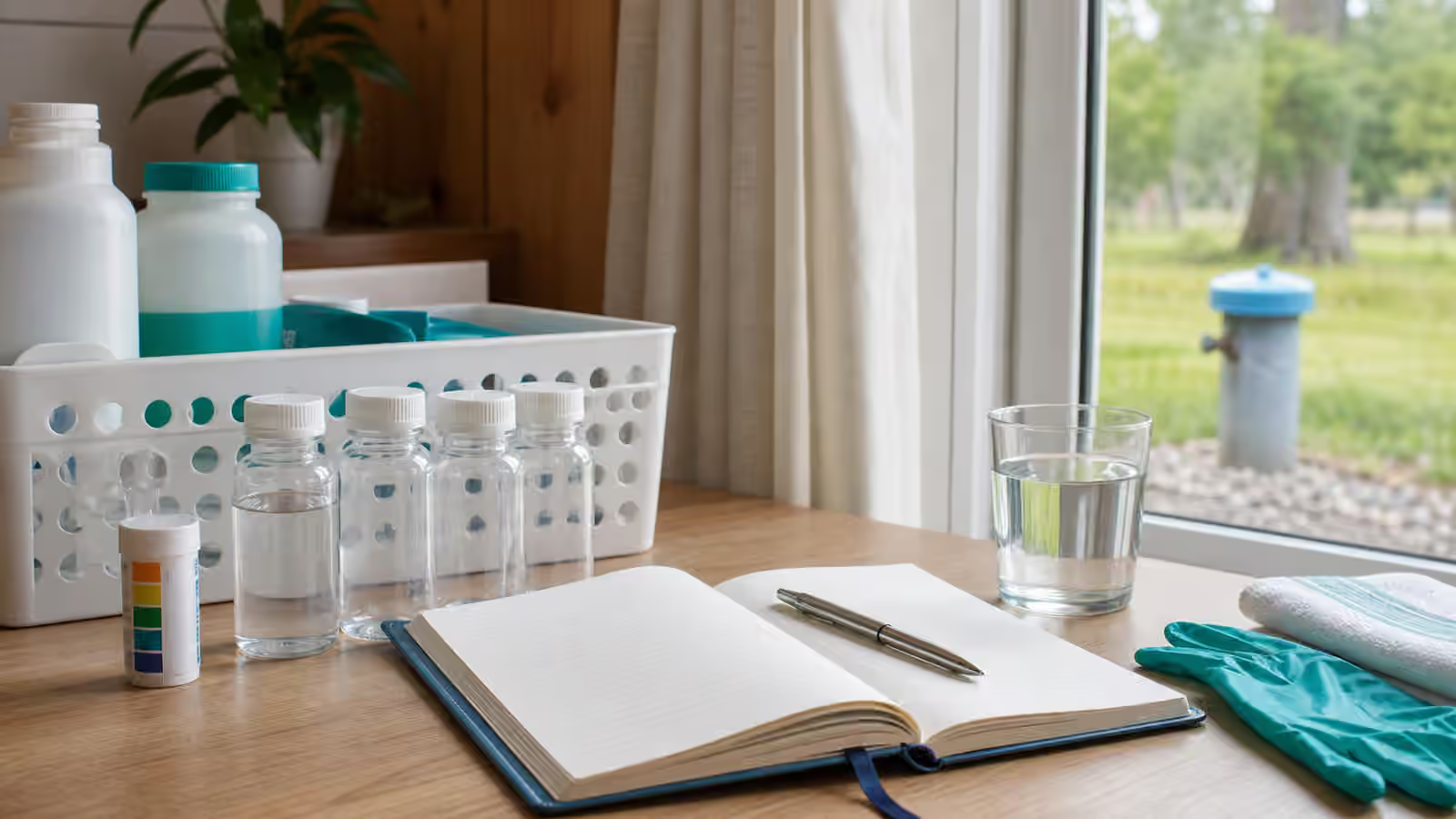
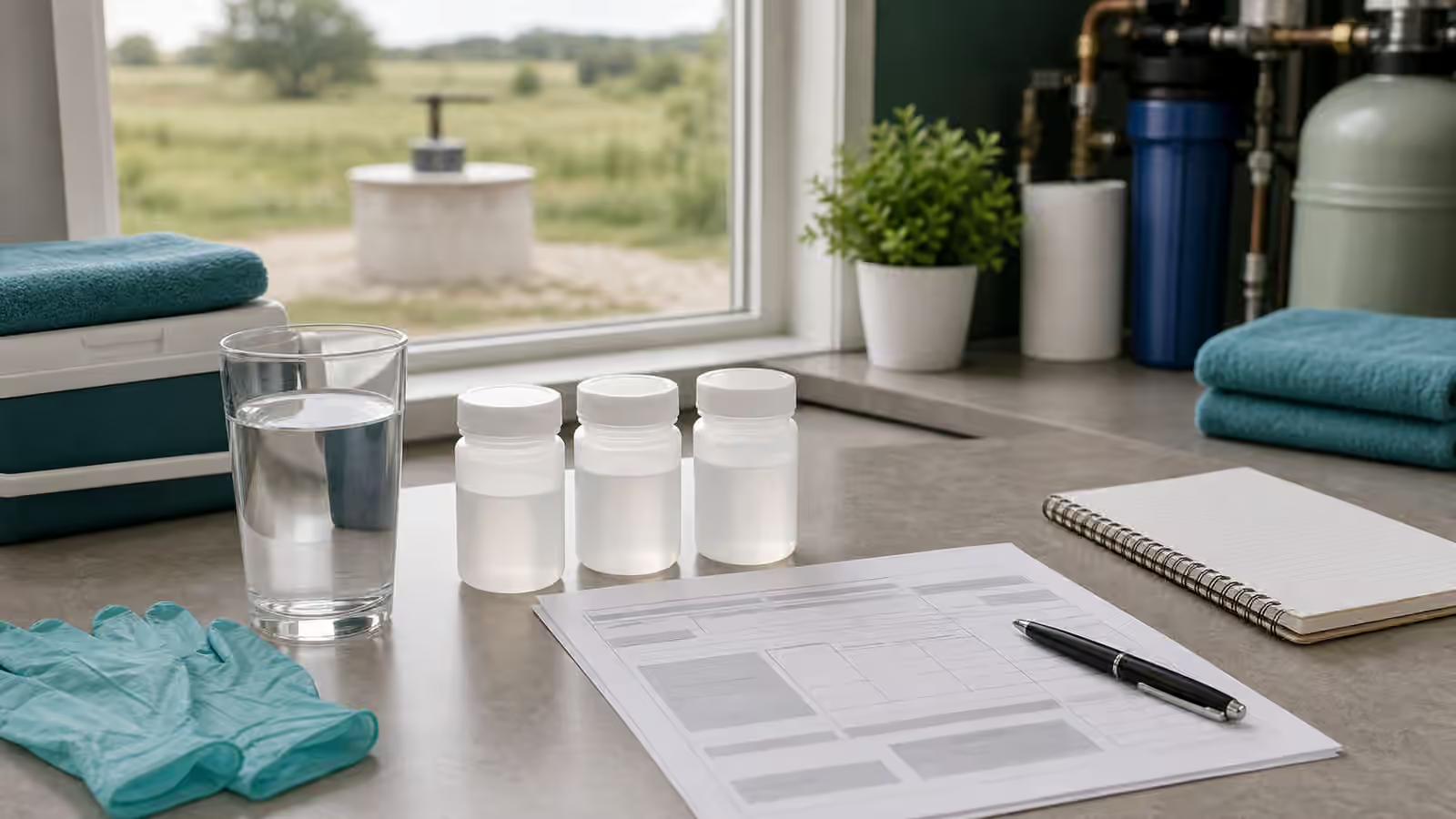
This is why Home Water Testing separates kitchen-counter tools from certified lab methods. Bacteria questions depend on sterile bottles, holding times, sample points, temperature control, and directions that should be followed exactly. A strip, taste, smell, or clear glass is not a bacteria test. Clear water can still produce an unsatisfactory result. Cloudy water can have a different explanation. The method is part of the evidence.
The result also belongs to the sample point. A raw-water sample before treatment says something different from a kitchen tap sample after a softener, carbon filter, pressure tank, UV unit, or storage tank. A sample collected from a dirty swivel faucet, garden hose, or tap with an aerator left in place against instructions can complicate interpretation. How to Collect a Water Sample at Home explains why the bottle and tap handling matter before the lab ever opens the sample.
One result is a moment in a system
A private well is connected to weather, soil, casing condition, cap condition, nearby activity, plumbing, pressure equipment, and treatment. A bacteria result collected after flooding, pump work, long vacancy, well repair, pressure loss, or shock chlorination follow-up should be labeled with that context. A routine annual sample after stable conditions should be labeled too. Without context, the report is still useful, but the next conversation becomes harder.
Well Water Sampling Log is the right place for those notes. Write down the lab, date, sample point, recent rainfall or flooding, well service, treatment status, whether the sample was raw or treated water, and any instructions followed. If a repeat sample is requested by local guidance, record it as a new event rather than overwriting the first result. The sequence matters.
Retesting should be handled as evidence, not as a search for the most comforting number. A second sample collected carefully may help clarify a questionable sample or show what changed after an official response, but it does not erase the first result from the record. If the two results disagree, the difference deserves context: sample point, bottle handling, recent weather, treatment state, well work, and timing. A log that preserves both results is more useful than a folder that keeps only the report everyone liked best.
Absence results need modest interpretation as well. A result that says no total coliform detected in one properly collected sample is reassuring for that sample and method. It does not prove every future day will be the same, and it does not answer nitrate, arsenic, lead, PFAS, hardness, iron, or pesticide questions. Nitrates, Arsenic, and Private Wells covers a different evidence lane. Bacteria testing and chemical testing should not be merged into one vague feeling of safe or unsafe.
Treatment is not the same as source protection
UV disinfection, chlorination systems, filtration, and other treatment equipment can be part of a private well plan when designed, installed, and maintained for the job. They do not erase the need to understand the well and the sampling point. A UV unit depends on clear water, proper flow, lamp age, sleeve condition, power, and upstream treatment when needed. UV Water Disinfection explains why light is a stage in a system, not a magic shield around every possible water problem.
Shock chlorination is another place where records matter. It is often discussed as if it were a single household trick, but well disinfection depends on well construction, plumbing, contact time, flushing, safety, and follow-up testing. Private Well Shock Chlorination keeps that boundary clear. A homeowner record should say when disinfection occurred, who performed it, why it was done, what instructions were followed, and what follow-up samples showed.
Source protection remains part of the story. A damaged cap, poor grading, flooded casing, nearby septic problem, animal activity, or compromised well construction can keep sending the same question back to the lab. Wellhead and Yard Water Protection focuses on those observations. Treatment may manage water at the house, but it should not train the household to ignore what is happening at the well.
Read the report before shopping
A bacteria result can trigger anxiety, and anxiety makes shopping pages look more useful than they are. Resist the jump from report to device. First, read the lab’s result language. Then follow local guidance for use restrictions, repeat sampling, disinfection, well inspection, or professional help. Only after the problem and route are understood should treatment equipment become the center of the decision.
If equipment is already installed, do not assume it was working correctly at the sample time. Check maintenance records, bypass positions, power, lamp age, cartridge condition, and sample location. A treated-water sample collected after a UV unit tells a different story from raw water before the unit. A failure after treatment could be a treatment problem, a sampling problem, or a plumbing problem. That is why the map, log, and lab instructions matter together.
The careful reading is not dramatic. Bacteria testing is a defined method applied to a defined sample. The report should lead to official and local steps, not improvisation. Keep the result, preserve the context, follow the instructions that apply, and let follow-up evidence replace guesswork.
That same discipline helps during real estate, rental, or family transitions. A new owner, tenant, caretaker, or adult child may inherit the well without knowing which sample point was used or what treatment equipment was active. Keeping bacteria results with the well map, service records, and treatment notes prevents the next person from treating an old absence result as a permanent certificate or a past presence result as a mystery with no timeline.