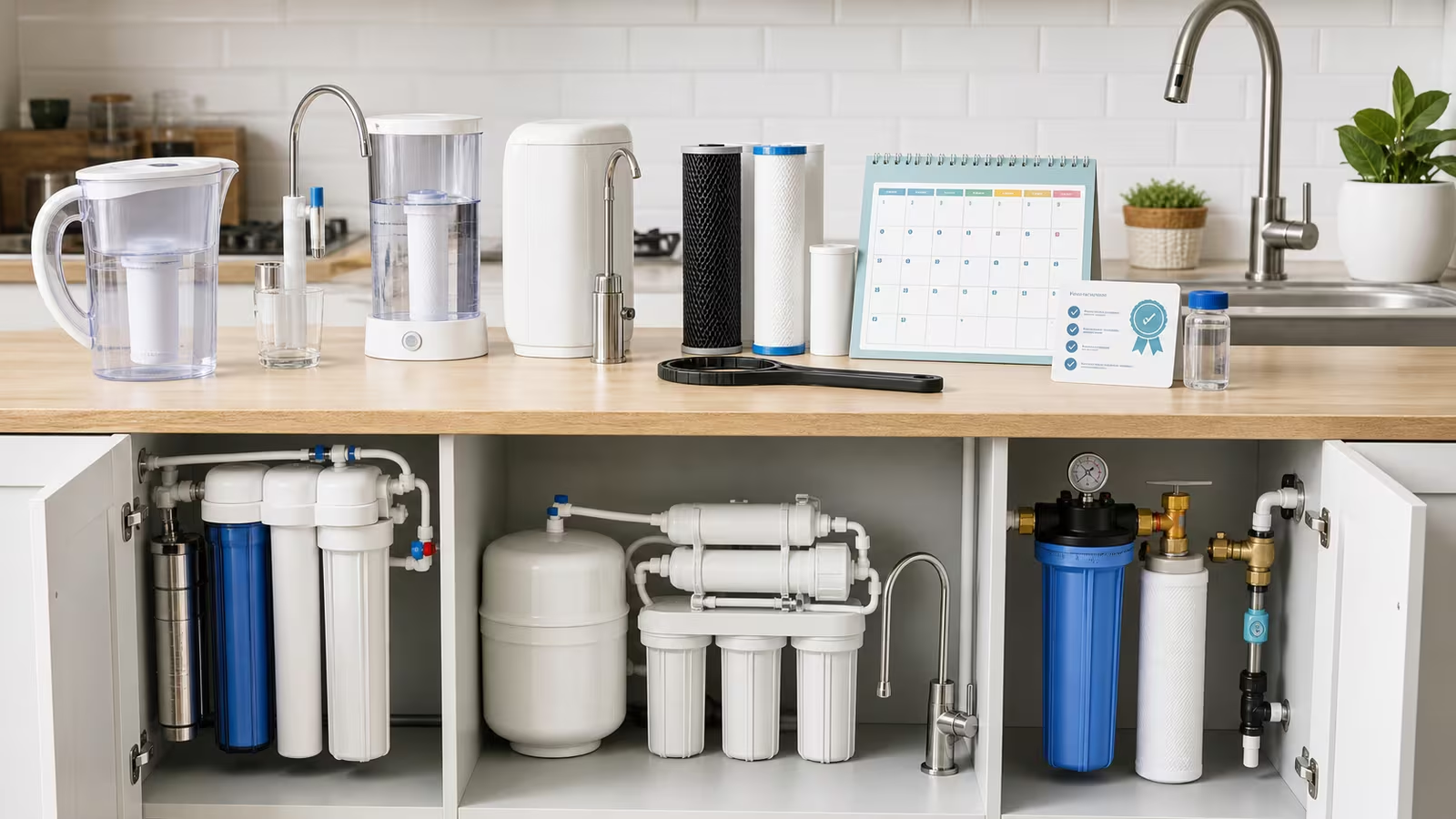
PFAS is not one chemical. It is a class of persistent chemicals, and the useful home question is specific: what does your water report or lab result show, what standard or advisory applies, and which treatment device is certified for the exact reduction claim you need? For background, see EPA — PFAS Explained .
Clear Water Lab helps with everyday water decisions, reports, testing, certification checks, and maintenance. It is not medical advice, legal advice, or a substitute for local boil-water notices, certified lab results, utility instructions, or health department guidance.
Keep the PFAS conversation specific
PFAS is not one single chemical with one simple home answer. It is a large class of persistent chemicals, and public conversation around it often moves faster than household decision-making can follow. That is why the calm path matters. Start with whether your water system reports PFAS data, whether your state or utility has current information, and whether your concern is about drinking water from a specific tap. Then move from the general word “PFAS” to the exact claim a device is certified to reduce.
Boiling is not the answer for PFAS. The useful question is whether a treatment device has a verified reduction claim for the relevant PFAS compounds under a recognized standard and whether the exact model and cartridge are listed by the certifier. Vague phrases like “tested for PFAS” or “helps reduce contaminants” are not as strong as a certification listing you can match to a model number. The model number is the hinge. A brand may sell several cartridges with very different claims.
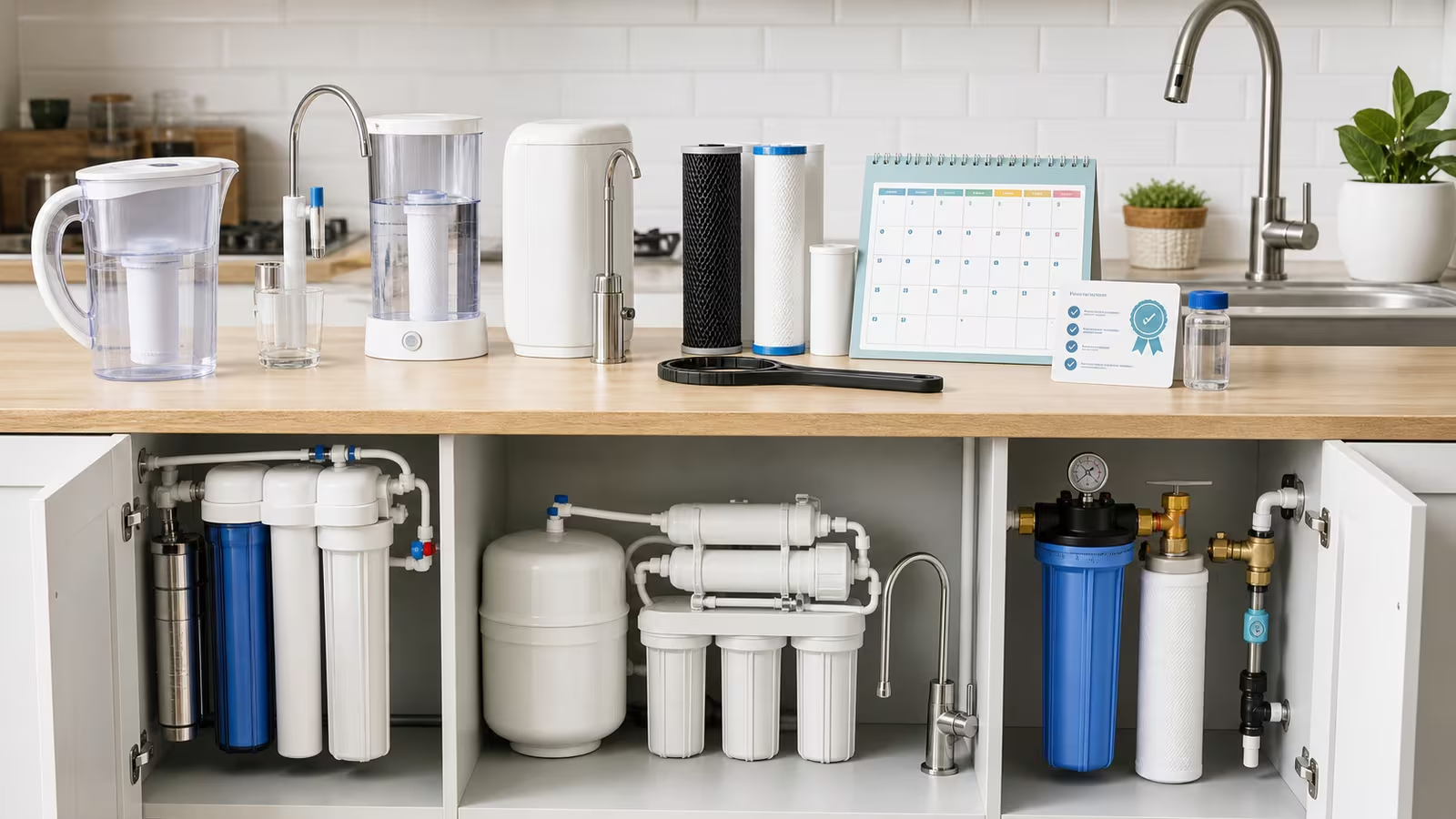
Maintenance is part of the claim, not an afterthought. A device that performs under test conditions depends on flow rate, capacity, installation, cartridge life, and replacement behavior. If a PFAS concern is serious enough to drive a purchase, it is serious enough to write the replacement schedule down before the box is opened. The promise lives in the whole system: verified claim, correct installation, correct cartridge, and disciplined replacement.
What this helps you decide
This helps you decide how to read PFAS labels, when boiling is the wrong tool, and how to check a filter listing without turning the topic into panic shopping.
Plain definitions
| Term | Plain meaning |
|---|---|
| PFAS | A broad class of per- and polyfluoroalkyl substances, including names such as PFOA and PFOS. |
| MCL | An enforceable drinking water limit for a public water system. EPA lists final MCLs for several PFAS and a hazard index for certain mixtures. |
| Certified reduction | A verified product claim for a particular contaminant, model, standard, and capacity, not a general promise that all PFAS disappear. |
Decision criteria
| Question | Useful next move |
|---|---|
| Public-system result | Read the utility report, EPA rule context, and any public notice. Ask the utility how monitoring is being handled. |
| Private well concern | Use a lab and local health department guidance. PFAS test quality matters. |
| Filter label | Look for certified reduction of PFOA, PFOS, total PFAS, or the exact claim relevant to your result. |
| Maintenance | A cartridge past its rated life should not be treated as a current reduction claim. |
Common mistakes
- Boiling water for PFAS. Boiling is not a PFAS treatment plan.
- Reading “tested to” as the same as an active third-party certification listing.
- Assuming one PFAS claim covers every PFAS compound.
- Keeping an old cartridge because the water still tastes fine.
Try this next
- Write down the exact PFAS name or group in your report or lab result.
- Read NSF/ANSI 42 vs 53 vs 58 vs 401 to understand which standards and listings might apply.
- Use How to Verify a Water Filter Claim to match the exact model, cartridge, contaminant claim, and capacity.
- Follow public notices and utility guidance if a public system reports a violation or action requirement.
Safety and source check
PFAS regulation and implementation details can change. Treat EPA and your water utility as the current source of truth for public-system requirements.
Related Fondsites path
- Does Boiling Water Remove PFAS, Lead, Chlorine, or Bacteria?
- Reverse Osmosis for Beginners
- Activated Carbon Filters
- How to Verify a Water Filter Claim
What a careful household can do
A careful household does not need to memorize the entire PFAS regulatory landscape. It needs a sequence. First, identify the source water and look for official local information. Second, decide whether the concern is broad background learning or a specific drinking-water decision. Third, verify treatment claims through a recognized certification listing, not only through marketing copy. Fourth, maintain the system exactly as the claim requires.
If you are on public water, the starting evidence may be a utility report, state PFAS page, public notice, or direct utility contact. If you are on a private well, the path may involve local health guidance and lab testing. Do not assume that a low-cost general test or a taste change can answer a PFAS question. PFAS decisions are better handled with official data, credible testing, and verified treatment claims.
The emotional part of this topic is real. Persistent chemicals can make the home feel less ordinary. A clear method helps keep that feeling from turning into either denial or panic. You are allowed to take the concern seriously without buying the first device with a long contaminant list. You are allowed to wait for better evidence when the label is vague. You are allowed to call a certifier’s database boring and still use it as the most practical tool in the room.
When you compare devices, look for a claim that names the standard, the contaminant or PFAS group covered, the exact model, the cartridge, the rated capacity, and the replacement conditions. If any of those pieces are missing, keep reading before buying. The cleanest PFAS decision is not the most dramatic one. It is the one you can verify today and maintain six months from now.