Private wells are not small city water systems. They are local water systems where the household owns more of the responsibility. Nitrates, arsenic, bacteria, pesticides, septic influence, flooding, and local geology cannot be solved by guessing from taste or buying a general filter.
Clear Water Lab helps with everyday water decisions, reports, testing, certification checks, and maintenance. It is not medical advice, legal advice, or a substitute for local boil-water notices, certified lab results, utility instructions, or health department guidance.
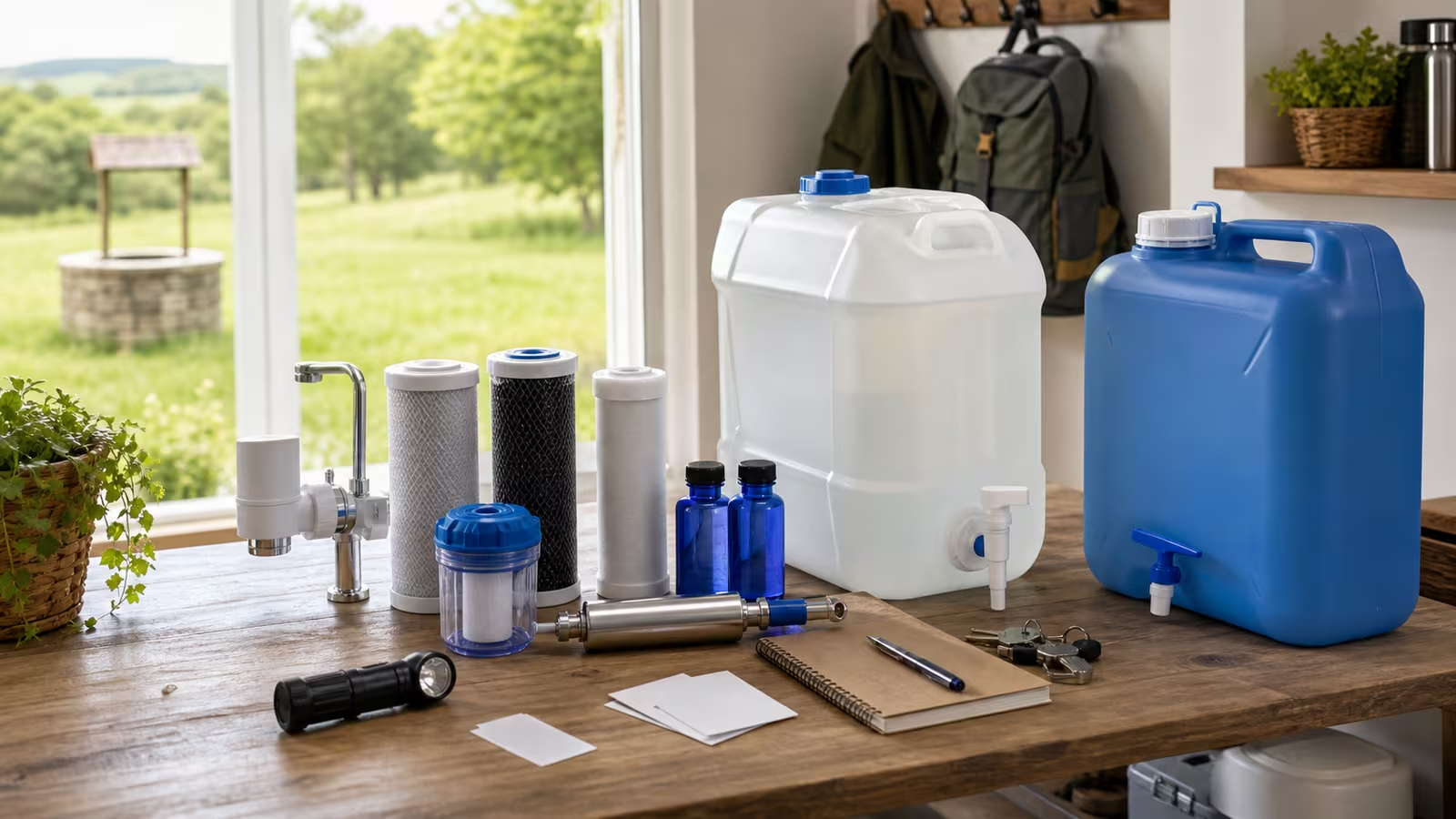
Wells ask for local evidence
A private well can feel wonderfully direct. Water comes from the ground, the system is close by, and the household can see more of the equipment than a city customer usually can. That closeness is useful, but it also means the owner carries more responsibility. The well does not publish an annual report for you. It does not call when local geology changes your risk profile. It does not know that a flood crossed the casing or that nearby land use shifted.
Nitrates and arsenic are good examples because taste is a poor guide. Clear, cold, pleasant water can still deserve testing. A store strip may be useful for orientation in some situations, but it is not a substitute for a certified lab when health-effect contaminants are on the table. The sampling instructions matter too. A poorly collected sample can create false confidence or unnecessary alarm.
Local guidance is the center of the plan. County health departments, state drinking water agencies, extension offices, and certified labs can tell you which tests make sense for the area. Agriculture, septic systems, bedrock, industry, flooding, old wells, and repairs can all change the right panel. A national checklist is a starting point. Your place decides the final list.
What this helps you decide
This helps you decide when to use a certified lab, which baseline tests to ask about, and why some contaminants need treatment designed from results.
Plain definitions
| Term | Plain meaning |
|---|---|
| Nitrate | A contaminant that can come from fertilizer, septic systems, animal waste, and local conditions. |
| Arsenic | A naturally occurring or site-related contaminant in some groundwater areas. |
| Certified lab | A laboratory recognized by a state or relevant authority for drinking water testing methods. |
Decision criteria
| Question | Useful next move |
|---|---|
| Annual baseline | CDC advises well owners to test at least yearly for total coliform bacteria, nitrates, total dissolved solids, and pH, with local additions as needed. |
| After flooding or repairs | Ask local health authorities about testing and disinfection before returning to normal use. |
| Nitrate or arsenic result | Use certified lab results and treatment professional guidance. A simple pitcher is not the plan. |
| New home purchase | Test before relying on seller claims, taste, or old paperwork. |
Common mistakes
- Using only a store strip for arsenic or nitrate decisions.
- Assuming a clear, cold, good-tasting well has no issue.
- Buying carbon for a nitrate or arsenic result without checking certified treatment claims.
- Testing once, then never retesting after seasons, repairs, land-use changes, or floods.
Try this next
- Call the local health or environmental department for region-specific tests.
- Use a state-certified lab and follow sample instructions exactly.
- Keep results, treatment manuals, and maintenance logs in one folder.
- Read Pitcher, Faucet, Countertop, Under-Sink, RO, and Whole-Home Filters only after the lab result gives a treatment target.
Safety and source check
Private well treatment can affect pressure, disinfection, drainage, waste streams, and maintenance. Work with qualified local professionals when results show health-effect contaminants.
Related Fondsites path
- City Water vs Well Water
- Emergency Water Basics
- Reverse Osmosis for Beginners
- How to Verify a Water Filter Claim
Do not treat the filter as the test
The most common well-water mistake is buying treatment before the problem is defined. A carbon filter may improve taste but do little for nitrate. A softener may handle hardness but not arsenic. An RO system may be relevant for some dissolved contaminants when certified and maintained, but it still needs to be chosen from lab results. UV can be useful for certain microbiological applications, but only when water clarity, sizing, power, and lamp maintenance are right. The device follows the result.
Keep well records like a homeowner’s logbook. Include test dates, lab reports, treatment manuals, cartridge or media changes, pump work, repairs, flooding events, and any changes in taste, odor, color, pressure, or nearby land use. Over time, that folder becomes the well’s memory. It helps a professional understand the system quickly and helps you see when a new test is due.
Testing is not only annual routine. Test after flooding, repairs, long vacancy, a new baby in the household, a real estate transaction, a sudden taste or odor change, or local guidance that names a concern. If results show a health-effect contaminant, talk with qualified local professionals about treatment and retesting. The goal is not to collect numbers for decoration. The goal is to make decisions that match the water under that specific property.
Private wells reward attention. They can be reliable, but they should not be managed by taste, pride, or gadget shopping. A good well plan is evidence first, treatment second, maintenance always.