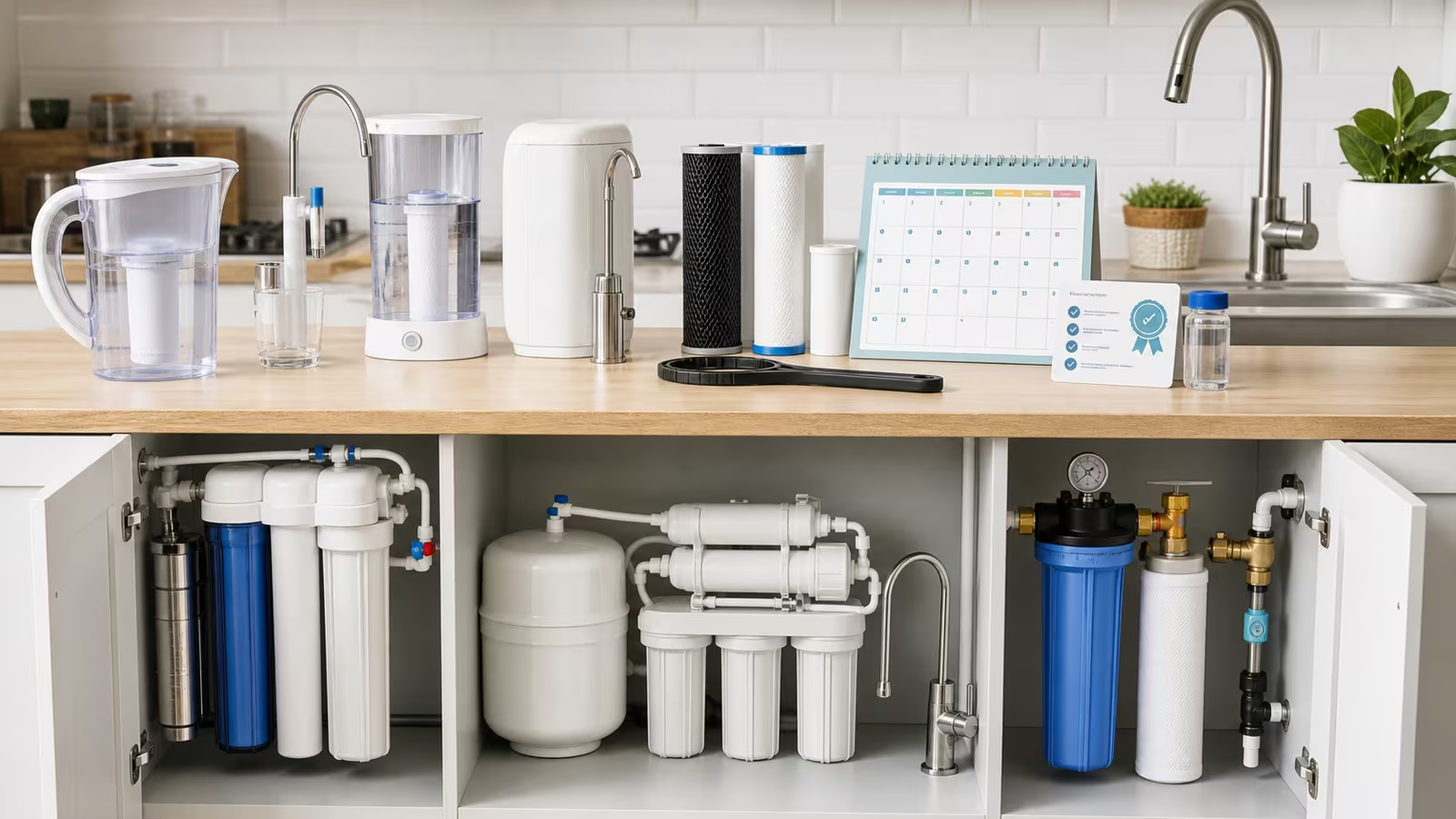
Microplastics are an emerging concern, but a calm home decision still comes down to evidence. Do not buy a filter because a listing uses a broad word like “microplastics” without checking whether the exact model has a certified reduction claim and what the claim covers. For background, see EPA — Home Drinking Water Testing .
Clear Water Lab helps with everyday water decisions, reports, testing, certification checks, and maintenance. It is not medical advice, legal advice, or a substitute for local boil-water notices, certified lab results, utility instructions, or health department guidance.
Do not let one emerging concern take over the whole tap
Microplastics are easy to worry about because the word is vivid and the science is still developing. A calm household decision begins by keeping the topic in proportion. Your water source, public report, private well risks, plumbing materials, filter maintenance, and official guidance still matter. Microplastics can be one question on the page, but they should not erase older, better-defined concerns like lead, nitrates, arsenic, bacteria, PFAS, or boil-water instructions.
The measurement problem is part of the story. Particle size, sampling method, material type, and reporting language can vary. A product label may use the word microplastics in a way that sounds precise but does not tell you what was tested, what standard applies, or what claim is certified. That is why the same verification habit matters here: exact model, exact cartridge, exact standard, exact claim, exact capacity.
A filter that catches particles is not automatically a filter for dissolved chemicals, and a filter that improves taste is not automatically a microplastics device. Some systems may carry relevant claims, but the claim has to be read in context. The household decision should feel patient: first identify the claim, then verify it, then ask whether the maintenance burden is realistic.
What this helps you decide
This helps you decide how to read emerging-contaminant marketing without pretending every home can measure or solve the topic perfectly.
Plain definitions
| Term | Plain meaning |
|---|---|
| Microplastics | Small plastic particles. Definitions and measurement methods can vary by context. |
| Emerging contaminant | A contaminant category that may not be regulated in the same way as older drinking water standards. |
| Certified claim | A claim tied to a standard, product, test scope, and listing, not a vague promise. |
Decision criteria
| Question | Useful next move |
|---|---|
| Product listing | Check whether microplastics are an actual reduction claim, not just a blog keyword. |
| Standard 401 | Use it as a starting point for emerging compound claims, then check the exact claim list. |
| Private well or tank | Do not let microplastics distract from bacteria, nitrates, arsenic, sediment, or maintenance basics. |
| Taste problem | Microplastics are unlikely to be the first explanation for taste or odor complaints. |
Common mistakes
- Buying by fear-based marketing rather than certification.
- Assuming a filter that catches particles handles dissolved chemicals.
- Ignoring cartridge maintenance because the claim sounds advanced.
- Treating one contaminant concern as a substitute for reading the water report.
Try this next
- Search the official listing for the exact model and cartridge.
- Look for the actual microplastics or emerging-contaminant claim.
- Confirm flow rate, capacity, and replacement schedule.
- Use Tap Water Quickstart to keep microplastics in proportion with source water and report basics.
Safety and source check
Clear Water Lab avoids medical claims about personal exposure. Use official public health agencies and current research for health-risk interpretation.
Related Fondsites path
A better way to compare claims
When a product mentions microplastics, slow the page down. Is the word part of a certified listing, a lab test, a marketing article, or a general contaminant list? Does the listing name a standard or protocol? Does it describe particle size or claim scope? Does the cartridge you can actually buy match the tested model? If the answer is hidden or vague, treat the claim as incomplete rather than filling the gap with hope.
Then compare the claim with the rest of your water picture. A renter with ordinary city water and a taste concern may choose a maintained carbon filter for taste and treat microplastics as a secondary claim if verified. A private well owner with no recent bacteria or nitrate testing should not let microplastics distract from baseline lab work. A household choosing RO for a verified contaminant concern should still check the exact model claims and maintenance schedule.
This is not a call to ignore emerging contaminants. It is a call to handle them with the same discipline as everything else. Water decisions get worse when the newest worry becomes the only worry. They get better when each concern earns its place through evidence, official context, and a device claim you can actually verify.
The calm conclusion is practical. If microplastics are part of your filter choice, write down the verified claim and keep the cartridge schedule. If they are not verified, do not let the word carry more weight than it deserves. A good home water setup is built from evidence, not from whichever contaminant name feels loudest this week.
It is also reasonable to reduce avoidable plastic contact without pretending that one habit answers the whole science. Use containers intended for drinking water, replace worn hoses or pitchers, and avoid letting stored water sit in heat when you can. Those are practical housekeeping choices, not proof that a specific exposure question has been solved.