Home water testing is most useful when the test matches the question. A strip, meter, public water report, store mail-in kit, and state-certified laboratory can all be useful, but they do different jobs. The mistake is treating every result as the same kind of evidence.
Clear Water Lab helps with everyday water decisions, reports, testing, certification checks, and maintenance. It is not medical advice, legal advice, or a substitute for local boil-water notices, certified lab results, utility instructions, or health department guidance.
Testing starts with the question
A home water test should begin with a plain sentence, not with a kit. Write the question before choosing the tool. You might be asking why the water tastes like chlorine, whether a refrigerator filter is past its useful life, whether a private well needs a lab panel, whether old plumbing could be adding lead, or whether a new reverse osmosis system is changing taste. Those questions do not belong to one testing method. Each one needs a different level of evidence.
The easiest trap is the all-in-one kit. A colorful package can make testing feel tidy, as if one box can turn every concern into a row of neat answers. Some strips are genuinely handy for quick orientation, especially when you are checking broad traits such as pH, hardness, sanitizer residual, or a change that deserves a closer look. They are not magic. They can be sensitive to storage, timing, lighting, interpretation, and sample handling. A faint color block is not the same as a certified laboratory result, and a reassuring strip is not proof that every health-effect contaminant has been addressed.
Public water customers have one advantage before they touch a sample bottle: the utility report. How to Read Your Water Quality Report explains why the report is a starting map, not a final answer for every faucet. It can show what the public system detected and whether it reported violations, but it may not answer a building-plumbing question. If the concern is lead from a service line, brass fixture, or old interior pipe, the useful test is closer to the tap. If the concern is a broad system contaminant, the report may already contain the best first clue.
Private well households start from a different place. There is no annual utility report written for the well, and taste is a weak safety tool. The guide to nitrates, arsenic, and private wells goes deeper on that responsibility, but the testing principle is simple: local geology, nearby land use, septic systems, flooding, and repairs shape the test plan. A quick strip can help you notice some conditions. A certified lab is the better route when bacteria, nitrate, arsenic, lead, or other health-effect questions are on the table.
What strips and meters can do well
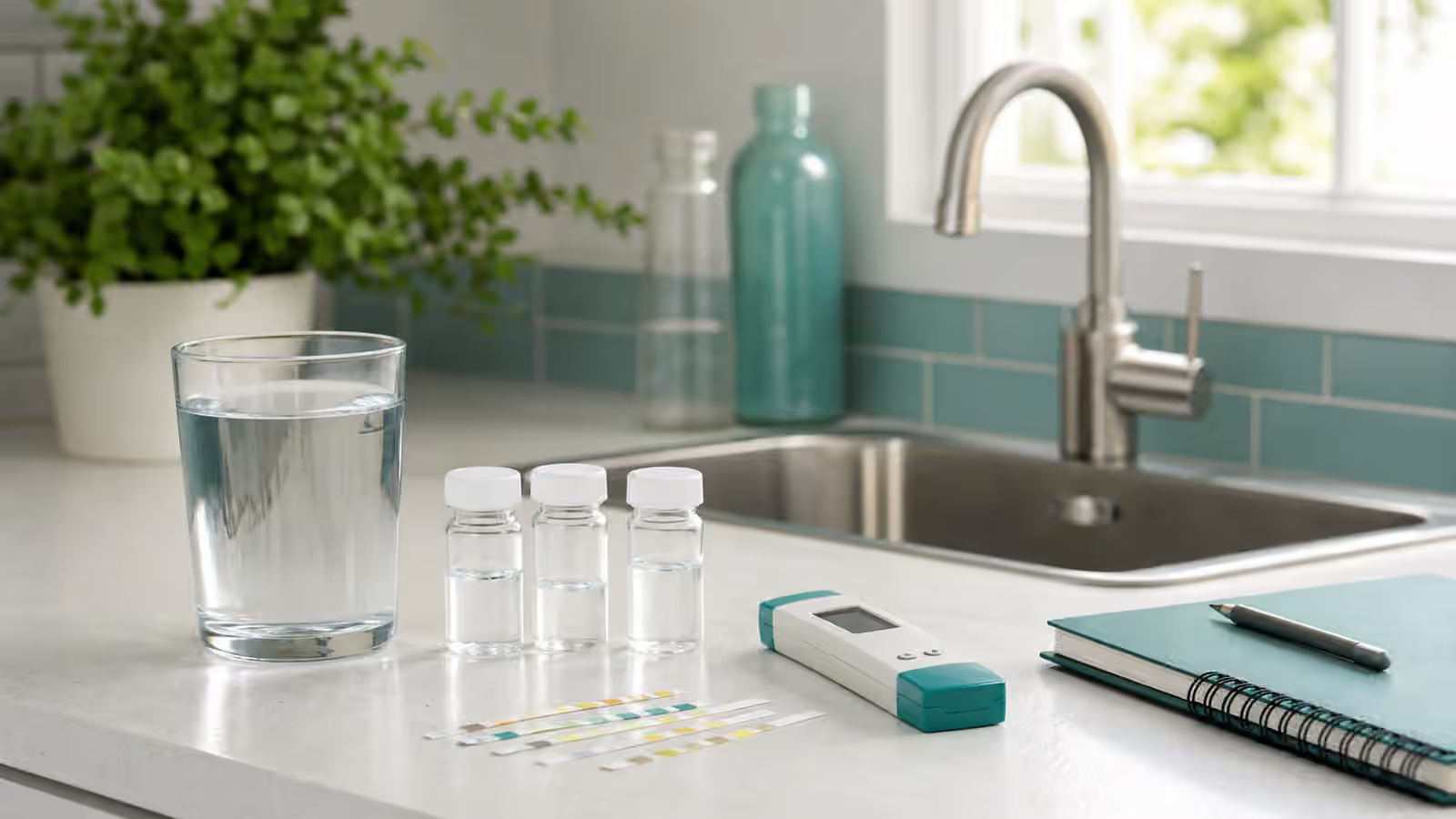
Test strips are useful when you treat them as screening tools. They can help a homeowner compare two taps, check whether a softener seems to be changing hardness, notice a large pH shift, or see whether a carbon filter is no longer improving chlorine taste in a way that matches daily experience. The best use is modest and repeatable. Use fresh strips, follow the timing exactly, read them in good light, and write down the date, tap, and result. When the result is surprising, repeat once with care before building a story around it.
Handheld meters have their own narrow strengths. A total dissolved solids meter can show a broad change in dissolved ions, which is why people often use it around reverse osmosis systems. It does not identify which substances are present. A lower number after an RO membrane can indicate that the system is reducing dissolved solids, but it does not prove the system is reducing lead, PFAS, nitrate, arsenic, bacteria, or any other named contaminant. A pH meter can be useful only if it is calibrated and maintained. A meter that has lived loose in a drawer is not more trustworthy because it looks technical.
These tools are strongest when the stakes are low and the question is mechanical. Is the softener behaving differently after service? Did the RO system change after a cartridge replacement? Is one tap obviously different from another in a way that deserves a better test? Those are reasonable home-lab questions. The result should guide attention, not replace evidence. If the question carries health consequences or depends on a regulated method, move away from the kitchen counter and toward official guidance or a certified lab.
Certified labs answer narrower questions with better rules
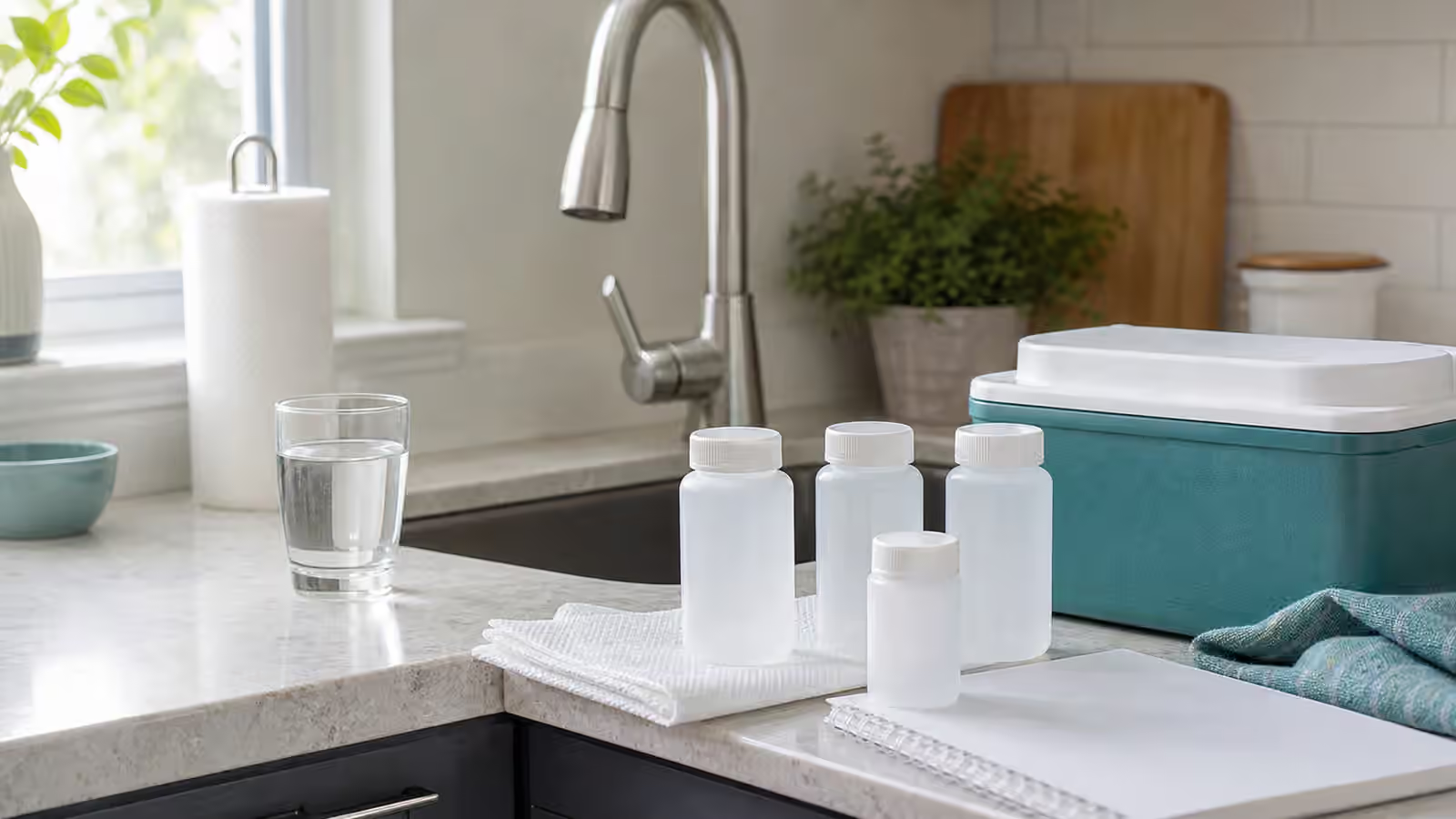
A certified lab is not simply a more expensive version of a strip. It is a testing path with defined methods, sample containers, holding times, preservation rules, chain-of-custody habits in some cases, and reporting units that can be compared with standards or guidance. That discipline matters because drinking water results can be distorted by ordinary mistakes. The wrong bottle, a sample that sits too long, a flushed tap when the instructions required first-draw water, or a bottle touched inside the cap can turn a serious question into a muddy result.
Lead testing shows why the instructions matter. The result can depend on which tap is sampled, how long the water sat in the plumbing, whether the aerator was disturbed, and whether the household followed the lab or utility directions exactly. A test for bacteria has different handling concerns. A test for nitrate or arsenic follows a different method again. The common thread is that the sampling protocol is part of the test, not a fussy extra step.
Certified lab results still need interpretation. A lab can tell you what was found in the sample and how it was measured. It does not automatically tell you which filter to buy, whether a whole-home system makes sense, or whether a single point-of-use device is enough. After a result arrives, the next question is treatment fit. That is where filter certifications and claim verification become useful. Match the contaminant, model number, standard, cartridge, capacity, and maintenance requirements before trusting a product claim.
The sample location is part of the answer
Testing one faucet does not always answer a whole-house question. A kitchen drinking tap, bathroom sink, hose bib, refrigerator dispenser, post-filter faucet, and storage tank outlet can each tell a different story. If you are trying to understand a filter, sample before and after the device only if the lab or test plan supports that comparison. If you are trying to understand building plumbing, choose the tap and stagnation conditions that match the concern. If you are trying to understand a private well, ask the lab or local authority where to sample and whether treatment equipment should be bypassed for the question at hand.
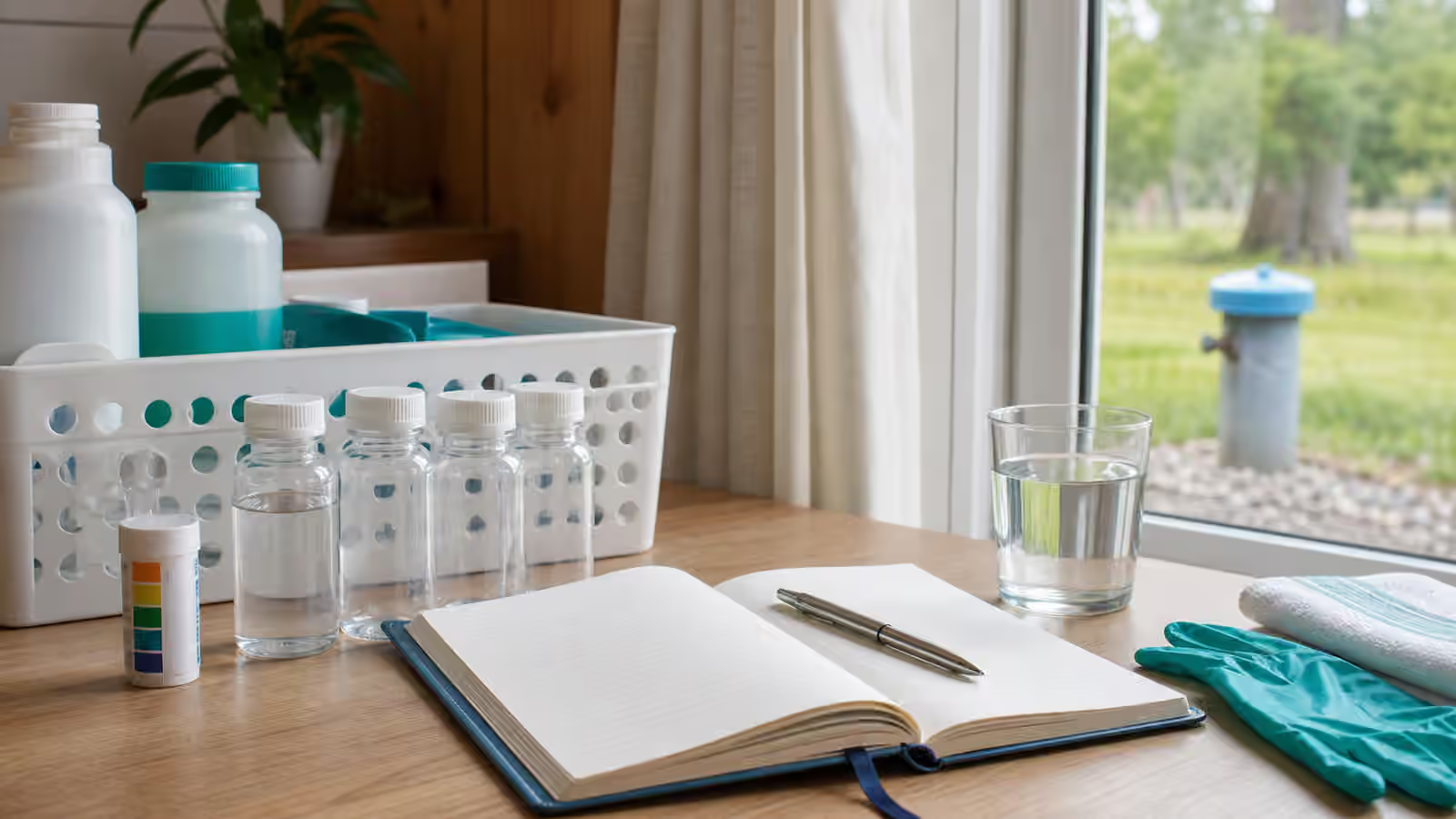
Timing also matters. Morning first-draw water can reveal different plumbing behavior than water after several minutes of flushing. A sample after a storm, flood, repair, long vacancy, or filter change may not represent ordinary conditions. That does not make it useless. It means the result should be labeled honestly. A notebook entry with the date, tap, recent plumbing work, filter status, weather event, and sample instructions can prevent a result from floating free of its context.
For taste and odor complaints, testing should sit beside observation. The taste and odor troubleshooter separates chlorine, sulfur, metallic, earthy, plastic, and stale notes because each clue points somewhere different. A carbon filter might improve chlorine taste when it has a verified aesthetic claim and is replaced on schedule. It will not turn a vague concern into a defined contaminant. If a sudden odor change appears across the home, or if official notices mention a concern, testing should follow the seriousness of the situation rather than the convenience of the kit in the drawer.
Do not use testing to avoid maintenance
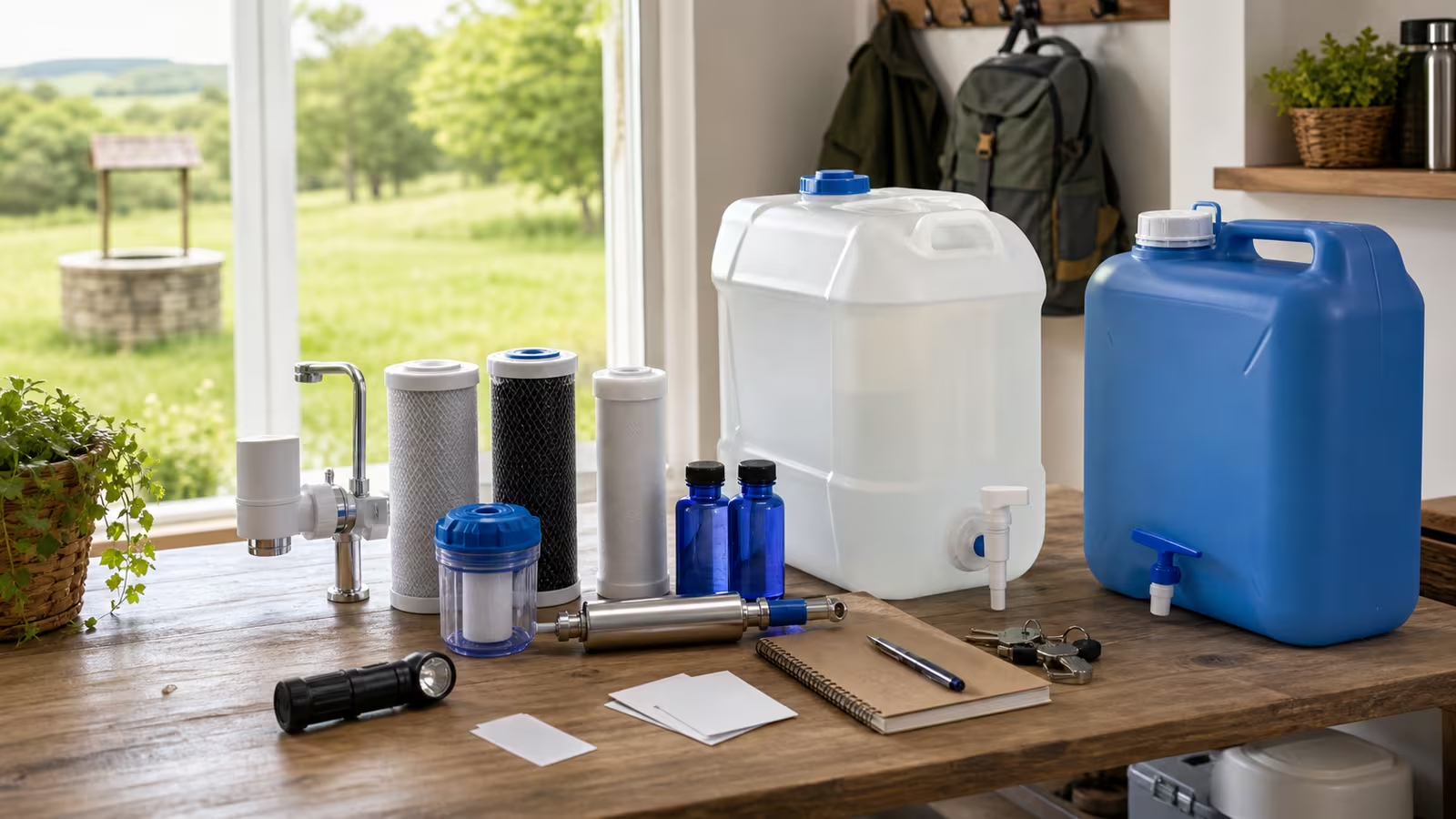
Some households test because a filter has become mysterious. That is understandable, but maintenance records often answer more than a quick strip. A cartridge with an unknown installation date, an RO system with a forgotten membrane, a refrigerator filter replaced only when flow slows, or a whole-home sediment cartridge left until pressure drops is already giving you useful information. Filter replacement schedules explains why capacity and calendar discipline are part of the treatment claim.
Testing can confirm a suspicion, but it should not become an excuse to stretch a filter beyond its rated life. A device is evaluated under conditions that include flow, capacity, installation, and replacement. Once those conditions are ignored, a single home result cannot restore the original claim. If the filter matters for a health-effect contaminant, follow the certified capacity and replacement instructions. If the filter is mainly for taste, keep the same discipline anyway. It is easier to maintain a simple system than to decode a neglected one.
The practical habit is a small water folder. Keep utility reports, lab results, product manuals, cartridge model numbers, installation dates, replacement dates, and any official notices in one place. Add test strip notes only when they include method and context. Over time, the folder will show whether you are seeing a pattern or a one-day anomaly. It also makes conversations with utilities, labs, landlords, plumbers, or treatment professionals more precise.
When a home test should become an official step
Escalation is not a sign that the first test failed. It is how testing is supposed to work. If a strip shows a surprising result twice, if water changes suddenly, if a private well has never had a baseline lab test, if a public notice is active, if plumbing work disturbed old lines, if flooding reached a well, or if a household concern involves infants, pregnancy, immune vulnerability, or clinician guidance, the next move should come from official instructions, local health authorities, the utility, or a certified laboratory.
This is the calm way to use home testing. Let simple tools answer simple questions. Let official reports answer system questions. Let certified labs answer questions that need defined methods. Let certified treatment claims answer filter questions after the contaminant is known. Good testing does not make water decisions dramatic. It makes them specific enough to act on.
Useful official starting points include EPA’s home drinking water testing resources , EPA’s certified drinking water laboratory contacts , EPA lead testing guidance , and CDC guidance for private well testing . Those sources are not a substitute for local instructions, but they are better anchors than a product label when the question is about what kind of evidence you need.