A home water system map does not need to be beautiful. It needs to be useful when a filter leaks, a sample bottle arrives, a utility notice mentions flushing, a plumber asks where the main shutoff is, or a new cartridge has to be changed by someone who did not install it. Most households carry the water route in memory until something goes wrong. A simple map moves that knowledge out of one person’s head and into a record the house can use. For background, see EPA — Home Drinking Water Testing .
Clear Water Lab helps with everyday water decisions, reports, testing, certification checks, and maintenance. It is not medical advice, legal advice, or a substitute for local boil-water notices, certified lab results, utility instructions, or health department guidance.
Start with the route, not the equipment
The first version of the map should answer one plain question: where does water enter, and where does it go before someone drinks it? For public water, that may begin at a meter, service line, basement wall, garage wall, or utility closet. For a private well, it may begin where the well line enters the building, then move to the pressure tank, treatment equipment, and distribution branches. For an apartment, the route may be partly hidden, but the map can still identify the unit shutoff, kitchen tap, bathroom taps, refrigerator line, and any point-of-use filters.
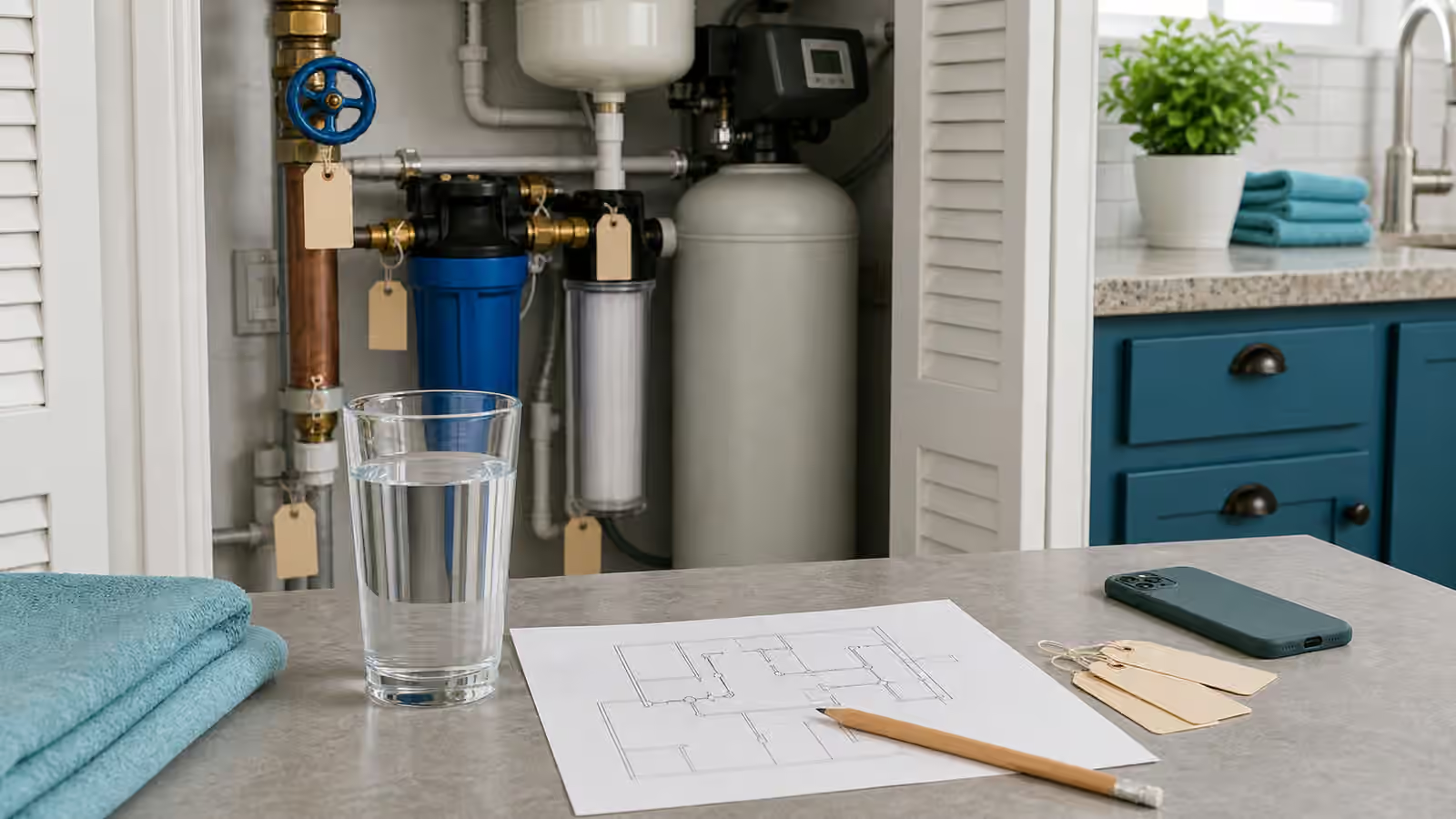
New Home Water Walkthrough encourages this habit at move-in, but the map is useful in any home. Draw a rough plan with arrows. Mark the main shutoff, branch shutoffs, water heater, softener, sediment filter, carbon filter, UV unit, reverse osmosis system, refrigerator line, outdoor hose bibs, and any dedicated drinking tap. If the home has treatment equipment, write the order. If the order is uncertain, write that too. Uncertainty recorded honestly is better than a confident diagram made from guessing.
The map should distinguish whole-home treatment from point-of-use treatment. A whole-home sediment filter near the entry point changes water before it reaches many fixtures. A kitchen under-sink carbon block changes one drinking tap. A refrigerator cartridge changes only the dispenser and ice maker route. Whole-Home vs Point-of-Use Water Treatment explains why the location of the fix matters. The map makes that lesson physical.
Sample points belong on the drawing
Testing gets clearer when sample points are named. A kitchen faucet sample after an under-sink filter is not the same as raw well water before treatment. A bathroom tap after a softener is not the same as an outside hose bib that branches before treatment. A refrigerator dispenser is not the same as the cold tap feeding the appliance. A first-draw lead sample is not the same as a flushed system sample. The map should show which tap is being tested and what water has passed through before it gets there.
Home Water Testing and How to Collect a Water Sample at Home both rely on this discipline. The lab instructions decide the method, but the map helps the household follow the method without accidentally sampling the wrong route. If a lab wants raw well water and the only convenient tap is after a softener and carbon filter, that is not a small detail. It changes what the result can mean.
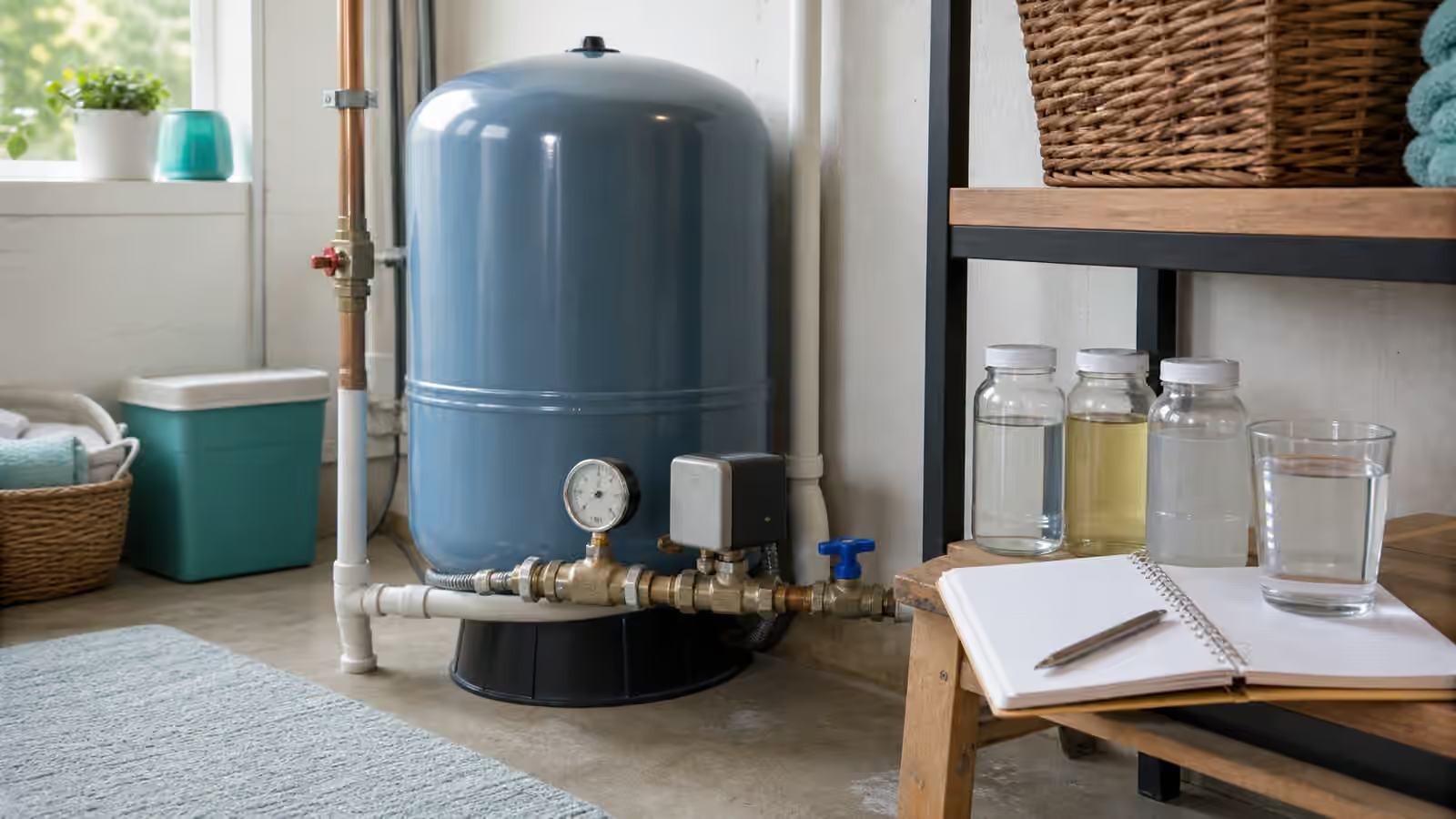
Private well homes often benefit most from sample point labels. A well route can include a pressure tank, sediment filter, neutralizer, softener, carbon stage, UV unit, and drinking-water RO system. If those stages are not labeled, a future bacteria result, iron clue, pH reading, or pressure complaint becomes harder to interpret. Well Pumps and Pressure Tanks covers the equipment side. The map gives the equipment a memory.
Shutoffs and bypasses are part of water quality
Shutoffs can feel like plumbing details until a leak or cartridge change turns them into water-quality details. A filter that cannot be isolated may be neglected. A bypass left open may send untreated water to a tap that looks filtered. A stuck valve may prevent safe maintenance. A missing label may leave a housemate guessing during a drip. Mark shutoffs, bypass valves, and drain points on the map, then put small blank tags on the equipment if the setup allows it.
Bypasses deserve special care. A softener bypass, UV bypass, filter bypass, or refrigerator bypass may be useful during service, but it changes the route. If the household relies on a treatment stage for a specific reason, a bypass is not just a handle. It is a state that should be recorded. A quick note beside the map can say when a bypass was used, why, and when normal flow was restored.
This is one reason Water Treatment Stage Order belongs beside the map. Treatment order is not an abstract diagram once the equipment is in a real basement or cabinet. Each stage has valves, pressure, service clearance, cartridges, lamps, tanks, tubing, and possible bypass states. The map connects the theory to the house.
Keep photos with the sketch
A phone photo can be more useful than a careful drawing when the pressure is on. Photograph the main shutoff, meter, filter housings, cartridge labels, RO tank, UV lamp chamber, softener controls, water heater, and any unusual branch. The photos do not need to become a polished album. They need to be findable. Store them with the map and label them in plain language if possible.
The record should also include dates. Installation dates, cartridge changes, UV lamp changes, service visits, lab samples, pressure complaints, odor complaints, and plumbing work all become easier to interpret when they sit beside the route. Filter Replacement Schedules covers the maintenance side, but the map shows where each maintenance task happens.
Renters and condo owners can still make a smaller version of the map. The building riser, booster pump, roof tank, or shared treatment equipment may be outside the unit, but the unit shutoff, refrigerator line, drinking filter, bathroom fixtures, and maintenance responsibilities are still worth recording. That smaller map also makes landlord or building conversations more precise. Instead of saying the water is strange everywhere, you can say which tap, which temperature, which time of day, and whether a point-of-use filter sits in the route. Multi-Unit Building Water Clues is useful when the water route disappears into shared infrastructure.
Update the map after changes. A new under-sink filter, refrigerator line, softener bypass, outdoor hose branch, replacement water heater, or removed cartridge can make an old drawing misleading. The point is not perfection. The point is to reduce avoidable confusion. When the water route is visible, decisions become less dramatic. You can see which tap is treated, which stage needs service, which valve matters, and which question belongs to a report, a lab, a plumber, a landlord, a utility, or a certified product claim.