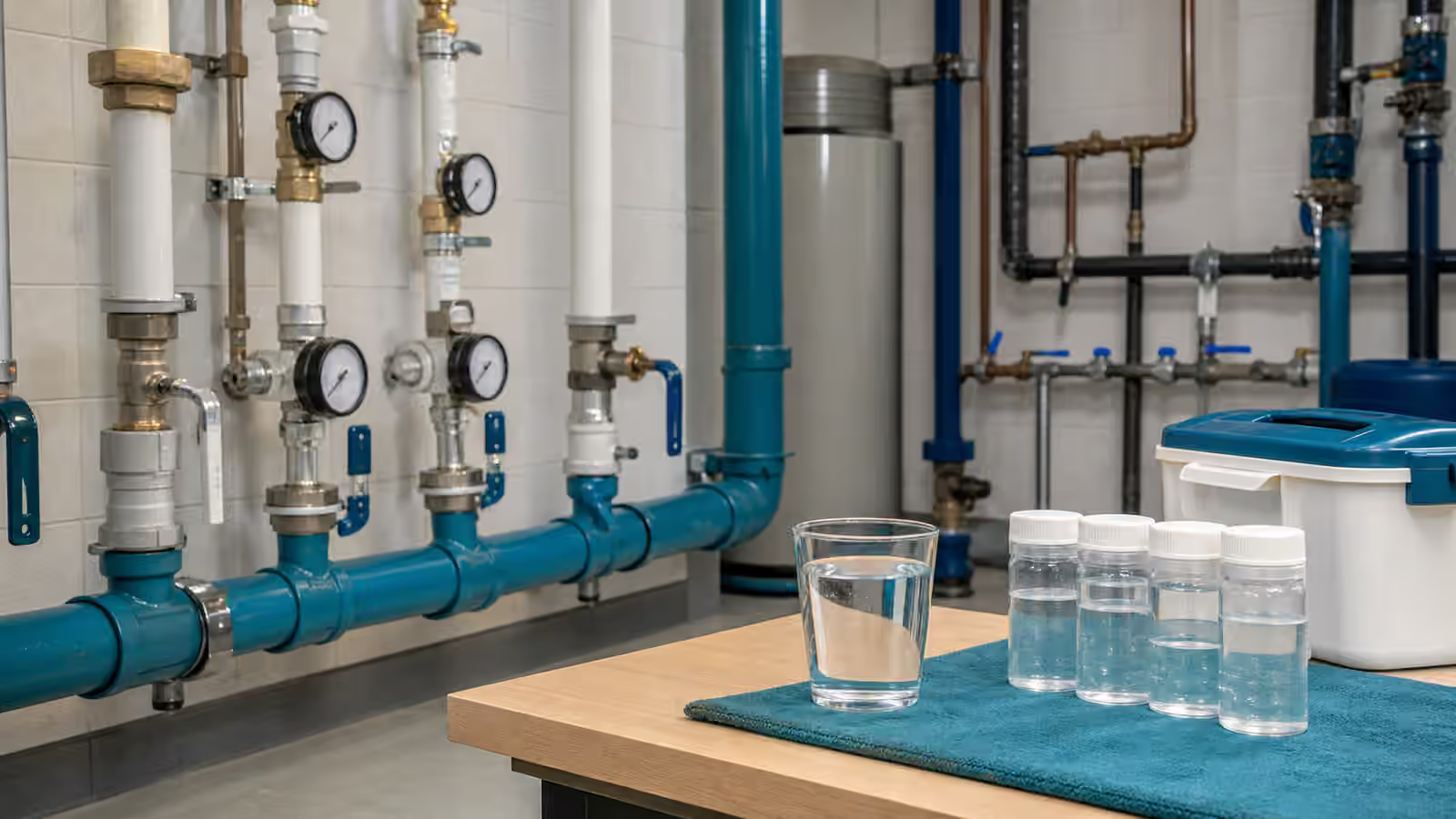
Galvanized plumbing is one of those house details that can hide in plain sight. The pipe may be behind walls, under a basement ceiling, or connected to newer plumbing in short leftover sections. The water may look normal most days. Then a faucet sputters with brownish water, a shower loses flow, an aerator fills with grit, or a plumber points to an old threaded pipe and says the water route is not as modern as the remodeled kitchen suggests. For background, see EPA — Basic Information about Lead in Drinking Water .
Clear Water Lab helps with everyday water decisions, reports, testing, certification checks, and maintenance. It is not medical advice, legal advice, or a substitute for local boil-water notices, certified lab results, utility instructions, or health department guidance.
Old pipe clues are pattern clues
Galvanized steel pipe was commonly used in older buildings. Over time, interior corrosion and mineral buildup can narrow the pipe, roughen the inside surface, and release rust-colored particles or flakes. That does not mean every brown glass of water is caused by galvanized pipe. Public main work, hydrant flushing, a water heater, old service lines, iron in well water, fixture debris, or disturbed sediment can all produce similar clues. The pipe material is one part of the pattern.
Start with location and timing. If only one fixture has poor flow or rust flecks, the local branch, faucet, or aerator may be the first place to inspect. If several cold taps behave the same way, the issue may sit upstream of one fixture. If hot water is the main path for discoloration, the water heater route deserves attention through Hot Tap Water and Water Heaters . If a city utility is flushing mains or has issued instructions after pressure loss, household guessing should step aside for official guidance.
Sediment, Rust, and Cloudy Water is the useful first companion because color is not diagnosis. A rusty burst that clears quickly after one unused tap behaves differently from rusty water that continues across the house. Grit that sits in an aerator behaves differently from dissolved metals that require a lab method. A pattern that begins after plumbing work behaves differently from a long-standing low-flow complaint.
Recent work can make old pipe clues louder for a while. A valve replacement, meter change, water heater service, faucet swap, shutoff event, or pressure change can disturb material that had been sitting quietly inside the route. That does not make every post-work glass dangerous, and it does not make every discoloration normal. It means the timing belongs in the notes. After Plumbing Work gives a calmer path for comparing taps, cleaning aerators when appropriate, and knowing when official or professional instructions should replace household interpretation.
Flow loss can be a plumbing clue
Galvanized pipe often enters the conversation through flow, not color. A bathroom sink may take a long time to fill a glass. A shower may feel weak even after the head is cleaned. A filter may seem to clog quickly because pipe scale upstream keeps shedding. A pressure gauge may look acceptable while one branch remains starved. Flow complaints can tempt a household into buying bigger filters, but filters cannot widen an old pipe.
Water Pressure and Flow separates pressure from flow restriction. That distinction matters in older plumbing. A sediment cartridge can create restriction when it loads with particles. A clogged aerator can create restriction at one tap. A narrowed galvanized branch can create restriction before the water ever reaches a filter or fixture. Replacing cartridges may help if they are catching real debris, but repeated fast clogging should raise a route question, not just a cartridge question.
The aerator is a small evidence trap. It may collect rust flakes, pipe scale, rubber fragments, carbon fines, or grit from recent work. Faucet Aerators and Fixtures explains why that little screen can make one faucet seem worse than the home. If the aerator repeatedly catches reddish-brown particles and the branch has old galvanized pipe, the clue is worth documenting before deciding on treatment.
Lead questions deserve separate evidence
Galvanized plumbing can be part of a lead conversation, but it should not be handled with shortcuts. Some older galvanized pipes, fittings, or service-line sections may be connected to lead-bearing plumbing history, and corrosion scales can complicate what reaches the tap. That does not mean a homeowner can identify lead risk by color, taste, or pipe appearance alone. Lead is a testing and records question.
The guide to Lead in Drinking Water is the better path when old plumbing raises concern. Service-line records, fixture age, solder history, first-draw sampling, certified lab instructions, and certified filter claims matter more than visual reassurance. A rusty color does not prove lead. Clear water does not rule it out. A galvanized-looking pipe does not answer the whole route question by itself.
This is also where pH and corrosion context matter. Tap Water pH explains why pH belongs beside alkalinity, hardness, dissolved minerals, stagnation, temperature, and plumbing materials. In an older system, the condition of the water and the condition of the pipes influence each other. A single strip reading or one photo of pipe material should not become the whole story.
Filters can polish symptoms without fixing the route
Sediment filtration can be useful in an older-plumbing home, especially when visible particles are recurring. It may protect fixtures and downstream devices. It may reduce what reaches a drinking tap. It may make maintenance less annoying. But a filter does not replace failing pipe, correct a hidden service-line issue, or answer a lead question. If the source of particles is deteriorating plumbing, the filter is managing a symptom while the route remains the route.
This is not an argument against filters. It is an argument for naming their job. A point-of-use certified filter may be appropriate for a defined drinking-water claim. A sediment prefilter may protect equipment. A carbon filter may improve taste when properly certified and maintained. A whole-home filter may collect particles before they reach fixtures. Each of those choices should be made with the actual water route in mind, not as a substitute for understanding old pipe.
Good records make the conversation easier. Photograph visible pipe transitions, write down which fixtures show discoloration or poor flow, note recent utility or plumbing work, keep lab results, and record filter change intervals. If work is planned, ask where the old material remains after the repair. Older homes often contain mixed eras of pipe. A careful map and a calm testing plan prevent one shiny new fixture from hiding the rest of the water path.
The most useful repair conversation is specific. Instead of asking whether the water is bad, ask which branches are old, which pipes remain galvanized, whether any service-line material is uncertain, where samples should be collected, and what temporary flushing or aerator cleaning is recommended after work. Those questions do not require panic. They require treating old plumbing as part of the water system rather than as background scenery.