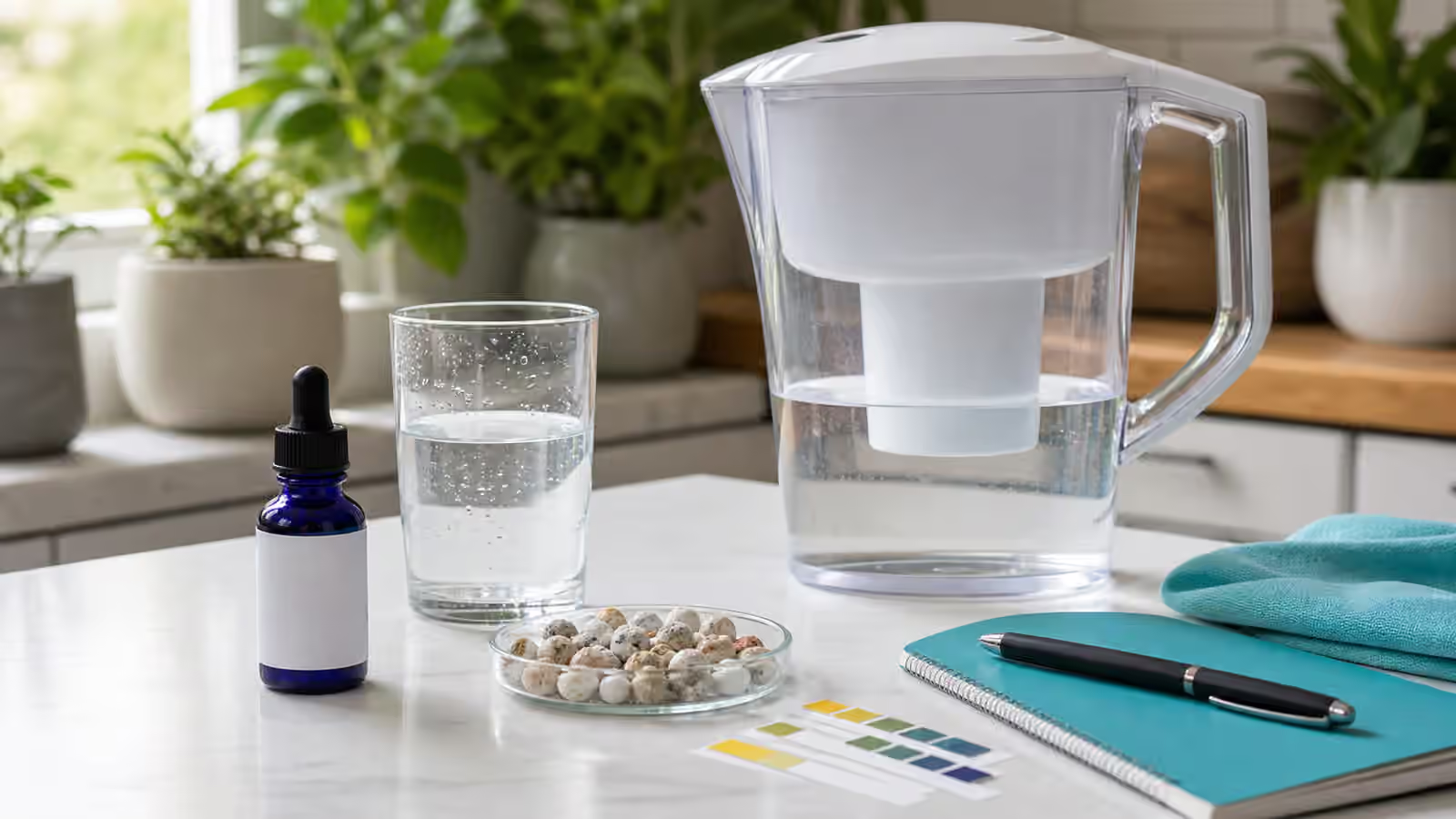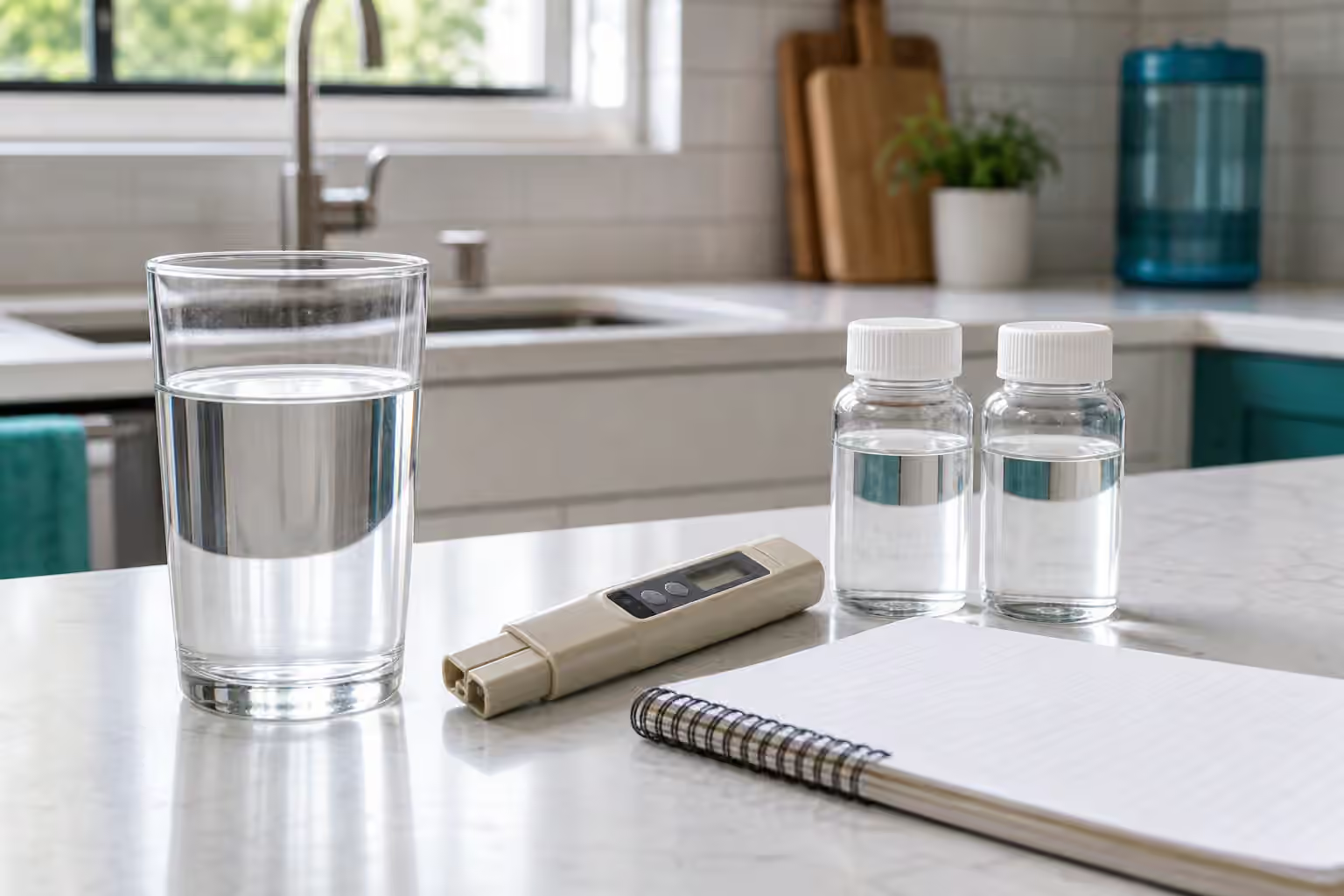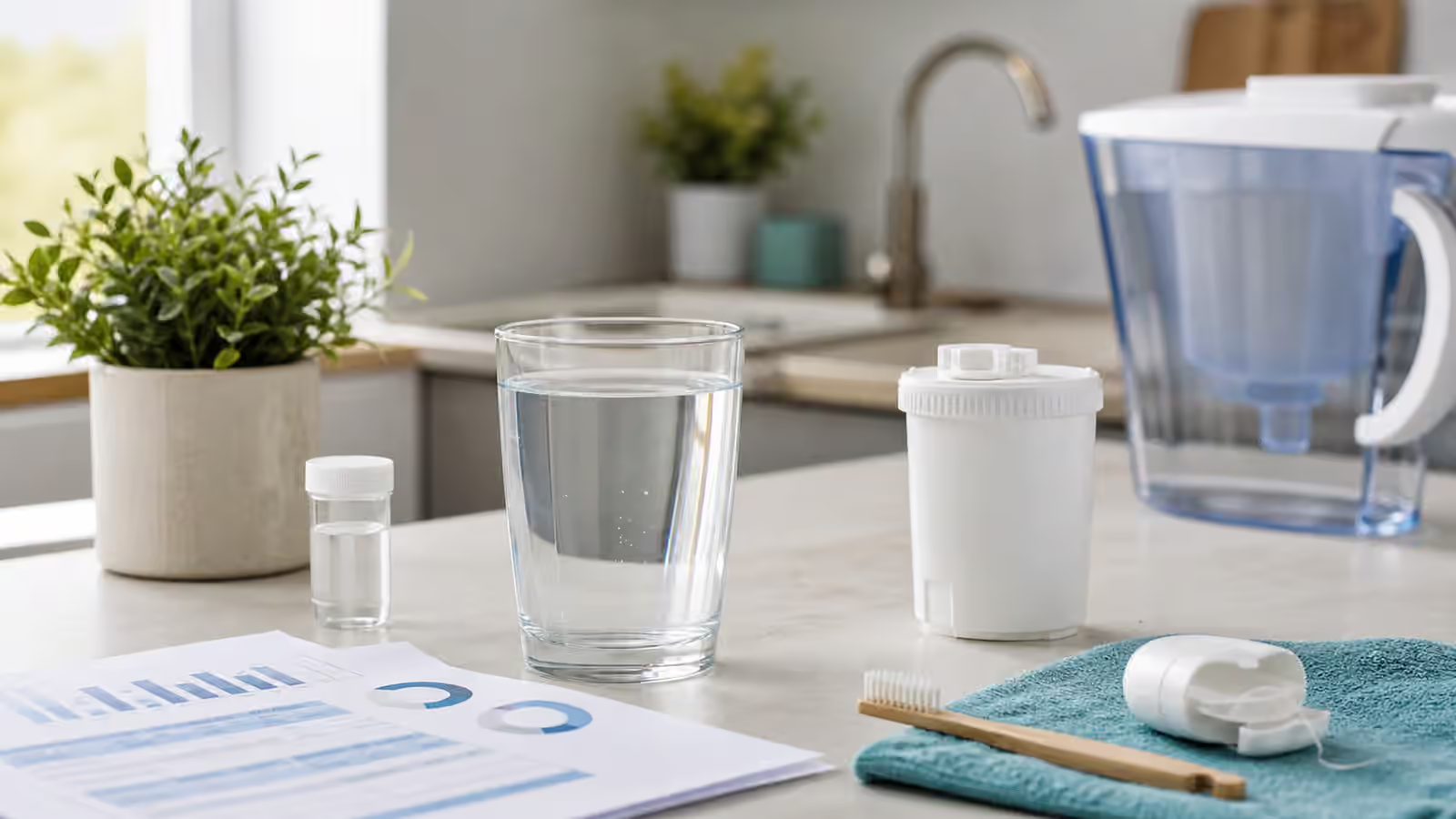
Fluoride is one of the few tap-water topics where the conversation can leave the sink very quickly. Some people arrive through a water report. Others arrive through dental advice, a filter label, a private-well result, or a household disagreement about what should be in the drinking glass. The calm way to handle it is to bring the question back to source, measured level, filter evidence, and the reason the household is asking. For background, see CDC — About Community Water Fluoridation .
Clear Water Lab helps with everyday water decisions, reports, testing, certification checks, and maintenance. It is not medical advice, legal advice, or a substitute for local boil-water notices, certified lab results, utility instructions, or health department guidance.
Start with the water source, not the filter aisle
Fluoride can appear in tap water for different reasons. Some public water systems add it as part of a community water program. Some groundwater contains naturally occurring fluoride before any treatment decision is made. Some households have almost none, and some private wells can have levels that deserve closer attention from a certified lab and local guidance. Those starting points matter because a product decision made from a vague internet argument can miss the real question in the home.
Public water customers should begin with the water quality report and utility information. The report may list fluoride directly, and the utility may publish additional material about treatment practice. How to Read Your Water Quality Report Without Getting Lost is the right companion because fluoride is not understood from a marketing claim alone. You need the system name, reporting period, units, detected level, and any note about compliance or treatment. If you live in an apartment or multi-building property, make sure you are looking at the correct public water system rather than a nearby city with a similar name.
Private wells are different. A well owner cannot assume that a public report describes the water at the kitchen tap. Local geology, well depth, aquifer conditions, treatment equipment, and plumbing can all matter. Fluoride may be part of a broader lab panel, but the result should be read with the rest of the chemistry rather than as an isolated number. The source split in City Water vs Well Water applies here: when the source changes, responsibility and evidence change with it.
A fluoride number is not the same as a taste clue
Fluoride usually does not announce itself the way chlorine, sulfur, iron, or sediment can. A glass that tastes flat, treated, metallic, or stale is not giving a reliable fluoride reading. That matters because households sometimes buy a filter after a taste complaint and then assume the filter solved every named concern they have heard about. Taste improvement and fluoride reduction are separate claims.
Home test strips and small kits may be useful for orientation in some water questions, but they should be treated carefully for fluoride. The result can depend on sample handling, timing, storage, color interpretation, and the range the kit was designed to show. A certified lab result is a stronger reference when the number will drive a significant decision, especially for a private well or a household with clinician-specific advice. Home Water Testing: Strips, Meters, Reports, and Certified Labs explains the broader habit: kitchen-counter tools can point you toward a better question, but they do not turn every concern into a final answer.
Units also matter. Water reports often use milligrams per liter, which is effectively the same as parts per million for many everyday water discussions. A product page, lab report, and utility report may not all present the information in the same visual style. Before reacting, confirm the unit, the sample location, the date, and whether the result represents source water, treated system water, or a point inside the home.
Common filters create a lot of fluoride confusion
Many everyday filters are designed mainly for taste, odor, chlorine, particulates, or a narrow set of certified claims. A carbon pitcher that makes water taste better is not automatically a fluoride filter. A refrigerator cartridge that reduces chlorine taste is not automatically a fluoride filter. A faucet mount with a broad clean-water promise still needs an exact certified listing before it should be treated as a fluoride-reduction device.
Reverse osmosis is the treatment category most households encounter when they look for fluoride reduction at a drinking tap, but even there the exact product matters. An RO system has a membrane, prefilters, post-filters, a storage tank or tankless flow design, maintenance needs, pressure assumptions, and replacement schedules. It can be a good fit for some households and a poor fit for others. Reverse Osmosis for Beginners is useful because it treats RO as equipment with tradeoffs rather than as a magic label.
Some specialty media and distillation approaches may also be discussed around fluoride, but the principle stays the same. The device should have a claim you can verify for the exact model and cartridge, not a general promise that sounds water-adjacent. NSF/ANSI 42 vs 53 vs 58 vs 401 helps separate aesthetic claims, health-effect claims, RO standards, and emerging-contaminant language. The standard alone is not enough. You still need the exact contaminant claim and the exact product listing.
Verify the claim before you redesign the sink
A fluoride decision should not begin with cabinet drilling. First find the exact model number, cartridge number, certified standard, contaminant claim, capacity, flow rate, and replacement instructions. If the product says it is certified, check the listing through the certifier rather than relying only on a store page. How to Verify a Water Filter Claim on NSF, WQA, or IAPMO shows the routine. It is slower than reading the front of the box, but it prevents an expensive mismatch.
Capacity is part of the claim. A filter that reduces fluoride under test conditions may not keep doing so after it has exceeded its rated capacity, used the wrong cartridge, or been installed in a way the manufacturer did not intend. If an RO membrane is old, a prefilter is clogged, a tank is neglected, or a household ignores the service interval, the system is no longer the tidy promise from the brochure. The maintenance lesson from Filter Replacement Schedules applies just as much to fluoride as it does to taste and odor.
Flow and use patterns matter too. A pitcher may be easy for one person and too slow for a family that fills several bottles every morning. An under-sink RO system may feel convenient but require cabinet space, leak checks, and a dedicated faucet. A countertop distiller may avoid plumbing changes but add time, heat, cleaning, and storage questions. The right location is the one the household will actually use and maintain.
Household tradeoffs should be named plainly
Fluoride questions are not only technical. A household may include children, adults with dental guidance, someone using bottled water, a private-well owner, a renter, or a person who has been told by a clinician to manage a specific exposure. Clear Water Lab cannot settle those personal or clinical choices. It can make the water side less foggy.
Write down the reason for the decision. If the goal is to understand the public water report, start with the report and utility. If the goal is a private-well concern, start with a certified lab and local well guidance. If the goal is to remove fluoride at the drinking tap, verify a product claim and plan maintenance. If the goal is better taste, do not pretend a taste filter is answering a fluoride question. If the goal is dental or medical, use professional guidance rather than a filter label as the authority.
It also helps to decide which taps matter. A point-of-use device at the kitchen sink may be enough for drinking and cooking water in one household. Another household may not need treatment at all after reading the report. A whole-home approach is rarely the first move for a fluoride question because most household uses do not need the same water quality as the drinking glass, and broad treatment adds cost and maintenance. Whole-Home vs Point-of-Use Water Treatment is helpful when a concern starts to expand beyond the tap where it actually matters.
The steady conclusion is modest. Name the source. Read the report or get the right lab result. Treat taste and fluoride as different questions. Verify any filter claim before trusting it. Then choose the smallest setup that fits the evidence and the household routine. That keeps fluoride from becoming either a vague fear or a vague reassurance.