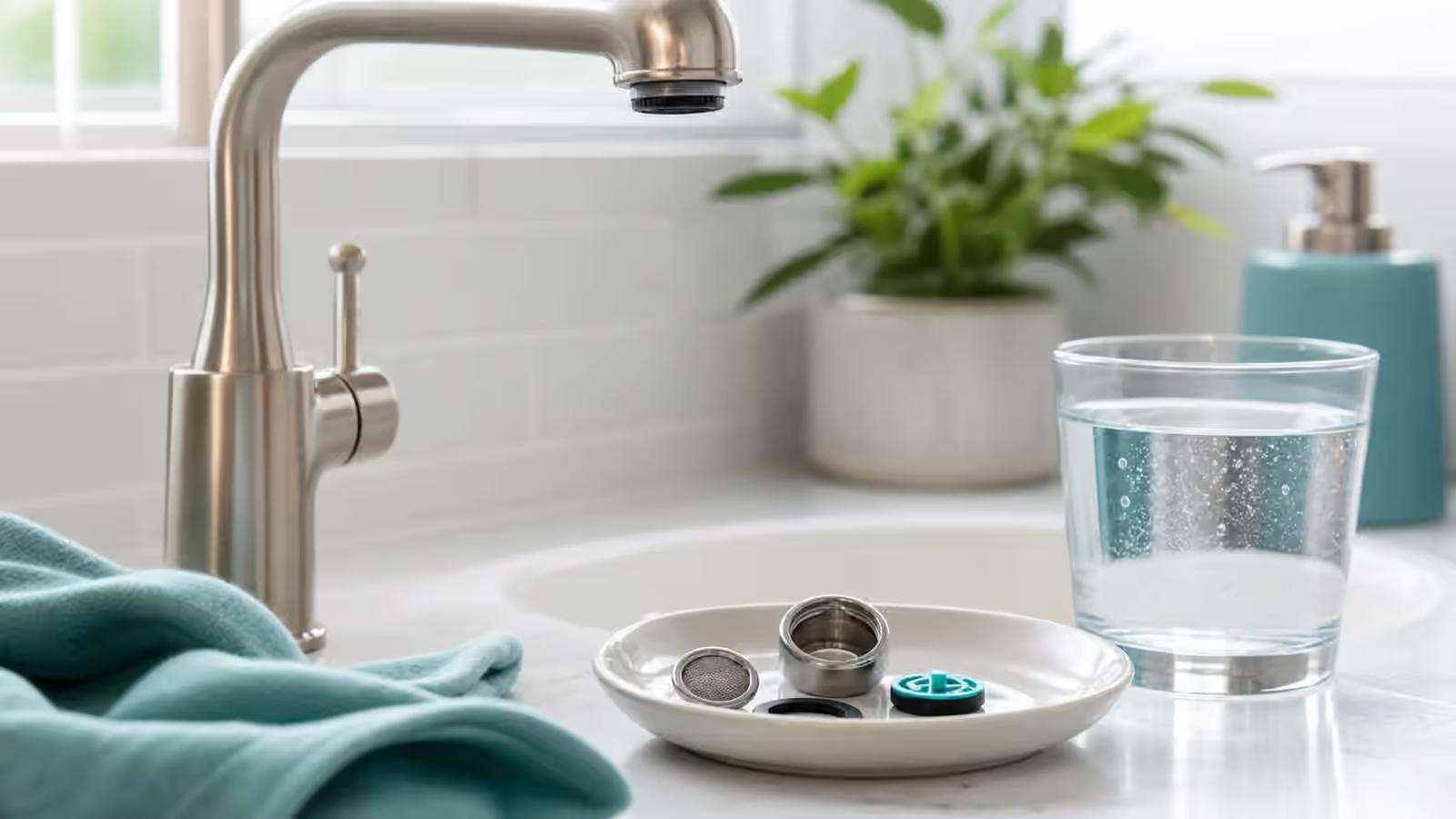
The smallest part of a faucet can make a water problem look bigger, smaller, or stranger than it really is. An aerator is only a little screen and flow-shaping piece at the end of the tap, but it can collect grit, loosen old debris, trap scale, change splash, and hide clues until the day someone unscrews it. Before buying another filter, it is worth knowing what the fixture itself may be adding to the story. For background, see EPA — Home Drinking Water Testing .
Clear Water Lab helps with everyday water decisions, reports, testing, certification checks, and maintenance. It is not medical advice, legal advice, or a substitute for local boil-water notices, certified lab results, utility instructions, or health department guidance.
The tap is part of the sample
People often talk about water as if it appears directly from the source into the glass. In a real home it passes through service lines, interior plumbing, valves, fixture bodies, cartridges, hoses, refrigerator tubing, and the small screen at the faucet tip. By the time a glass is filled, the tap has become part of the evidence. That does not mean the tap is always the problem. It means the tap should be considered before a whole house story is built from one faucet.
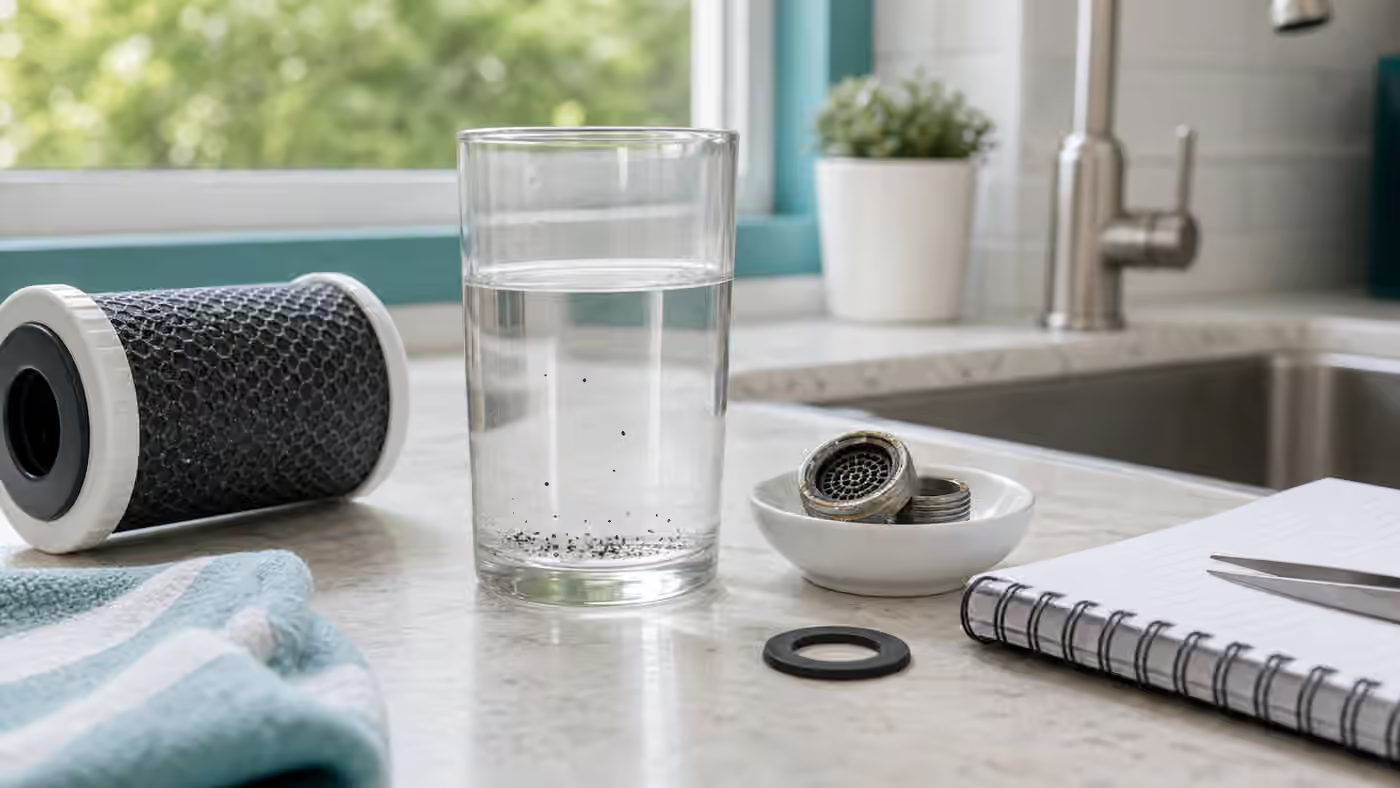
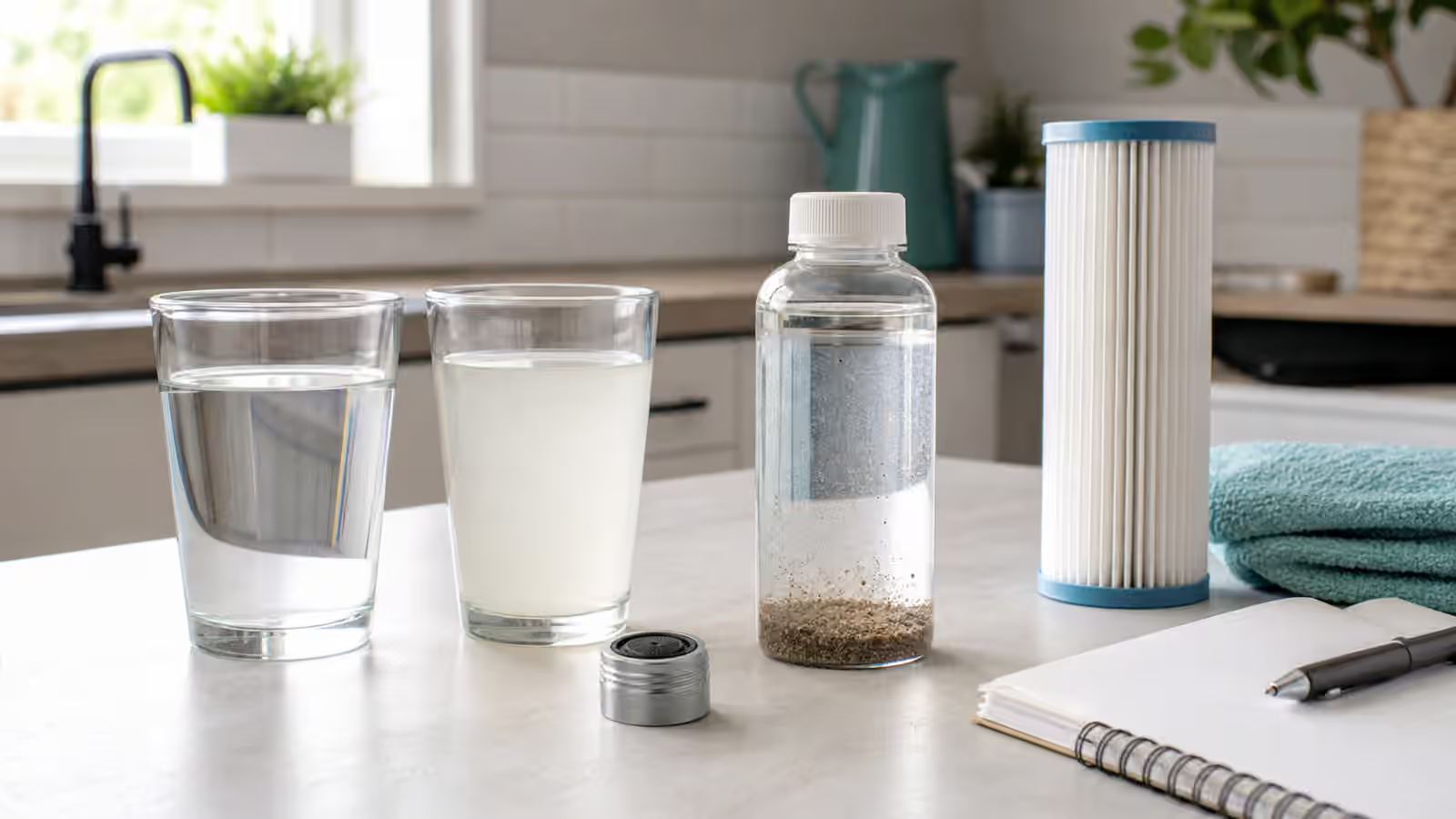
An aerator can make ordinary sediment visible. Tiny grains of sand, rust flakes, black rubber specks, mineral scale, or plumbing debris may collect behind the screen and then release in bursts. The first glass after cleaning an aerator may look different from the tenth glass. A bathroom sink may show different material than the kitchen sink because the fixture, pipe route, and usage pattern are different. Sediment, Rust, and Cloudy Water is the broader guide to reading those clues, but the aerator is often where the clue becomes visible.
The fixture can also change flow. A clogged aerator may make a faucet sputter, spray sideways, or fill a glass slowly. Someone may blame the filter, the utility, or the well pump when the first obstruction is a small screen packed with mineral chips. The opposite can happen too. Removing the aerator can make water look clearer because the trapped debris is no longer being disturbed, while the plumbing problem upstream remains. A fixture check is therefore a starting point, not a final diagnosis.
Cleaning is observation, not proof
Cleaning an aerator is simple in many fixtures, but the useful part is not only the cleaning. The useful part is observing what comes out. Tan sand, reddish flakes, white crust, black specks, green-blue staining, slimy material, and clear gel-like bits point toward different questions. The color and texture do not produce a lab result, but they help decide whether to look at a water heater, softener, old galvanized pipe, rubber washers, municipal work, well sediment, or a filter cartridge.
Those observations should be written down before they are rinsed away. A photo for personal reference, a date, the faucet location, and a short note about recent plumbing work can be more useful than a vague memory. If material keeps returning after cleaning, the issue is not only the aerator. Something upstream is supplying the debris, and the next step depends on the source. A public water customer may call the utility if multiple taps change after nearby work. A private well owner may need to think about sediment prefiltration, pump behavior, pressure tank issues, or testing.
Fixture cleaning should not be used to dismiss health-effect questions. If the concern is lead, for example, a clean aerator does not prove lead is absent. Lead can come from service lines, solder, brass, fixtures, or particles captured and released in ways that depend on water chemistry and stagnation. Lead in Drinking Water: Pipes, Fixtures, Testing, and Filters is the better frame because lead decisions need sampling instructions, certified lab evidence when appropriate, and verified treatment claims. The aerator is part of that route, not a substitute for it.
Sampling depends on the question
Whether an aerator should be removed before sampling depends on the instructions and the question being asked. Some sampling protocols require the aerator to stay in place because the goal is to represent what a person actually drinks from that tap. Other investigations may ask for a different setup. The important habit is to follow the lab, utility, or health department instructions exactly rather than improvising because the screen looks dirty.
This matters because the aerator can hold particles. A first-draw sample taken after water sits in plumbing may capture different information than a flushed sample. A sample with the aerator in place may include debris released from the screen. A sample after aerator cleaning may tell a different story again. None of these is automatically wrong. Each answers a different question. Home Water Testing: Strips, Meters, Reports, and Certified Labs explains why sample location and handling are part of the test rather than a minor detail.
For everyday troubleshooting, comparing taps can help. If only one faucet has black specks, the local fixture or supply hose becomes more interesting. If every cold tap has sediment, the source or shared plumbing deserves attention. If hot water has sediment but cold water does not, the water heater enters the story. If a refrigerator dispenser tastes stale while the sink is fine, the refrigerator filter, tubing, reservoir, or ice maker may be the better place to look. The point is to narrow the question before shopping.
Fixtures age in ordinary ways
Faucets are mechanical objects. Washers wear, cartridges loosen, hoses age, screens clog, finishes corrode, and mineral deposits build where water evaporates. None of that is exotic. It is the ordinary life of plumbing hardware. The trouble begins when fixture aging is mistaken for source-water proof. A white crust at the spout may reflect hardness and evaporation. A green-blue stain may point toward copper corrosion or another plumbing condition that deserves context. A black fleck may be rubber, carbon fines, manganese, or something else entirely. The clue needs a route.
Hard water can make aerator maintenance more frequent. Scale forms where water dries, and the small openings in aerators are perfect places for crust to collect. Hard Water vs Bad Water is useful because scale can be annoying without meaning the water is unsafe. It can still affect appliances, fixtures, soap feel, and filter performance. If a household installs a softener or scale-control system, aerator behavior may change, but that does not turn the fixture into a water-quality report.
Taste can be local too. A faucet used rarely may taste stale at first. A new fixture may have a temporary material taste. A pull-down sprayer hose may hold water differently from a fixed spout. A bathroom tap may sit unused longer than a kitchen tap. Flushing a tap briefly can help separate stale fixture water from the broader supply, but it should not be used to ignore official sampling instructions or recurring problems. When taste remains after reasonable observation, move back to the broader taste framework rather than guessing from one glass.
A small part can keep the decision honest
Checking the aerator is not glamorous, but it protects the household from overbuilding the solution. A clogged screen does not require a whole-home treatment system. A few trapped flakes after plumbing work may call for flushing and observation, not a panic purchase. Persistent sediment from a private well may need a better source and prefilter conversation. Lead concerns may require a careful sampling plan. The same visible clue can lead to very different next steps.
The best habit is to treat the faucet as evidence. Look at it, clean it when appropriate, follow sampling instructions when testing, and compare taps before naming the problem. If a filter is still needed, the decision will be stronger because the fixture has already been separated from the source. That small screen at the end of the tap cannot explain every water question, but it often explains enough to slow down a bad purchase.