A countertop water distiller feels satisfyingly physical. Water heats, vapor rises, condensation collects, and mineral scale stays behind. That visible process can make distillation seem more complete than other home treatment choices. It is a real treatment method, but it is not a shortcut around source water, contaminant evidence, storage hygiene, electricity, cleaning, or the slow pace of making water one batch at a time. For background, see NSF — Standards for Water Treatment Systems .
Clear Water Lab helps with everyday water decisions, reports, testing, certification checks, and maintenance. It is not medical advice, legal advice, or a substitute for local boil-water notices, certified lab results, utility instructions, or health department guidance.
Distillation removes some things by changing state
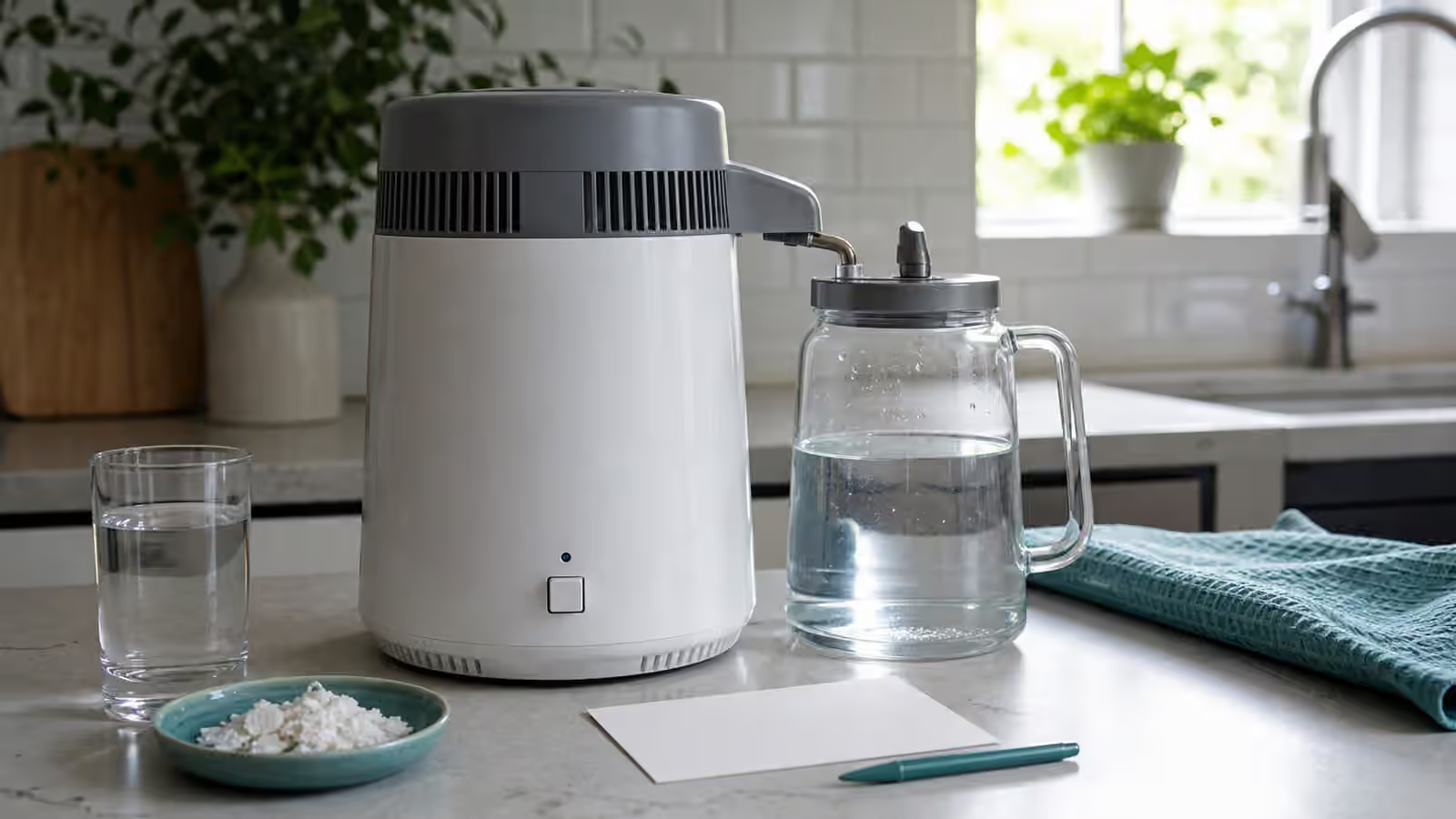
Distillation separates water by boiling it into vapor and condensing that vapor back into liquid. Substances that do not travel easily with steam tend to remain behind in the boiling chamber. That is why distilled water usually has a low dissolved-minerals profile and why the chamber can collect scale or residue over time. The process is different from carbon filtration, ion exchange, softening, UV, or reverse osmosis.
The practical result is easy to notice. Distilled water often tastes flat to people used to mineral-containing water. It may reduce scale in small appliances that call for low-mineral water. It may be used for certain household tasks where minerals are the nuisance. But low minerals do not answer every water question. A distiller’s usefulness depends on the contaminant, the unit design, the operation instructions, the source water, and the care taken after distillation.
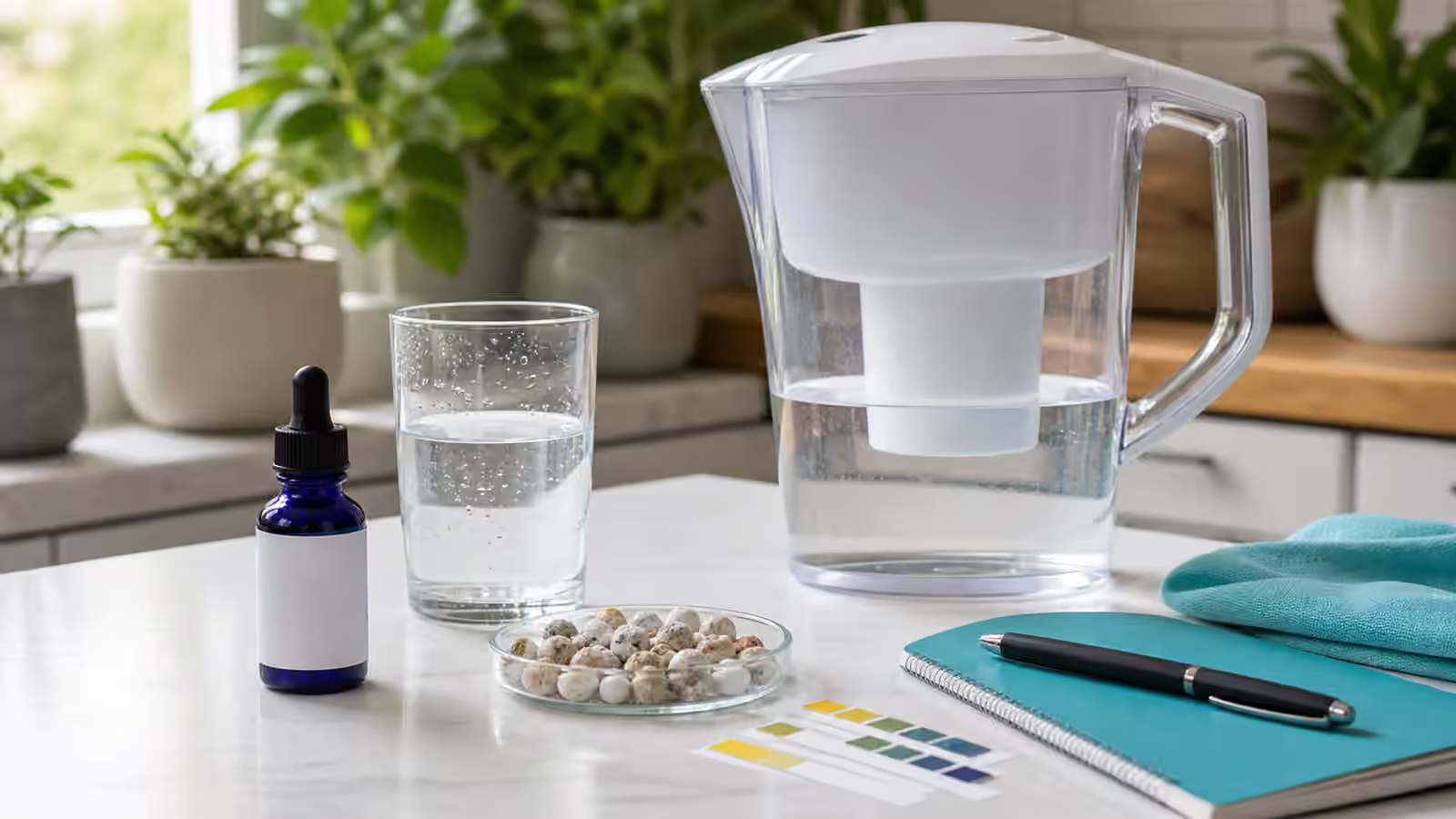
TDS Meter Readings helps explain why distilled water gives such a dramatic number. A low TDS reading can show that many dissolved ions were reduced, but it does not name every possible contaminant or prove that the water was handled cleanly after treatment. A low number is a clue about dissolved solids, not a universal safety certificate.
Boiling and distilling are related but not the same decision
People often ask whether boiling water removes contaminants. Does Boiling Water Remove PFAS, Lead, Chlorine, or Bacteria? explains why boiling is not a universal answer. Distillation adds condensation and collection, so it is not the same as simply boiling a pot. Still, both processes deserve careful boundaries.
Volatile substances can complicate the story because some chemicals may evaporate or move differently than minerals. Some distillers include vents, carbon post-filters, or other design features meant to address taste or volatile compounds, but the exact claim should be read from the product instructions and any verified testing or certification, not assumed from the word distiller. If the concern is a named contaminant, match the device to that contaminant instead of relying on the general elegance of steam.
Distillation also uses heat and time. A countertop unit may take hours to produce a modest volume. That can be acceptable for one person’s drinking routine, appliance water, or a specific household use. It may be awkward for a family that wants all cooking and drinking water from the device. A treatment method that works chemically can still fail practically if the pace, heat, noise, electricity, or cleaning routine does not fit the home.
The chamber tells a maintenance story
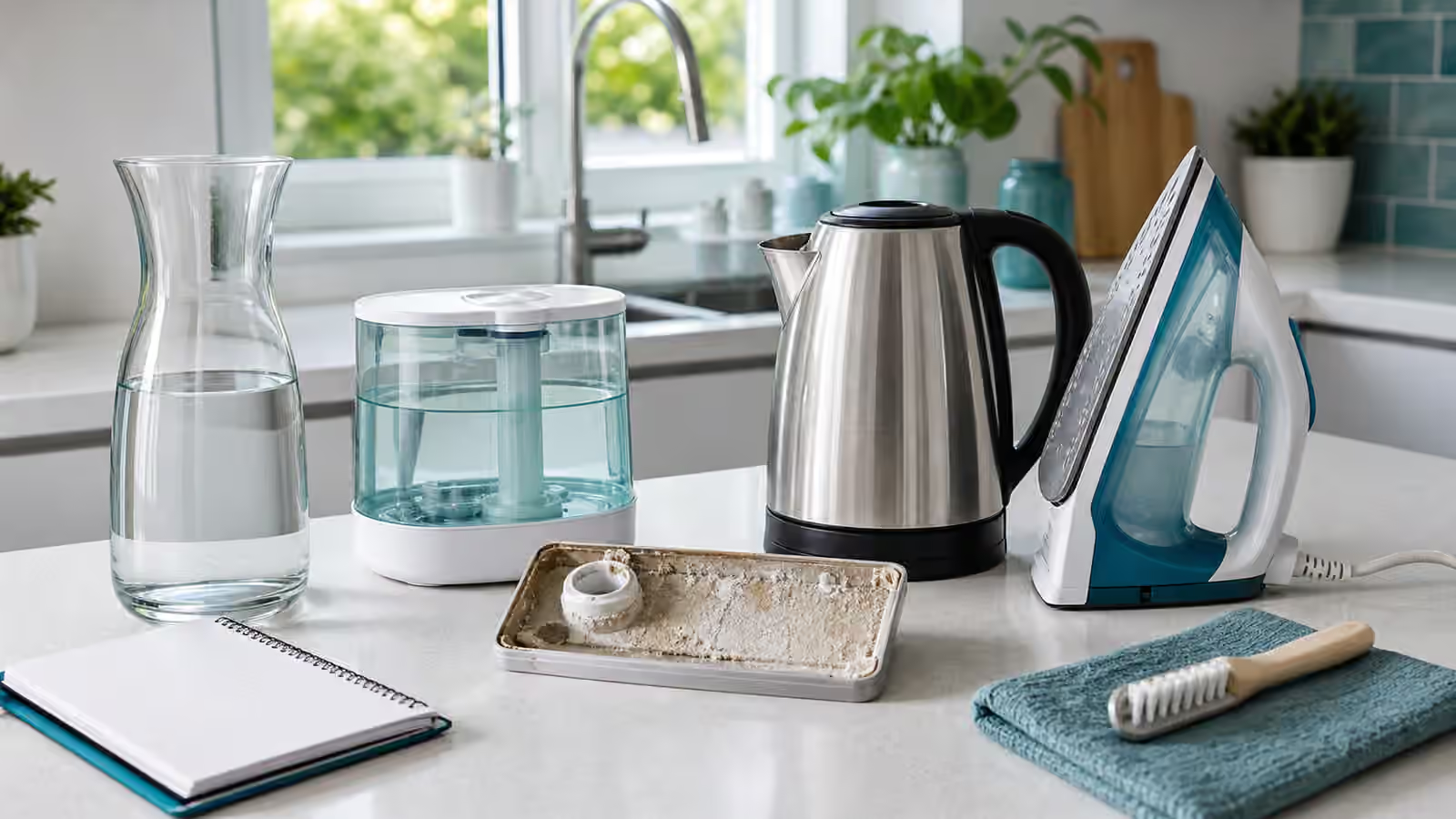
The residue left behind is one of the most honest parts of distillation. Scale, mineral deposits, or discoloration in the boiling chamber remind the user that the process is doing work. They also create the maintenance burden. A dirty chamber can reduce efficiency, affect taste, shorten unit life, or make the device unpleasant to use. Cleaning is not a cosmetic chore. It is part of the system.
Product instructions matter here. The chamber material, cleaning method, descaling frequency, cooling time, fill level, lid design, gaskets, fan, vents, carafe, and post-filter all belong to the treatment route. A countertop distiller is small enough to feel like an appliance, but it still handles heated water and collected drinking water. The same discipline from Filter Replacement Schedules applies in a broader way: the claim belongs to a maintained device, not an object forgotten on the counter.
Post-filters are easy to miss. Some distillers use a small carbon packet or cartridge after condensation to improve taste or address certain volatile compounds. That small part has its own replacement schedule and storage conditions. If it is neglected, the water may still be distilled, but the taste or claimed polishing step may no longer match the setup described by the manufacturer.
Storage after distillation is part of the water path
Freshly distilled water is not protected from ordinary handling mistakes. The receiving carafe, cap, storage bottle, funnel, and refrigerator shelf all become part of the route. A clean process can be undermined by a dirty container. A batch made slowly overnight can sit open longer than intended. A carafe used for other drinks may carry residue back into the water. Low-mineral water can also taste stale if stored carelessly.
Drinking Water Storage at Home is the companion for this part of the decision. If distilled water is made for drinking, store it in clean containers suited to that use and rotate it according to the household plan. If it is made for appliances, label it so nobody confuses the container with ordinary drinking water or chemical storage. The more batches a household makes, the more boring the storage routine should become.
The source still matters too. Distilling water from a public supply under ordinary conditions is different from distilling water during a do-not-use notice, from a flooded private well, or from an unknown storage tank. Official instructions may specifically rule out home treatment during certain events. A distiller should not be treated as a private override for emergency guidance.
Where distillers fit among other options
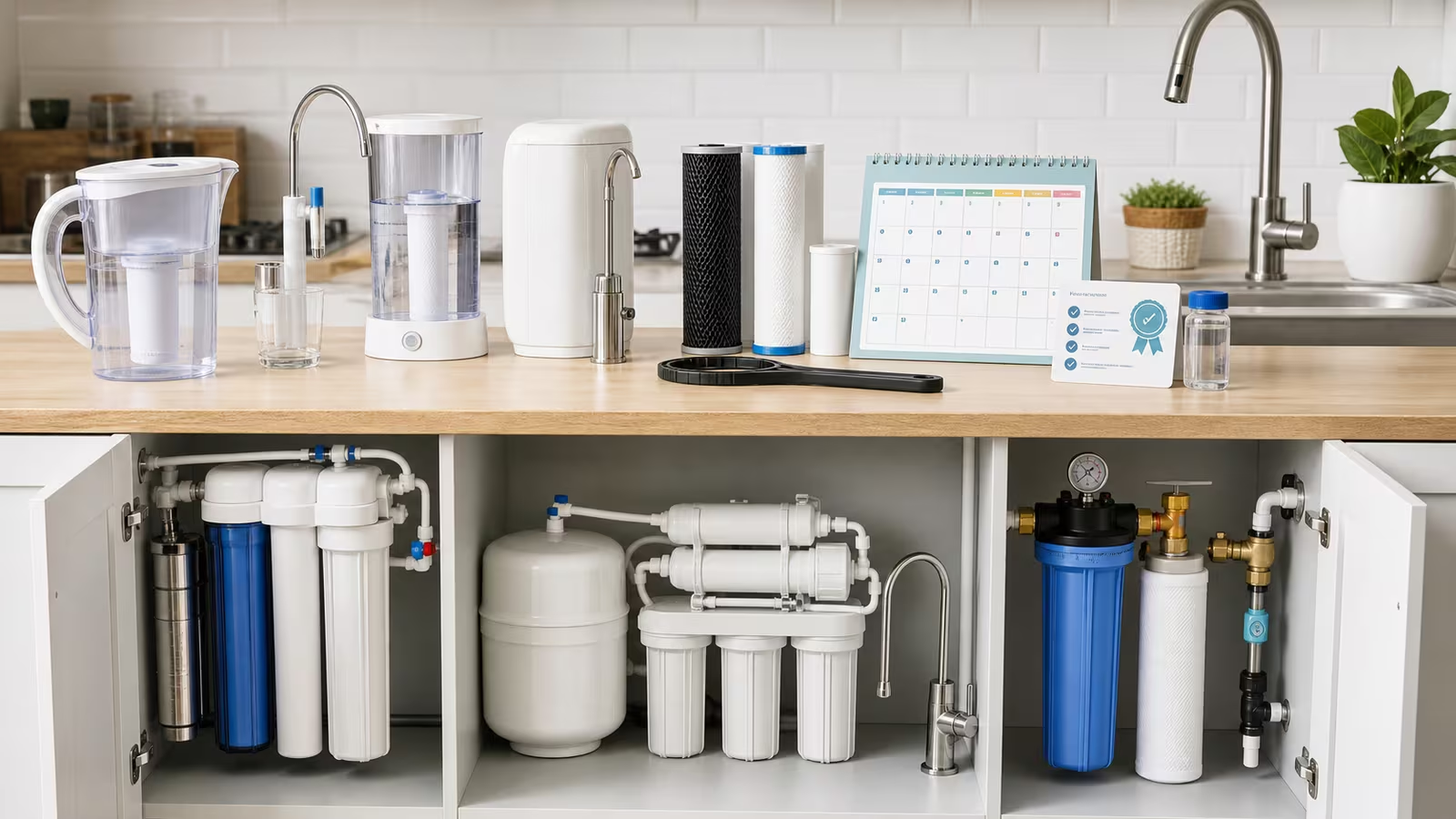
In Pitcher, Faucet, Countertop, Under-Sink, RO, and Whole-Home Filters , the main question is matching format to job. A distiller is a countertop batch treatment device. It may suit a household that wants low-mineral water for specific uses and accepts slow production. It may be less convenient than an under-sink reverse osmosis faucet for daily cooking water. It may be irrelevant to whole-home sediment, iron, hardness, pressure, or private-well disinfection planning.
Compared with reverse osmosis, distillation is usually slower and heat-based rather than membrane-based. Compared with carbon, it targets a different set of properties and usually changes mineral profile much more. Compared with a softener, it makes small batches rather than changing hardness behavior throughout the plumbing. Compared with UV, it is not a flow-through disinfection stage for a well system. These comparisons are not about ranking. They are about keeping each tool in its lane.
The best reason to buy a distiller is specific. The household wants distilled water, understands why, has read the unit instructions, accepts the batch volume and energy use, and will clean the chamber and storage containers. The weakest reason is vague purity language. “Distilled” tells you about a process. It does not tell you that every source condition, volatile compound, storage habit, or emergency instruction has been handled.
A modest device can still be useful
A countertop distiller can be a sensible appliance when expectations are narrow. It can make low-mineral water without plumbing changes. It can support certain small-appliance habits. It can create a consistent water for a particular task. It can help a household compare taste and scale behavior in a concrete way. Those are real uses.
It becomes less useful when it is asked to replace evidence. If the concern is lead from plumbing, PFAS in a public report, nitrate in a well, bacteria after flooding, or a chemical notice from officials, start with the contaminant and guidance. Ask whether distillation is appropriate for that concern and whether the exact device has relevant evidence. Do not let steam make the decision feel more complete than it is.
Distillation is an old idea with a modern countertop shape. It rewards patience, cleaning, and honest scope. If the household can keep those habits, it may earn a place on the counter. If the household needs fast daily drinking water, verified contaminant reduction, or whole-home treatment, another route may fit better.