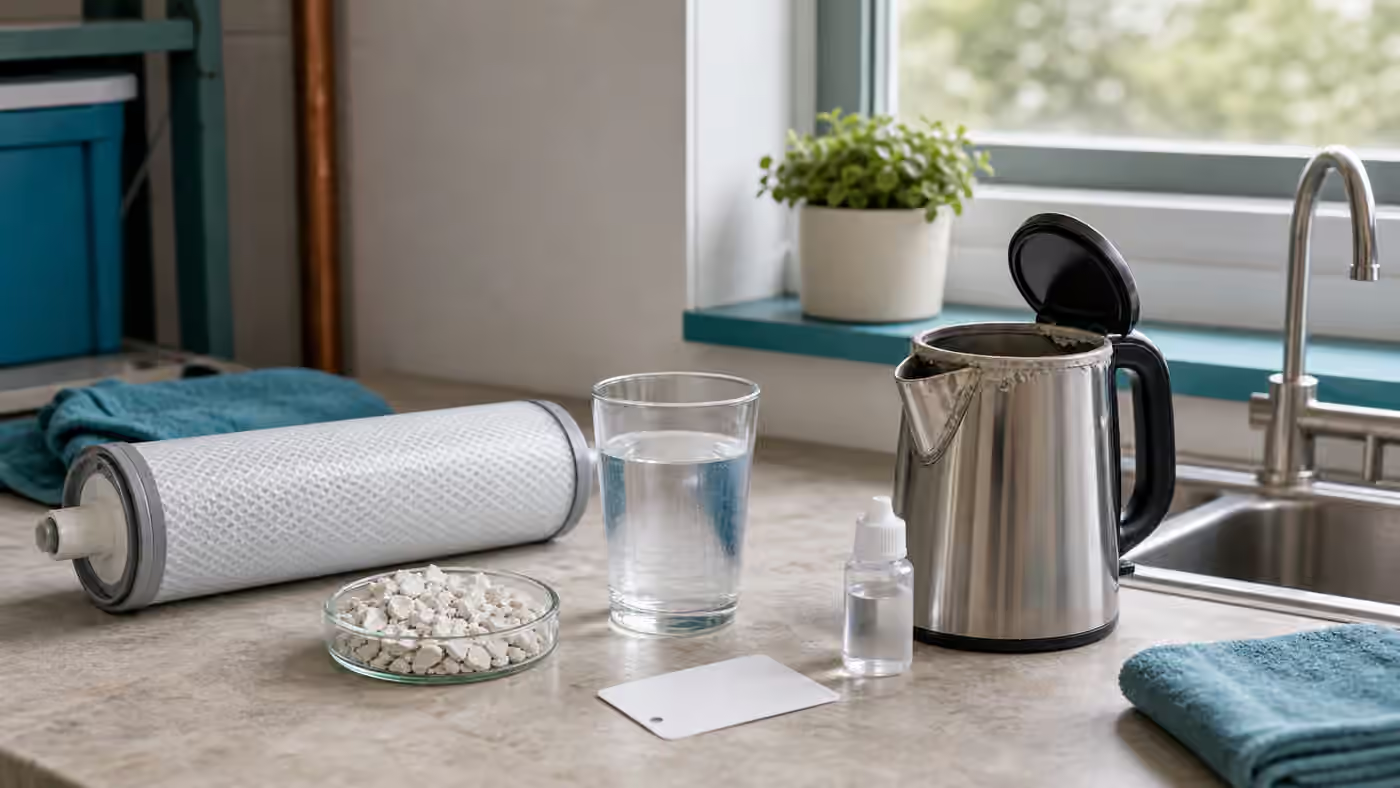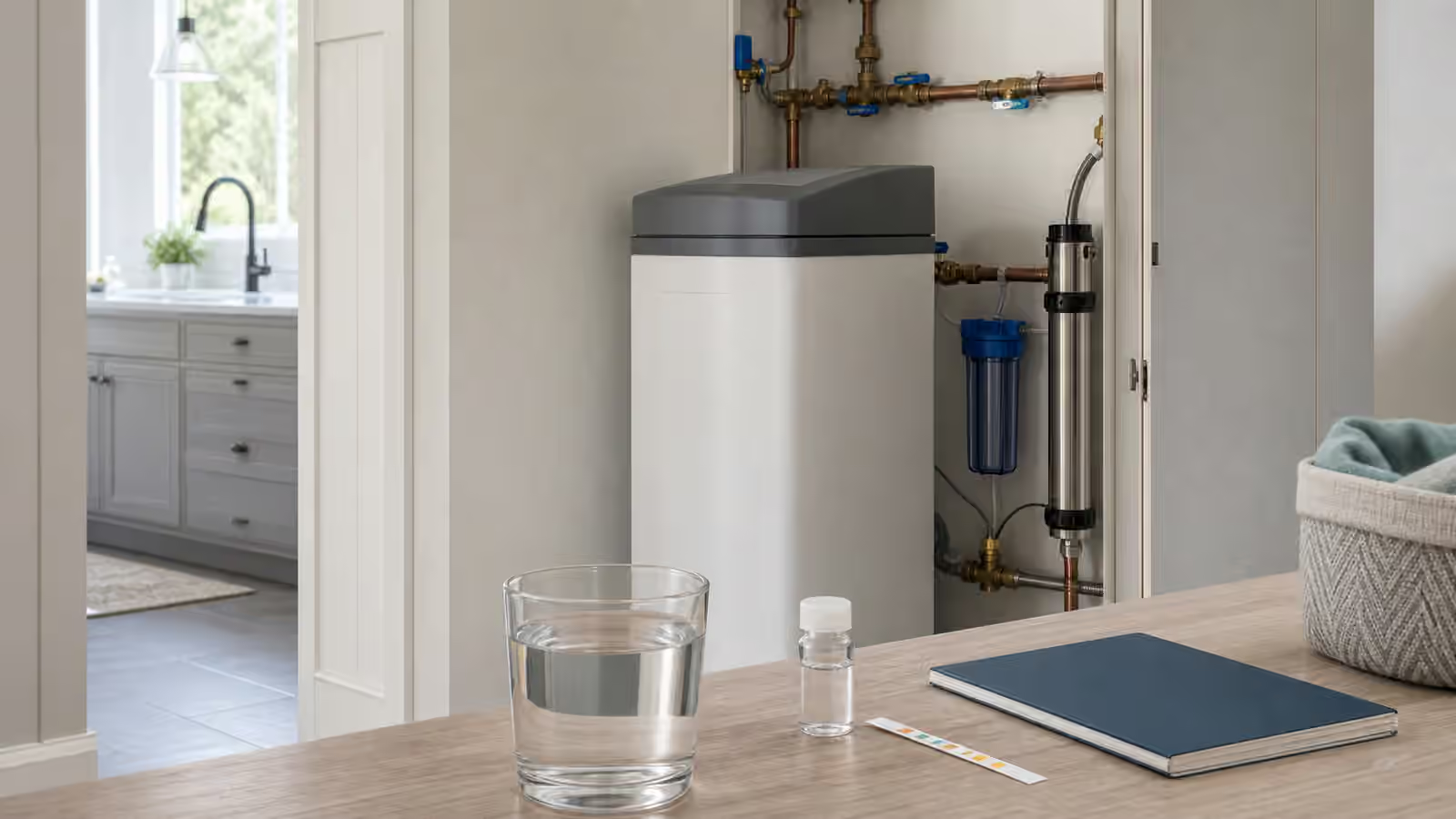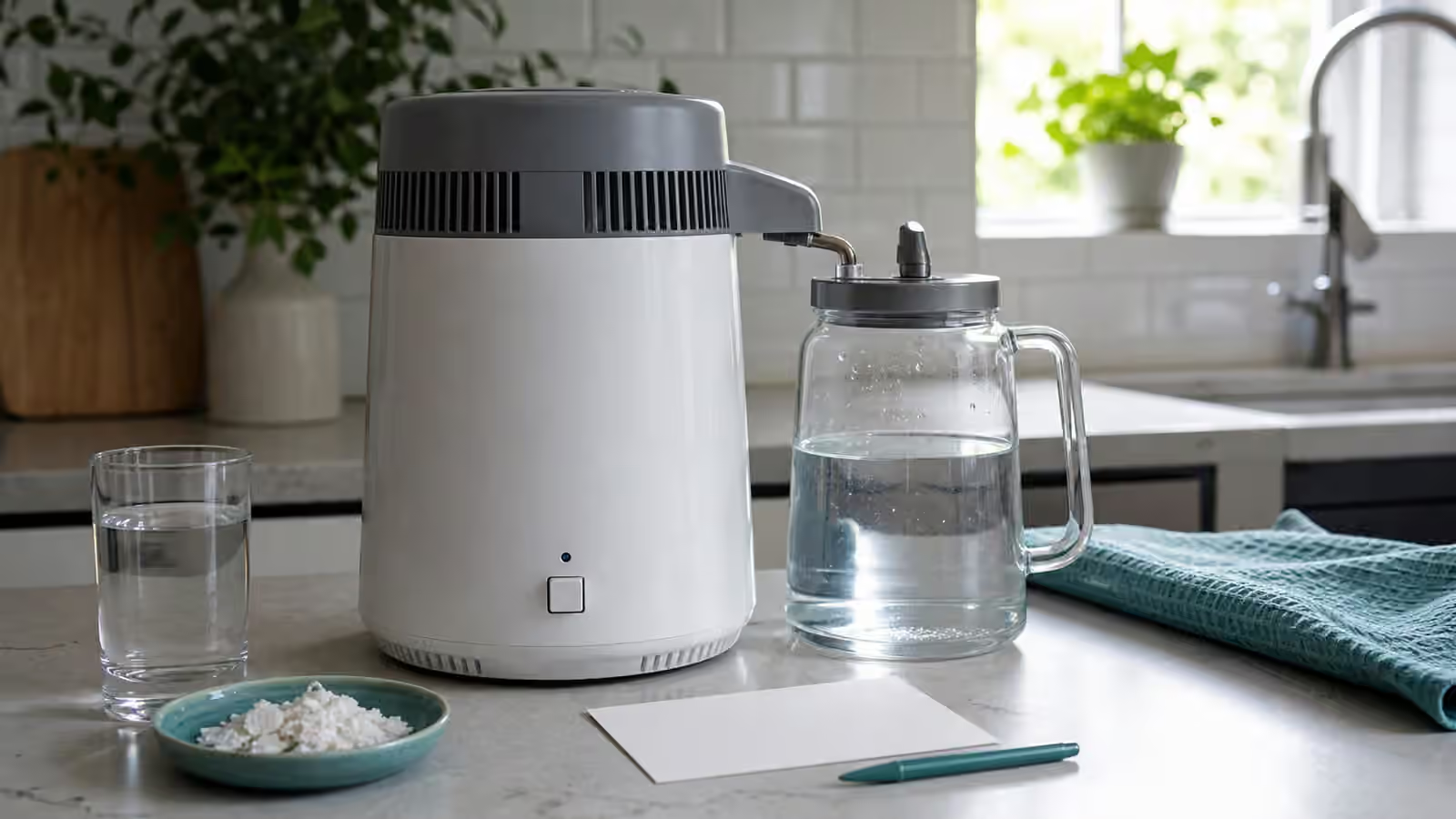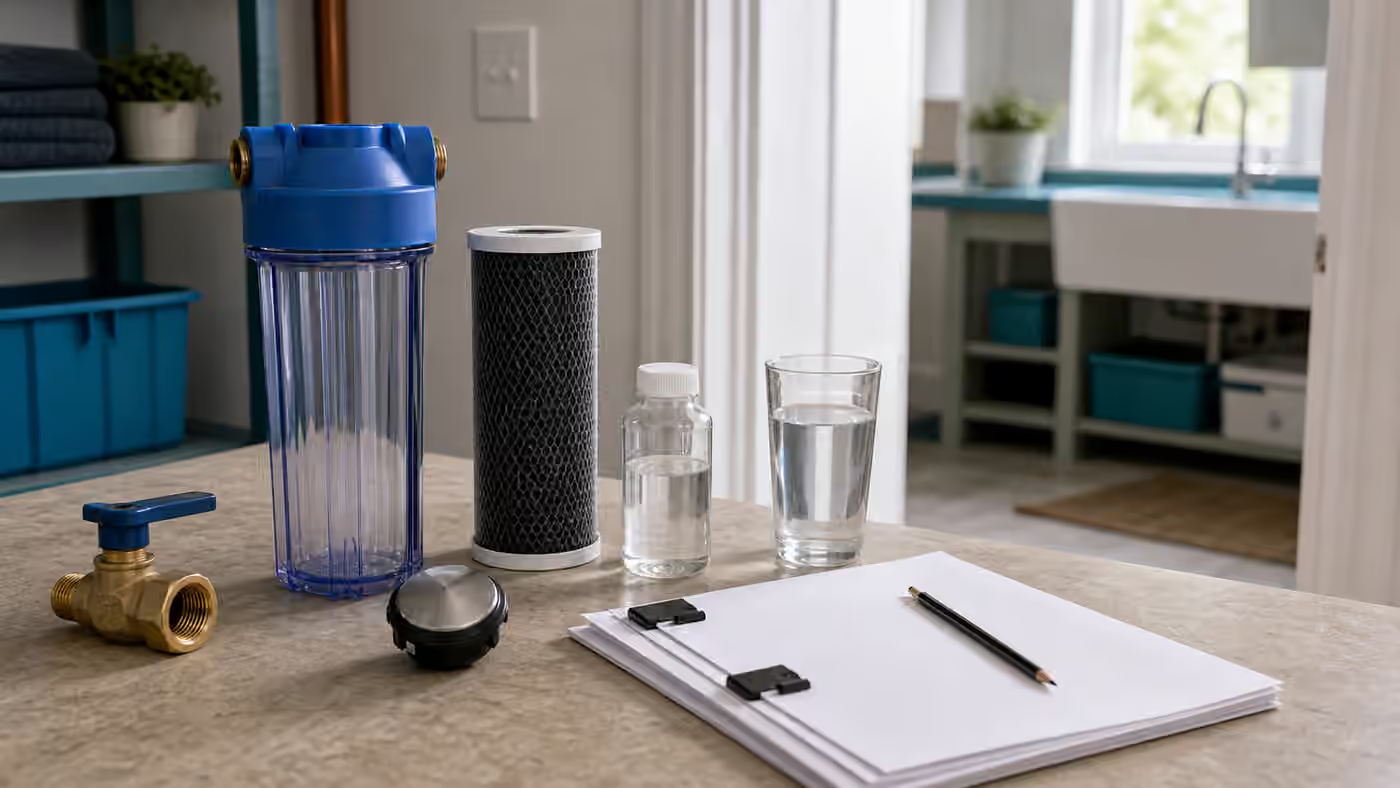
A water treatment quote can look convincing before it has answered the most basic questions. There may be tanks, cartridges, polished product names, lifetime language, and a neat total at the bottom, but the household still needs to know what evidence started the proposal, which water route is being treated, which claims are verified, how the equipment is sized, and who will maintain it after the installer leaves. A good quote should make the water simpler to understand, not more mysterious. For background, see NSF — Standards for Water Treatment Systems .
Start with the evidence behind the quote
The first comparison is not price or tank size. It is the reason each proposal exists. A quote based on a certified lab result, a current water quality report, a private-well history, and clear household goals is different from a quote based on a quick sales test at the kitchen counter. Screening tests can be useful, but they should not carry more weight than they deserve. Home Water Testing is the better frame when a proposal starts with a strip, meter, or demonstration.
Ask what problem the quote is solving in plain language. It might be chlorine taste at a city-water kitchen tap, hard-water scale across the home, iron staining from a private well, low pH corrosion clues, PFAS reduction for drinking water, sediment protection for downstream equipment, or microbiological treatment after well testing. Those are different problems. A quote that cannot name the problem without vague purity language deserves slower reading.
For public water, the annual report and utility notices should sit beside the proposal. How to Read Your Water Quality Report helps prevent a product pitch from replacing system evidence. For private wells, a quote should be connected to appropriate well testing and local conditions. A treatment company may perform useful field checks, but serious well decisions should not depend only on a countertop show.
Location decides whether the equipment fits
Treatment location is one of the easiest ways to compare quotes. Is the proposal for the whole home, one drinking tap, a refrigerator line, a softener branch, a well treatment train, or an appliance-specific route? If the concern is a certified drinking-water claim at one kitchen tap, a whole-home system may be unnecessary or less focused. If the concern is iron staining across every fixture, one under-sink cartridge may be too narrow.
Whole-Home vs Point-of-Use Water Treatment gives the placement logic. A quote should explain why the proposed location matches the evidence. It should also explain what water will not be treated. If a reverse osmosis faucet is installed at the sink, bathroom water does not pass through it. If a whole-home softener is installed after outdoor hose branches, the outside taps may stay unsoftened. If a carbon tank is installed at the entry point, its capacity and maintenance affect every downstream use.
The household should be able to draw the route after reading the quote. Water enters, passes through specific equipment in a specific order, splits to hot and cold lines, reaches fixtures, and sometimes passes through point-of-use devices. If the proposal does not show the route, it is hard to know whether it is solving the right problem or merely adding impressive equipment.
Claims need model-level verification
Filter claims are not interchangeable. A quote that says carbon, RO, UV, softener, conditioner, purifier, or whole-home filter has not yet named the claim. The useful details are the exact model, cartridge or media, certified standard if applicable, contaminant or aesthetic claim, capacity, flow rate, installation conditions, and replacement schedule. How to Verify a Water Filter Claim is the habit to use before a proposal becomes a purchase.
Some devices solve comfort or maintenance problems rather than health-effect contaminant questions. A softener can reduce hardness behavior. A sediment filter can protect equipment from particles. A UV unit can support a microbiological treatment plan when water clarity, sizing, power, and maintenance are correct. Those are real jobs, but they should not be marketed as broad contaminant reduction unless the claim is supported. A quote should name what each stage does and what it does not do.
Replacement parts matter as much as the first installation. If the quote depends on a proprietary cartridge that only one local dealer sells, that is part of the decision. If a third-party cartridge fits physically but lacks the certified claim, that is not a small detail. If media replacement requires service access that the installation does not leave, the system is fragile from the start.
Sizing and maintenance reveal the practical quote
A treatment device has to match flow, pressure, water chemistry, household use, and service access. A whole-home backwashing filter needs enough flow and a suitable drain route. A UV unit needs the right dose at the actual flow rate and water clarity. An RO system needs space for cartridges, tank, drain, and faucet. A softener needs hardness settings, salt access, regeneration behavior, and bypass awareness. A sediment filter needs a micron choice that protects downstream equipment without clogging immediately.
Water Pressure and Flow is useful because many proposals look good until the tap becomes slow. A quote should describe expected flow effects and how pressure drop will be monitored. If pressure gauges, sample ports, bypass valves, or unions are needed for service, they should be part of the design rather than afterthoughts.
Maintenance should be plain enough that the household can repeat it. Who changes cartridges? Who adds media? How often is the UV lamp changed? How is the sleeve cleaned? What happens after a power outage? What is the bypass position during service? Where are the manuals kept? Filter Replacement Schedules is framed around cartridges, but its larger lesson applies to every quote: a system that cannot be maintained is not a finished system.
The best quote explains doing less
A strong professional should be willing to explain why a smaller option may fit. Mild hard water and one scaling kettle may not justify a large treatment train. Chlorine taste at one tap may be a simple carbon-filter decision if the claim and maintenance fit. A lead concern at an old kitchen faucet may call for testing and a certified point-of-use claim rather than a general whole-home tank. A private well with multiple lab concerns may need a staged plan rather than a quick sale.
Doing less is not the same as ignoring the water. It means matching the response to the evidence. If the evidence points to a named health-effect contaminant, do not let a comfort device stand in for a certified claim. If the evidence points to scale, do not buy a contaminant filter because the word filter feels reassuring. If the evidence points to plumbing corrosion, do not skip sample context and pipe history.
Comparing quotes is slower than comparing totals, but it protects the household from buying symbols. Put each proposal beside the same questions: what evidence started it, where in the route does it work, which exact claims are verified, how is it sized, how is it maintained, and what does it leave untouched? The proposal that answers those questions clearly may not be the flashiest. It is the one most likely to become a water system the household understands.