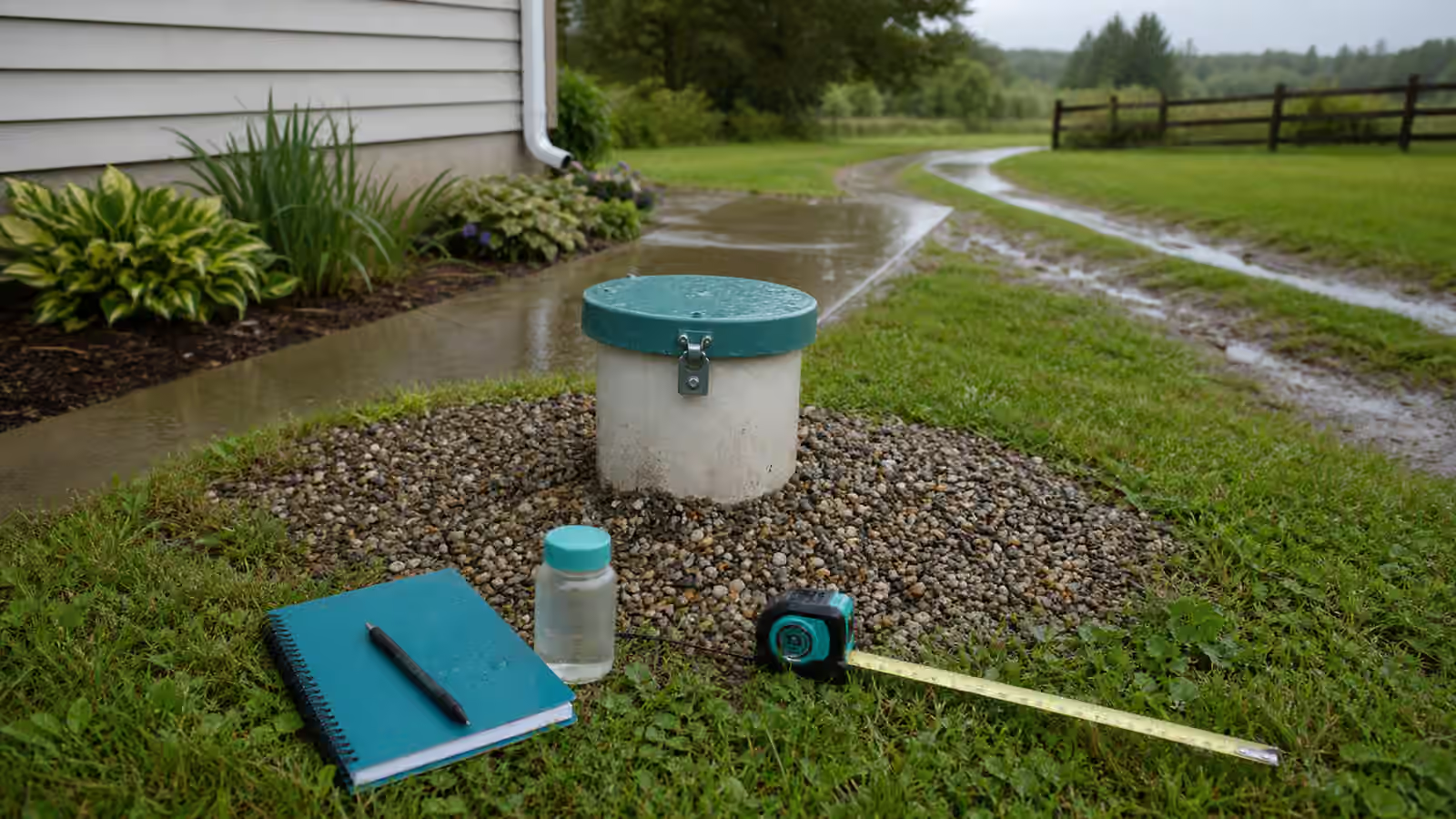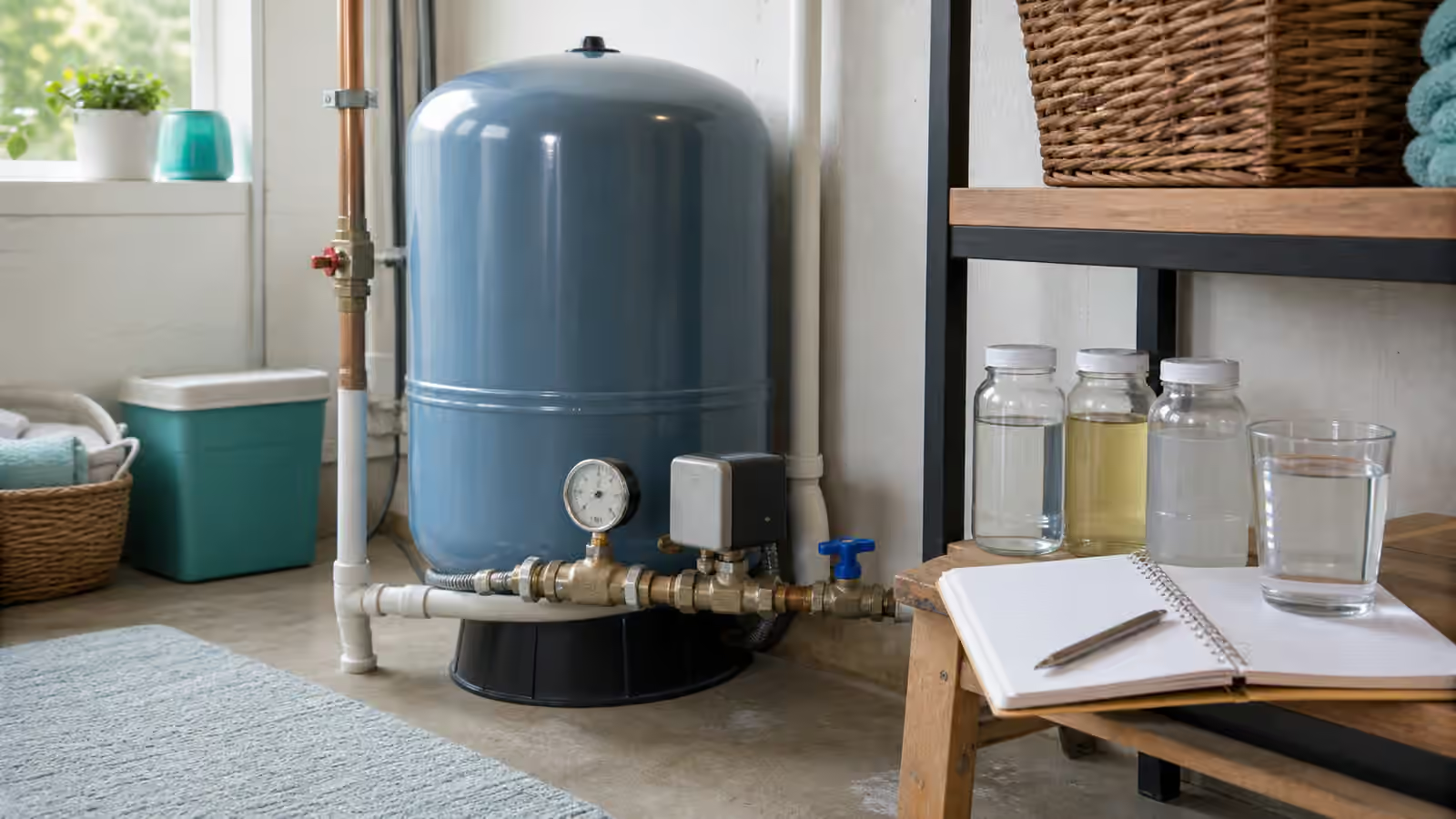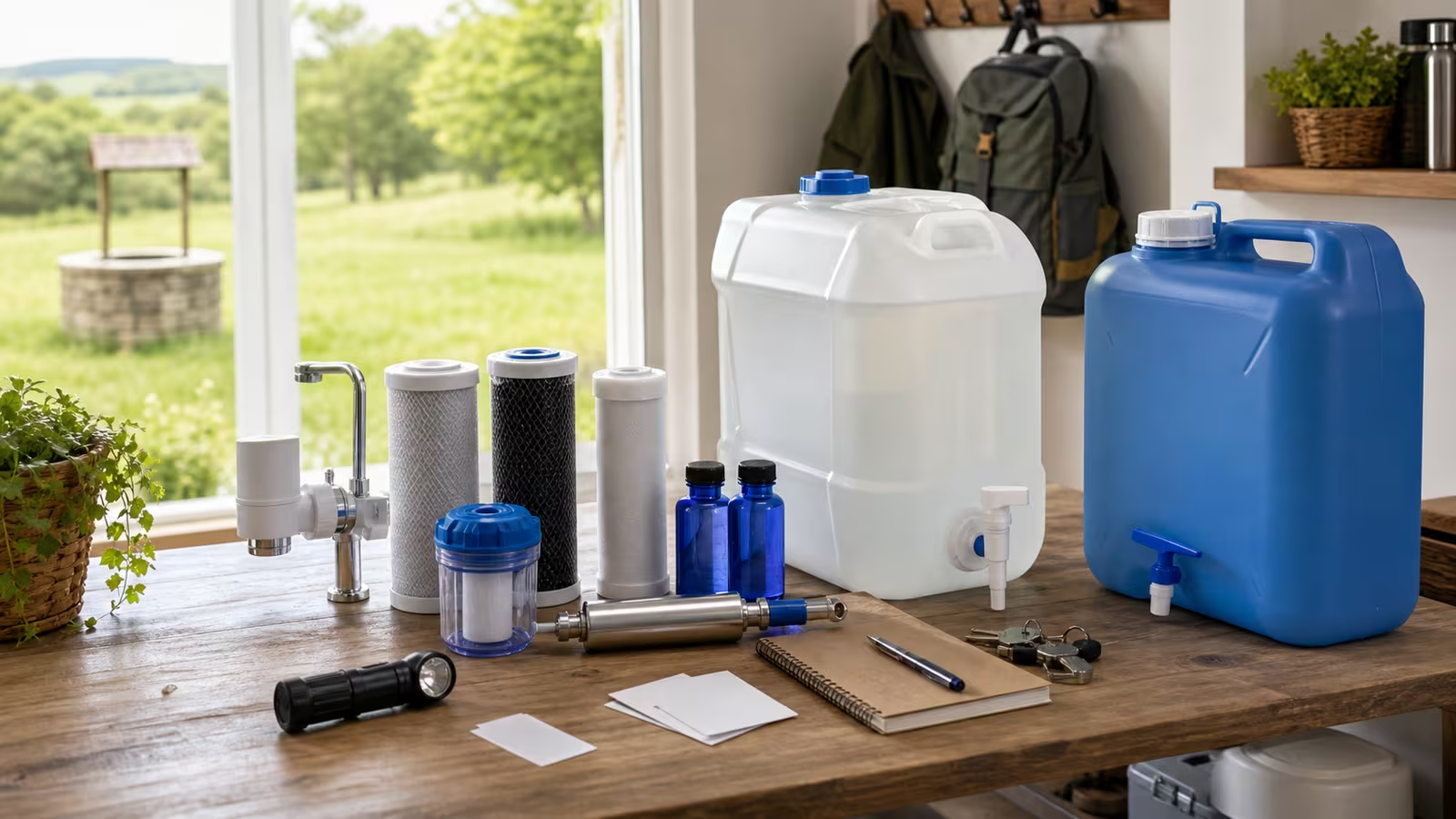
City water and well water are different responsibility models. Public systems are monitored under drinking water rules and publish water quality reports. Private well owners are responsible for testing, maintenance, and follow-up. The water may look the same in a glass, but the decision path is not the same.
Clear Water Lab helps with everyday water decisions, reports, testing, certification checks, and maintenance. It is not medical advice, legal advice, or a substitute for local boil-water notices, certified lab results, utility instructions, or health department guidance.
Responsibility changes the whole plan
City water and private well water can look identical in a glass, but they arrive with different responsibility models. Public water systems are monitored under public drinking water rules, publish reports, issue notices, and maintain treatment before the water reaches the distribution system. That does not make every building plumbing question disappear, but it gives you an official trail to follow. A private well is more local and more personal. The owner is usually responsible for testing, maintenance, and deciding when a treatment system is needed.
That difference should shape the first hour of work. For city water, you begin with the Consumer Confidence Report, recent notices, utility contact information, and any building-specific plumbing questions. For a private well, you begin with the well history, local geology, nearby land uses, flood or repair events, and lab tests recommended by local health officials. The practical mood is different too. City water often asks you to interpret a public report and then check your own plumbing. Well water asks you to create the evidence record yourself.
The mistake is treating both sources as a generic “tap water” problem. A pitcher filter may improve taste in either house, but it is not a well water safety plan. A whole-home sediment filter may protect fixtures, but it will not prove anything about arsenic or nitrates. A boil notice can matter for a public system during an emergency, while a private well after flooding may need testing, disinfection guidance, and local expertise. The source is not trivia. It is the beginning of the decision tree.
What this helps you decide
This helps you decide whether your next step is a public report, a utility call, a certified lab test, a well inspection, or a filter claim check.
Plain definitions
| Term | Plain meaning |
|---|---|
| Public water system | A regulated system that supplies water to customers and must monitor and report under drinking water rules. |
| Private well | A household water source where the owner is responsible for testing, maintenance, and treatment decisions. |
| Point-of-entry treatment | Treatment installed where water enters a home, often considered when the whole building needs treatment. |
Decision criteria
| Question | Useful next move |
|---|---|
| Public water concern | Read the CCR, watch for public notices, and ask the utility about current operations or distribution work. |
| Private well concern | Test with a certified lab and ask the health department what to add based on local geology and land use. |
| Shared building | Ask the landlord, building manager, or HOA how water is stored, treated, and routed after it leaves the utility. |
| RV, tank, or tiny home | Treat the tank, hose, fill source, sediment, disinfection, and maintenance routine as part of the water system. |
Common mistakes
- Using a city-water report to judge a private well.
- Assuming a clear taste means a well has no bacteria, nitrate, arsenic, or metal concern.
- Installing a whole-home system before confirming the contaminant and required treatment type.
- Ignoring the building plumbing between the water main and the glass.
Try this next
- Identify whether the bill comes from a public system, a landlord, a well, or a shared source.
- For public water, save the current CCR and any public notices.
- For wells, test at least the baseline items your local health department recommends.
- Use Pitcher, Faucet, Countertop, Under-Sink, RO, and Whole-Home Filters only after the source and target problem are clear.
Safety and source check
Private wells are local. Nearby agriculture, septic systems, industry, flooding, old plumbing, and geology can matter more than a generic national checklist.
Related Fondsites path
- How to Read Your Water Quality Report
- Nitrates, Arsenic, and Private Wells
- Emergency Water Basics
- Tiny Home and RV Water Basics
A calm first-week plan
If you are on public water, spend the first week collecting official context rather than shopping. Download the latest report, search for current notices, and write down the name of the system serving your address. If you live in an older building, ask what is known about service lines, internal plumbing, and fixtures. When the question is tap-specific, consider testing at the tap instead of trying to infer too much from a system-wide table.
If you are on a private well, spend the first week building a test plan. Local health departments, state agencies, and extension offices often provide better starting guidance than product labels. The right panel depends on the place. Some regions deserve attention to arsenic, nitrates, bacteria, hardness, metals, salinity, pesticides, or flood-related contamination. Testing after repairs, flooding, changes in taste, or long periods of nonuse can be more important than buying a shiny device.
Both paths benefit from humility. City water can still pick up lead from plumbing. Well water can taste clean while carrying contaminants that need lab testing. Treatment devices can be useful, but only after you know which claim matters. The goal is not to make city water sound worry-free or well water sound frightening. The goal is to respect the system you have.
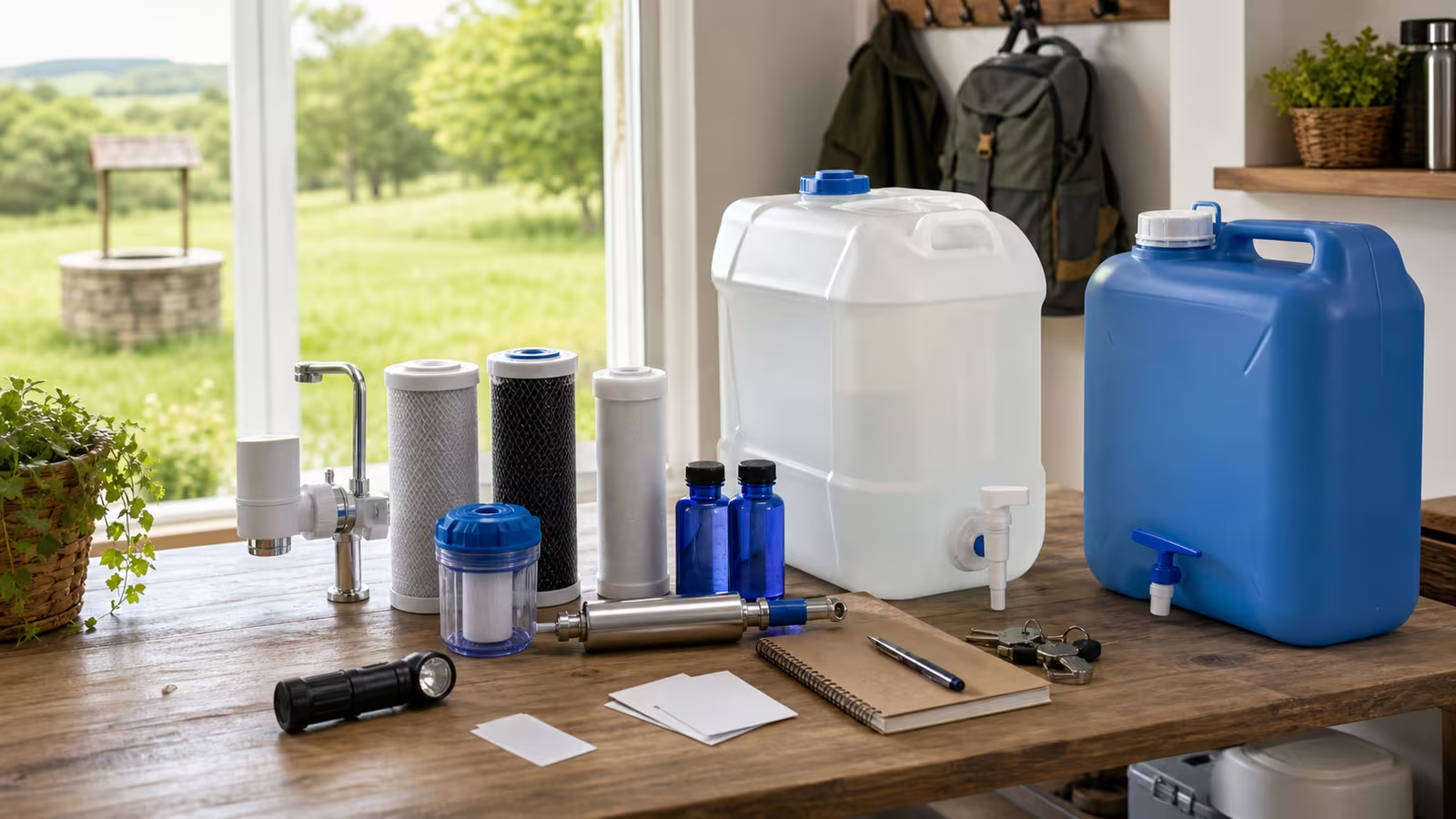
Once you know the source, decisions become less dramatic. You can choose a renter-safe carbon setup for taste, a certified point-of-use device for a specific drinking-water contaminant, a sediment prefilter for visible particles, or a professional treatment plan for a well result that deserves it. The source gives the story a beginning, and a good beginning prevents expensive detours.