Bottled water can be useful without being mysterious. It can cover a short outage, travel with fewer logistics than a home filter, help compare brewing taste, or provide a known sealed container when local instructions call for an alternate source. It can also be overread. A clean label, mountain image, or word like purified does not automatically answer the same questions as a water quality report, a certified filter listing, or a private well lab result. For background, see NSF — Standards for Water Treatment Systems .
Clear Water Lab helps with everyday water decisions, reports, testing, certification checks, and maintenance. It is not medical advice, legal advice, or a substitute for local boil-water notices, certified lab results, utility instructions, or health department guidance.
The label is a starting point, not the whole story
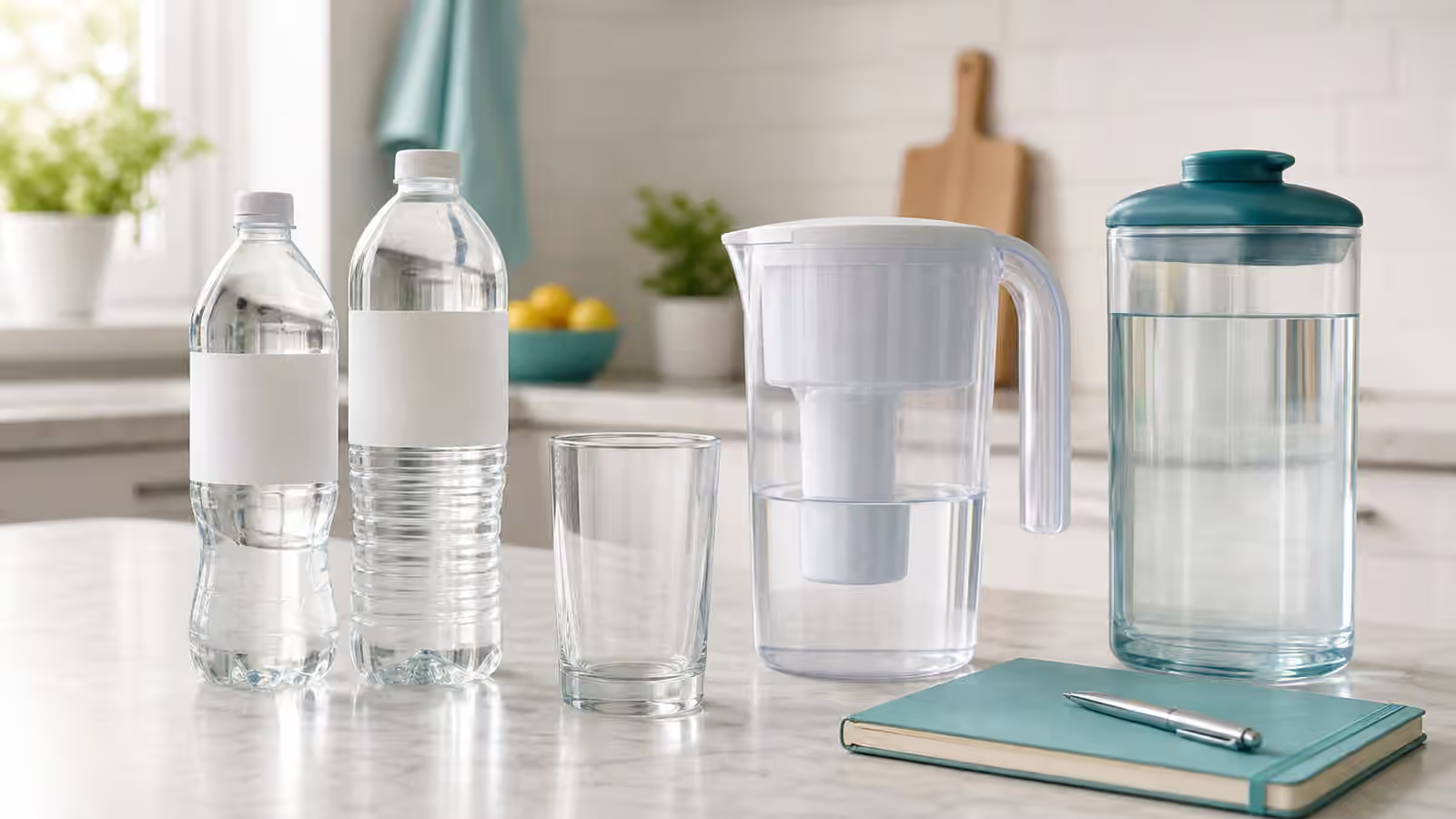
Bottled water labels often use words that sound more complete than they are. Spring, purified, mineral, distilled, artesian, and drinking water each suggest a different source or treatment path, but the useful question is narrower: what source was used, what treatment was applied, what does the label actually claim, and why is the household choosing this water instead of the tap? A bottle can be convenient and still leave some questions unanswered.
Filtered tap water has a different evidence path. The source may be a public water system with a Consumer Confidence Report, a private well with lab testing responsibility, a building tank, or a small storage system. The treatment may be a pitcher, faucet mount, refrigerator cartridge, under-sink carbon block, reverse osmosis system, or whole-home device. If the concern is taste, the comparison can be simple. If the concern is lead, PFAS, nitrate, arsenic, microbes, or another health-related contaminant, the comparison needs stronger evidence than taste or packaging.
This is where Tap Water Quickstart matters. The first water decision is still a source decision. Bottled water does not erase the need to understand a public notice, a private well result, or a building plumbing issue. Filtered tap water does not become equivalent to bottled water because it tastes cleaner. Each route deserves its own evidence.
Convenience and safety are different claims
The most common mistake is treating convenience as proof. A sealed bottle is convenient. It may be the right choice during a notice when officials recommend bottled or alternate water. It may be easier for a renter, traveler, or household with an interrupted kitchen sink. But convenience does not automatically tell you how that water compares to the exact contaminant question that caused concern.
A public water report describes a water system over a reporting period, not the inside of every apartment pipe or the route through every refrigerator dispenser. A bottled water label describes a product category and sometimes a source or treatment process, not a private lab report for the glass in front of you. A filter certification describes an exact product claim under specified conditions, not every cartridge that physically fits a housing. These are different kinds of evidence. They should not be swapped simply because one feels more reassuring.
When an official notice is active, the notice wins. If the instruction says to boil, boil according to the issuing authority. If it says not to drink or not to use water, do not treat a household filter or casual boiling step as a workaround. Emergency Water Basics keeps those distinctions clear because bottled water is often part of emergency planning, not a universal replacement for instructions.
Taste experiments can be useful when the stakes are low
Bottled water can be a good comparison tool for taste. A familiar coffee or tea brewed with tap water, maintained carbon-filtered water, reverse osmosis water with appropriate remineralization, and a known bottled water can reveal how minerals, chlorine taste, stale storage, and scale affect flavor. This kind of experiment belongs in the realm of preference and maintenance clues. It should not be stretched into a contaminant conclusion.
Coffee and Tea Water uses the same discipline. Change one variable at a time, write down what changed, and avoid turning a better cup into a broad safety claim. Bottled water that improves flavor may have a mineral profile that suits brewing. Filtered tap water that tastes flat may have lost some mineral character. Hard tap water that makes scale may still be ordinary for its source. Taste is useful, but it is not a full lab report.
If a household uses bottled water only because the tap tastes like chlorine, a maintained activated carbon filter may be the simpler long-term fix. If the tap has a metallic first-draw taste, bottled water may dodge the symptom while the plumbing question remains. If the concern is a private well, bottled water can be a temporary drinking source while proper testing is arranged, but it does not solve the well.
Storage changes the question
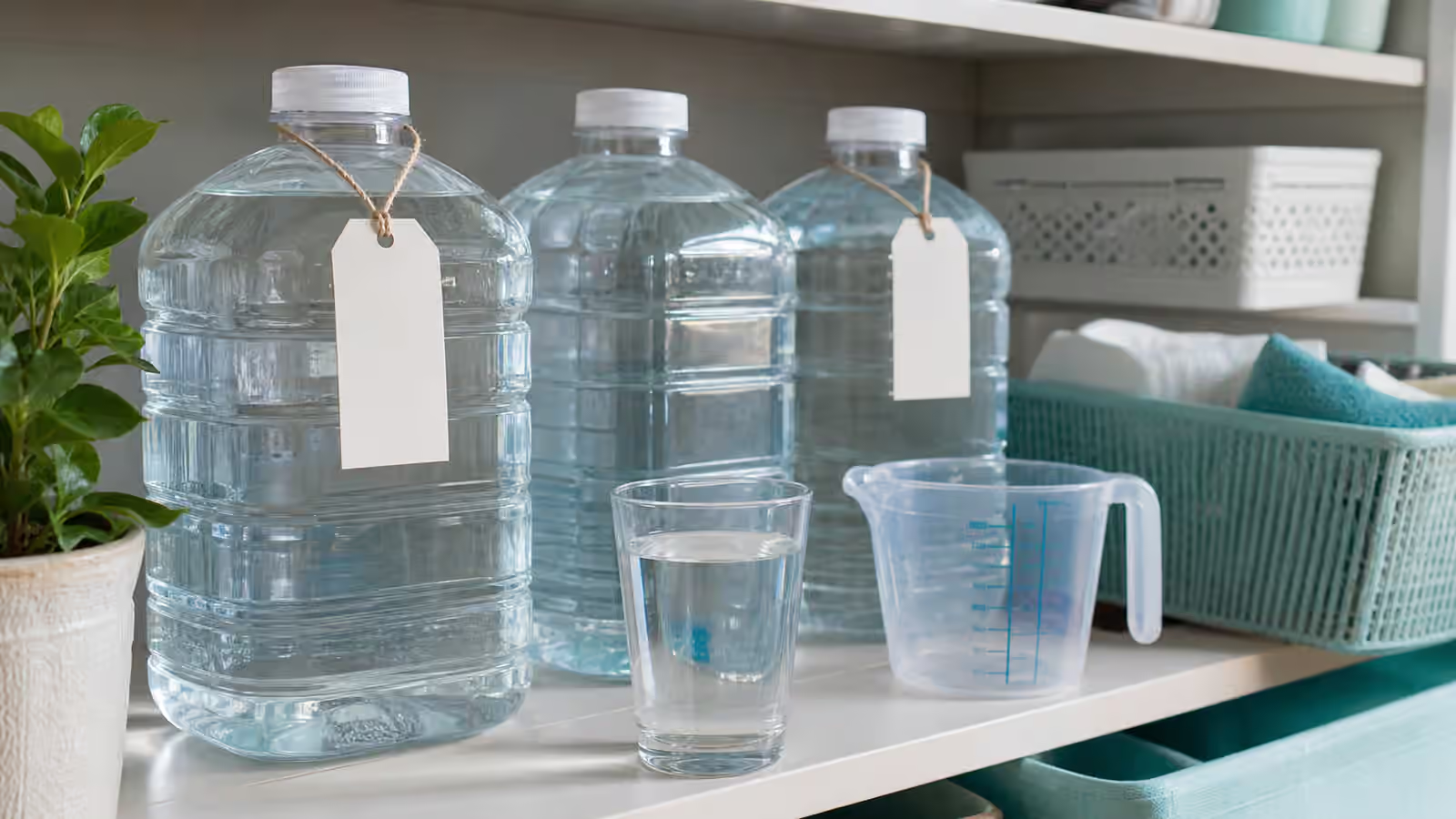
Stored bottled water and stored tap water both need ordinary care. Containers should be kept according to their instructions, protected from heat and chemicals, and rotated when appropriate for the household plan. A bottle left in a hot car, a refillable jug handled with dirty hands, and a storage container filled through a garden hose are not the same as a clean sealed container stored for emergency use.
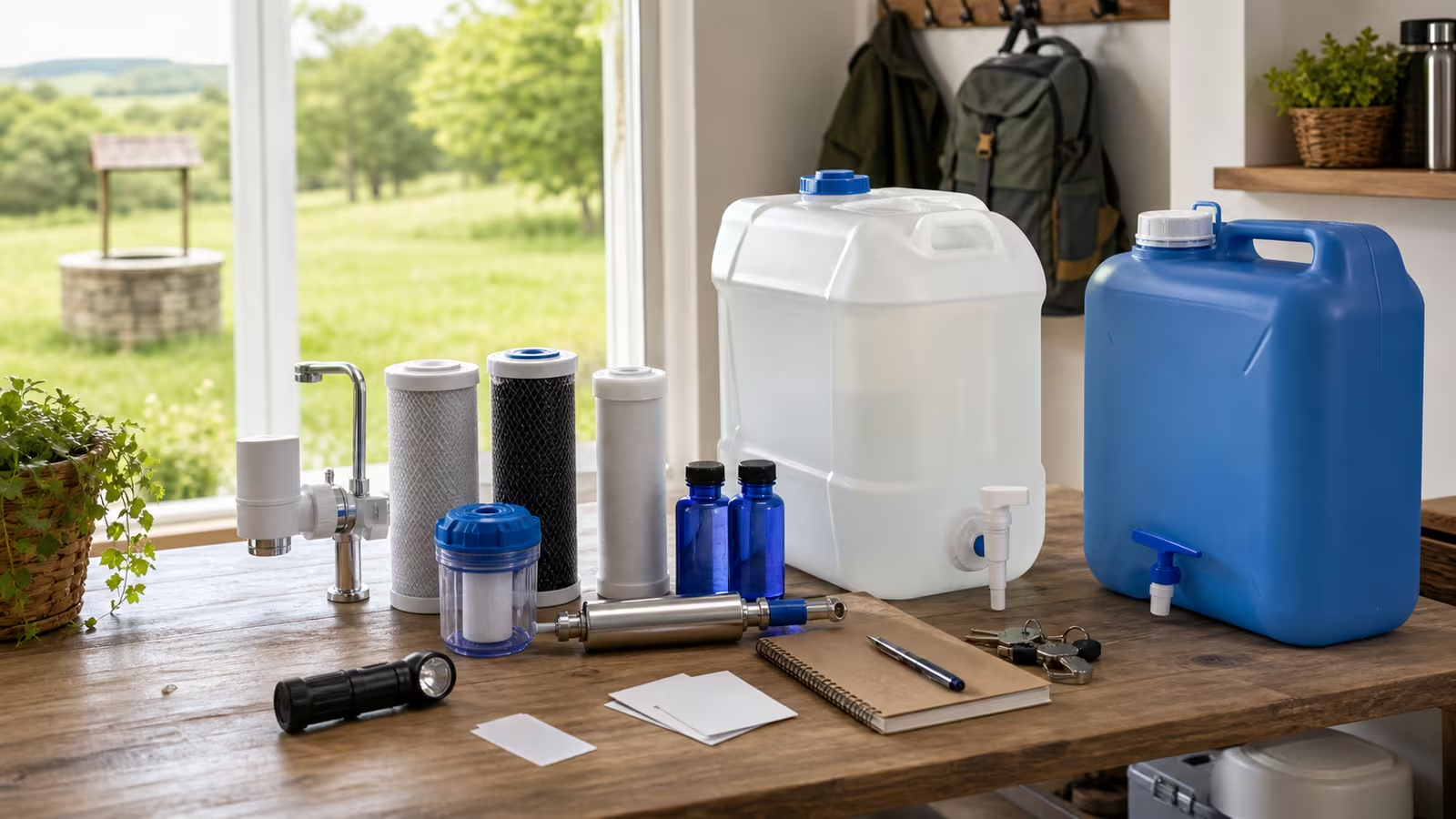
Drinking Water Storage at Home is the better companion when the question is preparedness. The container, cap, filling method, storage location, rotation date, and intended use matter. Bottled water can make preparedness easier because the container and seal are already part of the product. Refillable containers can reduce waste and fit larger household needs, but the cleaning routine becomes part of the water path.
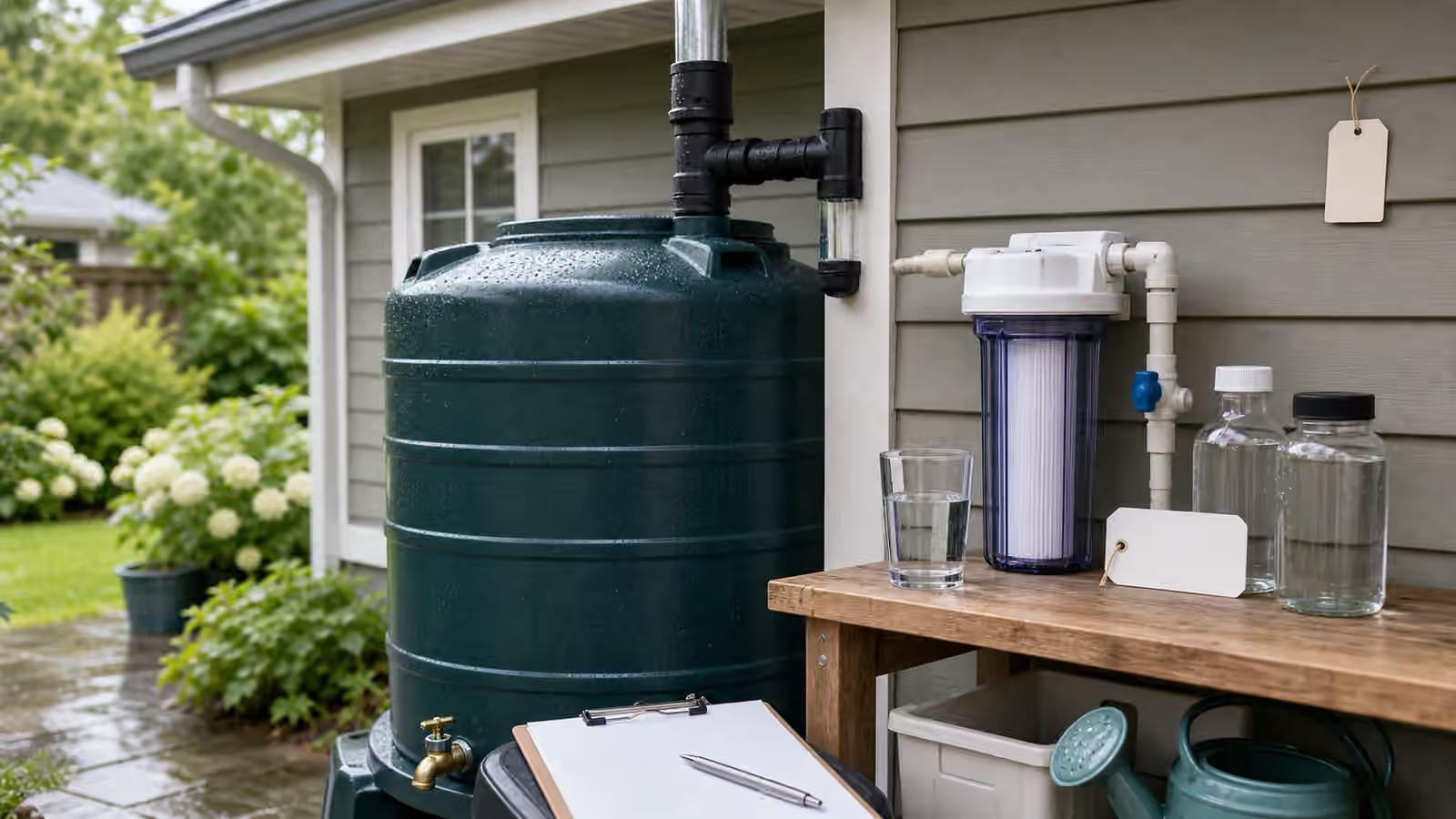
This is also why outdoor filling deserves caution. An outside hose bib may bypass indoor treatment, pass through a hose that was used for yard work, or hold stagnant warm water. If the bottle or jug will be used for drinking, the route into the container matters as much as the source. Outdoor Hose and Yard Water covers that route in more detail.
A calmer comparison method
The clean comparison is practical. Name the reason for bottled water first. Is it taste, emergency backup, travel, convenience, a temporary notice, a private well concern, infant or medical guidance from a clinician, or distrust of a filter claim? The answer decides the evidence needed. Taste can be compared by tasting. Emergency use should follow official guidance. Contaminant concerns need reports, lab results, certified listings, or qualified local instructions.
Then name the tap route. Is the household comparing bottled water to raw tap water, a pitcher, a refrigerator dispenser, an under-sink carbon block, reverse osmosis, or a whole-home system? A bottle and a filter are not single categories. A certified lead-reduction under-sink cartridge is a different object from a taste-only pitcher. A bottle labeled distilled is different from spring water chosen for brewing flavor. General categories hide the real decision.
Finally, keep maintenance visible. If filtered tap water is the chosen route, the cartridge schedule and verified claim matter. If bottled water is the chosen backup, storage and rotation matter. If both are used, assign each one a job. Bottled water may be for emergencies and travel. Filtered tap may be for daily drinking. Raw tap may be fine for other uses depending on source and guidance. The household does not need a winner in every category. It needs a reasoned match between water, evidence, and use.
Bottled water is neither magic nor foolish. Filtered tap water is neither automatically superior nor automatically suspect. Both can be practical when the claim matches the reason. The useful habit is to slow the comparison down until the label, report, filter listing, storage plan, and actual use all point in the same direction.