Backflow is one of those plumbing ideas that sounds technical until the household sees the simple version. A hose end sits in a bucket. A utility sink has a sprayer below the flood rim. An irrigation line connects treated drinking water to soil and outdoor equipment. A chemical feeder, boiler fill, softener bypass, or improvised tank fill creates a route that nobody meant to create. Under unusual pressure conditions, water can move the wrong way. For background, see EPA — Home Drinking Water Testing .
A cross-connection is a route, not a mood
A cross-connection is a physical link between potable water and something that should not be allowed back into it. The link can be obvious, like a hose submerged in a container. It can be built into equipment, like an irrigation system or boiler fill. It can be accidental, like a temporary hose used during cleaning or maintenance. The important idea is not that bad water is definitely moving backward at every moment. The important idea is that a possible route exists.
Backflow can happen through backpressure or backsiphonage. The words are less important than the household picture. If pressure changes, water may move from the wrong side of a connection toward the potable side. That is why vacuum breakers, air gaps, check valves, reduced pressure devices, and other assemblies exist in plumbing practice. The correct device depends on the hazard, location, local code, and system design.
This is not a reason to panic at every fitting. It is a reason to stop casually removing protective devices because they hiss, drip, look awkward, or make a hose harder to connect. A small inconvenience may be the visible part of a safety layer. If it is malfunctioning, the answer is repair or replacement with the right part, not improvisation.
Hoses are the easiest place to understand the risk
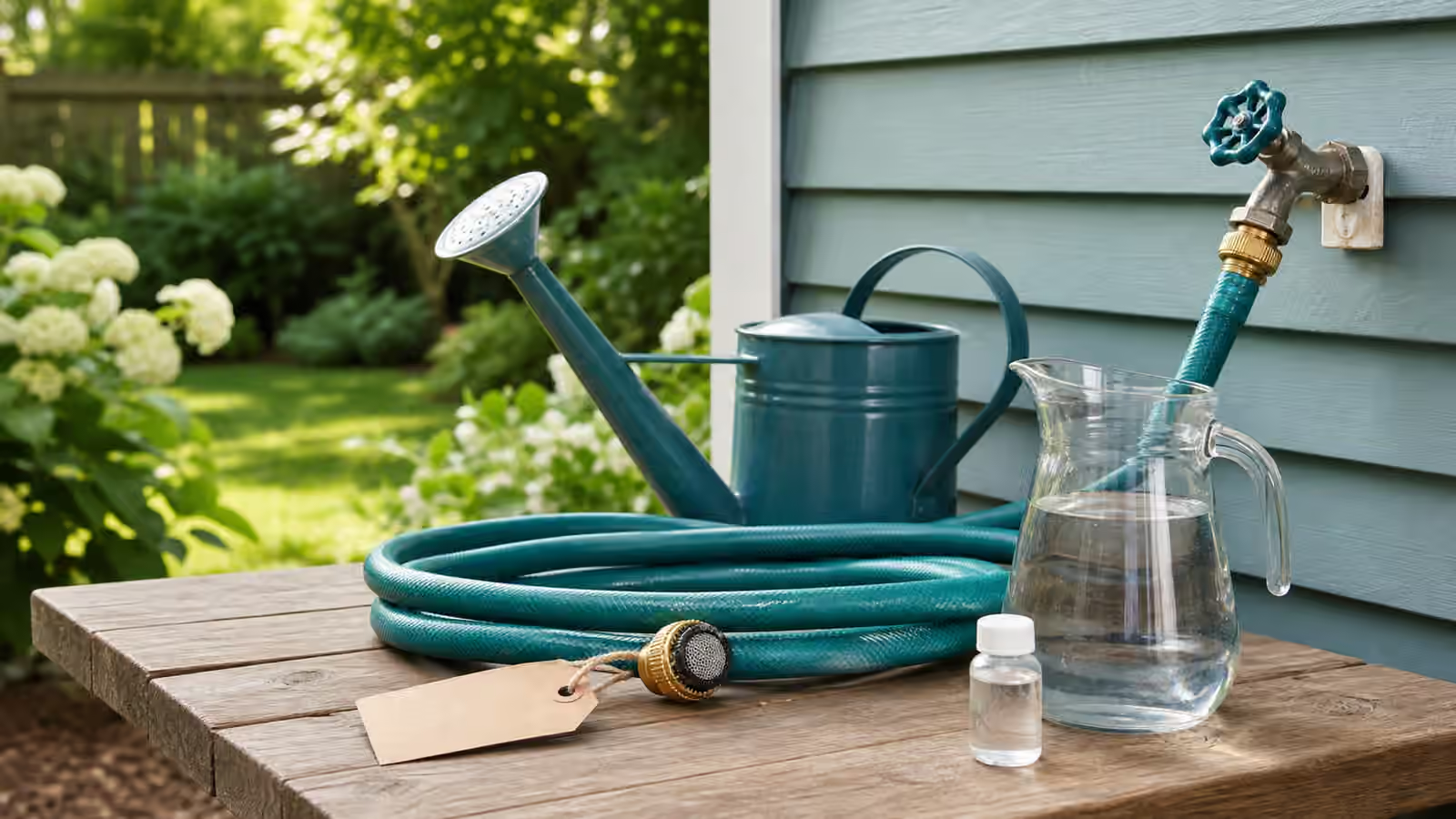
Outdoor Hose and Yard Water covers hose water as a different route from a kitchen drinking tap. Backflow is one reason. A hose may be attached to a sprayer, fertilizer applicator, rain barrel, pool fill, irrigation manifold, or bucket. The end may sit below the water surface. If pressure drops in the supply, the hose can become more than an outlet. It can become a path.
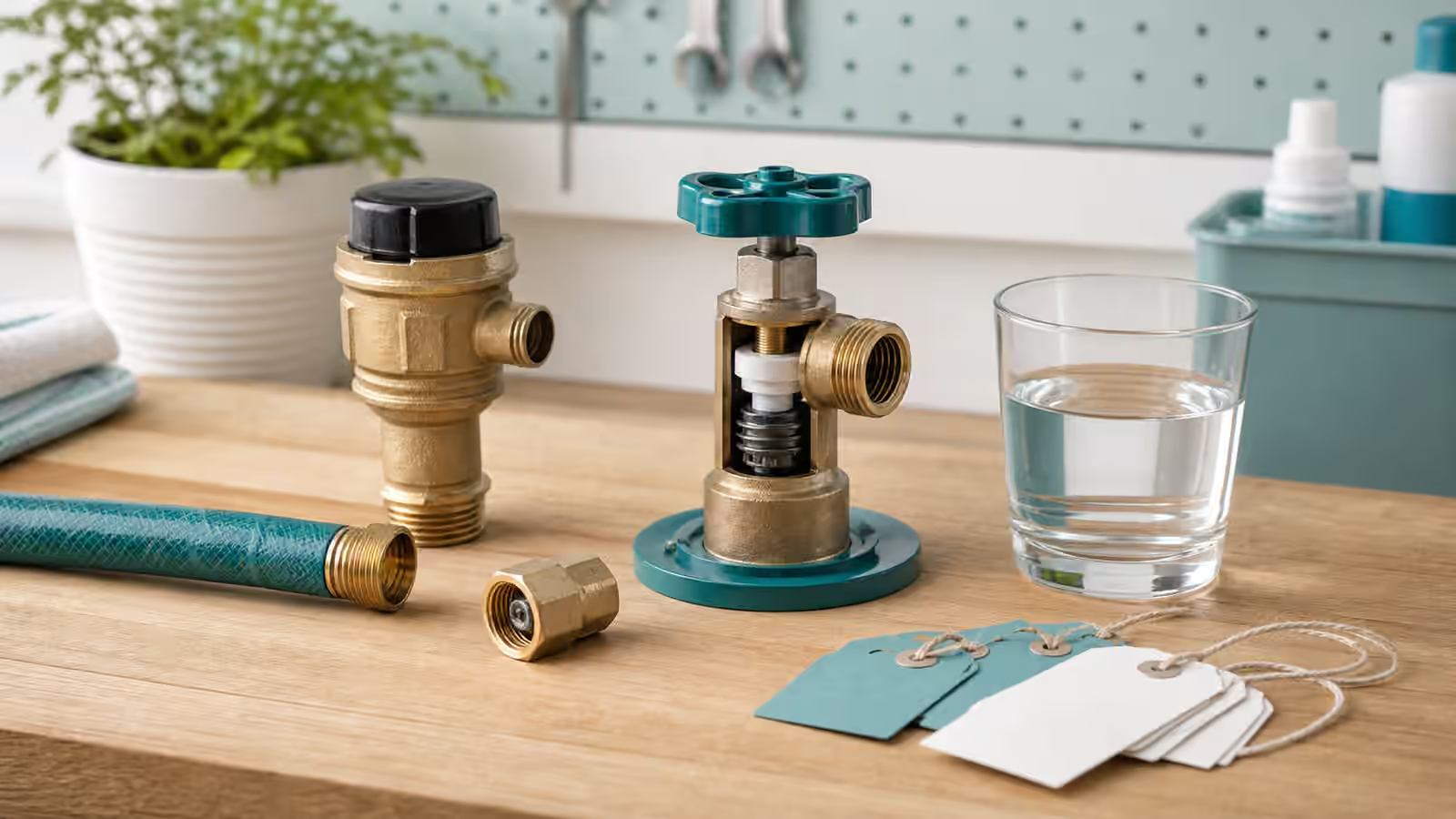
Many outdoor faucets have hose bib vacuum breakers or similar protection. Some are built in. Some are added on. Some are missing, damaged, painted over, removed, or left leaking for years. The household does not need to memorize every device type to have a better habit. Notice whether protection exists, avoid submerging hose ends, do not remove devices casually, and ask local professionals when irrigation, chemical application, or unusual equipment is connected.
Indoor hoses deserve the same respect. Laundry sinks, mop sinks, handheld sprayers, basement utility connections, and temporary fill hoses can create low points where a hose end sits in water. The cleaner the room looks, the easier it is to forget the route. Backflow is not only a yard topic.
Treatment equipment can create confusing branches
Water treatment adds valves, bypasses, drains, brine tanks, cartridge housings, pressure equipment, storage tanks, and sometimes chemical feed systems. Each part may be appropriate when installed correctly. Each part can become confusing when the household no longer understands which way water flows. A bypass valve left in the wrong position may send untreated water to a tap. A drain connection without the required air gap may create a different concern. A temporary hose used during service may not belong after the service is done.
Whole-Home vs Point-of-Use Water Treatment is useful because treatment location changes the stakes. An under-sink device affects one route. A whole-home system sits near the beginning of the building path. The more central and complex the equipment, the more important it is to label valves, keep manuals, and understand which parts require professional testing or service.
Backflow prevention should not be treated as a filter claim. A carbon cartridge does not fix a bad cross-connection. A UV lamp does not make an improper drain connection acceptable. Reverse osmosis does not excuse a missing air gap where one is required. Filtration and plumbing protection solve different problems.
Air gaps are boring for a reason
An air gap is one of the most straightforward protections because it uses physical separation. Water discharges above a flood level or receiving opening rather than being connected by a submerged tube. That visible break prevents a direct route back into the potable side. It can look crude compared with a sleek hidden connection, but the openness is the point.
Households sometimes dislike air gaps because they make noise, take space, or reveal splashing. That frustration can lead to improvised tubing, sealed connections, or rerouted drains. Resist that urge. If a device instruction or local code requires an air gap, changing it for neatness can change the safety of the installation. The same applies to drain saddles, softener discharge, RO drains, and treatment equipment that sends water to waste.
This is where Under-Sink Water Filter Planning connects to backflow thinking. Cabinet space, drain routes, tubing, and maintenance access are not merely aesthetic. They decide whether the device is installed in a way that remains understandable and serviceable. A tidy unsafe shortcut is still a shortcut.
Records make professional help easier
When a plumber, irrigation technician, treatment professional, landlord, or utility asks about the system, vague answers slow everything down. A simple home water map helps. Mark the main shutoff, pressure regulator if present, water heater, softener, sediment filter, carbon system, UV unit, RO faucet, refrigerator line, outdoor taps, irrigation connection, boiler fill, and any visible backflow devices. The map does not need to be architectural. It needs to name the routes.
New Home Water Walkthrough is a good starting point for building that map. If a device requires annual testing, inspection, or service under local rules, keep that record with the map. If a protective device leaks or changes behavior, write down when it started instead of removing it and forgetting the reason.
Records also prevent accidental reversals. A future resident, contractor, or family member may see a device and treat it as unnecessary clutter. A tag that says what the valve or fitting protects can keep a safety layer from being discarded during a hurried repair. The best label is plain and non-dramatic: what it is, what it serves, and who should service it.
Keep the principle simple
Backflow prevention is not a claim that water is dangerous. It is a design habit that respects the possibility of pressure changes and unwanted routes. A home can have ordinary safe daily water and still need backflow protection at specific connections. The need comes from plumbing geometry, not from fear.
The household version is calm. Do not put hose ends where they can sit in questionable water. Do not remove vacuum breakers, air gaps, or protective assemblies because they are inconvenient. Do not turn treatment drains or temporary hoses into permanent hidden connections. Do not assume a filter solves a plumbing route. When irrigation, boilers, treatment equipment, or code-required devices are involved, use local qualified guidance.
A clear glass of water begins upstream of the glass. Sometimes the most important water-quality decision is not a cartridge or test strip, but a humble fitting that keeps water moving one way.