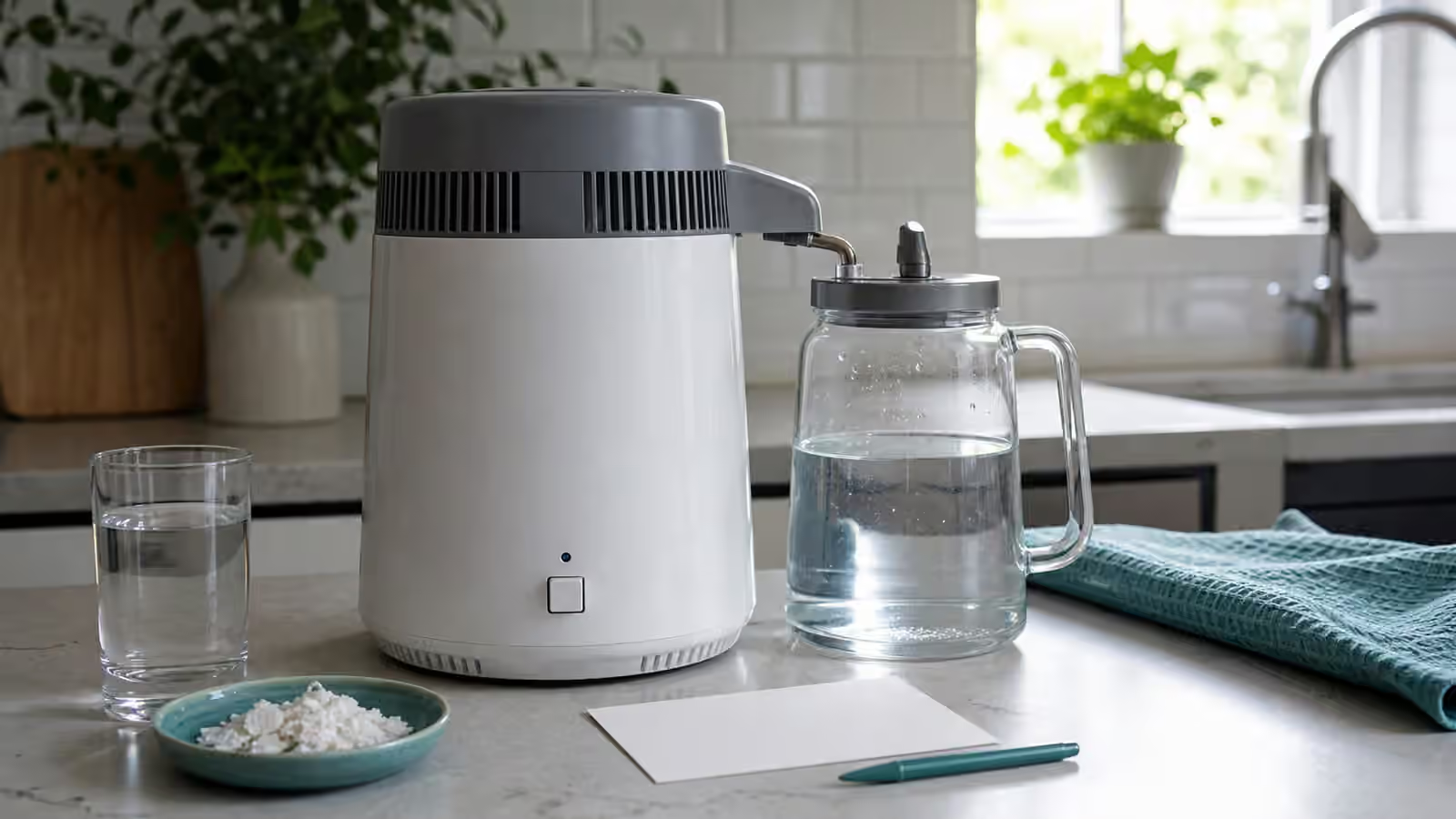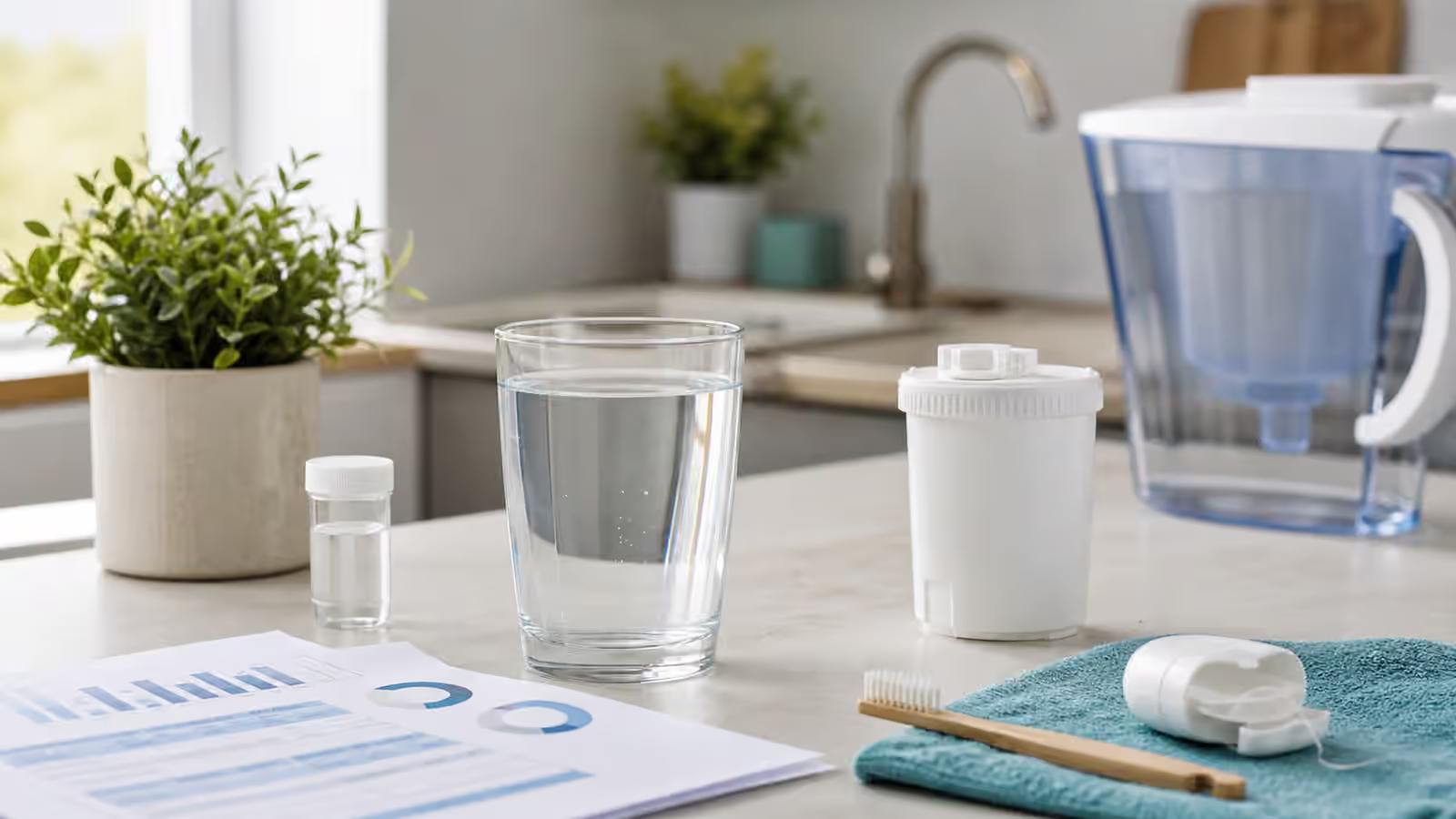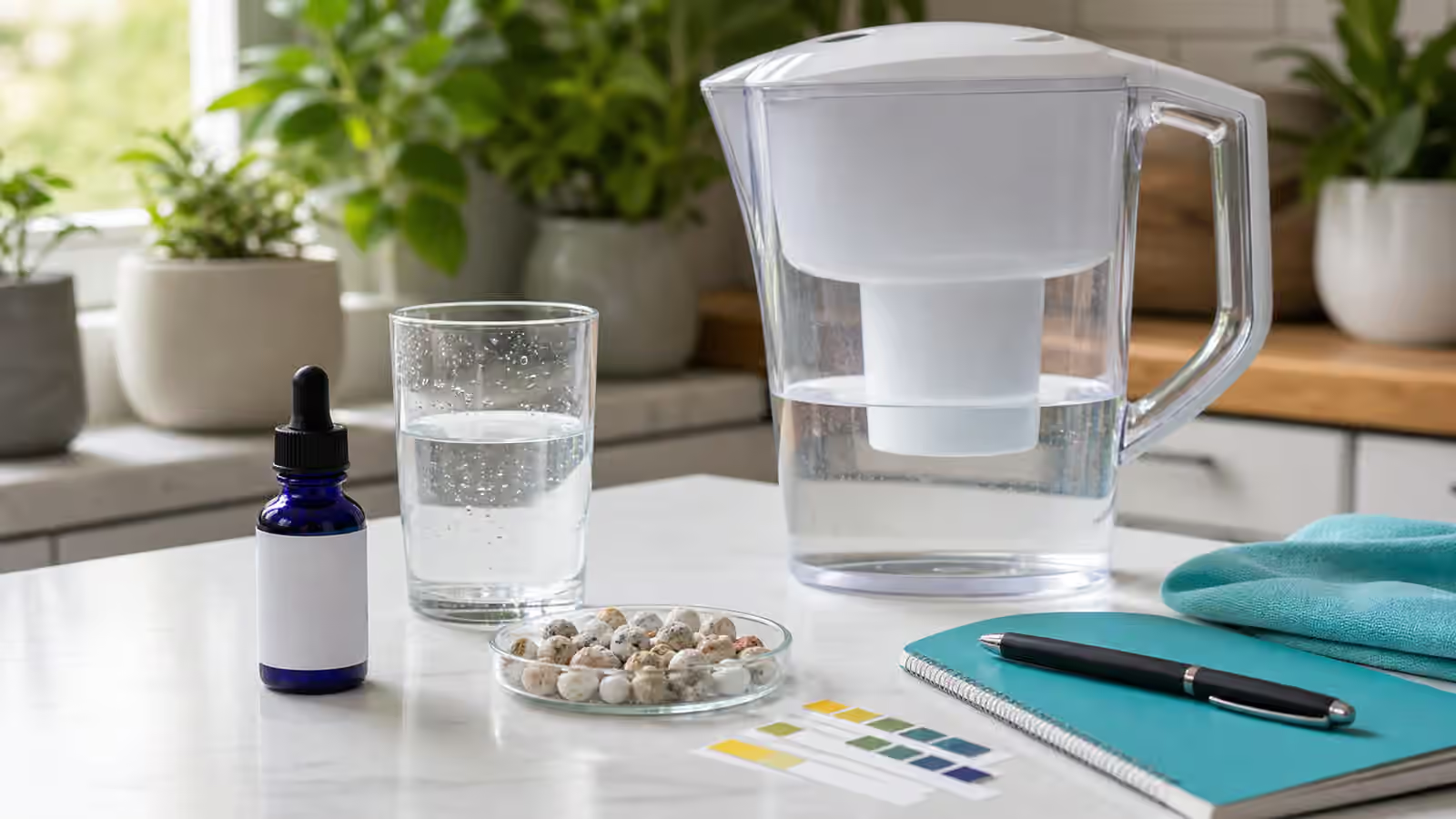
Alkaline water claims often mix several ideas into one glass. There is pH, which describes acidity or alkalinity. There are minerals, which can affect taste, scale, and conductivity. There are filter materials, which may or may not reduce specific contaminants. Then there is health marketing, which often asks the pH number to carry more meaning than it can responsibly carry at the kitchen counter. For background, see EPA — Secondary Drinking Water Standards: Guidance for Nuisance Chemicals .
Clear Water Lab helps with everyday water decisions, reports, testing, certification checks, and maintenance. It is not medical advice, legal advice, or a substitute for local boil-water notices, certified lab results, utility instructions, or health department guidance.
pH is real, but it is not a universal score
The pH of water matters in plumbing, corrosion, taste, treatment design, and some lab interpretation. Tap Water pH covers that broader role. In a home filter aisle, however, pH is often turned into a simple scoreboard. Higher is implied to be better, cleaner, or more supportive of wellness. That shortcut is not a water-quality method.
Water can have a higher pH because of minerals, treatment choices, source chemistry, or additives. It can have a lower pH because of dissolved carbon dioxide, source conditions, treatment, or plumbing interactions. Neither direction automatically names the contaminants in the water. A pH strip does not tell you whether lead, PFAS, nitrate, arsenic, bacteria, chlorine, VOCs, or microplastics are present. It tells you one chemical property under the limits of the method you used.
This matters because many alkaline pitchers are purchased as if they are contaminant filters, mineral supplements, and health devices at the same time. The claims should be separated. If the product claims to raise pH or change taste, evaluate that claim as a pH or taste claim. If it claims contaminant reduction, verify the exact model and cartridge through a recognized certification listing. If it implies a health effect, be much more cautious and rely on qualified medical guidance rather than product language.
Minerals can change taste without proving safety
Minerals are not automatically bad. Calcium, magnesium, bicarbonate, sodium, potassium, chloride, sulfate, and other dissolved substances can shape taste and scale behavior. In coffee and tea, mineral balance can be obvious in the cup. In kettles and humidifiers, minerals can show up as scale or dust. In a TDS meter, minerals can raise the reading even when the water is ordinary for its source.
The problem is not that minerals exist. The problem is turning minerals into vague proof. A product that adds minerals after reverse osmosis may improve taste for some people. A pitcher that contains mineral media may change pH and mouthfeel. A dropper bottle may alter a glass in a measurable way. None of that proves that a separate contaminant was reduced. TDS Meter Readings makes the same point from the opposite direction: one number can change while the real contaminant question remains unanswered.
Taste comparisons are fair when taste is the question. Brew a familiar tea with ordinary tap water, a maintained carbon filter, reverse osmosis water, and an alkaline pitcher if you want to hear the difference. Keep the experiment boring and change one thing at a time. If the alkaline version tastes smoother, that is useful preference information. It is not a certified reduction claim for lead, PFAS, microbes, or anything else.
Pitchers still need exact claim checking
Pitchers are attractive because they are simple. They sit on the counter or in the refrigerator, require no plumbing, and make water feel intentionally handled. That simplicity is valuable for renters and small households. It is also a reason to be strict about claims. A pitcher can physically hold a cartridge without making every marketing phrase trustworthy.
Look for the exact product model, cartridge model, standard, contaminant, capacity, and replacement conditions. A phrase such as “helps reduce impurities” is not the same as a verified listing for a named contaminant. A claim to alkalize water is not the same as a claim to reduce lead. A long contaminant chart on a sales page is not the same as a current certification listing you can match to the cartridge being sold. How to Verify a Water Filter Claim is the safer habit before trusting any health-related reduction claim.
Maintenance also matters. Mineral media, carbon, ion exchange resin, and other cartridge materials do not work forever. If the household bought the pitcher for taste, an overdue cartridge may simply make the water less pleasant. If the household believes the cartridge is reducing a health-related contaminant, overdue replacement is a more serious mismatch between belief and evidence. Filter Replacement Schedules belongs in the same conversation as any pitcher claim.
Home pH tests can mislead when the method is casual
pH strips and inexpensive meters can be useful, but they are easy to overread. Strips have color ranges, lighting effects, expiration concerns, and interpretation limits. Meters require calibration, clean probes, temperature awareness, and storage care. A cup with soap residue, a sample taken after water sat in plumbing, or a glass that has just held mineral drops can make the result less representative than it looks.
That does not mean home pH checks are pointless. They can help notice changes, compare treated and untreated water, or support a conversation with a lab or treatment professional. The result should be labeled as a home observation, not treated as a full water analysis. If pH is part of corrosion, plumbing, well treatment, or lab interpretation, stronger testing and context matter.
Be especially cautious when a product demonstration shows dramatic color changes. A color shift can be visually persuasive while saying little about the question the viewer actually cares about. The demonstration may be showing pH, dissolved minerals, chlorine reaction, or something else entirely. The move from “this color changed” to “this water is better for you” is not evidence. It is marketing unless the claim is narrow, verified, and relevant.
A useful way to decide
Start by naming the job. If the job is taste, compare taste honestly and keep the cartridge schedule visible. If the job is brewing quality, read Coffee and Tea Water and think about minerals, hardness, chlorine taste, and scale as flavor variables. If the job is corrosion or blue-green staining, pH belongs with plumbing clues, not health slogans. If the job is contaminant reduction, ignore the alkaline language until the exact reduction claim has been verified.
Then decide whether the product creates extra work. Some pitchers are slow. Some cartridges are expensive or easy to forget. Some mineral additions create scale in kettles. Some water tastes better to one person and odd to another. A modest carbon pitcher with a clear certification claim may be a better fit than a dramatic alkaline device with vague promises. A reverse osmosis system with remineralization may be useful for a specific concern, but it is a larger maintenance commitment. The right answer depends on source, claim, household routine, and why the water is being changed.
Alkaline water does not need to be mocked, but it should be kept in its lane. pH is a property. Minerals affect taste and scaling. Filters need exact certified claims. Health decisions belong with qualified medical guidance, not with a color strip on a sales page. Once those lanes are separate, the decision becomes calmer: choose the water treatment that solves the named problem, not the one with the most impressive pH story.