Activated carbon is one of the most useful home filter materials because it can improve many taste and odor problems and, when properly designed and certified, reduce specific contaminants. The important phrase is specific contaminants. A carbon filter is not a universal answer.
Clear Water Lab helps with everyday water decisions, reports, testing, certification checks, and maintenance. It is not medical advice, legal advice, or a substitute for local boil-water notices, certified lab results, utility instructions, or health department guidance.
Carbon is useful because it is specific
Activated carbon has a quiet kind of usefulness. It can make ordinary tap water taste cleaner when chlorine taste or certain odor issues are the target. It can also be part of certified systems for specific health-related claims. But carbon is not powerful because it solves everything. It is powerful when its design, contact time, media amount, flow rate, and certification match the job.
Picture water moving through a maze of tiny surfaces. Some compounds are attracted to those surfaces and adsorb onto the carbon. Others do not. Some require enough contact time to matter. Some claims depend on carbon block design, not just loose carbon grains. Sediment can clog the path. Fast flow can reduce performance. An old cartridge can keep water tasting acceptable while no longer supporting the claim you bought it for. The material is impressive, but the system matters.
This is why “has carbon” should never be the end of the reading. Ask what the product is certified to reduce, for how much water, at what flow, with which cartridge, and under which instructions. For taste and odor, the answer may be straightforward. For lead, VOCs, PFAS-related claims, or other health concerns, the exact listing becomes essential. For nitrates, arsenic, bacteria, and many well-specific problems, carbon may be the wrong center of the plan.
What this helps you decide
This helps you decide when carbon is a good first step and when you need a stronger claim, a different treatment method, or a lab test.
Plain definitions
| Term | Plain meaning |
|---|---|
| Activated carbon | Carbon processed to create a large surface area that can adsorb certain compounds. |
| Adsorption | A process where substances adhere to the surface or pores of a material. |
| Contact time | How long water stays in contact with the media, which can affect performance. |
Decision criteria
| Question | Useful next move |
|---|---|
| Chlorine taste and odor | Look for Standard 42 taste and odor or chlorine claims if that is the target. |
| Lead, VOCs, PFAS, or other health-effect concerns | Look for a certified claim for that contaminant, not just “carbon filter.” |
| High sediment | Sediment can clog carbon and reduce flow. A prefilter or different system may be needed. |
| Fast flow or old cartridge | Performance depends on design and rated life, not just the presence of carbon. |
Common mistakes
- Assuming carbon removes nitrates, arsenic, bacteria, or every PFAS concern.
- Letting flow slow down for months instead of replacing the cartridge.
- Using a small pitcher for a whole-home or well-treatment problem.
- Comparing filters by pounds of carbon instead of certified claims and capacity.
Try this next
- Name the contaminant or taste problem first.
- Check the product listing for the exact certified claim.
- Follow flow, priming, flushing, and replacement instructions.
- Use Filter Replacement Schedules to keep the claim from turning into an expired promise.
Safety and source check
Carbon can be excellent for the right job. It can also be the wrong tool for several serious contaminants. Let the report, test, and certification guide the choice.
Related Fondsites path
- NSF/ANSI 42 vs 53 vs 58 vs 401
- Filter Replacement Schedules
- Why Your Water Tastes Like Chlorine, Metal, Dirt, Eggs, or Plastic
- How to Verify a Water Filter Claim
Use carbon with restraint and confidence
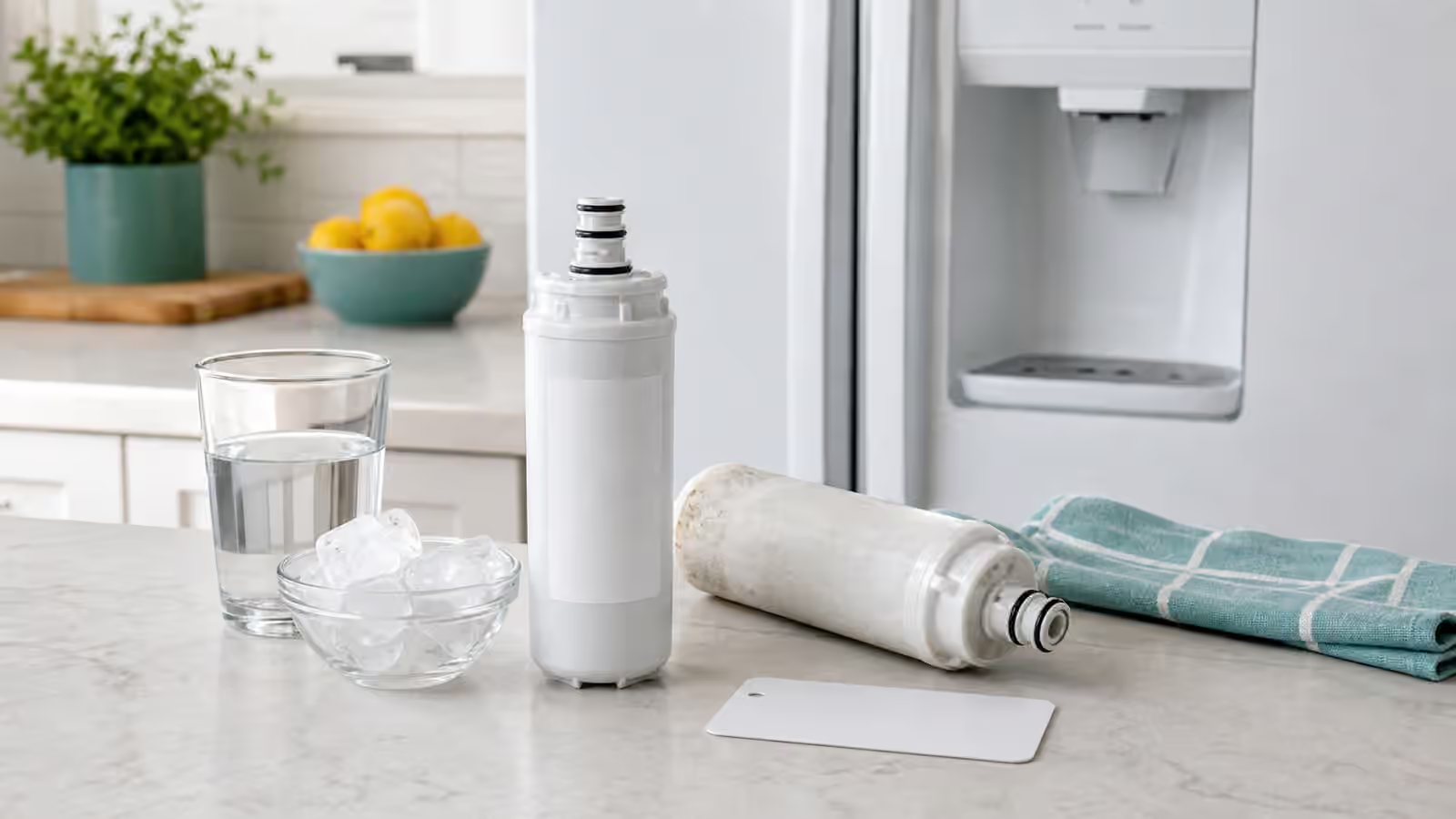
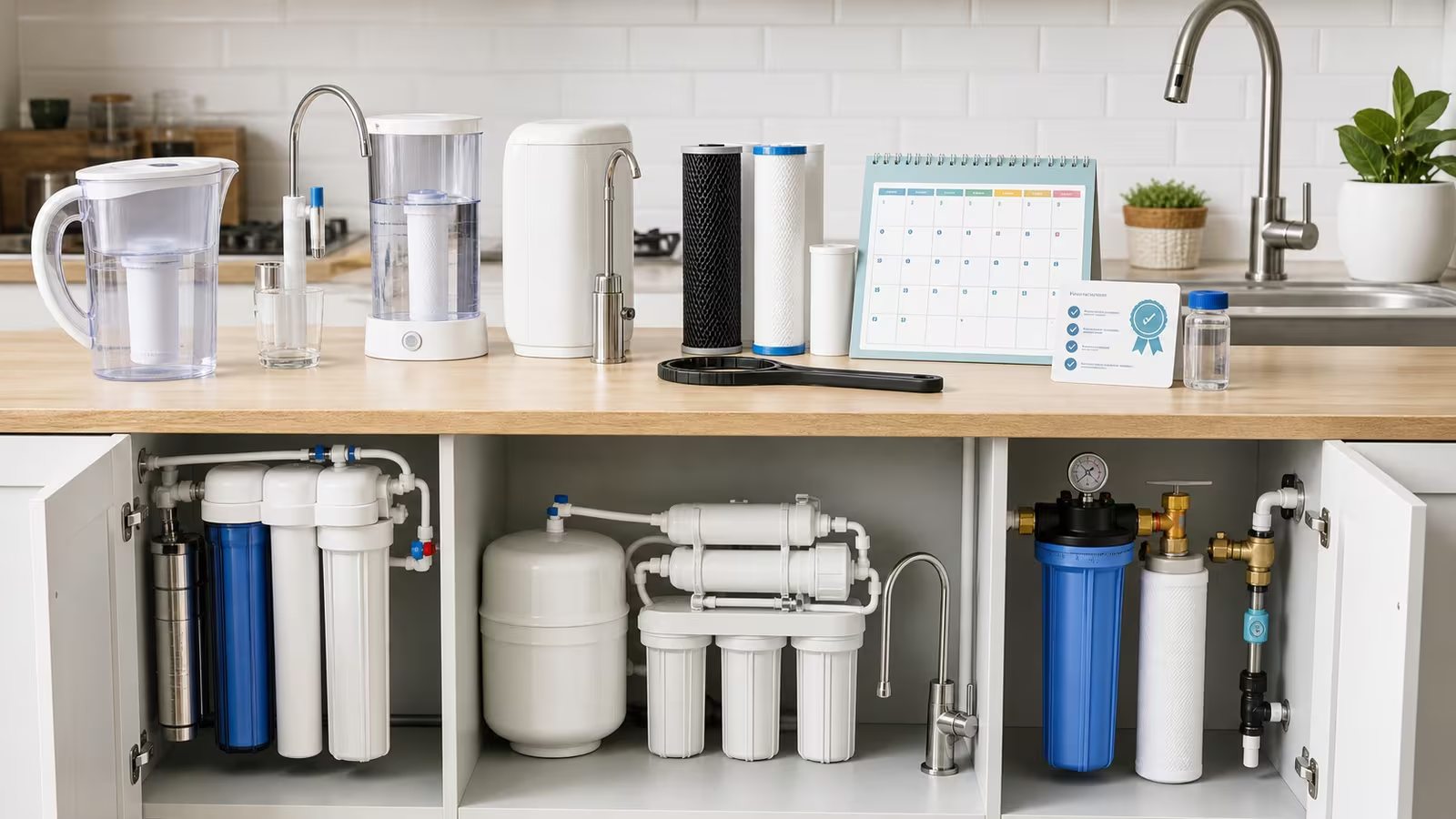
For city water with ordinary chlorine taste, a certified carbon pitcher, faucet filter, refrigerator cartridge, or under-sink unit may be a sensible first upgrade. The decision can be pleasantly simple if you keep the claim modest: better taste, better odor, and a replacement schedule you will follow. It is still worth checking the model listing and capacity, but the household stakes are usually lower than a health-effect contaminant decision.
For a named contaminant, slow down. If the report, lab result, or plumbing concern points to lead, PFAS, VOCs, or another health-related issue, do not rely on the word carbon by itself. Look for the certified reduction claim. Confirm the exact cartridge. Check whether the claim applies to the product configuration you are buying. Then decide whether the capacity and flow make sense for the number of people using it.
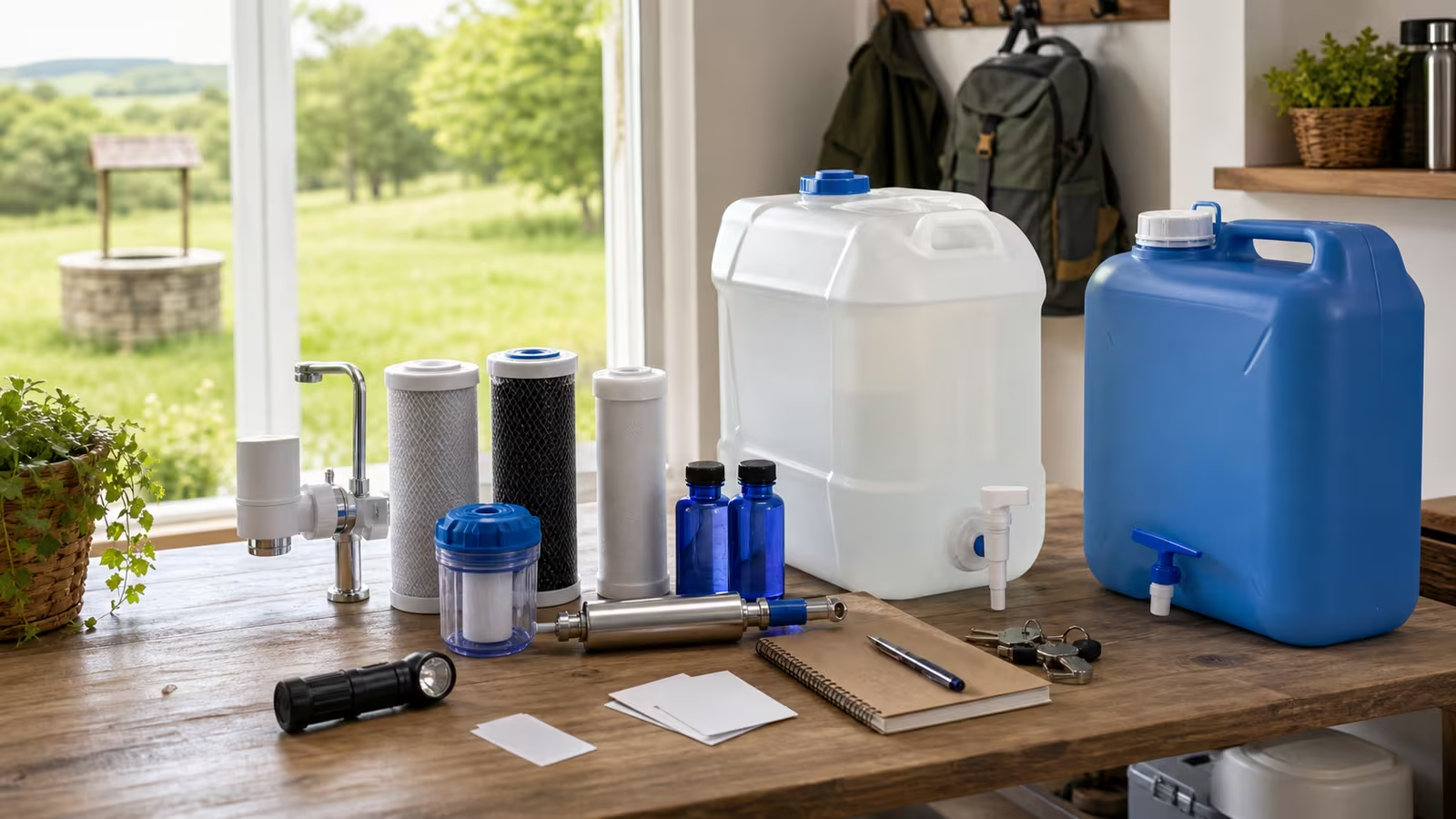
For private wells, carbon may be one part of a larger treatment train, but it should not be used as a guess. Well water can carry site-specific issues that need lab testing and sometimes professional design. Carbon can polish taste after other treatment, protect certain downstream components, or reduce specific contaminants when certified. It cannot replace knowing what is in the water.
The best carbon setups are humble and well kept. Prime the cartridge, flush it as instructed, watch flow changes, replace it on schedule, and keep a spare if the household depends on it. A small label with the installation date can do more good than another round of product comparison. Carbon works best when the promise stays connected to the routine.