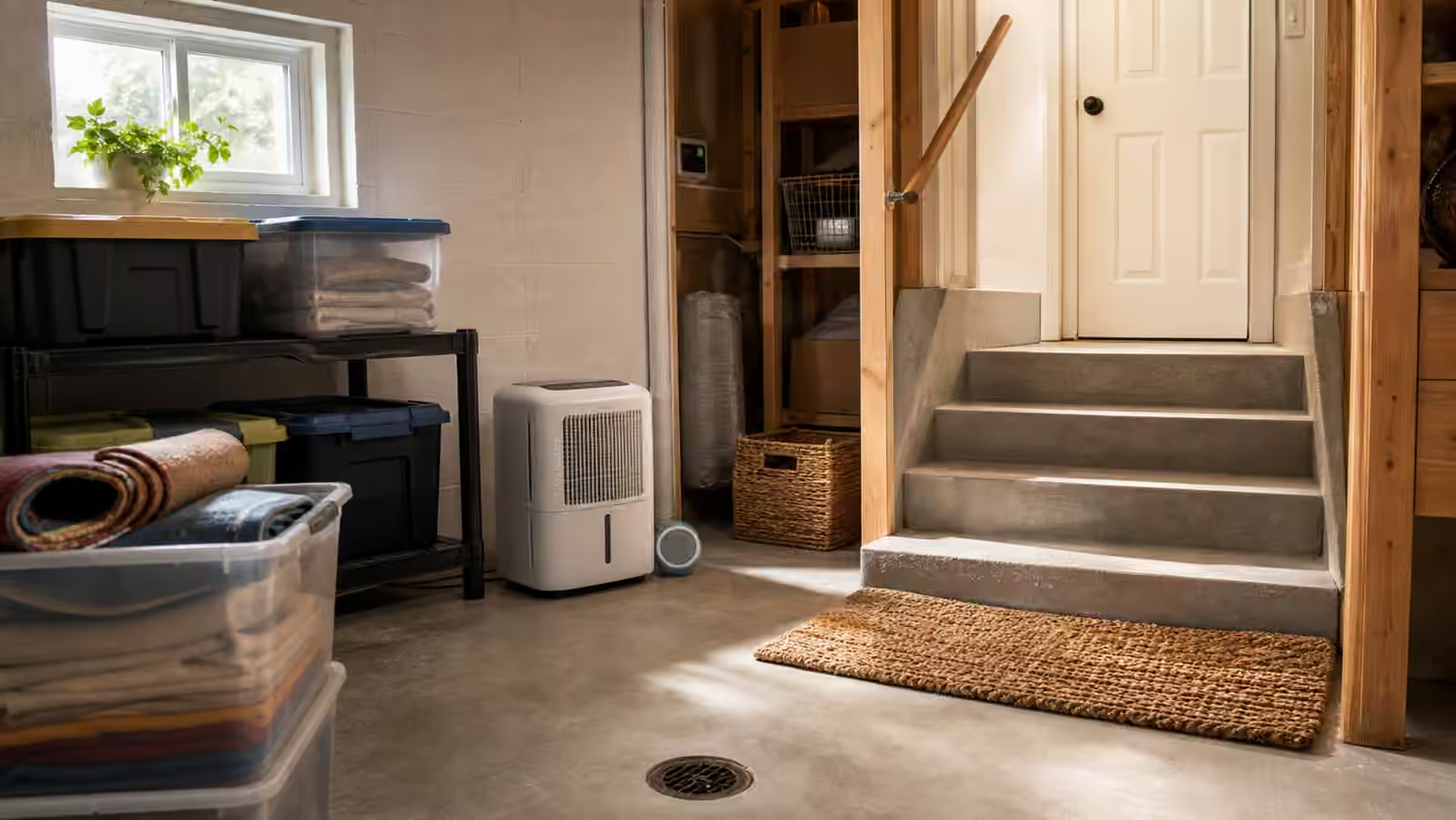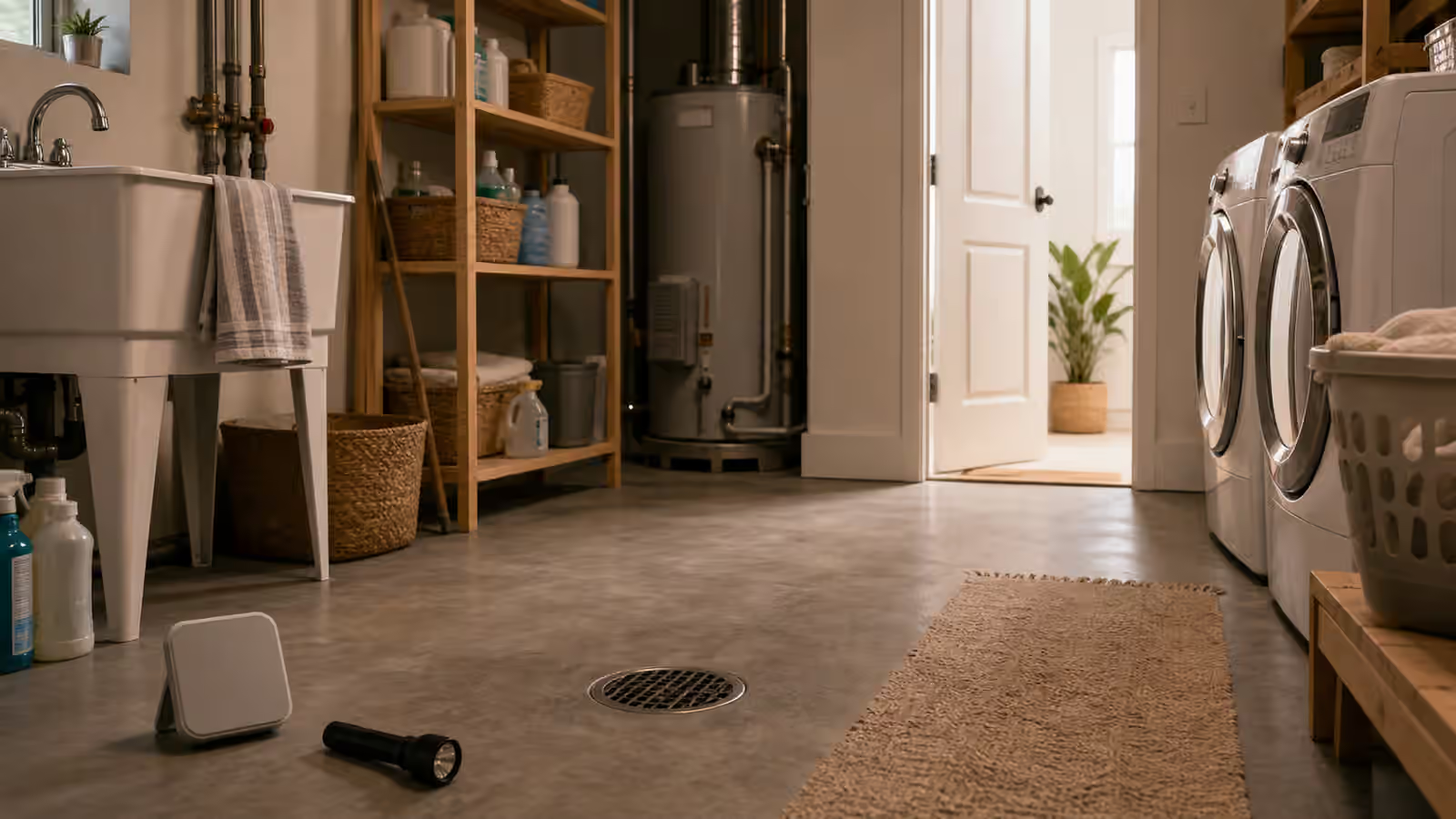
The utility room is where a house keeps the machinery it would rather not look at, and because nobody lingers there, its air gets graded on a curve. A basement corner with the washer, the water heater, a slop sink, a floor drain, and a few shelves of half-used products is allowed to smell a little “like a basement,” and that phrase quietly excuses a lot. The trouble is that this one small room concentrates more potential air sources than almost anywhere else in the home, and unlike a kitchen or a bedroom, it rarely gets the daily glance that would catch a problem early. When a vague mustiness starts drifting up the stairs, the utility room is usually where the honest investigation begins. For background, see EPA — A Brief Guide to Mold, Moisture and Your Home .
The Room That Shares Its Air Without Asking
The first thing to understand is that a utility room is almost never sealed off from the rest of the house. Its door has an undercut, its ceiling has penetrations for pipes and wiring, and the stairwell above it acts like a chimney. When the furnace fan kicks on, when a bathroom exhaust upstairs runs, or when the dryer pulls air out of the space, the pressure balance shifts and utility-room air gets invited into rooms people actually use. This is why a smell that seems to “belong” downstairs can turn up in a first-floor hallway. Before you treat the odor, it helps to notice the paths: an open stair door, a nearby return grille, gaps around ductwork, or a laundry chute all give the room’s air somewhere to go.
Because the sources are hidden and the air travels, guessing from the doorway is weak evidence. The companion guide to musty smell triage exists precisely because “it smells musty” is a starting point, not a conclusion, and a utility room hands you several suspects at once.
Floor Drains Are Traps First, Odors Second
A floor drain is not just a hole; it has a trap, a small curved section of pipe designed to hold a plug of water that seals sewer gas out of the room. In a drain that rarely gets used, that water slowly evaporates, the seal breaks, and the room gets a whiff of the sewer line it is connected to. This dry-trap situation is one of the most common and most benign explanations for a sudden drain smell, and the fix is often as simple as pouring a cup or two of water down the drain to restore the seal, sometimes with a little mineral oil on top to slow future evaporation in a drain that sees no traffic.
But a dry trap is only one possibility, and it is a mistake to assume it. A drain that smells strongly, persistently, or genuinely sewage-like, or one that comes with slow drainage, gurgling, bubbling, or any sign of backup, is telling you about the plumbing system, not the air, and that is a plumber’s territory. The temptation to pour bleach, drain chemicals, or a cocktail of products down a smelly drain is worth resisting, because the wrong mix can create fumes, damage the pipe, or simply mask the clue you needed. A slop sink nearby earns the same scrutiny: a basin holding mop water, paint rinse, or a bucket of soaking rags can quietly become the strongest source in the room while you blame the drain.
Laundry Is A Moisture Machine
Even a healthy laundry setup changes utility-room air. A dryer moves a large volume of warm, damp, lint-laden air, and it only stays out of the room if the vent is intact, unblocked, and actually reaching outdoors; a disconnected or crushed duct dumps humidity and fine lint right back inside. A front-load washer left shut after a warm cycle grows a sour film on its gasket. A pile of damp towels, or a drying rack running in a space that is already humid, adds water to air that has nowhere good to send it. None of this is dramatic, but it stacks up, and in a small closed room it stacks up fast.
The moisture side of this gets fuller treatment in laundry, drying racks, and indoor moisture . In the utility room specifically, the useful habits are to keep the dryer vent short, clear, and connected, to leave the washer door cracked between uses so the drum dries, to keep lint from accumulating on warm surfaces, and to stop treating a scented detergent as a solution to a damp-room smell. If drying laundry indoors is the thing making the room musty, the drying needs a different location or a dehumidifier running alongside it, not more fragrance.
The Shelf Of Forgotten Chemicals
Utility rooms accumulate the products that do not have a home anywhere else: old paint, solvents, adhesives, pool or garden chemicals, aerosols, and the occasional unlabeled jar. Out of sight is not out of the air. A cracked lid, a loosely capped can, or a product cooking near a warm water heater can off-gas into a poorly ventilated room, and a crowded shelf makes it much harder to notice when something new starts to leak or spill. Keeping products in their original, readable containers, storing incompatible materials apart, and getting rid of things you can no longer identify does more for the room’s air than any absorber you could add. Keep these materials away from HVAC returns, filter racks, and anything with a pilot flame, and follow local instructions when it is time to dispose of them.
Mechanical Equipment Has Hard Boundaries
If the room holds a water heater, furnace, boiler, or air handler, some of what you are looking at has combustion-air needs, required clearances, and service access that clean-air enthusiasm must respect. Do not stack boxes against equipment, block louvers or vents, seal a door that the appliance relies on for combustion air, or tape over panels. Cleaning and better storage are fair game; anything involving flame, exhaust, soot, or an alarm is not. A combustion or exhaust smell, visible soot, a flame that looks wrong, or a carbon monoxide alarm is a stop-everything signal, and the honest response is fresh air, safety, and qualified service, never a scented product or an extra filter. The guide to carbon monoxide, radon, and monitor boundaries is the right companion here, because consumer purifiers and general monitors do not replace certified alarms or professional testing.
Reading The Room Before You Fix It
When the clues are mixed, let timing sort them out. Does the smell strengthen when laundry runs, after heavy rain, when the HVAC fan starts, or when the stair door is open? Each pattern points somewhere different: laundry toward moisture and venting, rain toward water intrusion, fan runtime toward air paths, and a persistent drain note toward the trap or the plumbing. The humidity and musty smell triage tool gives you a structured way to turn those observations into a sensible next check rather than a shopping list. Its best output is not certainty; it is the single most useful thing to measure or inspect next.
A dehumidifier can genuinely help a damp utility space, but it is a supplement, not a plan. It does not fix water entry, a dry trap, a sour washer, or a leaking container, and it needs its own upkeep, since a neglected tank or clogged hose becomes a new source. The goal for this whole room is modest and worth stating plainly: it should smell dry, neutral, and understandable, with no drain announcing itself, no equipment kept wet, no mystery chemicals, and no shelf hiding a leak.
Clean Air Society is practical education, not medical advice, diagnosis, remediation, or a guarantee that a room is safe. Follow local public health guidance during smoke, carbon monoxide, mold, chemical, radon, or building-safety issues, and bring in a plumber, a technician, or your utility when the evidence points past ordinary household maintenance.