Moving day turns indoor air into a short, intense logistics problem. For a day or two the front door barely closes, boxes arrive from garages and rented storage units, rugs get unrolled, and dust that sat undisturbed behind a bookshelf for years suddenly goes airborne. Then the truck leaves, the adrenaline drains away, and the cardboard stays. Weeks later a room can still smell faintly of storage or feel gritty underfoot, and it is tempting to decide the new place is simply a dusty home. More often the move stacked a dozen temporary sources on top of each other, and nobody cleared them once the furniture was placed. The good news is that almost all of it is temporary if you treat it that way. For background, see EPA — Improving Indoor Air Quality .
The First Hour Is About Boundaries, Not Décor
On the day itself, the open front door is doing most of the damage to the air, and there is not much to be done about it while people are carrying a sofa through it. Hallway air, parking-lot exhaust, pollen, damp weather, and dust from a building’s common areas all drift in freely for hours. That is acceptable as a one-day event. The mistake is letting it quietly become the new normal, with the threshold permanently loaded and shoes crossing it a hundred times before anyone thinks to clean up.
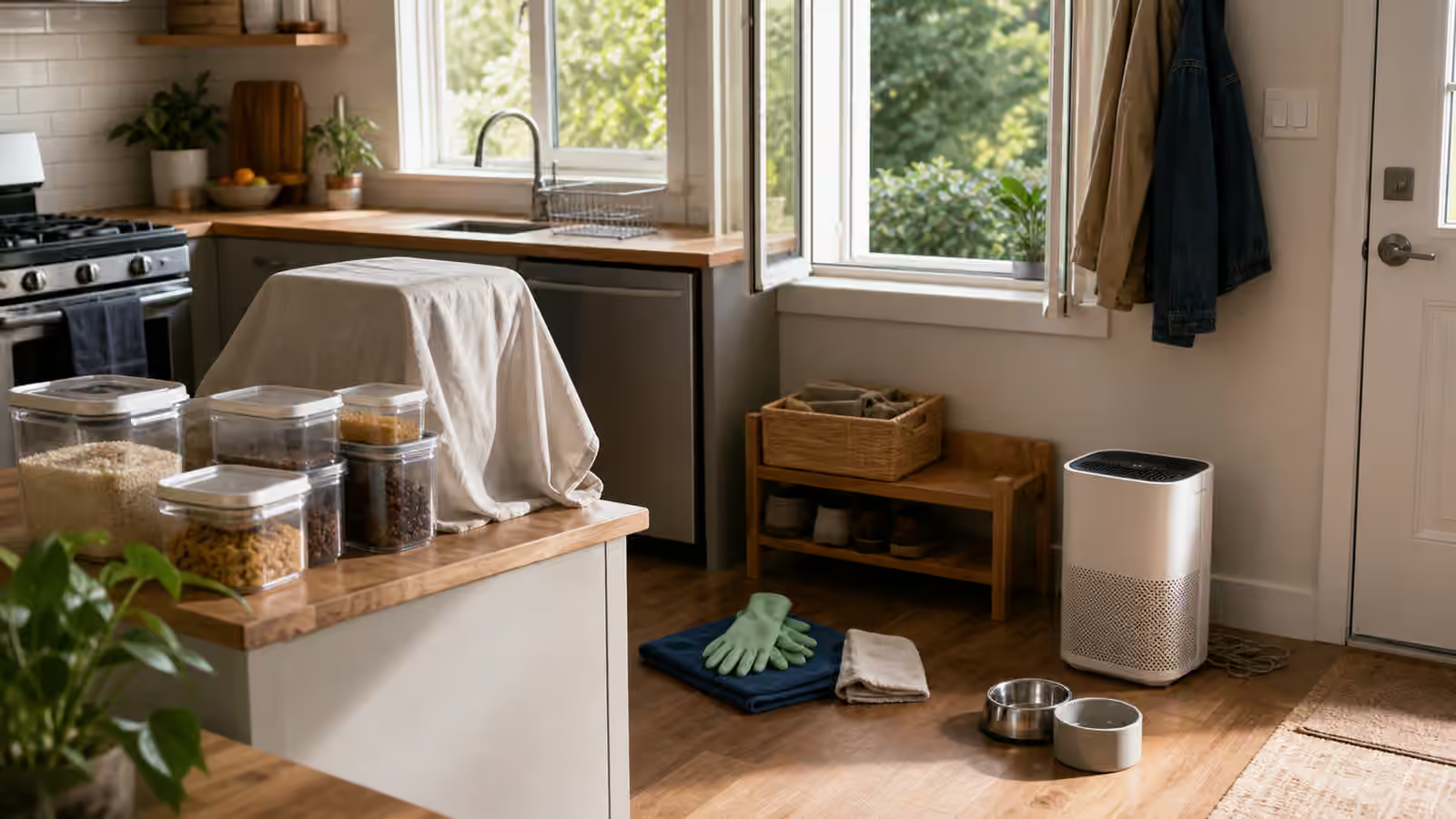
So the first air decision is really a scheduling decision: pick the moment the heavy carrying ends and treat it as a hard boundary. Close the door, clean or swap the entry mat, wipe the threshold, and move shoes and shredded packing debris out of the main living path. The guide to entryway dirt, shoes, and outdoor particles is especially useful right after a move because the entry has been overloaded far beyond a normal week. If the door happened to open onto wildfire smoke, heavy pollen, or attached-garage air, that is the moment to start running filtration in the room where people will actually rest, not the moment to assume a temporary event left no trace.
Cardboard Remembers Where It Has Been
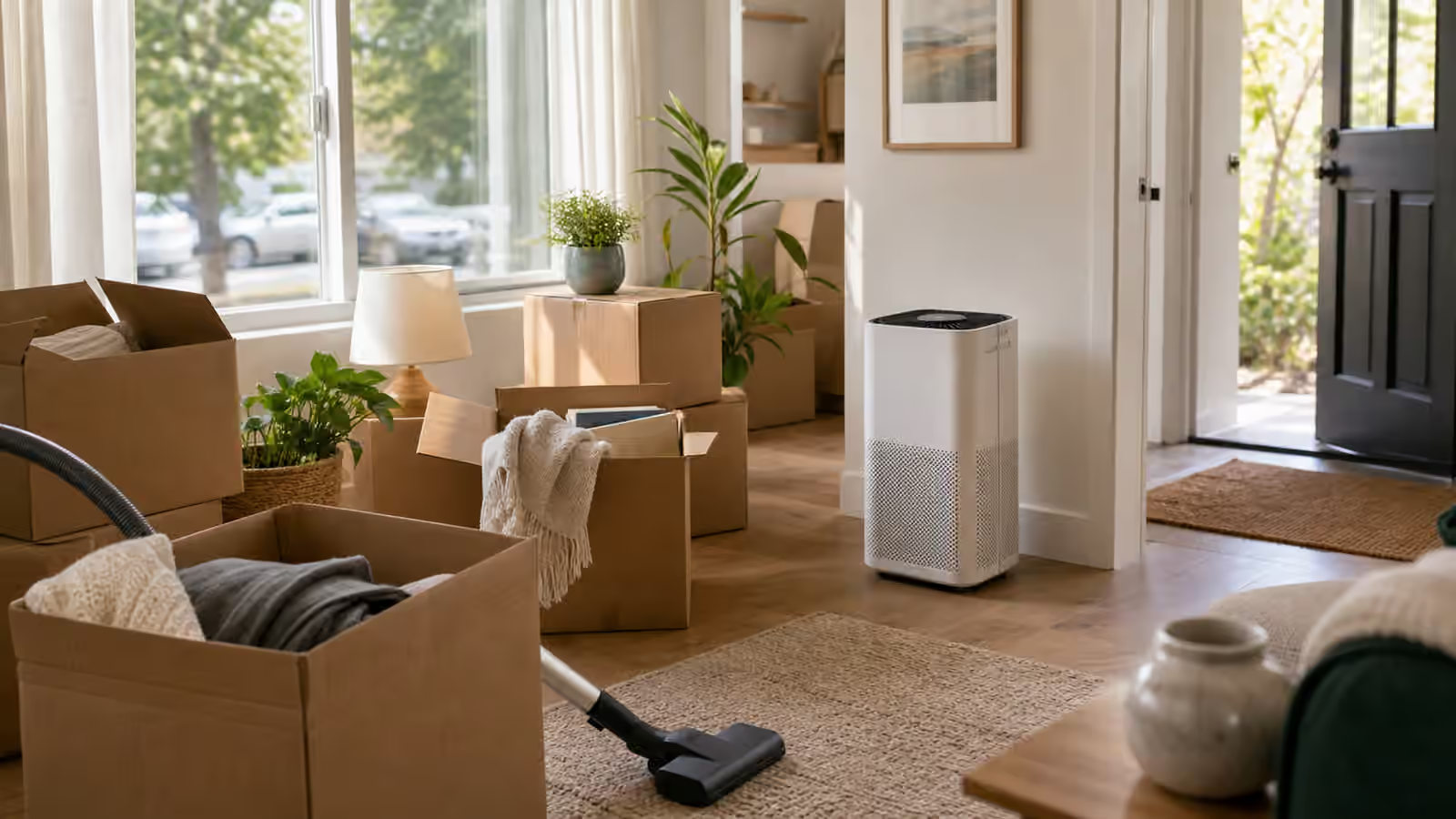
Cardboard is the most underestimated source in a move. A box feels neutral, but it has a history: it may have absorbed warehouse dust, garage odor, basement damp, tape-adhesive smell, or the ordinary grime of a truck floor. A clean-looking stack can still make a corner smell like storage simply by sitting there closed. A slightly damp box will hand its mustiness to whatever textiles it touches. And a box slid under a bed to deal with later becomes a quiet dust reservoir that outlasts the move by months.
Short-term cardboard is genuinely fine. The problem begins the moment moving boxes become long-term storage, which is exactly when the guide to closets, storage bins, and musty air starts to apply. If a box smells musty, smoky, perfumed, or chemical, keep it away from bedding and clothing until you decide what to do with the contents, rather than stacking it in a closet on the theory that a lid solves a smell. Breaking down and removing the boxes you will not reuse is not tidiness for its own sake; it is source removal.
Clean The Empty Room While You Still Can
An empty room is a rare gift, because every wall, baseboard, vent cover, closet floor, window track, and cabinet top is reachable. Those surfaces often hold a previous tenant’s dust, construction residue, pet particles, insect debris, or old fragrance. Cleaning them before the furniture goes in means the new room is not being arranged around old reservoirs you can no longer reach.
Do the cleaning in a sensible order and give it a beat before you judge the result. A rushed pass with an overloaded vacuum filter can make a room look finished while flinging fine dust back into the air, which is why the guide to vacuuming without kicking dust around matters more during a move than during an ordinary week, when the dust load is simply heavier. Run a purifier during unpacking with clear space around its intake, sized to the room where people will sleep rather than to the biggest empty box in the apartment. The air purifier sizing calculator is a good sanity check here: it keeps you from parking a small unit in a large open-plan space and expecting it to keep up, and it keeps you from burying the purifier behind a wall of boxes where it filters nothing.
Old Textiles Bring Their Old Rooms With Them
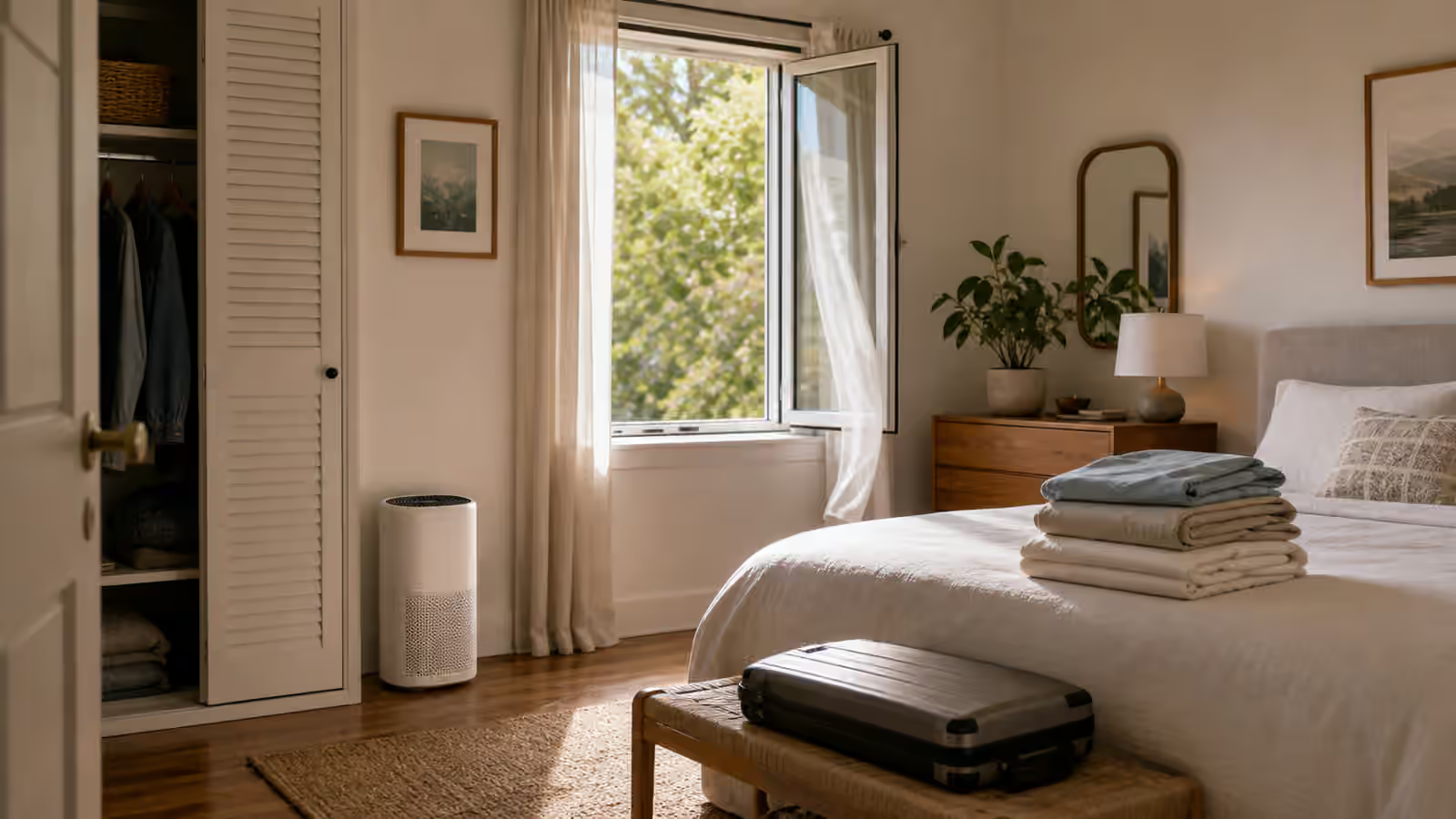
Curtains, rugs, blankets, cushions, duvets, pet beds, and fabric bins carry the air story of wherever they last lived. That story might include cooking smoke, perfume, damp storage, pet dander, or cleaning-product residue. Move them in unwashed and the new home can smell like the old one before it has had a chance to develop its own character.
Handle fabric deliberately rather than symbolically. Wash what can be washed before it enters a bedroom or a closet; air out what cannot, on a day when outdoor air is acceptable; vacuum rugs and upholstery before they settle into sleeping areas. If a textile smells strongly of mildew, fuel, or something chemical you cannot place, do not let move-day optimism tuck it in beside clean linens. And resist the urge to spray the problem away: as the guide to scented laundry, fabric sprays, and room air points out, layering a fresh scent over an old textile smell usually just gives you two smells and less information about the first one.
Don’t Let The Move Hide A Renovation Or A Damp Corner
Move-in rarely arrives alone. It often overlaps with fresh paint, flat-pack assembly, adhesive, a new mattress, shelf liner, and a lot of cleaning product. Each of those is manageable on its own, but together they can make a room feel sharp or chemical in a way that is easy to blame on the boxes. If the home was painted or renovated just before you arrived, those sources deserve their own timing, and the guide to paint, renovation dust, and new furniture covers how to sequence them rather than opening everything at once.
Storage areas deserve the same skepticism. Moving questionable cardboard into a musty basement and calling the problem solved just relocates it, and if the storage space itself is part of the home’s air path, the guide to utility room, floor drain, and mechanical closet air is the better place to start. A move is a bad time to discover a damp problem, but a worse time to bury one under boxes.
A Week Of Simple Notes
During the first week, it is genuinely hard to tell what belongs to the home and what belongs to the process. A few plain notes cut through that. Did the room smell dusty only while boxes were open? Did the closet smell musty before anything was stored in it? Did the bedroom go stale after the door stayed shut overnight? Did an odor follow a specific rug, sofa, or mattress from room to room? The guide to room-by-room air notes that actually help is built for exactly this kind of transition. If a smell follows an object, deal with the object. If it follows rain, look at moisture. If it follows the shared hallway door, look at the building. If it fades once the cardboard leaves, the cardboard was the source all along.
The Move Ends When The Sources Leave
The clean-air finish line is not the moment the furniture is in place; it is the moment the temporary sources are actually gone. Flatten and remove the leftover boxes, clear the packing paper, wash or properly store the textiles, reset the entry after the last carrying day, and change any HVAC or purifier filter that loaded heavily during the chaos. Then let the occupied rooms run on a normal routine for a while before you form an opinion about them.
This guide is practical education, not medical advice, and no move-in checklist can guarantee a room is safe to breathe. If something points past ordinary dust and cardboard toward carbon monoxide, extensive mold, a chemical smell you cannot source, radon concerns, or a building-safety problem, stop treating it as a moving mess and bring in alarms, testing, or a qualified professional. Everything else is what it usually is on moving day: a short-term cluster of sources that gets easier to understand the moment you carry it back out the door.