Air-cleaning marketing leans hard on the vocabulary of freshness. A device might promise energized air, charged particles, alpine or after-the-storm scent, active oxygen, or odor that is destroyed rather than merely covered. Those phrases sound more advanced than a plain fan pulling air through a filter, and that is the point: they are designed to feel like a technological leap. The trouble is that they blur together several very different technologies, a few useful in narrow settings, several poorly explained, and at least one that public-health agencies actively caution against for occupied rooms. You do not need an engineering degree to sort them out. You need to separate what a device claims to do from what problem is actually in your room. For background, see EPA — Ozone Generators That Are Sold as Air Cleaners .
Name the Pollutant Before You Judge the Device
The single most useful habit here is refusing to shop until you can name what you are trying to remove. Dust, pollen, pet dander, cooking particles, wood smoke, solvent fumes from a hobby, a musty damp smell, and stale occupied-room air are not one problem with one answer. A device that charges particles behaves differently than one that filters them, and neither touches a combustion or radon hazard. When a product page promises to handle particles, gases, germs, odors, and allergens all at once from a small plug-in unit, that breadth is a warning sign rather than a feature, because no single small device moves enough air or uses enough media to do all of those jobs well.
Starting from the pollutant also keeps the purchase from carrying more responsibility than it should. If a scented plug-in, an unvented cooking habit, or a damp rug is the source, the honest first move is to reduce, move, exhaust, or reschedule that source, a sequence the guide on source control before air purifiers walks through. Air cleaning belongs after source control, not as a permission slip to leave the source running.
What Ionizers Are Trying to Do
An ionizer gives particles an electrical charge so they clump together or stick to surfaces and walls, dropping out of the air you breathe. Some purifiers offer this as a mode alongside a real mechanical filter; some small standalone devices lean on it as their whole pitch. In a sealed laboratory chamber the idea can look tidy. A lived-in room is messier: it has furniture, fabric, moving people and pets, opening doors, and dust reservoirs that charged particles simply relocate onto rather than remove. The particles you charged out of the air often land on nearby surfaces that then need wiping, and some ionizing processes can generate small amounts of ozone as a byproduct, which is the crux of the caution below.
The question worth asking is not whether the word ion sounds modern. It is whether the device publishes clear, independent performance information for the pollutant you care about, whether it moves enough air for your room, whether it avoids producing ozone in normal use, and whether an ionizer mode can be switched off while the unit still filters meaningfully. If those answers are vague, a straightforward mechanical-filter purifier with a stated clean-air delivery rate is far easier to evaluate honestly.
Why Ozone Language Deserves Real Caution
Ozone gets marketed as a deep cleaner or odor eliminator, which sounds appealing after smoke, pet odor, or a lingering cooking event. But ozone is not a neutral scent; it is a reactive gas, and health and environmental agencies generally warn against running ozone-generating air cleaners in spaces where people are present. This guide does not replace local guidance or a professional’s judgment, but it can hand you a firm buying rule: do not use a device that intentionally produces ozone as a routine home freshener.
The hard part is that the label rarely says ozone outright. Watch instead for activated oxygen, energized oxygen, shock treatment, oxidation of odors, or a fresh electrical smell after the storm. If the instructions tell you to leave the room during operation, ventilate heavily afterward, or treat a space like a timed procedure, that is a device meant for unoccupied treatment or remediation, not a bedroom appliance. Treating a remediation-grade ozone tool as everyday air cleaning is the mistake this whole topic exists to prevent.
Fresh Smell Is a Poor Scoreboard
Smell is the most misleading signal in the whole category. A room can smell better because you removed a source and exchanged the stale air for clean outdoor air, which is genuine improvement. It can also smell better because a fragrance masked the source, because a reactive process added its own odor, or simply because your nose adapted and stopped noticing. Your sense of smell is good at flagging change and useless at ranking particle levels, gas exposure, humidity risk, or safety. A device that only makes the room feel better while its scent or reactive process is running has probably not touched the underlying source at all. A stronger claim should come with stronger evidence than a pleasant smell.
Mechanical Filtration Is Easier to Trust
A plain fan-and-filter purifier is not magic, but it is legible. For particles you can compare its clean-air delivery rate against your room size, listen to it at the speed you will actually leave it on, check the ongoing filter cost and whether replacements are easy to find, and place it where air can reach the intake. Sizing is where most of the real-world benefit is won or lost, and the air purifier sizing calculator turns your room dimensions into a target delivery rate so you are matching the device to the space instead of trusting an advertised room number that assumes a wide-open, sealed, single space.
Odors and gases are a separate job that mechanical filters do not do. Activated carbon can help with some smells when there is enough media and contact time, but a thin carbon sheet in a small unit cannot tame a heavy solvent or cooking-gas problem, and the stronger answer there is usually source reduction plus ventilation when the outdoor air is acceptable. Keeping particles and gases as distinct problems, each with its own tool, is more effective than hoping one device with impressive language covers both.
Reading a Product Page Without Getting Sold
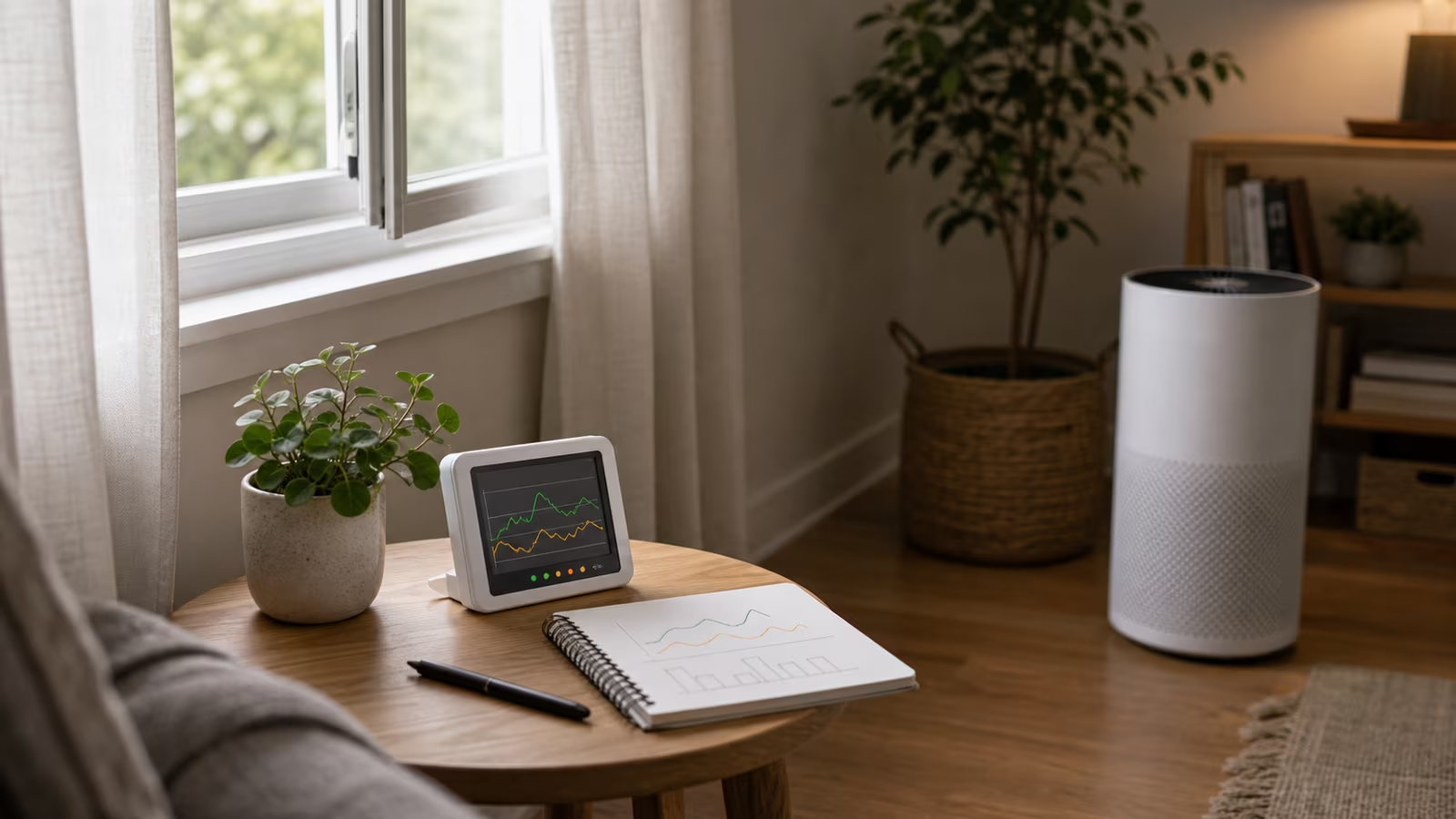
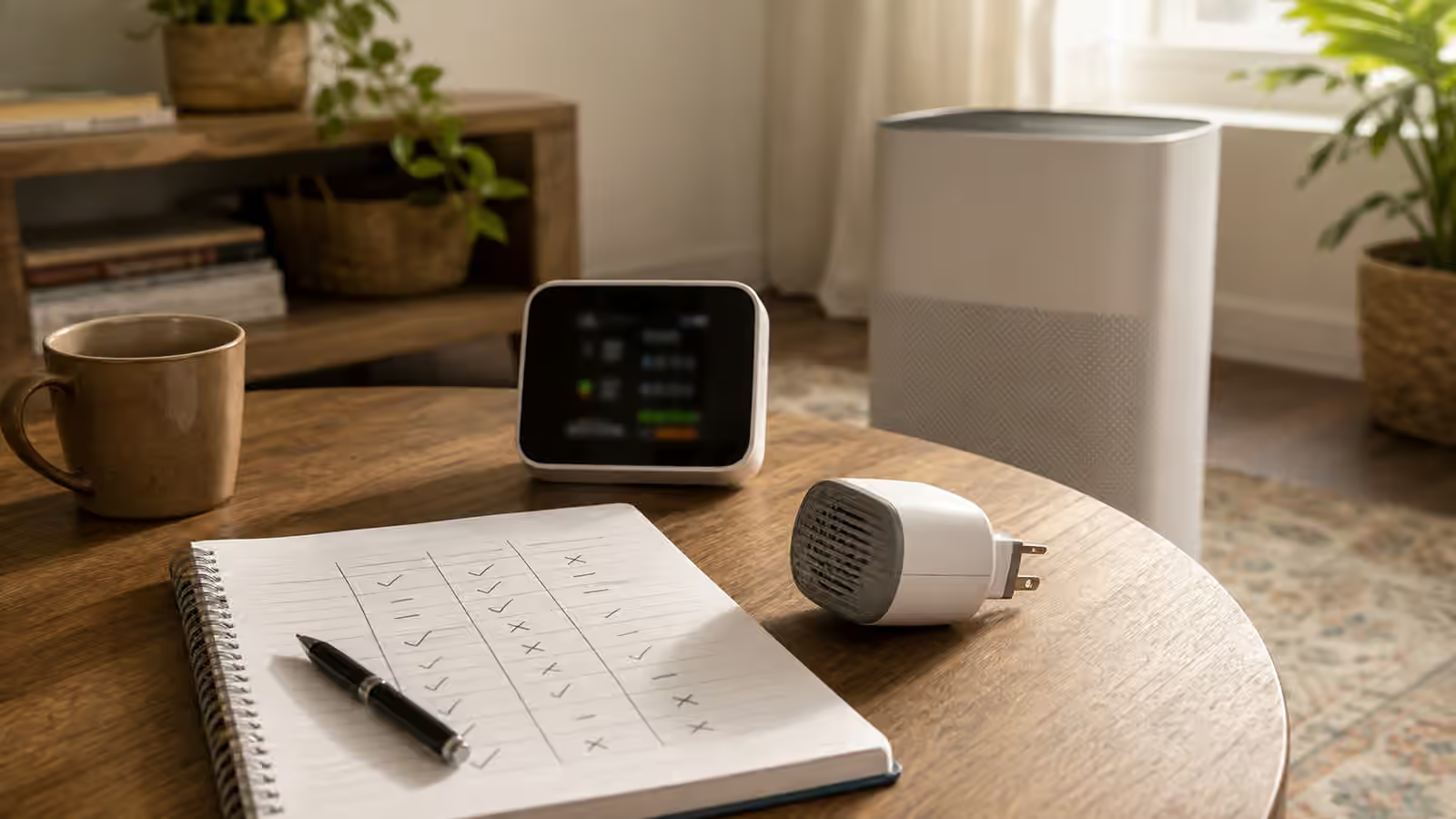
Look for specific performance claims tied to a testable pollutant and a stated room condition. If the page leans mostly on mood words, wellness language, or dramatic before-and-after odor stories, slow down. If a unit has an ionizer mode, confirm it can be turned off and that the advertised rating does not secretly depend on that mode. Hidden filter costs, proprietary replacements that are hard to source, and vague claims about killing everything in the air are all reasons to keep shopping. A consumer air monitor can help you test a real purifier during ordinary events like cooking or a closed-door work session, but many monitors do not detect ozone or identify specific gases well, so use them to check honest, low-risk actions rather than to bless a mysterious device. Never create smoke or fumes on purpose to test equipment.
A Conservative Boundary
For ordinary occupied rooms, prefer source control, acceptable ventilation, and mechanical filtration you can understand and maintain. Avoid deliberate ozone generation as a freshening habit, and treat ionizer features as optional claims that need clear evidence and an off switch. This is practical education, not medical advice, and no air cleaner can make a room risk-free. A device’s freshness language is never a substitute for carbon monoxide alarms, radon testing, moisture and mold work, combustion safety, or professional remediation. When those boundaries apply, follow local public health guidance and bring in qualified help; the resources from the EPA and the California Air Resources Board on air-cleaning technologies and ozone are the right place to check when a claim seems too good to be simple.