The floor plan draws a firm line around your apartment, but the air ignores it. A multiunit building is a connected system of hallways, stairwells, elevator shafts, trash rooms, garages, laundry areas, and neighboring units, and air moves between all of them through gaps you rarely think about. That is why an apartment can smell of a neighbor’s cooking, a stairwell’s dampness, or a corridor’s cleaning products even with every window shut. The good news is that this movement follows physics, not malice, and once you treat your front door as an air path rather than just a door, most shared-building odor problems become something you can observe, narrow down, and partly manage from your own side. For background, see EPA — Improving Indoor Air Quality .
Different Smells, Different Responses
The first mistake is to give every hallway odor the same reaction. Smoke, solvent fumes, dampness, perfume, cooking, trash, and construction dust each carry a different level of concern and a different sensible next step. A persistent smoky smell from a neighboring unit is a documentation-and-management matter with real health weight. A brief whiff of someone’s dinner calls for nothing more than timing and a better door seal. A musty stairwell points to moisture somewhere in the building’s structure, which a purifier inside your unit will never touch. Sorting the smell into a rough category first keeps you from either shrugging off something that deserves a written record or panicking over a one-time cleaning-crew fragrance. The guide to secondhand smoke in apartments covers the smoke-specific steps in depth; this one is for the broader case where shared-building air is clearly affecting your apartment but you have not yet pinned down what it is.
Your Front Door Behaves Like A Vent
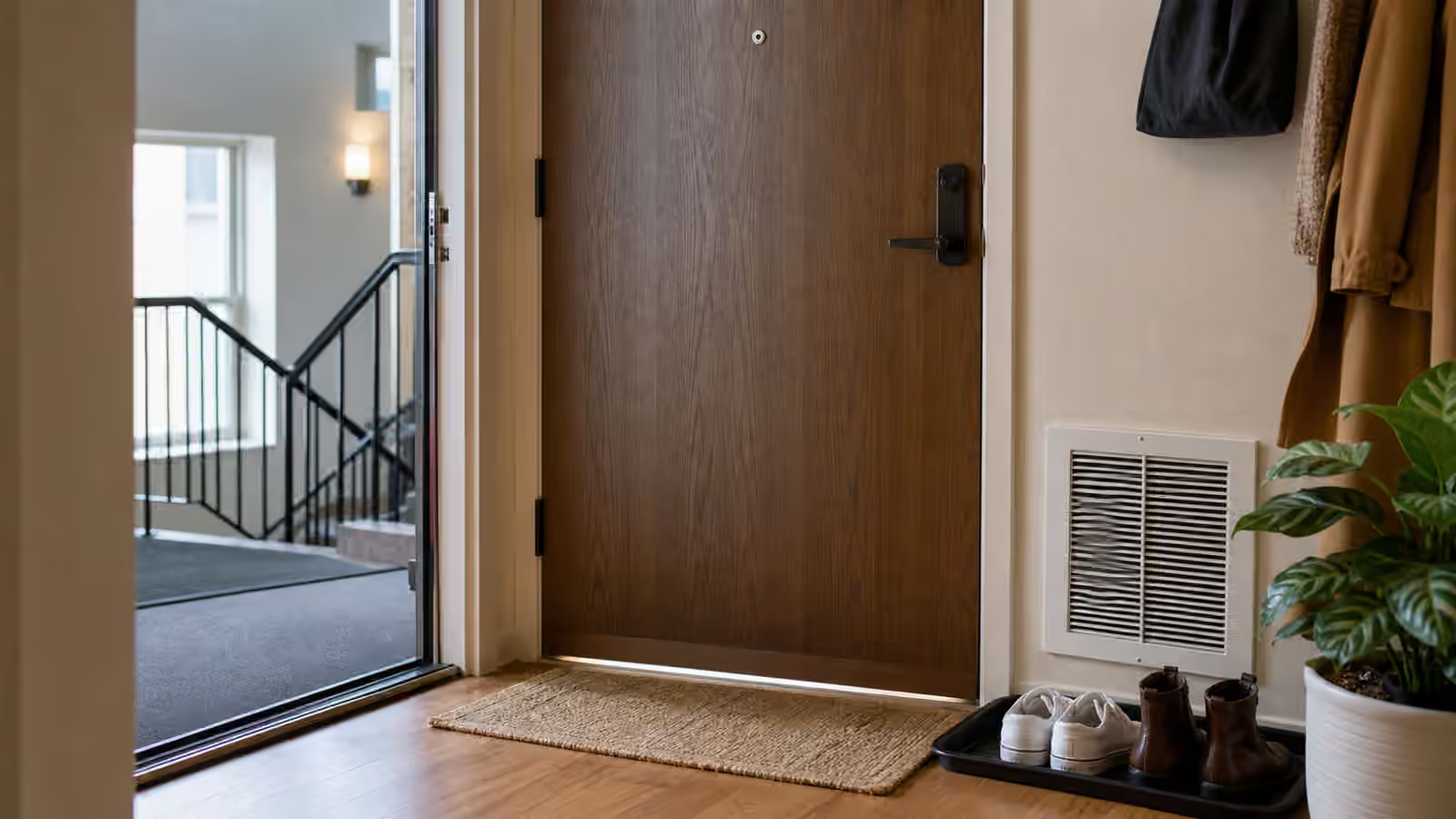
An apartment door is far leakier than it looks. Air can pass under the bottom sweep, along the latch and hinge sides, through a mail slot, past aging weatherstripping, or over a poorly sealed threshold, and it does so whenever a pressure difference exists between your unit and the corridor. You will often notice the timing: the smell arrives when the hallway is being cleaned, when the elevator cycles, when a heavy stairwell door swings, when your own bathroom or kitchen fan is running, or when the wind shifts against the building. A simple, low-tech observation tells you a lot. Hold a loose tissue near the bottom of the door; if it drifts inward, air, and whatever it carries, is flowing from the hallway into your home. Do not treat that as a laboratory measurement, but do treat it as proof that your apartment and the corridor are actively trading air through a path you can see and, to a degree, tighten.
Tighten The Boundary, Reversibly
Renters need fixes that come back out at move-out, and fortunately the useful ones are reversible. A well-fitted door sweep, intact weatherstripping, a clean threshold, and a washable entry mat together reduce both the obvious air path and the grit tracked in from shared floors, and a small shoe tray keeps corridor particles from being walked deeper into your rooms. The renter-friendly clean air setup collects more of these no-damage improvements. If the door’s own seals are cracked or missing, photograph them and ask the responsible party to repair them rather than improvising something permanent that could break a rule or a safety function. That last point matters: never block a required ventilation opening, wedge a fire door, obstruct a sprinkler, or stuff material into a gap that is meant to stay clear. As the guide to leaky windows, doors, and outdoor air stresses, the goal is to close unwanted paths, not to seal a home airtight, because buildings depend on intentional ventilation and some openings exist for safety.
The Exhaust-Fan Paradox
Here is the counterintuitive part that trips up a lot of apartment dwellers. When your bathroom fan, kitchen range hood, or clothes dryer pushes air out of the unit, that air has to be replaced from somewhere, and in a typical apartment the easiest replacement path is the leaky front door. So a hallway odor that appears only while your own bathroom fan runs may have less to do with the hallway and more to do with your apartment quietly pulling corridor air in through the door gap to satisfy the fan. This does not mean you should stop running exhaust fans; bathroom and kitchen exhaust are essential for removing moisture and cooking particles, and abandoning them trades one problem for a worse one. It means timing and observation help. If a fan reliably draws in hallway odor, keep runtimes to what the task needs, crack a window on the outdoor side only when that air is acceptable, and raise persistent patterns with management. The range hoods and kitchen exhaust guide walks through the same makeup-air tradeoff at the stove.
Filter Where You Actually Sit
When some hallway air gets in despite reasonable sealing, local filtration can lower the particle load in the rooms where you spend time. Resist the urge to jam a purifier right against the front door, where it blocks the walkway and gets overwhelmed every time the door opens. A unit sized for the space and placed in the living room or bedroom, with clear room around its intake, usually does more good; the guide to where to put an air purifier is more reliable than guessing from the entryway. Keep the limits honest, too. A particle filter helps with smoke, dust, and some cooking aerosols, but it does not remove every gas, fragrance, or moisture source, and thin activated-carbon layers do only modest work on odors. If the problem is strong, recurring, or clearly building-wide, the purifier is a support tool rather than the whole answer.
When You Want To Test A Fan Fix
If you suspect your own ventilation is the trigger, a little structured checking beats guesswork. The ventilation and CO2 helper is designed to make you observe the right things rather than hand down a verdict: it prompts you to relate stuffiness, fan use, and window habits to what you actually notice, which is exactly the discipline needed when a hallway odor seems tied to exhaust timing. Change one variable at a time. Run only the bathroom fan and note the door behavior, then only the range hood, then neither, and write down which combination pulls corridor air inward. One deliberate change with a recorded result is worth more than flipping several switches on the same evening and being unable to say which one mattered.
Write It Down, Skip The Blame
Shared-air conflicts turn tense fast because the cause may sit with a neighbor, a maintenance decision, or the building’s design, none of which respond well to accusation. Good documentation is deliberately dull: dates, times, locations, the likely odor type, the weather if it seems relevant, what building activity was underway, which of your fans were on, and what you tried. Photographs of door gaps, damaged seals, or visible dust entry strengthen a request, and keeping room-by-room air notes turns a vague “the air in here is bad” into a specific, credible pattern that management can act on. That record also protects you from overreacting: a single evening of cleaning-product smell will pass, while a nightly smoke odor through the door gap is a genuinely different pattern that deserves escalation.
Keep Your Own Air Out Of The Equation
When corridor air is already irritating, it is easy to overlook the indoor sources that make your unit harder to clear. Candles, incense, scented laundry, aerosols, cooking without exhaust, damp towels drying indoors, litter dust, and dusty rugs all add to the load. Reducing what you control does not excuse a building problem, but it gives your apartment more room to recover and makes it far easier to tell what is coming from outside the unit. After a hallway event especially, avoid stacking your own sources on top: adding fragrance over a cleaning smell just muddies the air, and frying without the hood while corridor smoke is present makes the particle load impossible to read.
Know Where The Line Is
Some shared-air situations are beyond any door sweep or purifier. Persistent smoke infiltration, chemical odors, visible mold in common spaces, concerns about a fuel-burning appliance, pest-treatment exposure, sewage smell, or building damage all call for building channels, local guidance, and the appropriate alarm, test, or professional, not a DIY habit. This guide is practical education, not legal advice, medical advice, or a substitute for tenant, health, and safety procedures, and none of it guarantees that a unit’s air is safe. For the ordinary run of apartment life, though, the path holds up well: sort the likely source, watch when air enters, tighten the door reversibly, filter the room where you sit, quiet your own indoor sources, and document what repeats. That leaves you far from powerless in your own entryway, even inside a building whose air you do not fully control.