The distinctive thing about a guest room is that nobody is around to notice it going stale. A bedroom in nightly use gets constant, unplanned maintenance: the covers are thrown back every morning, the door swings open and shut, laundry cycles through, and anyone would spot a musty smell or a damp corner within a day. A spare room skips all of that feedback. It sits behind a closed door for weeks, slowly accumulating settled dust, still closet air, and whatever odor the last stored box gave off, until a visit is booked and the room has to become welcoming on short notice. The instinct at that point is to spray something floral, open the window for ten minutes, and declare it ready. A better reset works on the reasons the room felt unused rather than papering over them. For background, see EPA — Improving Indoor Air Quality .
Give It A Few Days, Not Ten Minutes
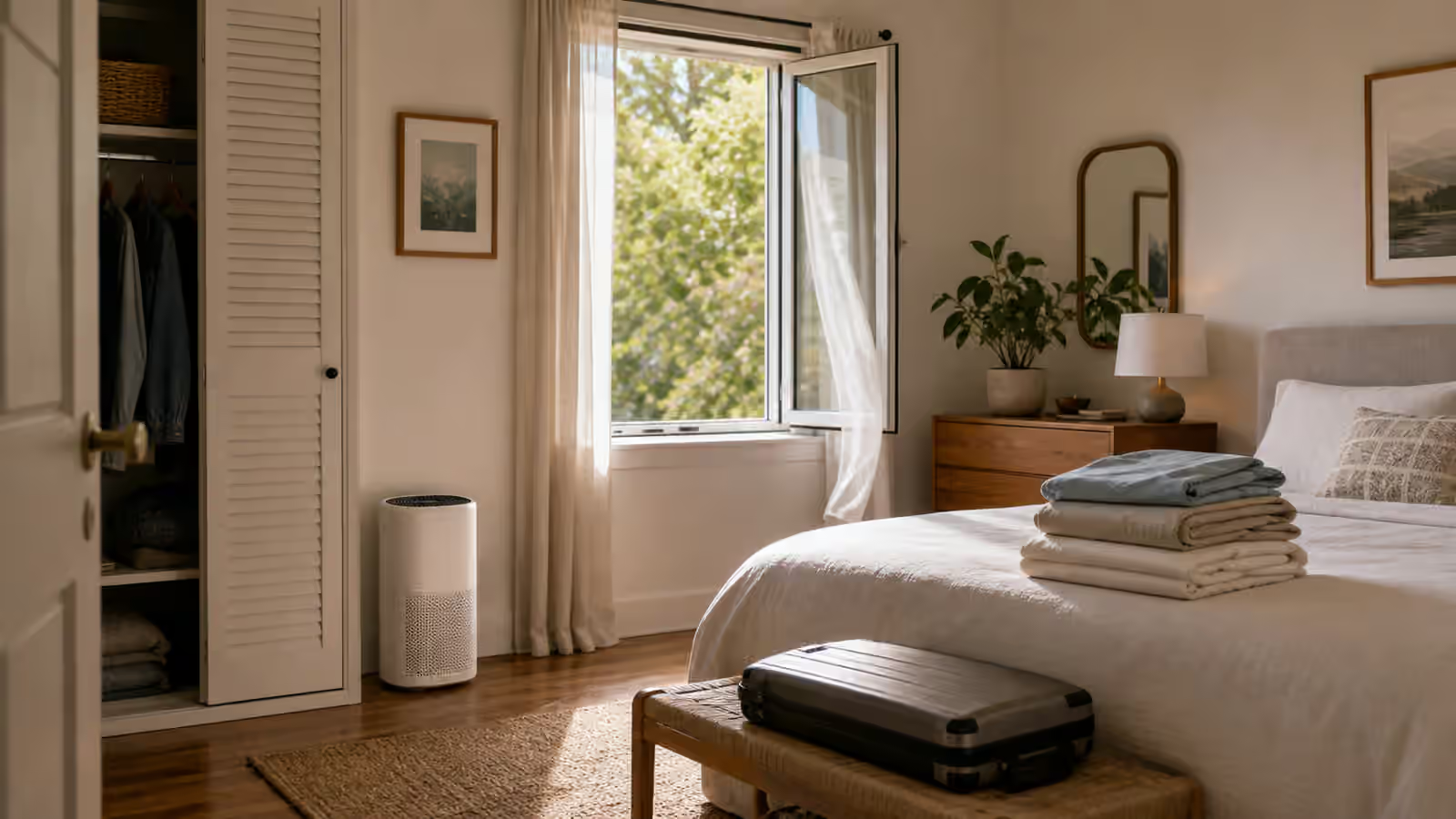
Almost every guest-room problem is easier to solve with lead time. Air that has been sealed in a closed room for weeks does not clear in the last hour before arrival, and bedding pulled from a bottom drawer needs a chance to shed its stored smell. The single most useful change is to open the room several days early rather than the same afternoon: prop the door so it rejoins the rest of the home’s air, and when outdoor conditions are clean and dry, open a window to let the stale volume exchange for fresh. That slow airing does more than any spray, because it removes the stale air instead of adding a second smell on top of it. If you only remember one habit from this guide, make it the early open.
The Room Is Probably Also Storage
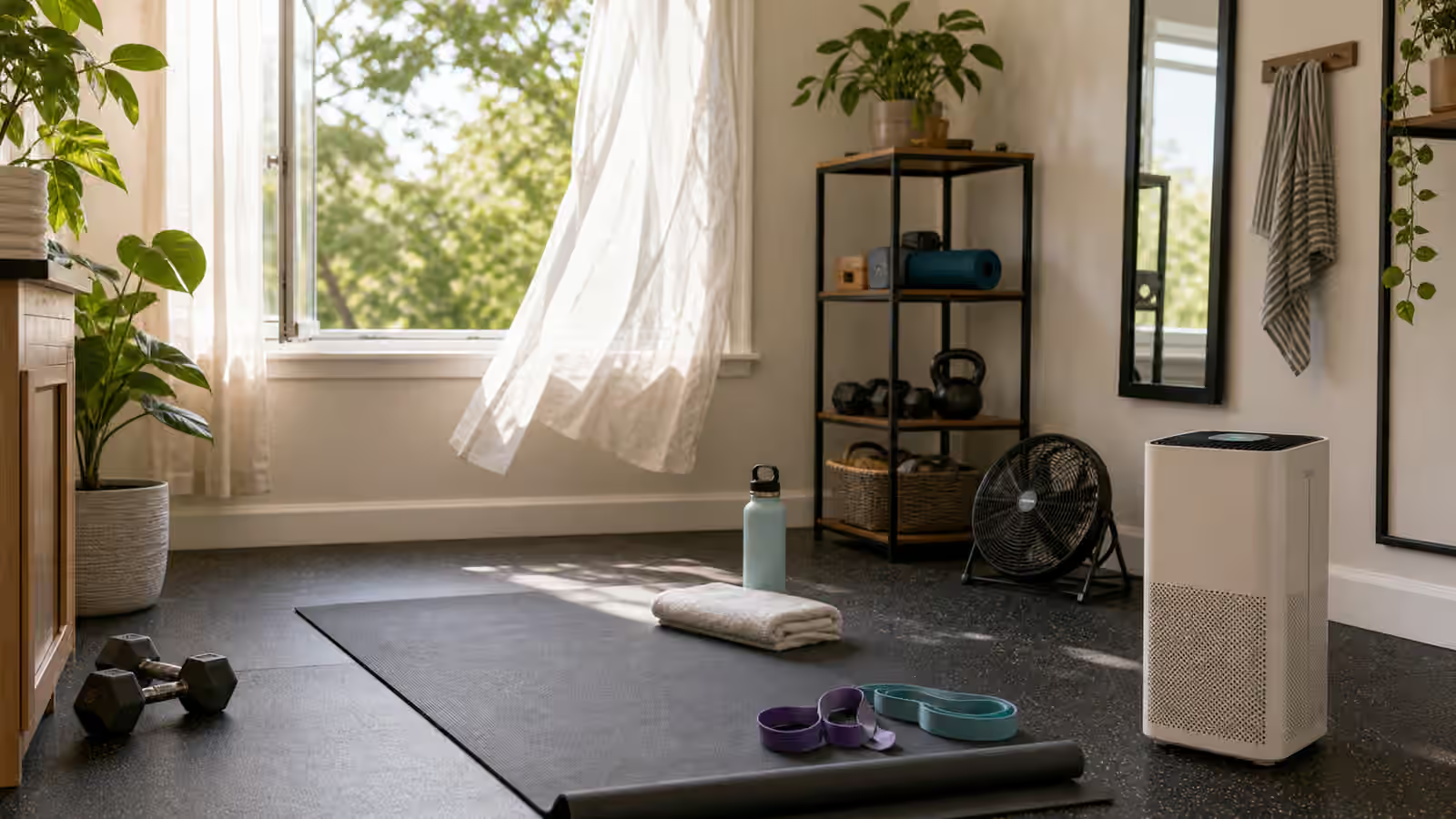
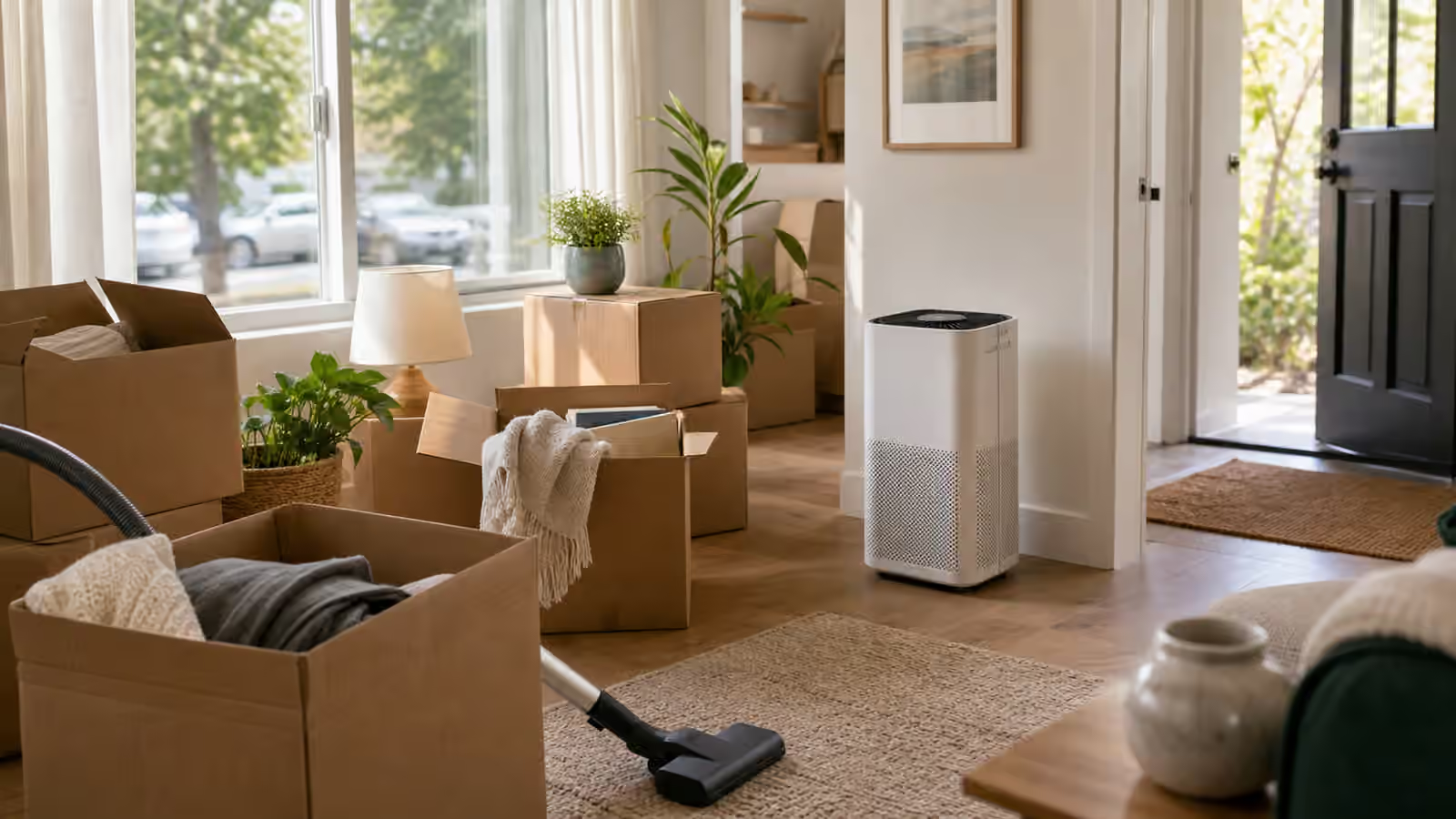
Be honest about what the spare room really holds. In most homes it doubles as overflow: extra linens, out-of-season clothes, gift wrap, luggage, exercise gear that migrated in and stayed, and a stack of cardboard boxes that quietly off-gas and hold dust. Any of those can be the actual source of the “closed-up” smell while the bed takes the blame. The guide to closets, storage bins, and musty air is worth reading alongside this one, because the closet is usually the room’s most concentrated pocket of stagnant, odor-holding air. Before you touch the bed, open the closet, look at what is stored there, and notice whether the smell strengthens when you do. Cardboard that has sat for a year, plastic bins that trap moisture, and textiles nobody has moved are far more likely culprits than the mattress.
Handle The Bedding, Then Stop
Bedding is the emotional heart of a guest room and also its largest textile reservoir. Sheets, a duvet, pillows, a mattress pad, throws, curtains, and an upholstered headboard all hold dust, old fragrance, and stale room odor, and they release it slowly once someone lies down among them. The practical move is to launder what is washable ahead of time and to keep the fine detail honest, which the guide to dust mites, bedding, and soft surfaces does well: wash on a sensible schedule, cut down the number of dust-catching extras, and make no promises about medical outcomes. Air the mattress surface if the room has been shut for a while, launder sheets and cases without loading them with heavy scent, and shake or vacuum washable covers somewhere that will not fill the room with the dust you just disturbed. If a decorative pillow has become a dusty ornament rather than a comfort, take it out. The room should feel simple and clean, not staged with fabric that has been sitting untouched for months.
Do Not Reach For Fragrance
Scent is the guest-room trap. A candle or plug-in makes the room smell prepared for the first minute of a tour and then becomes its own persistent source for the rest of a multi-night stay, layered on top of the closet and luggage odors it was meant to hide. A guest who is sensitive to fragrance may quietly sleep badly and never mention it, and even a guest who loves a scented room usually rests better where the air is genuinely fresh rather than masked. The guide to scented laundry, fabric sprays, and room air is relevant here because guest rooms get treated as showpieces, and presentation quietly outranks source control. It should not. If the room smells stale, pull the dusty textiles, empty any trash, check the closet, wipe the window track, and air it out. If it smells musty rather than merely stale, that is a moisture signal, and adding a stronger scent only hides the clue you most need to see.
Make Sure Air Actually Moves
A tidy guest room can still have almost no airflow. A closed door may cut the room off from central HVAC circulation entirely, a supply vent with no easy return path can leave the room either stagnant or oddly pressurized, and a purifier wedged behind a suitcase or nightstand makes noise without cleaning the air near the bed. Before the visit, open the door and simply feel whether air is moving. If there is a supply vent, confirm boxes or furniture are not blocking it. If you use a portable purifier, set it where room air can actually reach the intake and where a guest will tolerate the sound, and size it to the room rather than trusting a big advertised number. Opening a window helps when the outdoor air is clean, dry, and not heavy with pollen or smoke, but airing is not automatic; the window opening strategy covers when an open window helps and when it just imports the outdoor problem.
Watch For Moisture The Room Is Hiding
Because nobody lives with a spare room daily, moisture can build there unseen. Condensation may appear on the window only on cold mornings, the closet may smell damp only after rain, the wall behind a stack of stored bedding may run cooler than the rest of the room, and a rarely used adjoining bathroom with weak fan habits can quietly add humidity. If the room carries a musty odor, treat it as a question rather than a nuisance, and let the humidity and musty smell triage tool prompt what to observe rather than hand you a diagnosis. A purifier cannot dry a wall, fix a leak, or restore fabric after moisture damage; it can only address some airborne particles. If you find visible mold, water staining, dampness that returns after cleaning and airing, or a musty smell that keeps coming back, the guest visit is no longer the main issue and the room needs a real moisture investigation.
Reset Again After They Leave
A good guest-room routine also thinks about the day after departure, so the room does not slide back into storage mode carrying new sources. Strip and wash the used sheets promptly rather than closing them into the room, air the space again when outdoor air allows, empty the trash, let any luggage surfaces and the bathroom dry out, and notice whether the stay left behind strong fragrance, food odor, damp towels, or tracked-in outdoor particles. None of this is about policing a guest; it is about preventing the room from being sealed up with fresh problems inside.
This is practical education, not medical advice, and a freshly reset room is no guarantee that its air is safe for every visitor, particularly anyone with strong sensitivities or a health condition, whose questions belong with a clinician. The most welcoming guest room is rarely the most decorated one. It is the room with fewer dust-catching extras, washable textiles, honest storage boundaries, a real path for air, and the simple habit of being opened before it has a chance to go stale. Clean fabric, neutral air, and dry materials say welcome more convincingly than any scent.