A fan is the most immediately convincing clean-air device in the house, and that is exactly the problem. Switch one on and the room feels fresher within seconds, a breeze on the skin that reads as “better air.” But a fan does not add clean air, remove dirty air, capture a single particle, or lower humidity. It moves the air that is already in the room from one place to another. Whether that helps depends entirely on what the air is carrying and where you send it. For background, see EPA — Improving Indoor Air Quality .
It is worth being blunt about the boundaries, because fans get grouped with tools that do real cleaning work. A purifier cleans by pulling air through a filter. Ventilation refreshes by trading indoor air for acceptable outdoor air. Source control improves the air by reducing what fouls it. A ceiling fan or desk fan performs none of those three jobs on its own. It is a mixer, and mixing is a supporting move: sometimes it makes the other tools work better, and sometimes it spreads a problem you would rather have contained.
Mixing Is Not The Same As Removing
Air in a room is rarely uniform. Warm air stacks near the ceiling, a closed door isolates a corner, furniture and curtains create still pockets, and a cold outside wall holds a layer of denser air. A fan blends those layers so the room reaches a more even temperature and a more even mix of whatever is floating in it. When the air is basically fine, that evenness is pleasant and harmless. When something is being released, evenness is not automatically good, because the fan will carry that something to parts of the room it had not reached.
That is the hinge for using fans well. If a source is active, frying on the stove, incense burning, sanding a project, a musty closet just opened, running a fan across the room distributes those particles or odors more widely rather than clearing them. Mixing dilutes a source into a larger volume, which can lower the peak in one spot while raising it everywhere else. The order that keeps this sensible is to reduce or contain the source first, then mix, so the fan is spreading clean air rather than smearing a problem across the whole room.
Fans And Purifiers, Used Together
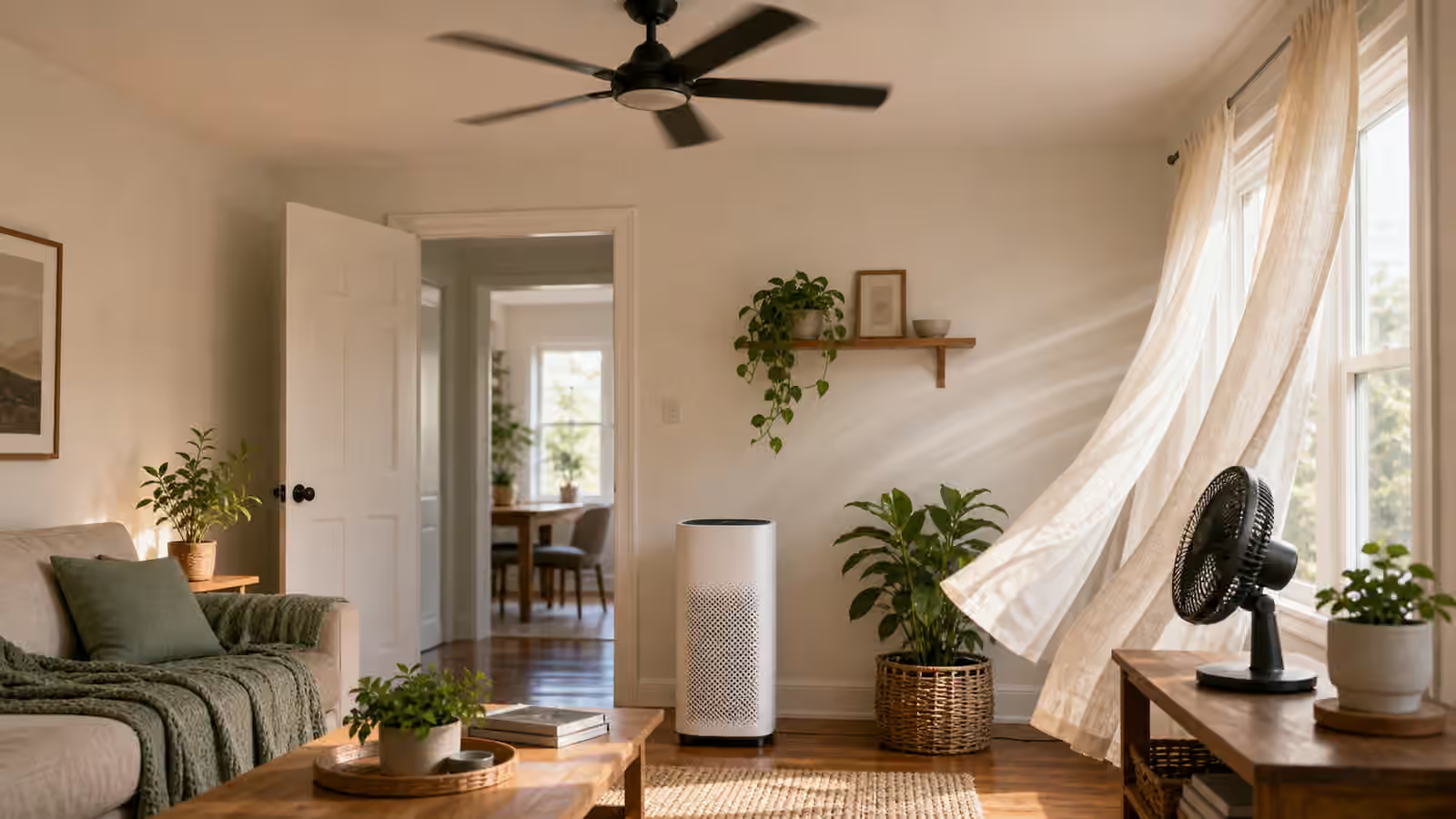
A purifier can only clean the air that reaches its intake, and in a large or cluttered room some air never makes the trip. A gentle fan can help by nudging stagnant zones toward the unit, so the filter sees more of the room over time rather than endlessly recycling the same nearby air. The effect is real but modest, and it depends on the purifier being placed sensibly in the first place. A fan cannot rescue a purifier that is wedged behind a couch breathing its own exhaust.
Because placement decides so much of this, it is worth settling the purifier’s spot before adding a fan to the picture. The purifier placement planner helps you find a location with clear intake space in the room’s natural airflow path, and once the unit is well positioned you can judge honestly whether a fan adds anything. Often, in an open, evenly-shaped room, a well-placed purifier needs no help. In a long room, a tall room, or one with a dead corner, a low, steady mixing fan can make the filtration feel connected to the whole space. What you should not do is aim a fan straight into the purifier’s intake from a few inches away, as if force-feeding it air; that just makes noise and stirs nearby dust, papers, and bedding into new airborne sources.
With Ventilation, Direction Is Everything
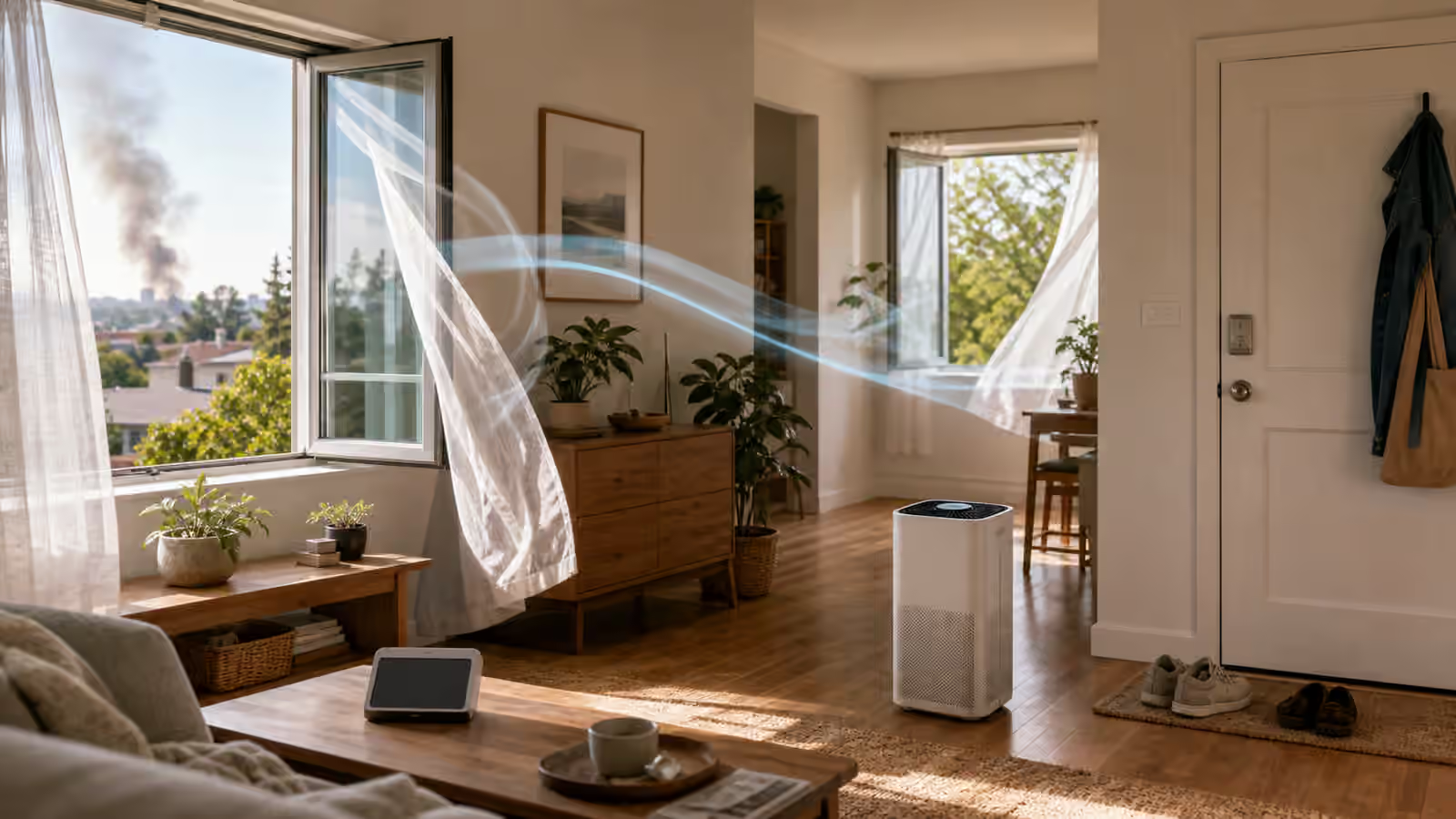
People most often mistake a fan for ventilation, and the distinction is not pedantic. A fan blowing on you in a sealed room is comfort, not fresh air; the same stale air is simply moving faster. Ventilation requires exchange, air actually leaving and acceptable air actually entering, which needs an opening and usually a second one for the air to flow through. A window fan can genuinely ventilate when it pushes indoor air out and a decent path lets replacement air in, and it can quietly make things worse when it faces inward on a bad-air day and pulls smoke, pollen, humidity, or street exhaust into the home.
So the outdoor conditions decide the move before the fan does. On a clean, mild day, a window fan exhausting a stuffy room can refresh it quickly. During a smoke event, the better choice is closed windows, filtration, and fewer indoor sources, with the window fan switched off. On a humid day, dragging outdoor air in may cool the room for a few minutes while raising the indoor moisture you were trying to keep down. A fan pointed at an open window is a tool with a direction and a context, not a guarantee of fresh air.
Ceiling Fans Are A Comfort Tool
Ceiling fans earn their place through comfort, and that is a legitimate contribution to clean-air habits even though they clean nothing. By making a warm room feel cooler and evening out temperature layers, a ceiling fan can reduce the temptation to fling windows open at a bad outdoor moment or to overcool the house. It supports the room indirectly by making it comfortable enough that people keep their better routines. What it does not do is filter anything, exhaust a bathroom, remove cooking particles, or turn a closed bedroom into a ventilated one overnight.
There is a small maintenance catch worth naming: a ceiling fan is a shelf for dust, and a neglected one becomes a source when switched on, flinging settled dust down over the bed or sofa below. Wipe the blades on a rhythm, and if a fan wobbles over a bed full of loose particles, clean the room before relying on it. The comfort is real; just do not let it quietly disguise a source you have not addressed.
Desk Fans Make Local Mistakes Visible
Small fans are directional, which makes their errors easy to spot and easy to fix. A desk fan blowing from a printer toward your chair delivers printer fumes straight to your breathing zone. One sitting on a dusty shelf lifts that dust into the air. One aimed at a damp closet spreads musty air before anyone has looked at the closet. The lesson is not that desk fans are bad; it is that they should be aimed after you have named the source, so they carry air away from people and problems rather than toward them.
Used with that awareness, a desk fan is a fine helper: keeping someone comfortable at a workstation while the room gets short ventilation breaks and the purifier runs in a clear spot, or cooling a sleeper without opening a smoky window. The fan is part of the setup, not the plan itself, and the plan is still source control, ventilation when outdoor air allows, and filtration.
A Quick Way To Judge Any Fan
Stand where people actually sit, sleep, or work, and ask which direction the air is going. Is the fan moving air from a source toward those people or away from them? Will it disturb settled dust? Is it blocking or feeding the purifier? Is the outdoor air worth inviting in before a window fan goes on? After any change in direction or speed, give the room a little time and pay attention to odor, comfort, dust movement, and noise, since a fan that is too loud gets turned off and then helps nobody.
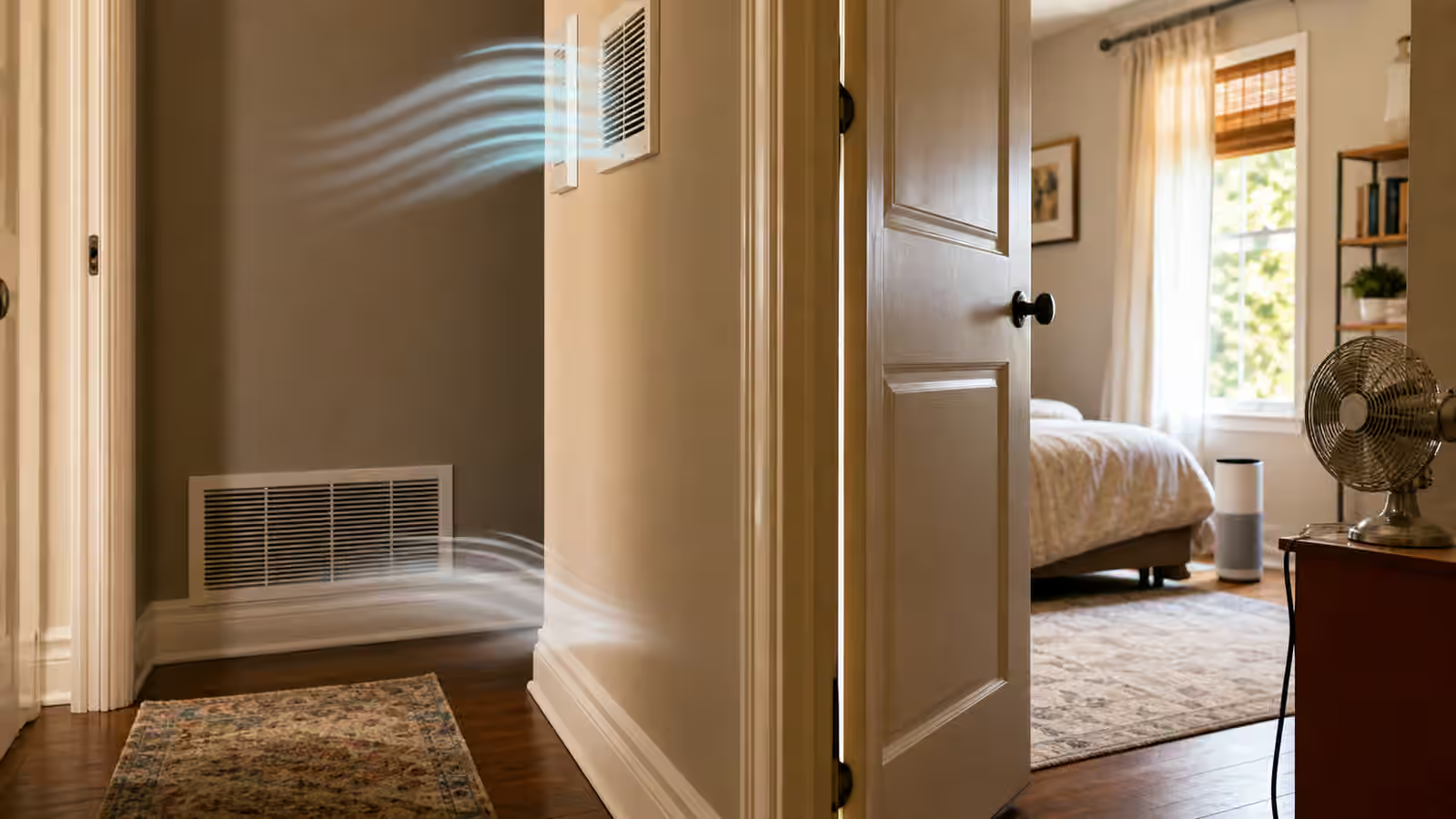
Keep the roles separate and the whole subject gets simpler: fans move air, filters capture some particles, ventilation exchanges air with the outdoors, and source control reduces what has to be handled at all. A fan is worth using when it makes one of those real jobs easier or the room more livable, and worth rethinking when it is just spreading a problem around faster. For the system-level version of this question, the HVAC fan on, auto, and circulate guide covers the central blower, and ventilation basics for stale rooms covers when to bring outdoor air in at all.
This guide is practical education, not medical advice, diagnosis, or remediation, and it makes no promise that any room is free of every hazard. A fan is a comfort and mixing tool; when there is a carbon monoxide risk, a fuel-burning appliance problem, extensive mold, or another serious issue, do not rely on moving air to manage it, and turn instead to alarms, testing, and qualified help under local public health guidance.