For the first thirty years of my life, chocolate was a percentage. Seventy percent meant dark. Fifty meant milk. Eighty-five meant you were showing off at a dinner party.
Then someone handed me a bar that changed the question entirely.
It was a 70% dark bar from a small maker. The label said “Zorzal Estate, Dominican Republic.” I broke off a square, let it melt on my tongue, and tasted—raisins. Not chocolate-with-raisins. Just raisins, right there in the chocolate, followed by a wave of brown sugar and something floral I couldn’t name.
I looked at the ingredients. Cacao beans and sugar. Nothing else.
That was the afternoon I stopped asking “how dark is it?” and started asking “where is it from?”
This guide is everything I’ve learned since that first square—about place, fermentation, and why the same percentage from two different origins can taste like two completely different foods.
What “single-origin” actually means
Single-origin chocolate is made from cacao beans sourced from one identifiable place. That place might be a country, a region, a cooperative, or a single estate.
The tighter the origin, the more specific the flavor. “Ghana” is single-origin. “Zorzal Estate, San Francisco de Macorís, Dominican Republic” is also single-origin—but far more focused.
Why does this matter? Because cacao, like wine grapes or coffee, is an agricultural product shaped by its environment. The soil, altitude, rainfall, fermentation practices, and even the shade trees on the farm all influence the flavor of the finished chocolate.
Chocolate makers call this terroir—the taste of place.
The first tasting: three bars, three places
The week after that Dominican Republic bar, I bought two more single-origin bars at the same percentage and tasted them side by side. It was the simplest possible experiment—and the most convincing.
Bar one: Madagascar, 70%
The first thing I noticed was brightness. This chocolate was tart—not in a sour-candy way, but the way a ripe raspberry is tart. There were citrus notes underneath: tangerine peel, maybe lemon curd. It was acidic, fruity, almost wine-like.
Madagascan cacao is famous for this profile. The island’s Trinitario and Criollo varieties, combined with its specific fermentation traditions, produce cacao that reads as fruit-forward and bright.
Bar two: Ecuador, 70%
Completely different. Where Madagascar was bright, Ecuador was earthy. The first note was floral—jasmine, maybe violet—followed by a wave of green banana and a long, nutty finish. There was a subtle bitterness at the end that felt structural, like tannins in wine.
Ecuadorian Nacional cacao, especially the Arriba variety, is known for these floral and earthy characteristics. The flavor is complex, layered, and tends toward a longer finish.
Bar three: Dominican Republic, 70%
The one that started everything. Warm, round, raisin-and-brown-sugar sweetness. Less acidic than Madagascar, less floral than Ecuador. A comforting profile—like dried fruit and toffee.
Three bars. Same percentage. Same two ingredients. Three completely different flavor experiences.
That tasting lasted twenty minutes and taught me more about chocolate than years of casual eating ever had.
How place shapes flavor
Once you taste the difference, the question becomes: why?
The answer has layers, and they stack.
Genetics
Not all cacao is the same species in practice. The three broad genetic groups—Criollo, Forastero, and Trinitario (a hybrid)—have different baseline flavor characteristics. Criollo tends toward complexity and delicacy. Forastero is robust and chocolatey. Trinitario ranges widely depending on its parentage.
But genetics alone don’t determine flavor. The same variety planted in different soils will taste different.
Soil and climate
Cacao grown at higher elevations with more temperature variation tends to develop more acidity—similar to how high-altitude coffee develops brightness. Volcanic soil contributes mineral complexity. Heavy rainfall can dilute flavors; the right amount of dry stress can concentrate them.
Fermentation
This is where craft enters. After harvest, cacao beans are fermented for three to seven days, depending on the producer’s protocol. Fermentation develops the precursor compounds that roasting later converts into flavor.
Under-fermented cacao tastes astringent and flat. Over-fermented cacao turns vinegary or musty. Well-fermented cacao has depth, sweetness, and aromatic complexity.
Fermentation is arguably the single biggest variable in cacao quality. Two farms in the same valley with different fermentation practices will produce noticeably different chocolate.
Drying
After fermentation, beans are dried—usually in the sun. Slow, even drying preserves the clean flavors developed during fermentation. Rushed drying or smoke-drying can introduce off-notes: smoky, musty, or acidic flavors that persist through roasting and into the finished bar.
A flavor map of the cacao world
After a year of tasting, I started to see patterns. Not rules—patterns. Every origin has variation, but these are the broad strokes that hold true often enough to be useful.
| Origin | Common Flavor Profile |
|---|---|
| Madagascar | Bright fruit (raspberry, citrus), tangy acidity |
| Ecuador | Floral (jasmine, violet), green banana, earthy, nutty |
| Dominican Republic | Raisins, brown sugar, toffee, warm spice |
| Peru | Nutty, malty, stone fruit, mild acidity |
| Tanzania | Bright citrus, grapefruit, sometimes tea-like |
| Venezuela | Deep chocolate, plum, balanced sweetness, elegant |
| Colombia | Caramel, red fruit, balanced acidity and body |
| Vietnam | Spicy, earthy, bold, sometimes smoky |
| Belize | Fudgy, classic brownie-like chocolate, moderate complexity |
| Papua New Guinea | Smoky, dried fruit, complex, savory undertones |
This is not a definitive chart. A single estate in Peru might taste nothing like another estate thirty miles away. But as a starting compass, it helps you navigate a chocolate shelf with more intention.
How to taste origin
Tasting chocolate for origin is not harder than eating chocolate. It just requires slowing down.
The method
Break the bar. Listen for the snap. A clean snap means good temper, which means clean flavor expression. A soft bend suggests bloom or poor storage—the tasting may be compromised.
Smell before you taste. Hold the piece near your nose for a few seconds. You’ll notice more than you expect—fruit, earth, roast, floral notes. The aroma previews the flavor.
Let it melt. Place the chocolate on your tongue and resist chewing. Cocoa butter melts at body temperature. As it melts, flavors release in sequence: the first note, the mid-palate, the finish.
Notice the arc. Does the flavor start bright and finish earthy? Start sweet and finish bitter? The shape of the flavor over time is where origin reveals itself.
Compare, don’t judge. The goal isn’t to find the “best” origin. It’s to notice differences. Madagascar isn’t better than Ecuador. They’re different conversations.
If you want the full breakdown of tasting mechanics, read the Chocolate Tasting guide.
The bar that tasted like rain
The moment that turned curiosity into real understanding came six months into my single-origin exploration.
I was tasting a bar from a small farm in Tumaco, Colombia. The maker’s notes said “red fruit, panela, citrus blossom.” I broke off a square, let it sit on my tongue, and felt something I hadn’t felt before with chocolate.
It tasted like a place. Not literally—I’ve never been to Tumaco. But the combination of warm caramel sweetness, a bright flash of orange-like acidity, and a long, clean finish felt specific. It felt like standing outside somewhere warm after rain—lush and earthy and alive.
That’s terroir. Not a marketing word. A real experience of agricultural specificity expressing itself through flavor.
Not every bar does this. Commodity chocolate, made from blended beans from multiple countries, is designed to taste consistent—the same chocolatey baseline every time. Single-origin chocolate is designed to taste specific—and specificity is where delight lives.
Building your own origin education
You don’t need to buy dozens of bars at once. Here’s a simple path:
Month one: Buy three bars from three different origins, all at the same percentage (70% is ideal). Taste them in one sitting. Write one word per bar. That’s your baseline.
Month two: Pick the origin you liked most and try two different makers’ versions of it. Same country, different interpretation. Notice what’s consistent (the origin) and what’s different (the maker’s hand).
Month three: Go somewhere unexpected. Try a bar from Vietnam, or Papua New Guinea, or a country you’ve never associated with chocolate. Let it challenge your expectations.
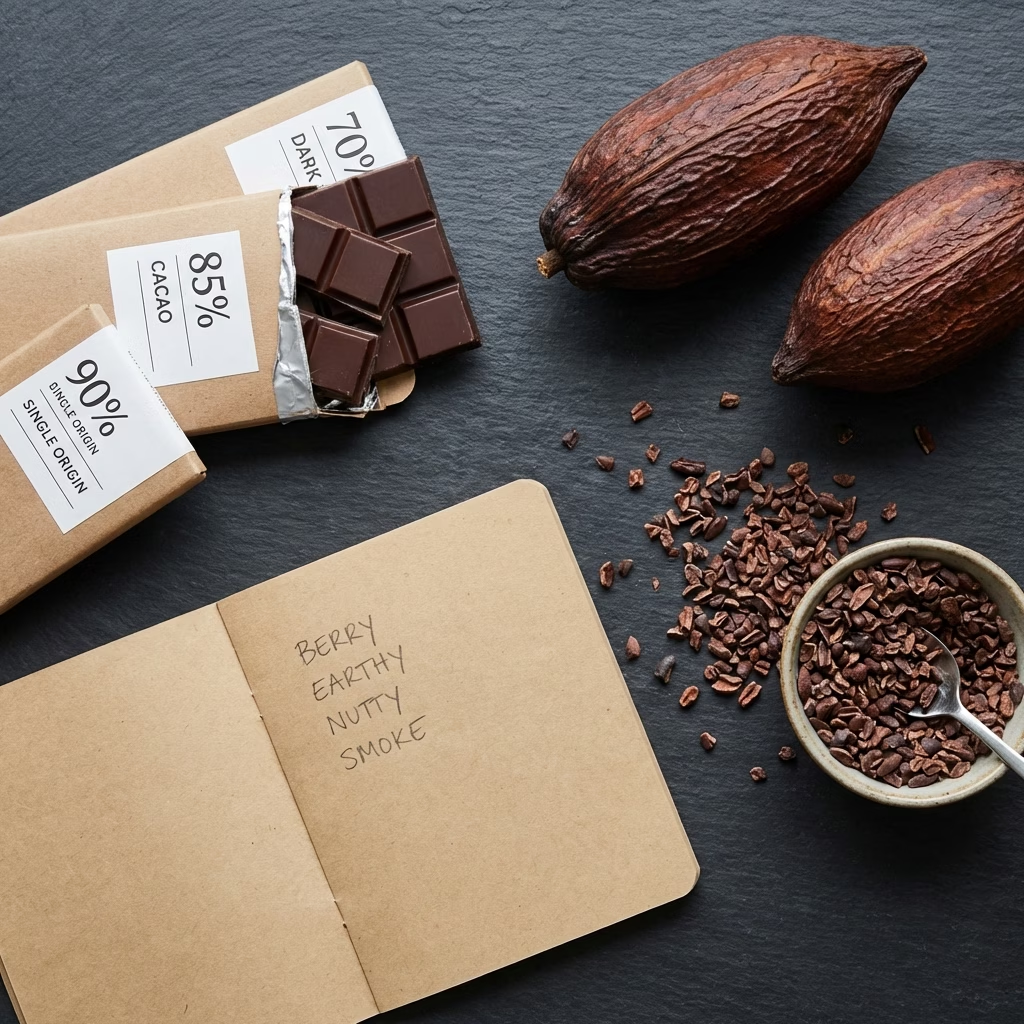
Ongoing: Keep a small notebook or phone note. Date, maker, origin, percentage, one or two flavor words. After ten entries, you’ll start seeing your own taste map emerge—and you’ll know what to reach for next.
Next steps
- Read Cacao Origins: A World Tour for the full reference on growing regions, varieties, and processing styles
- See Chocolate Tasting: A Complete Guide for detailed tasting techniques and vocabulary
- Explore Bean-to-Bar Basics to understand how the journey from farm to finished bar shapes flavor
- Try Chocolate and Coffee Pairing for a tasting exercise that highlights origin in both chocolate and coffee