Milk chocolate is easy to underestimate because most people meet it first as candy. The sweetness arrives quickly, the melt is friendly, and the flavor often seems less serious than a dark bar with an origin name and a sharp percentage on the wrapper. That first impression misses the craft. Good milk chocolate is not dark chocolate with the volume turned down. It is a different balance of cocoa, dairy, sugar, and fat, and each part changes how aroma moves through the mouth.
The best way to understand milk chocolate is to stop treating it as the beginner version of chocolate. It has its own structure. Cocoa gives depth and bitterness. Milk powder brings dairy sweetness, caramel, malt, and cream. Sugar sets the pace of the melt and the first impression. Cocoa butter decides whether the bar feels plush, waxy, quick, or clean. A thoughtful milk chocolate can be bright, nutty, floral, roasted, salty, or deeply cocoa-forward without becoming harsh.
If you already use Chocolate Tasting as a way to read aroma and finish, milk chocolate rewards the same attention. It simply asks you to listen for different signals. Instead of asking only how intense the cocoa tastes, ask how cocoa and dairy are sharing the stage. The answer tells you more than the word “milk” ever will.
Milk Changes Flavor, Not Just Color
Milk chocolate contains cocoa ingredients, sugar, and milk ingredients, usually in powdered form. That powder matters because it is not neutral. It can taste fresh and creamy, cooked and caramelized, malty, buttery, or slightly tangy depending on how it was made and how the chocolate maker handles it. Even before the cacao enters the picture, dairy brings its own flavor vocabulary.
This is why two milk chocolates with similar percentages can taste unrelated. One may feel like warm caramel and toasted biscuit. Another may taste like cocoa, cream, and a faint fruit note. Another may lean toward malted milk, browned butter, or sweetened condensed milk. These differences are not only sweetness levels. They come from the dairy, the cacao, the roast, and the maker’s decision about which flavors should stay visible.
Milk also softens the edges of cocoa. Acidity that might feel sharp in a dark bar can become rounder and more approachable in milk chocolate. Roast can read as toast or caramel instead of bitterness. Tannin can become less drying because fat and sugar change the way the particles coat the tongue. That softening is part of the style, but it can also hide weak chocolate. A bar that tastes sweet and creamy but disappears after a few seconds may have used dairy and sugar to cover a thin cocoa base.
Percentage Still Matters, But It Means Less Alone
Percentage labels are useful, but milk chocolate makes their limits obvious. In dark chocolate, a higher percentage often suggests more cocoa intensity and less sugar. In milk chocolate, the same number has more moving parts because the non-cocoa portion may include sugar and milk powder, while the cocoa portion may include both cocoa solids and cocoa butter. A 45 percent milk chocolate can feel darker and more cocoa-driven than a 55 percent bar if the lower-percentage bar uses flavorful cacao and the higher-percentage bar carries a large amount of cocoa butter.
The Understanding Chocolate Percentages guide is helpful here because percentage is a ratio, not a quality certificate. It does not tell you how much milk powder is present, how sweet the bar will feel, how fine the texture will be, or whether the cocoa was roasted gently or heavily. It also does not tell you whether the milk has a clean dairy flavor or a cooked caramel character.
High-cacao milk chocolate is worth seeking out when you want the bridge between dark chocolate and classic milk chocolate. These bars often sit in a middle territory: enough dairy to round the cocoa, enough cocoa to keep the finish from turning flat. They can be especially good for people who find very dark bars dry but still want origin character, roast nuance, and a longer finish than ordinary sweet milk chocolate provides.
Low-percentage milk chocolate can still be excellent when it is honest about its purpose. Some bars are meant to taste like caramel, cream, and childhood pleasure, with cocoa playing a supporting role. That is not a flaw. The problem begins when the sweetness arrives without depth, or when vegetable-fat smoothness replaces the distinctive melt of cocoa butter. The label can suggest a direction, but the texture and finish tell the truth.
Dairy Can Carry Roast, Caramel, and Malt
Milk chocolate has a special relationship with roasted flavors. A dark bar with a heavy roast may taste like coffee, smoke, or bitter brownie crust. Add milk, and some of that roast becomes more like toasted bread, dulce de leche, malt, or browned butter. The same cocoa can feel warmer because dairy has a natural affinity for cooked sugar flavors.
This is why milk chocolate pairs so naturally with nuts, coffee, shortbread, pretzels, and browned butter desserts. Those foods echo the bar’s dairy and roast notes rather than fighting them. A milk chocolate with a pronounced hazelnut or caramel finish can feel almost complete on its own because the flavor families are already close together. A brighter milk chocolate, especially one made with fruit-forward cacao, may need a little more attention. The dairy can round the acidity beautifully, but too much sugar can blur the fruit until it tastes merely sweet.
Good makers often use milk chocolate to show gentleness without losing character. A cacao that might seem severe as a high-percentage dark bar can become expressive when dairy softens its tannin. A roast that would feel blunt in dark chocolate can become comforting. This is a craft decision, not a downgrade. The maker is deciding which parts of the cacao should be foregrounded and which should be softened.
Texture Tells You How the Bar Was Built
Milk chocolate usually melts faster and feels softer than dark chocolate because milk fat and sugar change the structure. That friendly melt is one of its pleasures, but it can become a weakness if the bar turns greasy, waxy, or sticky. A good milk chocolate should open smoothly, not simply collapse into sweetness.
Start by letting a small piece rest on your tongue. If the surface softens quickly and the chocolate becomes creamy without turning oily, the fat system is cooperating. If the bar feels waxy, it may be too cold, too high in added fat for your taste, or formulated for coating and stability rather than slow tasting. If it feels sandy, the sugar, cocoa, or milk particles may not have been refined finely enough. The details in Chocolate Texture: Snap, Melt, and Mouthfeel apply directly, but milk chocolate often makes them easier to notice because the melt is more immediate.
Snap needs context. Milk chocolate often breaks with a gentler sound than dark chocolate, and that is normal. Milk fat softens the crystal structure, and a high-dairy formula will not behave like a plain 70 percent dark bar. A clean break is still useful, especially if the surface looks glossy and the bar releases aroma as it melts. A bendy, dull, or streaked surface may point to warm storage, poor temper, or bloom, but the bar’s formula matters before you judge it.
How to Taste Milk Chocolate With More Precision
The usual mistake is chewing too fast. Milk chocolate rewards patience because the first sweetness can be loud enough to hide the rest. Let the first piece melt slowly and notice the order of events. Sweetness may arrive first, then dairy, then cocoa, then roast or fruit on the finish. If everything arrives at once and vanishes, the bar may be pleasant but simple. If the finish keeps changing after the sweetness fades, there is more craft to read.
Smell before tasting. Milk chocolate can smell like cream, caramel, malt, vanilla, honey, cereal, hazelnut, dried fruit, or cocoa powder. Then taste for the relationship between aroma and finish. A bar that smells strongly of caramel but finishes with clean cocoa has balance. A bar that smells sweet and finishes sugary may be built more for immediate pleasure than complexity. Neither needs to be condemned, but they are different experiences.
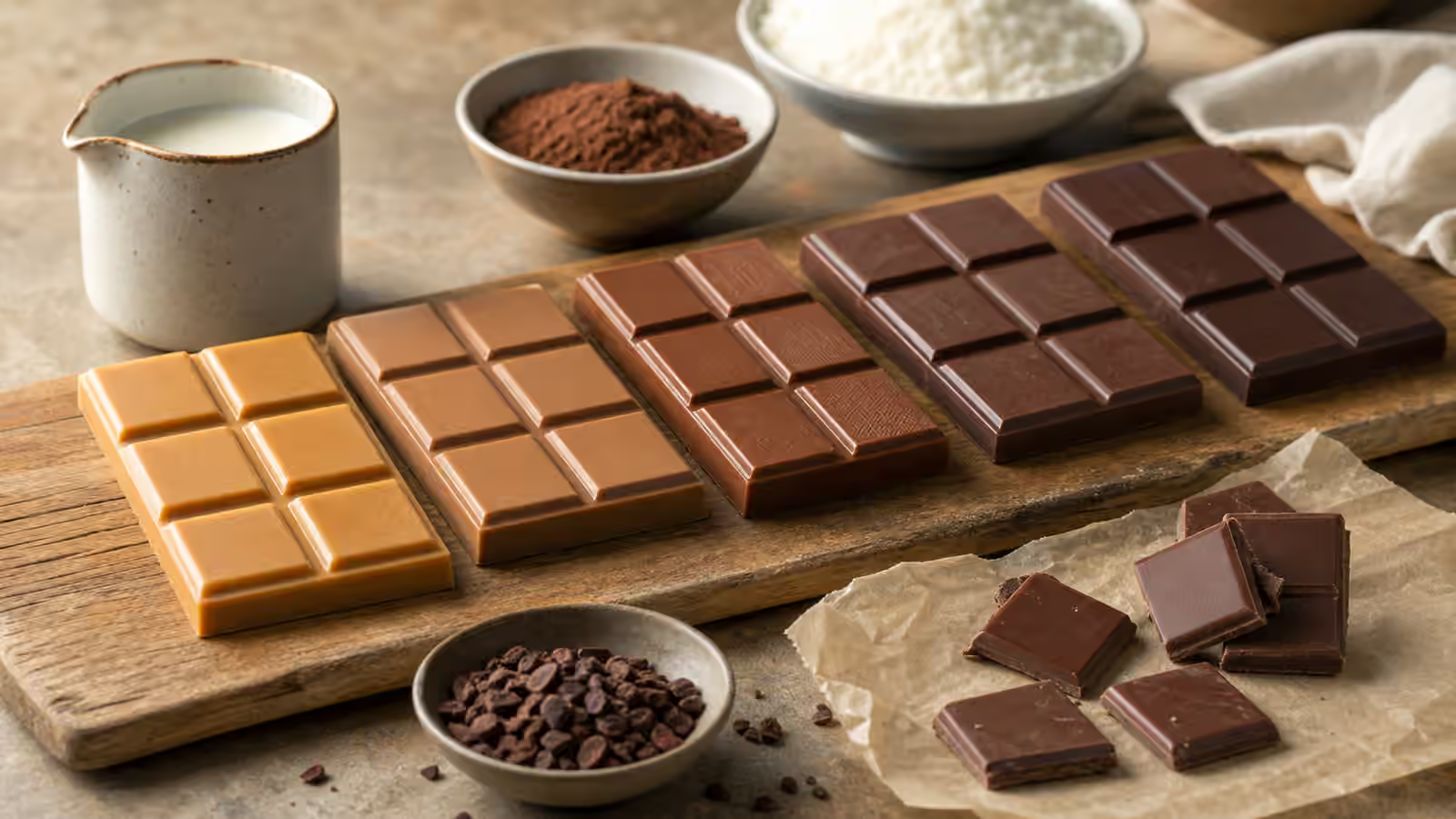
Taste milk chocolate beside one dark bar and one high-cacao milk bar if you want the lesson to become clear. The dark bar will show you what the cacao does without dairy. The high-cacao milk bar will show you how dairy rounds that structure. The sweeter milk bar will show you how sugar changes speed, aroma, and finish. This kind of comparison teaches faster than reading a label because your mouth can feel the tradeoffs directly.
Buying Better Milk Chocolate
A useful milk chocolate label gives you a few clues. The percentage tells you roughly how much of the bar is cacao ingredients. The ingredient list tells you whether the bar is built from cocoa mass, cocoa butter, sugar, and milk ingredients, or whether it relies on extra flavors and substitute fats. Origin information can be meaningful, but it is not required for pleasure. Some milk chocolates are blends because the maker wants balance, consistency, and a dairy-friendly cocoa profile.
If you are buying craft chocolate, use the same calm habits from How to Buy Craft Chocolate . Choose one contrast at a time. Try a classic milk chocolate next to a high-cacao milk chocolate. Try a caramel-leaning bar next to one described as fruity or nutty. Keep the tasting small enough that you can still notice texture after the first rush of sugar.
For baking, milk chocolate needs a different lens. Its sugar and dairy can make brownies, cookies, glazes, and ganache taste round and mellow, but it can also make a dessert too sweet if the recipe was written for dark chocolate. The Choosing Chocolate for Baking guide explains those tradeoffs from the kitchen side. As a rule of judgment, do not substitute by romance. Substitute by structure. Milk chocolate brings sweetness, dairy solids, and softer set, so the whole recipe has to welcome those traits.
Milk chocolate becomes more interesting when you stop apologizing for liking it. It can be sweet without being shallow, gentle without being bland, and creamy without losing cocoa. The best examples do not ask to be measured against dark chocolate on dark chocolate’s terms. They ask a different question: how much flavor can live inside softness before the sweetness takes over? When the answer is handled well, milk chocolate has its own kind of depth.