Chocolate is one of those foods that seems sturdy until you care about it. A candy bar can live in a backpack and still taste like sugar and cocoa. But a good bar—the kind that tastes like fruit, nuts, flowers, or deep roast—behaves more like a delicate ingredient. It’s sensitive to heat. It absorbs odors. It changes texture when it’s treated carelessly. And because chocolate is often eaten in small, quiet moments, the disappointment of a ruined bar feels oddly personal, like you wasted not just money but attention.
Most storage advice is delivered like a warning label: never refrigerate, never freeze, never let it warm, never let it cool. The reality is gentler. Chocolate doesn’t need a laboratory. It needs a stable, respectful place to rest. The best storage is not about rules; it’s about protecting three things: the crystal structure that gives chocolate its snap and melt, the aromas that make it expressive, and the surface finish that tells your brain “this will be good” before you even taste it.
You learn the first principle the same way many people do—by accident. You leave a bar near a warm window, and a day later it has a pale film, as if someone dusted it with chalk. You bite it anyway. The flavor is still there, but the texture is wrong: a little softer, a little waxier, the snap muted. This is bloom, and it’s not usually dangerous. It’s a structural change. Fat has migrated and re-crystallized on the surface, or sugar has pulled moisture and dried back into a grainy crust. The bar is telling you something simple: I got too warm, or I got damp, or I experienced swings.
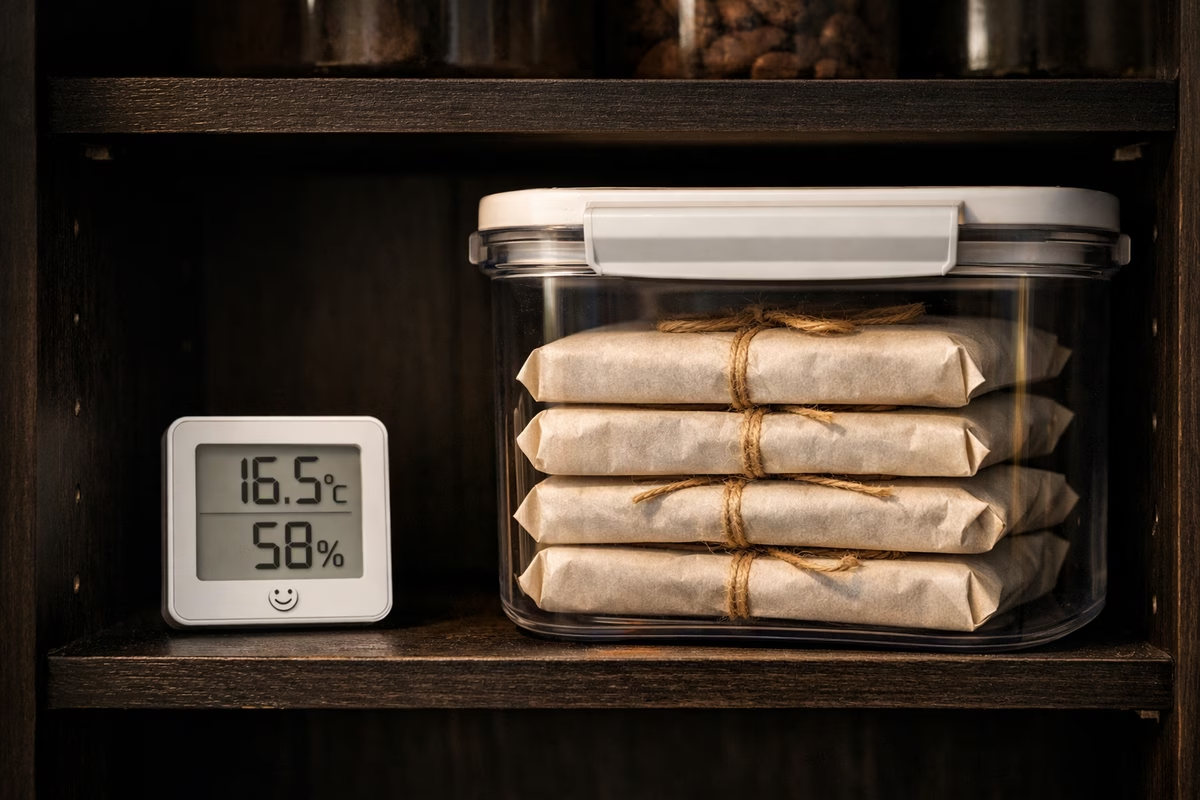
So you choose a new home for your chocolate. Not the sunlit counter, not the top shelf above the stove, not the fridge door where temperatures change every time it opens. You pick a cool cabinet or pantry, away from heat and away from light. Chocolate doesn’t just melt when it gets hot; it also loses some of its aromatic clarity. Heat turns a complex bar into something flatter, the way a room loses detail when the lights are too bright.
Then you learn the second principle: chocolate is a sponge for smells. Leave a bar near onions, garlic, strong spices, coffee, or fragrant soap, and it can quietly borrow those aromas. The cocoa butter and the porous structure of the bar do what fats do: they carry volatile compounds. When you unwrap it later, the bar tells a strange story you didn’t ask for. This is why the best storage isn’t just cool; it’s clean. If you want chocolate to taste like itself, let it live away from your loudest pantry companions.
At some point you ask the question everyone asks: should chocolate go in the fridge? The honest answer is that a fridge is not evil; it’s simply risky. Refrigerators are humid, they smell like food, and they fluctuate. Put a bar in a fridge unprotected and you invite sugar bloom, odor absorption, and the kind of condensation that makes chocolate feel tired. But sometimes your home is too warm, especially in summer, and the fridge becomes the least-bad option.
If you must refrigerate, the move is not “throw it in.” The move is to seal it like you mean it. Wrap it, place it in an airtight container, and let it come back to room temperature slowly while still sealed. The sealing matters because the danger is not cold; it’s moisture and odors. Condensation forms when a cold bar meets warm air. Keeping it sealed prevents the bar from sweating, and it prevents your chocolate from becoming a side character in your fridge’s smell ecosystem.
Freezing is similar: it can preserve chocolate, but only if you treat it like preservation rather than storage. Seal it, freeze it, and when you want to eat it, thaw it slowly in the sealed container. Chocolate is not fragile in the way fresh berries are fragile, but it does have a surface and a structure. Respect those and the bar will return to you intact.
The final principle is the simplest, and it’s the one that makes chocolate feel luxurious: let it warm slightly before you eat it. Chocolate that’s too cold becomes quiet. Aroma doesn’t lift. Texture feels hard. When the bar is at a cool room temperature, it melts the way it was designed to melt, and the flavors show up like a conversation rather than a list.
Once you understand these habits, storing chocolate stops being stressful. It becomes a small ritual of care. You buy a few bars, put them somewhere stable, and you know that when you reach for one on a Tuesday night, it will still be itself. Chocolate is not asking for perfection. It’s asking for calm: steady temperature, protection from smells, and a little patience.
If you want the technical companion piece, read Storage and Serving and Tempering Chocolate to understand why structure matters so much.