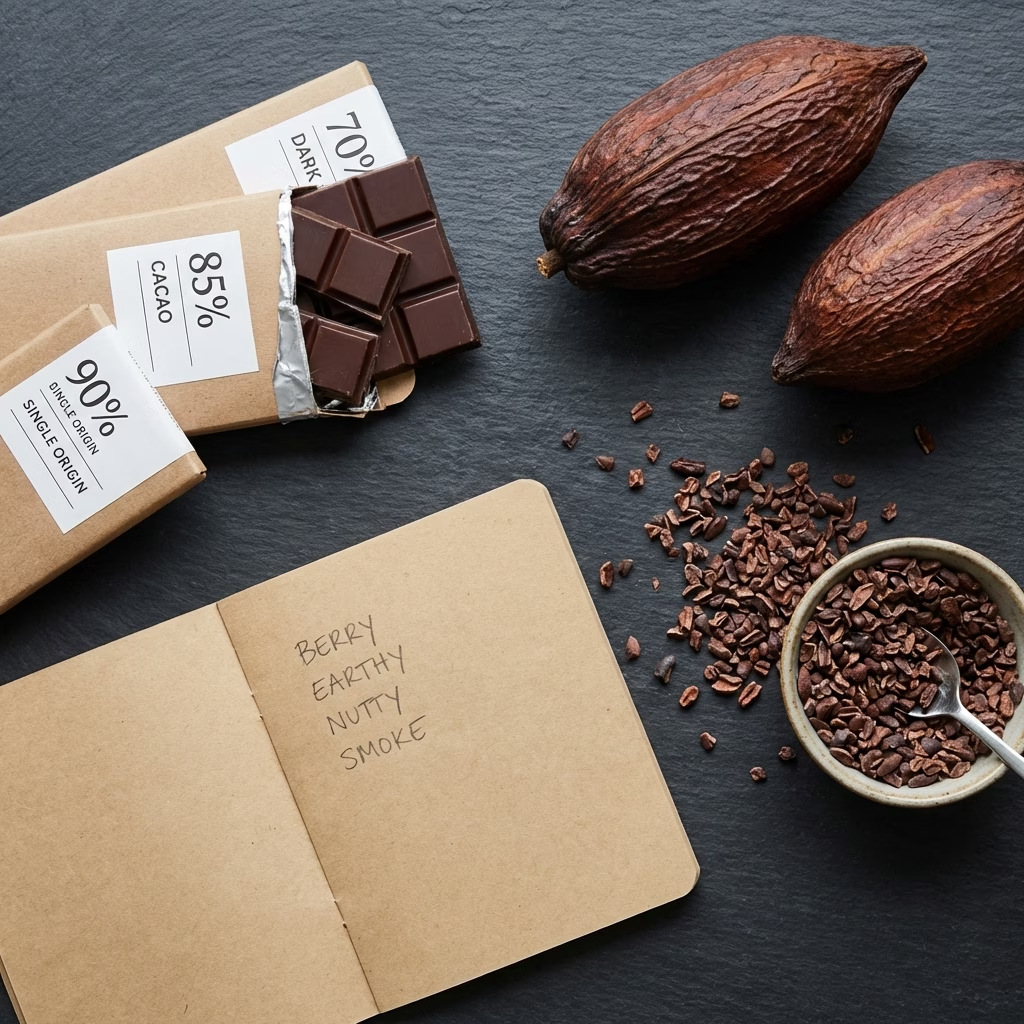
The craft chocolate shelf is beautiful and bewildering.
Fifty bars, each with an origin name you may or may not recognize, a percentage that may or may not mean what you think, and a price that ranges from three dollars to eighteen. Some have tasting notes printed on the back. Some have a story about the farm. Some have nothing but a percentage and a minimalist design that suggests you should already know what you’re looking at.
If you’ve been eating grocery-store chocolate your whole life and just wandered into a specialty shop—or an online store with dozens of makers—the question isn’t “which is best?” It’s “where do I even start?”
This guide is the answer. Not a ranking. A framework for reading labels, understanding what you’re paying for, and spending your chocolate budget on bars that match what you actually enjoy.
What the label tells you (and what it doesn’t)
Percentage
The percentage on a chocolate bar tells you the total cacao content by weight. A 70% dark bar is 70% cacao (cocoa solids + cocoa butter) and 30% sugar.
Higher percentage does not mean better. It means less sweet and more intense. An 85% bar is not superior to a 65% bar—it’s a different experience. Some of the most complex, interesting bars in the world are in the 60–72% range, where there’s enough sugar to let subtle flavors emerge without being masked by bitterness.
Useful range for tasting: 65–75% is the sweet spot for most people. Below 60%, sugar dominates. Above 80%, bitterness can overwhelm subtlety unless you’ve trained your palate.
Origin
The origin tells you where the cacao was grown. As covered in the Cacao Origins guide, origin is the biggest predictor of flavor character.
Single-origin bars specify one country, region, or estate. Blends combine cacao from multiple origins for a balanced, consistent profile.
Neither is inherently better. Single-origin is for exploration—tasting what a place produces. Blends are for consistency and harmony.
Ingredients
Flip the bar over. The ingredient list is the most honest part of the label.
Craft chocolate (bean-to-bar) typically lists: cacao beans, sugar. Sometimes cocoa butter and vanilla. That’s it.
Mass-market chocolate often includes: sugar, cocoa butter, milk solids, soy lecithin (emulsifier), vanillin (artificial vanilla), palm oil, and various flavorings. The longer the list, the further from the bean.
A short ingredient list doesn’t guarantee quality, but it guarantees simplicity—and simplicity means the cacao has nowhere to hide. If it’s good, you’ll taste it. If it’s not, you’ll taste that too.
Bean-to-bar vs. bean-to-bar-style
“Bean-to-bar” means the maker controls the entire process: sourcing green cacao beans, roasting, cracking, winnowing, grinding, conching, tempering, and molding. They start with raw beans and produce finished bars.
Some companies label themselves “bean-to-bar” but actually buy pre-processed cacao (couverture) and re-melt it into bars. This isn’t dishonest if they disclose it, but it’s a fundamentally different product.
How to tell: True bean-to-bar makers usually name their cacao source—a specific farm, cooperative, or estate. They often describe their roast profile and processing decisions. If the packaging talks about “sourcing” and “roasting,” you’re likely looking at genuine bean-to-bar.
What you’re paying for
Craft chocolate costs more than mass-market chocolate. A $9 bar feels expensive when a $2 bar exists. Here’s where the money goes:
Cacao quality
Mass-market chocolate uses bulk cacao—grown for volume, blended for consistency, sold at commodity prices. Craft chocolate uses specialty cacao—selected for flavor, sourced from specific farms, often fermented with more care and sold at premium prices.
The cacao itself typically costs a craft maker two to five times more per pound than what a multinational pays.
Direct trade and fair pricing
Many bean-to-bar makers buy directly from farms or cooperatives, paying significantly above commodity prices. This isn’t charity—it’s an investment in quality. Farmers who are paid well have the incentive and resources to ferment carefully, dry properly, and maintain genetic diversity in their orchards.
Some labels include the price paid per pound to the farmer. This transparency is increasingly common in craft chocolate and worth looking for.
Small-batch production
A craft maker might produce a few hundred bars per batch. A multinational produces millions. Economy of scale works in reverse for small producers—everything from roasting to wrapping is more expensive per unit.
The honest breakdown
For a $9 craft bar:
- ~$2–3 goes to cacao sourcing
- ~$2 goes to production (roasting, grinding, tempering, wrapping)
- ~$2 goes to packaging and overhead
- ~$2 goes to the retailer
- The margin is thin
For a $2 mass-market bar, the economics are inverted: very cheap cacao, very efficient production, and significant marketing budgets that craft makers can’t match.
Neither is “ripping you off.” They’re different products serving different purposes.
How to shop: a practical approach
Start with two bars
Don’t buy eight bars on your first visit. Buy two—same percentage, different origins. Taste them side by side. That single comparison teaches more about chocolate than any amount of reading.
Try: one Madagascar bar and one Ecuador or Peru bar, both at 70%. The contrast will be immediately obvious: Madagascar is bright and fruity; Ecuador is floral and earthy. If that comparison interests you, you’ve found a hobby. If it doesn’t, you’ve spent $16 and learned something.
Use percentage as a starting bracket
If you’re new to craft chocolate, start in the 65–72% range. This is where most makers do their best work—enough cacao intensity to be interesting, enough sugar to keep the flavors accessible.
Move darker (75–80%) once you’re comfortable. Go above 80% only when you’re actively curious about bitterness as a flavor dimension.
If you prefer milk chocolate, look for craft milk bars in the 45–55% range. Craft milk chocolate uses real milk and less sugar than mass-market versions—the difference is striking.
Read the maker, not the marketing
Look for makers who tell you:
- Where the cacao came from (country, region, or farm)
- Who fermented and dried it (this shows supply-chain awareness)
- Their roast approach (light, medium, or dark)
- The ingredients (shorter is generally better)
Avoid bars that use vague language like “premium cacao” or “finest ingredients” without specifics. Specificity is the hallmark of craft.
Where to buy
Specialty shops: The best experience. Staff can guide you, offer samples, and explain their selection. Most cities have at least one chocolate shop that stocks craft bars.
Online: Many bean-to-bar makers sell direct. Online retailers like specialized chocolate subscription services offer curated selections that introduce you to multiple makers.
Grocery stores: Increasingly, higher-end grocery stores carry one or two craft brands alongside mass-market options. Bars from makers like Hu, Alter Eco, and Endangered Species are widely available and offer a step up from commodity chocolate, though they’re not always true bean-to-bar.
When to spend more (and when not to)
Spend more when: You’re buying for tasting—especially single-origin bars you plan to eat slowly and deliberately. The extra cost goes to cacao quality and craft.
Spend less when: You’re baking or making hot chocolate. Heat destroys the nuances that make a $12 bar special. Use a good-quality baking chocolate or a mid-range bar.
Don’t assume expensive means better. Some $7 bars from small makers are more interesting than $15 bars from famous ones. Price reflects production cost, not a quality guarantee.
A starter shopping list
If you want a focused introduction to craft chocolate, here are five types of bars to try over your first month:
- A Madagascar 70% from any craft maker (for the bright, fruity baseline)
- An Ecuador or Peru 70% (for the earthy, floral contrast)
- A Dominican Republic or Colombia 70% (for the warm, caramel center)
- A craft milk chocolate 50–55% (to see what milk chocolate tastes like with real ingredients)
- A bar from a local or regional maker (to support craft near you and taste a maker’s personal style)
You don’t need to buy them all at once. One bar per week, tasted deliberately, is enough.
Next steps
- Read Chocolate Tasting: A Complete Guide for how to taste these bars once you’ve bought them
- See Cacao Origins: A World Tour for the full origin flavor map
- Explore The Bar That Tasted Like a Place for a personal single-origin discovery narrative
- Try Storage and Serving for keeping your bars in perfect condition
- Check Bean-to-Bar Basics for understanding the process behind every craft bar