The first time I gave chocolate as a gift, I bought a box of truffles from a department store. They came in a gold box, wrapped in ribbon, and tasted like waxy sweetness. The recipient smiled, said thank you, and the box was empty in two days without a single memorable moment.
The second time I gave chocolate as a gift, I spent an afternoon at a craft chocolate shop asking questions. The box I assembled that day cost less than the department store truffles. But when my friend opened it, she spent forty-five minutes tasting each bar, reading the origin cards I’d written, and asking me questions I didn’t yet know the answers to.
That was the gift box that taught me to taste—not because I was the one eating, but because curating for someone else forced me to understand what I was choosing and why.
Why gift boxes teach you more than buying for yourself
When you buy chocolate for yourself, the stakes are low. If a bar disappoints, you shrug and try another. There’s no need to articulate why you chose it or what makes it special.
When you build a box for someone else, every choice needs a reason. You’re telling a story with five or six bars, and the story should be interesting enough that the recipient wants to follow it from the first square to the last.
This is how I learned to think about chocolate:
Bar 1 is the gateway—something familiar but elevated. A smooth 55% milk chocolate from a quality maker. It says: “You know what chocolate tastes like. This is what it tastes like when someone cares about every step.”
Bar 2 is the surprise—a single-origin dark that tastes like something chocolate shouldn’t. A Peruvian bar with raspberry notes, or a Tanzanian with bright citrus. It says: “The same ingredient can taste completely different depending on where it grew.”
Bar 3 is the challenge—something bold. An 80% bar from Madagascar, intense and fruity, or a bar with inclusions like sea salt, nibs, or chili. It says: “Chocolate can be more than sweet.”
Learning about sourcing by reading the back of the bar
The craft chocolate shop where I built that first box had a wall of bars from makers I’d never heard of: Dandelion, Raaka, Dick Taylor, Pump Street, Friis-Holm, Original Beans. Each bar had a back label that read like a short story.
One bar said: “Cacao from the Zorzal Reserve in the Dominican Republic, a bird sanctuary where cacao grows under native shade trees. Your purchase supports habitat conservation.”
Another: “Fermented for 6 days in wooden boxes at Kokoa Kamili, a centralized fermentation center in Tanzania that pays farmers 50% above local market rate.”
I started reading these labels the way I’d read wine labels—not as marketing, but as a window into how the product was made and who made it.
What the labels taught me
Country of origin tells you the terroir. Ecuador tends toward floral and earthy. Madagascar toward bright fruit and citrus. Dominican Republic toward fudgy richness with raisin notes.
Farm or cooperative name means traceability. If a maker can name the farm, they have a direct relationship with the grower. If the label says only “West African cacao,” the beans likely came through a commodity supply chain where individual farms are untraceable.
Fermentation details signal craft. Fermentation converts raw cacao into something that can become chocolate—it’s as important as grape fermentation is to wine. Makers who mention fermentation duration, method, or partner are paying attention to what matters.
Percentage tells you intensity. A 70% bar is 70% cacao (solids + butter) and 30% sugar. But two 70% bars from different origins will taste nothing alike—one might taste like dried cherries, the other like tobacco and leather.
The six-bar box: a framework for curating
After that first gift, I developed a framework for building boxes. Each position in the box serves a purpose:
Position 1: The Welcome
What: A milk chocolate or low-percentage dark (50-60%) from a quality maker. Why: It meets the recipient where they are. Even dedicated dark chocolate fans appreciate a well-made milk bar. Example: A 55% milk from Dandelion or a 60% dark from Dick Taylor.
Position 2: The Origin Introduction
What: A single-origin dark (65-72%) with clear flavor notes listed on the packaging. Why: It demonstrates that origin changes flavor. Pick an origin with distinctive, easy-to-identify notes. Example: A Madagascar bar with red fruit notes, or a Belize bar with brownie-like richness.
Position 3: The Unexpected
What: A bar that defies expectations—white chocolate made from cacao butter, a bar with unusual inclusions (miso, seaweed, cardamom), or an origin with flavors nobody expects. Why: It sparks conversation. The best gift boxes generate questions. Example: Raaka’s unroasted dark chocolate, or a Peruvian bar with strong floral notes.
Position 4: The Ethical Highlight
What: A bar from a maker with an exceptional sourcing story—conservation-linked cacao, farmer co-ops, agroforestry projects. Why: It connects the flavor to a larger story. Chocolate tastes different when you know who grew it and how they were treated. Example: Original Beans (one tree planted per bar), or Uncommon Cacao’s Tranquilidad estate.
Position 5: The Bold Choice
What: A high-percentage bar (78-85%) or something with intense character. Why: It challenges the palate. Not everyone will love it, but everyone will remember it. Example: An 85% Ecuadorian Arriba from Pacari, or an aged bar.
Position 6: The Closer
What: Something celebratory—a bar with caramel, a chocolate-covered treat, or a flavored bar (vanilla, coffee, fruit). Why: It ends the journey on a high note. The last impression matters. Example: A salted caramel-filled bar, or a chocolate bar with toasted coconut.
What I learned about ethics by asking questions
Building gift boxes turned me into a question-asker. At every shop, every chocolate show, every maker’s website, I started asking the same questions:
“Where do your beans come from?” Makers who can answer specifically—naming farms, cooperatives, regions—are engaged in their supply chain. Makers who say “West Africa” or “blend” may not know.
“How much do you pay for your cacao?” This is the question that separates transparent companies from everyone else. Specialty cacao prices range from $3,000-$8,000+ per metric ton, compared to the commodity price of ~$2,500. Makers who publish prices (like Dandelion, Dick Taylor, and others in the craft community) demonstrate accountability.
“Do you visit the farms?” Direct relationships between makers and farmers result in better cacao (because the farmer understands what the maker needs) and better prices (because there’s no middleman taking a cut).
The uncomfortable truth about chocolate
About 60% of the world’s cacao comes from West Africa, primarily Côte d’Ivoire and Ghana. The commodity cacao supply chain in these regions has documented problems: farmer poverty (many earn less than $2/day), child labor, and deforestation.
Craft chocolate isn’t automatically ethical—but the best craft makers are actively working on these problems by paying higher prices, building direct relationships, and supporting programs that improve farmer livelihoods.
When I build a gift box now, I include at least one bar with a sourcing story I can explain. Not to lecture—but because the person receiving the gift deserves to know that their chocolate came from somewhere real, made by someone who was treated fairly.
The tasting card: the gift within the gift
Every box I give now includes handwritten tasting cards—one for each bar. Nothing elaborate. Just:
- Origin: Where the cacao was grown
- Percentage: How intense it is
- What to look for: One or two flavor notes to watch for
- The story: One sentence about the maker or the source
Example card:
Dandelion – Ambanja, Madagascar (70%) Look for: bright raspberry, light citrus “Dandelion buys directly from Akesson’s estate in the Sambirano Valley. The beans are fermented on-site and sun-dried.”
The cards take five minutes to write and they transform a box of chocolate into a guided experience. People keep them. They reference them while tasting. They ask about the makers.
The cards are the gift within the gift—the proof that you cared enough to learn something before sharing it.
Building a box on any budget
Craft chocolate ranges from $6-$15 per bar (typically 60-75g). A six-bar box costs $36-$90 in chocolate alone, plus $5-$15 for a box, tissue, and cards.
Budget-friendly approach ($30-$45)
- Buy three bars instead of six
- Choose bars from widely available makers (Endangered Species, Tony’s Chocolonely, Taza) at $4-$6 each
- Supplement with a bag of quality cocoa nibs or hot chocolate mix
- Write origin cards from the information on the wrappers
Mid-range approach ($50-$70)
- Five bars from specialty makers
- Include one inclusion bar (salt, nuts, fruit)
- A small box or bag for presentation
- Printed or handwritten tasting guide
Premium approach ($80-$120)
- Six bars from artisan makers, all single-origin
- Include a vintage or limited-edition bar
- Quality gift box or wooden crate
- Full tasting notes with maker stories
- A tasting wheel or flavor map for reference
How curating changed my own tasting
The unexpected thing about building gift boxes is how much it improved my own palate.
When you’re selecting bars for someone else, you taste more carefully. You compare. You think about sequence—how one bar will taste after another. You learn to distinguish between “I like this” and “this is interesting,” which are two different things.
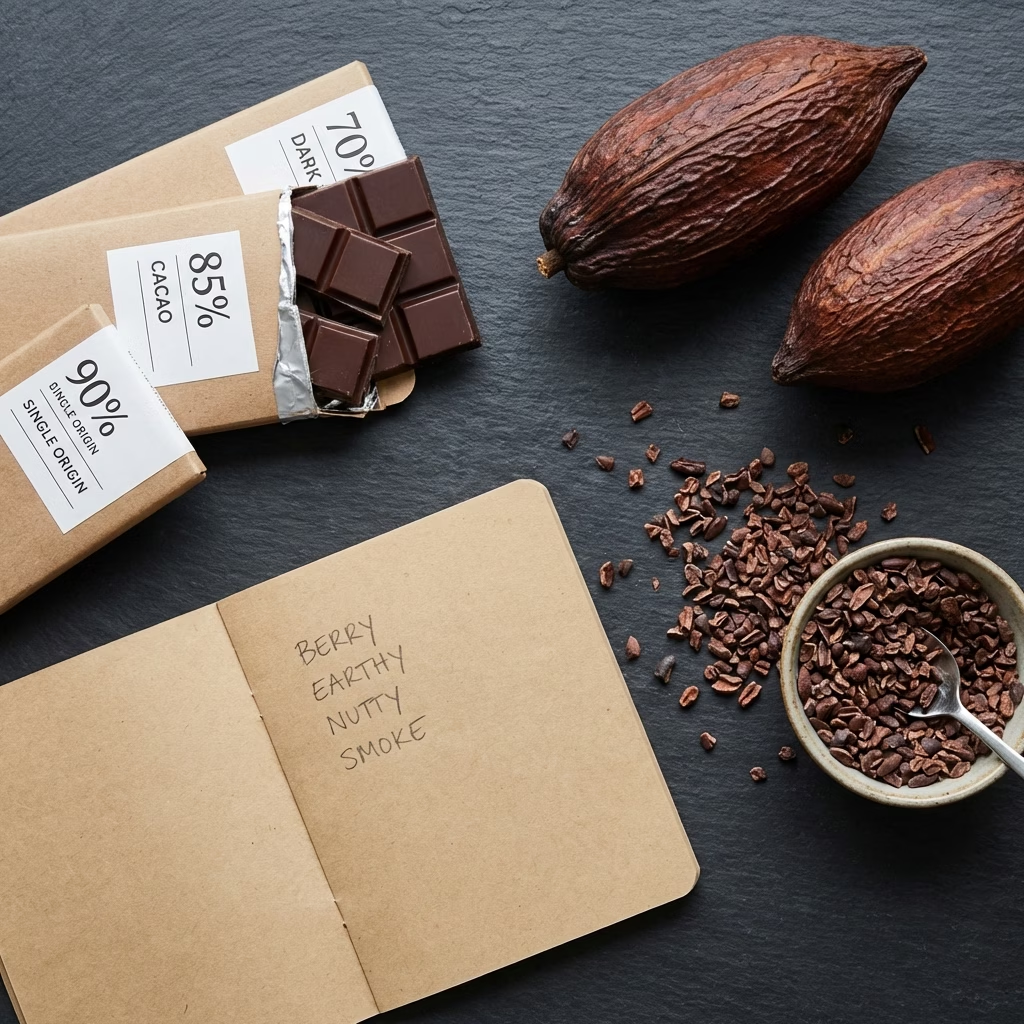
I started keeping notes on every bar I tasted. Not formal tasting notes—just the origin, the percentage, and one or two words about what I noticed. After six months, I had a notebook with over a hundred entries, and I could taste things in chocolate that had been invisible to me a year earlier:
- The difference between fruity acidity (like citrus) and fermented fruit (like raisins)
- The way a long fermentation creates complexity that short fermentation misses
- How roast level changes the same bean—light roasts preserve origin character, dark roasts create chocolate-y uniformity
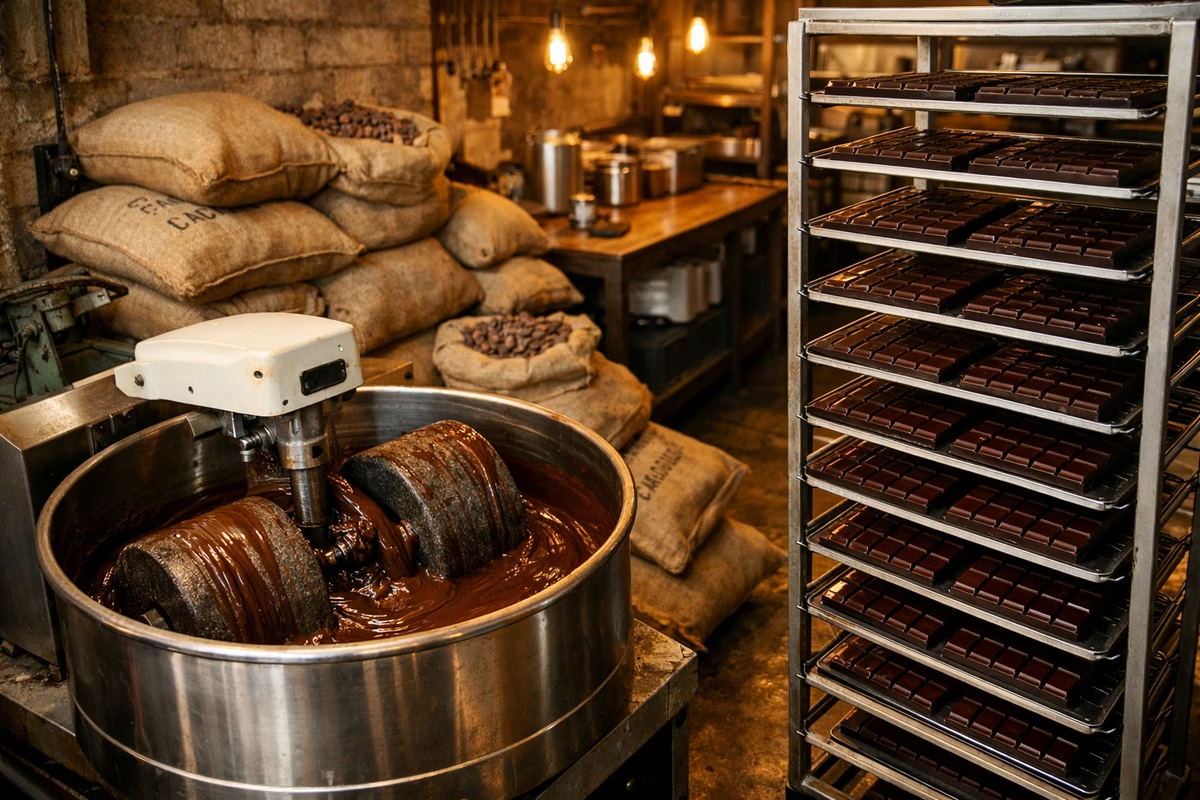
- The mouthfeel difference between stone-ground chocolate (rustic, textured) and roller-refined (silky smooth)
None of this knowledge came from studying. It came from the practical work of choosing bars for other people and needing to explain why each one mattered.
The last box I built
Last December, I built a box for my sister—someone who says she “doesn’t really like dark chocolate.”
I put in:
- Askinosie 62% Dark Milk, Davao, Philippines — A dark milk hybrid: creamy but complex, with tropical notes. The gateway.
- Raaka 68% Oat Milk, Tanzania — Dairy-free, smooth, with caramel sweetness. The surprise.
- Dick Taylor 72% Belize — Brownie batter in a bar. Accessible dark chocolate with no bitterness.
- Original Beans 78% Virunga, Congo — Fruity, intense, conservation-linked. The ethical story.
- Pump Street 60% Sourdough & Sea Salt — Bread maker turned chocolate maker. Crunch, salt, character.
- Dandelion 70% Ambanja, Madagascar — Bright raspberry. The grand finale.
I included six cards with origin details and tasting prompts.
She texted me three days later: “I finished the Dandelion bar and I need more. Also I think I like dark chocolate now? When did this happen?”
It happened the moment someone curated an experience instead of just buying a product. That’s what a good gift box does—it turns chocolate from something you eat into something you explore.
Next steps
- Read Single-Origin Discovery for the full story of terroir and origin-tasting
- Explore How to Buy Craft Chocolate for evaluating quality
- See Chocolate Tasting Guide for the formal sensory evaluation method
- Try Bean-to-Bar Basics to understand the production process
- Check Storage & Serving for keeping your gift bars in perfect condition