The packet said “just add water.”
I had been drinking that version of hot chocolate my entire life. The kind that comes in a paper envelope, pours out as a light brown powder with tiny dehydrated marshmallows, and produces a liquid that tastes like sweetened cocoa-adjacent water. It was fine. It was warm. It was what I believed hot chocolate to be.
Then I visited a chocolateria in Barcelona.
The woman behind the counter did not reach for a packet. She reached for a block of dark chocolate, broke off several squares, and dropped them into a small copper pot with whole milk already warming on the stove. She stirred slowly until the chocolate melted into the milk and became thick, glossy, and almost like warm pudding.
She poured it into a ceramic cup no bigger than a teacup. I took a sip.
Every hot chocolate I had ever had was the wrong reference point.
This was not sweet brown water. This was chocolate in liquid form, intense, complex, slightly bitter, and rich enough to coat my mouth. It tasted like a dark chocolate bar you could drink. I finished the cup in five slow sips.
I haven’t opened a packet since.
The history of drinking chocolate
Here’s the thing most people don’t know: hot chocolate came first. The bar came second.
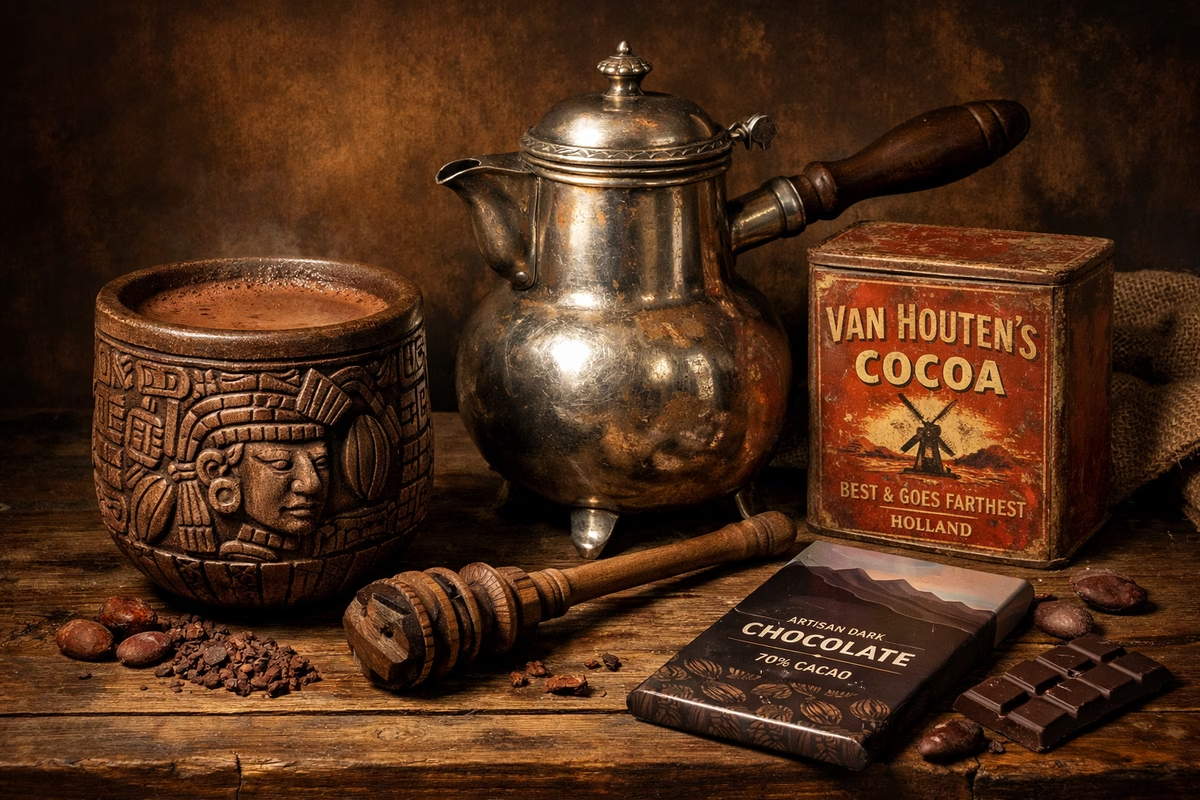
For roughly 3,500 years, from the ancient Olmec civilization through the Maya and Aztec empires and into 17th-century Europe, chocolate was a drink. The Aztecs called it xocolātl, a bitter mix made from ground cacao beans, water, chili peppers, and sometimes vanilla or achiote.
When cacao reached Europe in the 1500s, the Spanish sweetened it with sugar, served it hot, and created the first version of what we would call hot chocolate. By the 1600s, chocolate houses were social hubs where the wealthy gathered to drink thick chocolate and talk.
The solid chocolate bar didn’t arrive until 1847, when Joseph Fry discovered that mixing cocoa butter back into ground cacao produced a moldable paste. Before that, for millennia, chocolate was always a drink.
When we make real drinking chocolate today, we are going back to chocolate’s original form.
These are different things:
Hot cocoa uses cocoa powder, the defatted processed byproduct of cacao. It is lighter, thinner, and less complex. Packet hot chocolate is cocoa powder, sugar, dried milk, and additives.
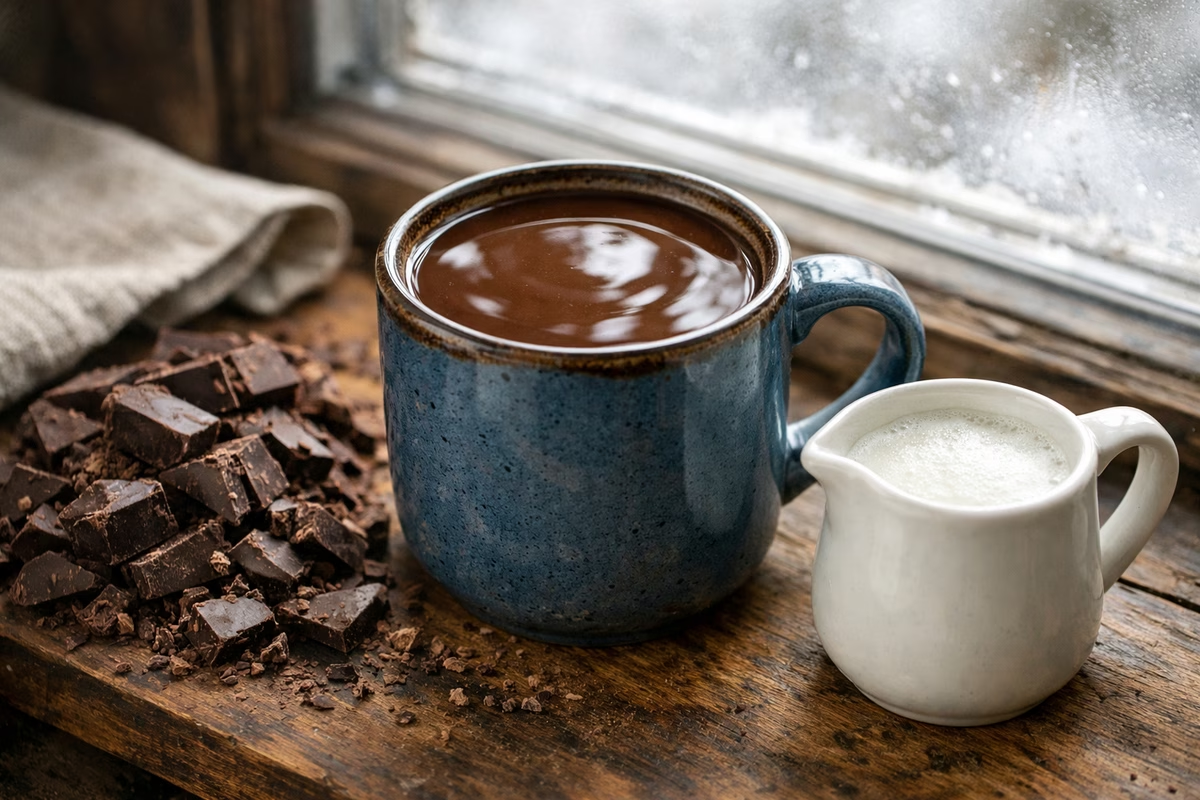
Drinking chocolate uses real chocolate, either melted bar chocolate or finely shaved chocolate that dissolves into warm milk. It contains cocoa butter, which gives it body, richness, and texture that cocoa powder cannot match.
The difference in taste is huge. Cocoa powder gives you flavor. Real chocolate gives you flavor, texture, and richness. It is the difference between juice from concentrate and fresh-squeezed.
How to make real drinking chocolate
This is not complicated. It takes ten minutes, two ingredients, and one pot.
The basic method
Ingredients (for one large mug or two small cups):
- 50-60g (about 2 oz) of good chocolate, finely chopped
- 200ml (about ¾ cup) whole milk
Process:
- Chop the chocolate finely. Smaller pieces melt faster and more evenly. If using a craft bar, you can break it into squares and then chop each square.
- Warm the milk. Heat it gently in a small saucepan until steaming but not boiling, about 160°F (70°C). Boiling can scorch the milk and make the chocolate seize.
- Add the chocolate. Remove the pot from heat and add the chopped chocolate. Let it sit for 30 seconds, then stir slowly and steadily until completely melted and smooth.
- Return to gentle heat. Put the pot back on low heat and stir for another minute until the mixture is uniformly hot, thick, and glossy.
- Pour and drink. Serve in a small cup. This is rich, so you do not need a 16-ounce mug.
That’s it. Real drinking chocolate is chocolate, milk, heat, and patience. No powder, no additives, no packets.
Choosing the chocolate
The chocolate you use is the flavor. This is not a recipe where cheap ingredients hide behind sugar and marshmallows. The chocolate is the main thing.
Dark chocolate (60-75%) produces the most classic drinking chocolate: intense, complex, and not too sweet. This is the Barcelona style.
Milk chocolate (35-45%) produces a sweeter, creamier result. It works well for people who find dark drinking chocolate too intense. Children usually prefer it.
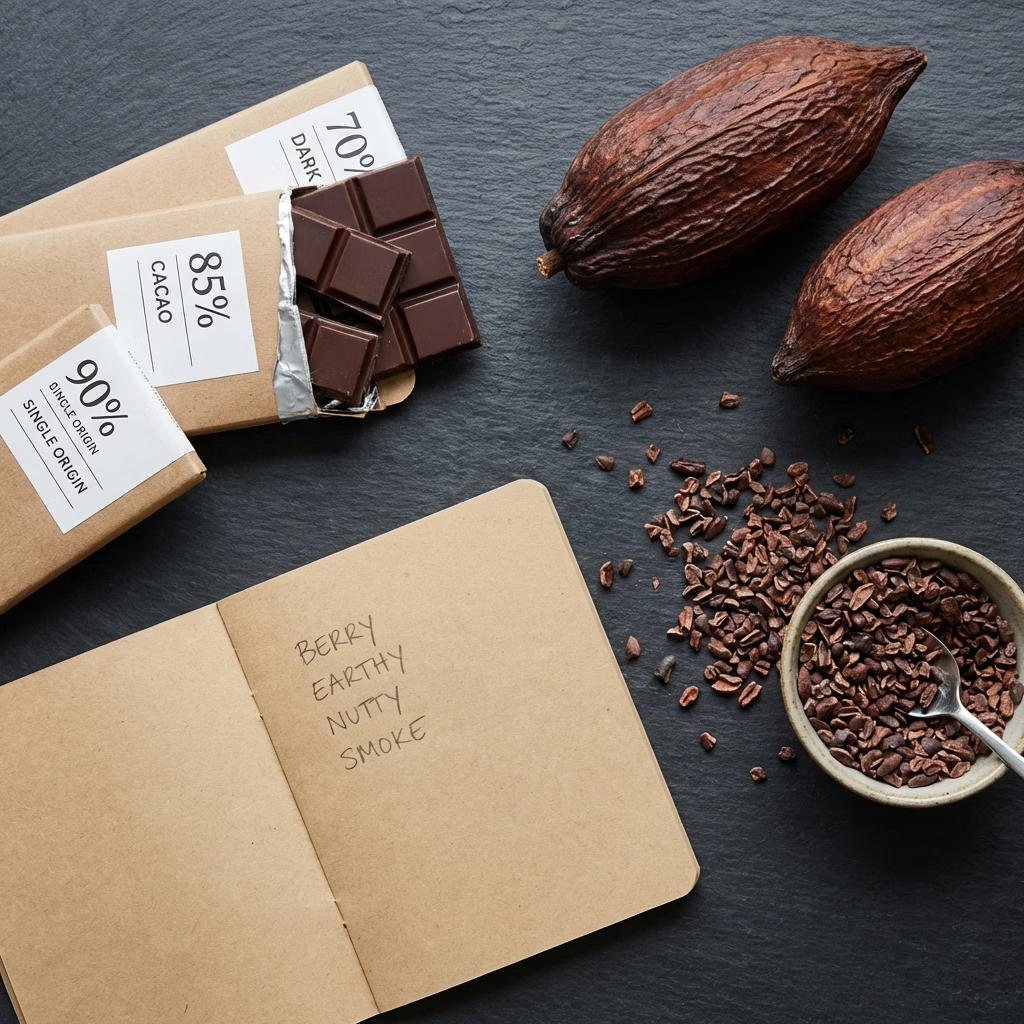
Single-origin bars make the most interesting drinking chocolate because their flavor notes come through clearly in liquid form. A Madagascar chocolate with red berry notes can taste like chocolate-dipped raspberries without any raspberry added.
Avoid chocolate with fillings, flavors, or inclusions. Plain bars only. Nuts, caramel, and fruit pieces do not melt cleanly.
Drinking chocolate is where craft chocolate shines over mass-market. Because the chocolate melts into milk, the flavor gets louder. You taste the origin, the fermentation, the roast, and the maker’s decisions more clearly than when you eat the bar solid.
Try making drinking chocolate with three different single-origin bars side by side. The flavor difference will be easy to hear, and it is a good way to train your palate.
European drinking chocolate traditions
Spain: Chocolate con churros
The Spanish tradition is thick, almost pudding-like. The chocolate uses more chocolate than milk, sometimes a little cornstarch, and is served with fresh churros for dipping. In Madrid and Barcelona, this is breakfast.
Italy: Cioccolata calda
The Italian version is very thick, so dense it barely pours. Florentine cafés serve it in small cups, almost like warm chocolate mousse. It uses cornstarch or sometimes egg and ends up closer to ganache than to regular hot chocolate.
France: Chocolat chaud
The French version is thinner than the Spanish, richer than the American, and made with high-quality dark chocolate and whole milk, sometimes with a touch of cream. Parisian chocolate houses like Angelina have served it since 1903.
Mexico: Champurrado and chocolate de agua
Mexico maintains the oldest continuous chocolate-drinking tradition. Champurrado is a thick chocolate drink made with masa (corn dough) and piloncillo (unrefined cane sugar), spiced with cinnamon. Chocolate de agua is the plainer version, chocolate dissolved in water instead of milk.
The Netherlands: Chocomelk
The Dutch drink hot chocolate year-round, not just in winter. Their version is usually made with real chocolate or high-quality cocoa, whole milk, and whipped cream. Simple, rich, and part of daily life.
Advanced variations
Once you have the basic method, here are a few simple variations:
Spiced drinking chocolate: Add a pinch of cinnamon, a little cayenne pepper, and a scrape of vanilla bean to the warming milk before adding chocolate. It adds warmth and a little depth.
Mocha drinking chocolate: Add a shot of espresso to the finished drinking chocolate. Coffee and chocolate work well together.
Orange drinking chocolate: Add a strip of orange zest to the warming milk. Remove it before adding chocolate. The citrus oil perfumes the milk.
Salted drinking chocolate: Add a small pinch of flaky sea salt to the finished cup. Salt softens bitterness and sharpens sweetness. This is the easiest upgrade.
Oat milk version: For dairy-free drinking chocolate, oat milk gives the closest texture to whole milk. Its natural sweetness and creaminess make it the best plant-based choice. Avoid almond milk. It is too thin and the flavor gets in the way.
The packet problem
I do not mean to be unkind to packets. They served a purpose in my life for decades. But once you know what drinking chocolate can be, the ingredients list starts to feel odd:
Sugar, corn syrup solids, modified whey, cocoa (processed with alkali), hydrogenated coconut oil, nonfat milk, calcium carbonate, less than 2% of: salt, dipotassium phosphate, mono- and diglycerides, guar gum, silicon dioxide, sucralose, acesulfame potassium, artificial flavor.
That is not chocolate. It is a mix designed to imitate chocolate at the lowest possible cost. The cocoa, the actual cacao-derived ingredient, is fourth on the list, behind two types of sugar and processed whey.
Real drinking chocolate is chocolate and milk. That is the ingredient list. Two items. Everything else is optional.
The price difference is real but smaller than you might think. A 50g portion of good craft chocolate for one serving costs $2 to $4. A packet costs $0.50 to $1.00. But the experience gap is much bigger than the price gap.
The winter ritual
Drinking chocolate is best understood as a ritual, not just a drink. The ten minutes of chopping, warming, and stirring are part of it. The small cup, held in both hands, is part of it. The first sip is part of it.
I make drinking chocolate every Sunday evening from October through March. Different origin each week. Sometimes Madagascar, fruity and bright. Sometimes Ecuador, earthy and deep. Sometimes a dark milk from the Philippines, caramel and rounded. Each one changes the cup, and each one makes the week feel a little steadier.
Next steps
- Read Quickstart Guide for the essentials of chocolate tasting
- Explore Chocolate Tasting for developing your palate
- See Bean-to-Bar Basics for how chocolate is made
- Read Cacao Origins to understand how origin affects flavor
- Check How to Buy Craft Chocolate for finding bars worth melting