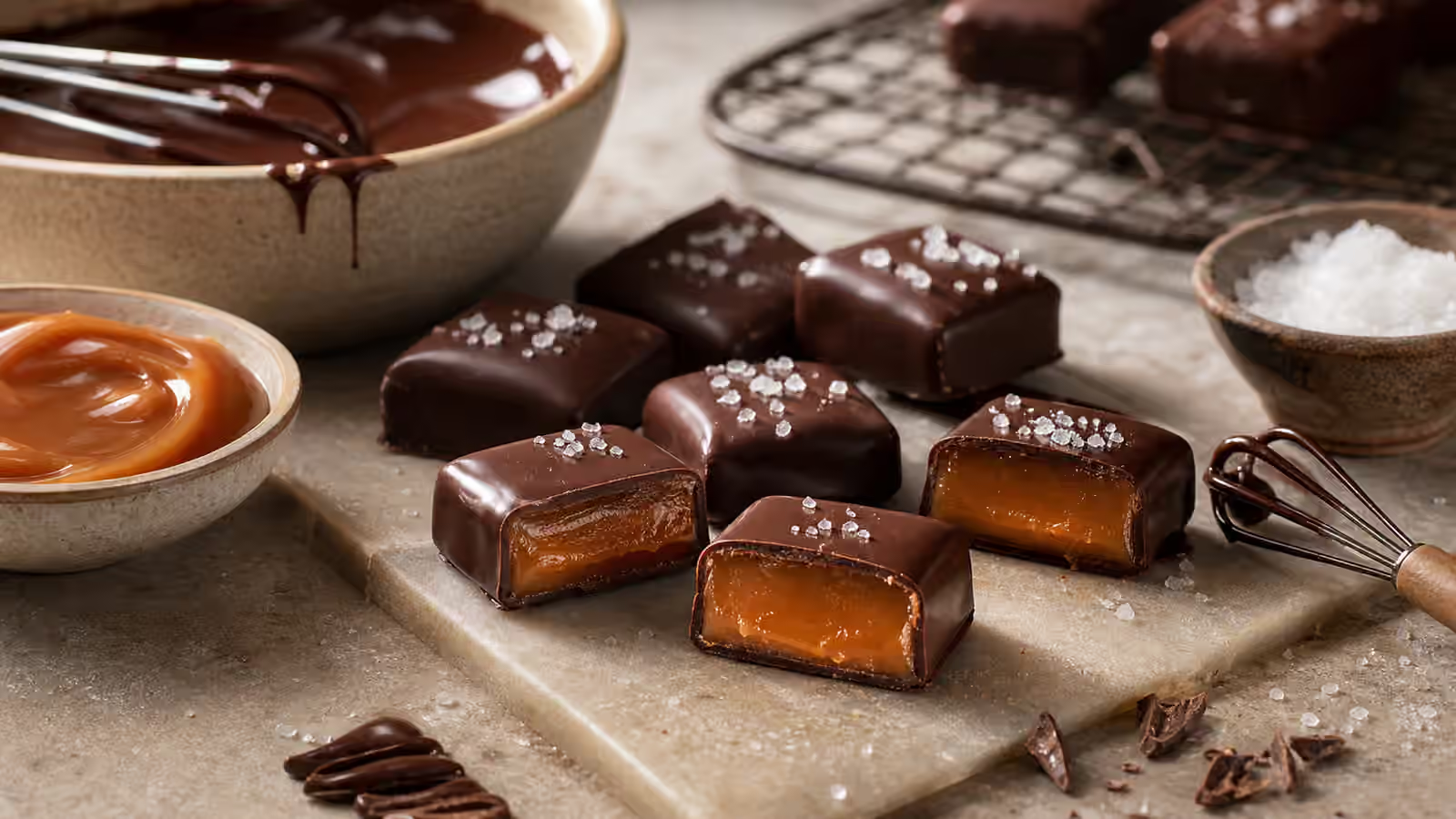
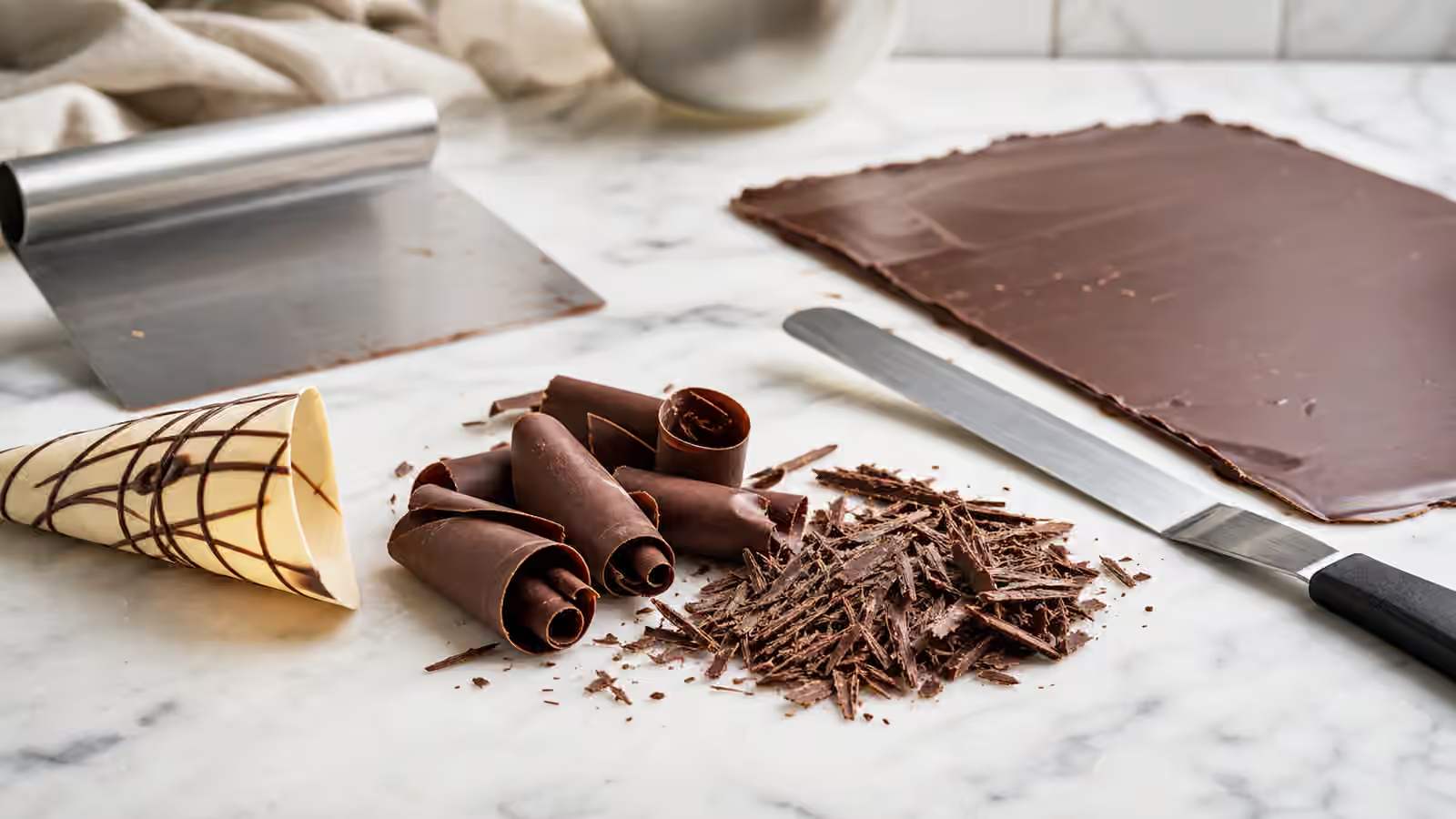
Chocolate coating looks simple from the outside. A nut becomes glossy. A truffle center receives a thin shell. A caramel square turns into a neat chocolate piece. The surface seems like decoration, but the coating is doing structural work. It protects aroma, slows moisture movement, changes the first bite, and decides whether the center feels elegant or clumsy. A good coating is thin enough to break cleanly and thick enough to hold itself together.
Panning and enrobing are two ways of solving that problem. Panning builds chocolate gradually around small centers, often nuts, coffee beans, dried fruit, or crisp pieces, by tumbling them while thin layers of chocolate are added. Enrobing covers a center in one more continuous pass, either by hand dipping or by sending pieces through a curtain of chocolate. Both depend on the same chocolate truths: flow, temper, dry centers, steady cooling, and restraint.
If you already know Tempering Chocolate at Home , Chocolate Molds and Casting , and Couverture vs. Compound Chocolate , panning and enrobing extend those ideas into movement. The chocolate is no longer sitting quietly in a mold. It is being asked to wrap, cling, contract, and shine around another food.
The Center Decides the Coating
Every coated piece begins with a center, and the center brings its own problems. A roasted almond is dry, hard, oily, and irregular. A hazelnut is rounder and more aromatic, but its surface oil can interfere with adhesion if it is warm or greasy. A ganache center is soft, moist, and temperature-sensitive. Dried fruit can be chewy and acidic, with enough moisture to challenge the shell. Crisp wafers or grains may lose their appeal if they absorb moisture before coating.
The chocolate has to be chosen for that center. A delicate dark chocolate may be lost around a strongly roasted nut. A very sweet milk chocolate may make dried fruit taste candied rather than vivid. A high-cacao dark shell can give balance to caramel, but it may feel severe around a bitter coffee bean. The flavor logic overlaps with Chocolate Inclusions: Flavor, Texture, and Balance , but coating changes the timing. The tongue meets chocolate first, then the center. That order matters.
Dryness matters as much as flavor. Water is still the enemy of clean chocolate work. A damp center can thicken chocolate, encourage sugar bloom, or shorten storage life. A cold center can cause condensation or make tempered chocolate set before it has flowed evenly. A warm center can soften the shell and disturb temper. The best center for coating is usually room temperature, dry to the touch, structurally stable, and flavorful enough to remain present after chocolate surrounds it.
Panning Builds a Shell by Patience
Traditional panning uses a rotating pan to tumble centers while chocolate is added in small amounts. At first, the centers look messy. Chocolate lands unevenly, catches on corners, and forms rough patches. As the pan keeps moving, those patches spread and the pieces begin to round. Each addition must set enough before the next one arrives. Too much chocolate too fast creates clumps. Too little cooling leaves pieces sticky. Too much cold can make the surface dull or brittle.
At home, true panning is difficult without dedicated equipment, but the principle is still useful. A coated almond or hazelnut is not made better by one thick layer. It is made better by multiple thin layers that build a continuous shell without smothering the center. Thin layers reduce the chance of cracking and make the finished piece feel less heavy. They also keep the center recognizable. A chocolate-covered almond should still taste like almond after the chocolate opens.
The surface can be left matte, dusted with cocoa, polished, or sealed depending on the style. Glossy commercial panned pieces often use polishing agents and controlled conditions that are beyond casual home work. That does not make unpolished panned chocolate inferior. A soft satin finish can be beautiful when the flavor is clear and the shell is even. Shine is only one kind of success.
Panning also teaches restraint in sweetness. Each layer adds chocolate, and chocolate brings sugar unless it is unsweetened or very dark. A small nut can quickly become a candy shell with a memory of nut in the center. That may be pleasant, but it is not always balanced. The best panned pieces keep the shell proportional to the center so the bite has contrast rather than insulation.
Enrobing Is About Flow and Timing
Enrobing asks chocolate to cover a center smoothly in one pass or a few deliberate passes. In professional settings, pieces move on a belt under a curtain of tempered chocolate while vibration and airflow remove excess. At home, enrobing usually means dipping with a fork, lowering a center into tempered chocolate, lifting it out, letting excess drain, and setting it on parchment or acetate.
The hard part is not dipping the center. The hard part is keeping the coating thin and even. Chocolate that is too thick will cling in heavy ridges and create a foot around the base. Chocolate that is too warm may lose temper and set dull. Chocolate that is too cool may begin setting before it can drain. This is why couverture is useful: it has enough cocoa butter to flow, and flow gives you a cleaner shell. The same idea appears in Choosing Chocolate for Baking , where couverture is treated as a tool for coating rather than a luxury word.
Hand enrobing rewards calm repetition. The center should enter the chocolate without splashing. It should be turned or covered gently, then lifted with enough time for the extra chocolate to fall away. Scraping the fork along the bowl edge can remove excess from the bottom, but too much scraping leaves bare spots. Setting the piece down cleanly matters because the last movement creates the base. A small tail or foot is common; a thick puddle usually means the chocolate was too viscous or the piece was moved before the excess had drained.
Ganache centers bring another layer of care. They should be firm enough to handle, cool enough not to melt the shell, and dry enough on the surface that chocolate can cling. Chocolate Ganache: Emulsion, Ratios, and Texture explains why centers can be soft, stable, broken, or too wet. Enrobing exposes those qualities. A center that tastes fine from a spoon may be too loose to dip neatly.
Temper Makes the Shell Behave
A coating shell needs temper because it is exposed. It has no mold to hide inside and no cake batter to disappear into. Properly tempered chocolate sets with snap, contracts slightly, and resists bloom better than untempered chocolate. It also feels cleaner on the tongue because the cocoa butter crystals are organized. When the shell is thin, that organization is easy to notice.
Poor temper shows up quickly. The shell may stay tacky, set with gray streaks, crack unpredictably, or feel soft at room temperature. Sometimes the flavor is still good, but the texture tells the truth. Tempering Troubleshooting is the place to go when the surface looks dull or streaked after a coating session.
Cooling conditions matter too. A thin coating can set quickly, but rushing it through cold, humid air invites problems. Condensation can roughen the surface and lead to sugar bloom. Uneven cooling can leave streaks or weak spots. The goal is a steady set: cool enough that the shell crystallizes, gentle enough that moisture does not collect, and patient enough that the center and coating settle together.
Compound coatings avoid some of this tempering work because their fat system is different. They can be useful for casual dipping, decorations, or settings where convenience matters more than cocoa butter melt. But they will not eat like well-tempered couverture. The difference is especially clear in a thin shell, where real chocolate can break cleanly and disappear while compound coating may feel waxier or more persistent.
Reading a Coated Piece
A well-coated piece gives information before you taste it. The surface should look intentional, whether glossy or matte. The shell should not be so thick that the center is hidden in a block. The base should be stable without a heavy foot. When you bite, the shell should break before the center collapses. If the chocolate flakes away, the center may have been too cold, too oily, too dusty, or too wet. If the shell bends rather than breaks, temper or storage may be the issue.
The finish matters. Chocolate should return after the center speaks. With a nut, you want cocoa and roast to echo each other. With fruit, you want acidity to lift the chocolate rather than turn it sour. With ganache, you want shell and center to melt at different speeds without fighting. With caramel, you want sweetness to be cut by cocoa, salt, roast, or bitterness before fatigue sets in.
Panning and enrobing are not only confectionery tricks. They are lessons in proportion. A center needs enough chocolate to become a chocolate piece, but not so much that it loses its own identity. Chocolate needs enough flow to coat, enough temper to set, and enough flavor to matter after the shine has been admired. When those parts line up, the coating stops being a cover and becomes the first line of the bite.