If you could taste chocolate at every point in its 4,000-year history—one sip or bite per century—you wouldn’t recognize the modern bar until the very last stop.
For most of its existence, chocolate was a drink. A bitter, spiced, frothy, sometimes cold, sometimes fermented drink that bore almost no resemblance to the sweet, smooth, solid confection we know today. The chocolate bar as we understand it is less than 200 years old. Everything before that was a different substance entirely—same bean, different world.
This is the story of that transformation. Not a textbook timeline, but a walk through the centuries, tasting as we go.
1900 BCE: The Olmec beginning
The oldest chemical evidence of cacao consumption comes from ceramic vessels found at archaeological sites in present-day southern Mexico, dated to approximately 1900 BCE. The Olmec—the “mother civilization” of Mesoamerica—were almost certainly the first people to process cacao, though what they did with it remains partly mysterious.
What we know: they fermented the beans (likely by accident—the white pulp surrounding cacao seeds ferments naturally in tropical heat), dried them, and ground them into a paste that was mixed with water and other ingredients to make a drink.
What we don’t know: how it tasted to them. But based on later Mayan and Aztec preparations, the Olmec drink was probably grainy, bitter, and mixed with ground maize or other starches for body. Sugar didn’t exist in Mesoamerica. Honey was available but appears to have been used sparingly, if at all, in cacao drinks.
The English word “chocolate” likely derives from the Nahuatl (Aztec) word xocolātl, which may combine xococ (bitter) and ātl (water). However, some linguists dispute this etymology and suggest it comes from the Mayan chocol (hot) + ha’ (water). Either way, the original word meant “bitter water” or “hot water”—a far cry from what we call chocolate today.
The word “cacao” comes directly from the Mayan kakaw, which referred to both the tree and the bean. “Cocoa” is an English corruption of “cacao” that stuck.
600 CE: The Maya golden age
By the Classic Maya period (250-900 CE), cacao had become sacred. Literally sacred—the Maya believed the cacao tree was a gift from the gods, and cacao drinks were central to religious ceremonies, royal feasts, and burial rituals. Vessels painted with scenes of gods drinking chocolate have been found in Mayan tombs across Guatemala, Honduras, and southern Mexico.
The Mayan preparation was more sophisticated than the Olmec version. They roasted the beans (developing flavor through the same Maillard reactions that modern chocolate makers use), ground them on a metate (stone grinding platform), and mixed the resulting paste with water, chili peppers, vanilla, and achiote (annatto, for red color).
The defining technique was frothing. Maya chocolate drinkers prized the foam above all else—they poured the drink from one vessel to another at height, or used a wooden stirring stick called a molinillo, to create a thick, persistent head of froth. The froth was considered the most desirable part of the drink, and serving a cup without it was an insult.
How did it taste? Reconstructions by food historians suggest: bitter and earthy from the cacao, warm and pungent from the chili, fragrant from the vanilla, with a richness that came from the natural fat in the beans. Nothing sweet. Nothing smooth. Something powerful.
1400 CE: The Aztec empire
The Aztecs inherited cacao culture from the Maya and elevated it further. Cacao beans became currency—a rabbit cost 10 beans, a slave cost 100. The emperor Montezuma reportedly drank 50 cups of xocolātl per day from golden goblets (a number likely exaggerated by the Spanish, but the point was clear: chocolate was power).
Aztec chocolate was served cold—a departure from the Maya hot preparation—and often mixed with psychoactive flower essences. It was a drink of the nobility, warriors, and priests. Commoners rarely tasted it.
The Aztec innovation was variety. They developed dozens of chocolate recipes: tlaquetzalli (with ground sapote pits for a red color), teonanacatl (with psychoactive mushrooms for ritual use), and various spiced versions with vanilla, allspice, and honey. Each recipe had a purpose—energizing warriors, honoring gods, celebrating harvests.
When Hernán Cortés arrived at the Aztec capital of Tenochtitlán in 1519, he found a civilization that had been drinking chocolate for over a thousand years and had refined it into an art form. He also found a bean that was literally money. He paid attention.
1528: Chocolate crosses the Atlantic
Cortés brought cacao beans back to Spain in 1528, along with the recipes and implements for making chocolate drinks. The Spanish court initially found the bitter Aztec preparation unpleasant—but then someone added sugar.
That single addition changed everything.
Sugar transformed chocolate from a bitter, medicinal, acquired taste into something instantly pleasurable. The Spanish began sweetening their chocolate drinks with cane sugar, warming them (reversing the Aztec cold tradition), and sometimes adding cinnamon instead of chili. The result was recognizably the ancestor of modern hot chocolate.
For nearly a century, Spain kept chocolate a secret—or tried to. The Spanish court guarded the recipe and supply chain jealously, and chocolate remained an exclusively Spanish luxury until the early 1600s, when it spread to Italy, France, and eventually all of Europe.
By the mid-1600s, chocolate houses were the social hubs of Europe—the coffee shops of their day:
- London’s first chocolate house opened in 1657. White’s, which began as a chocolate house in 1693, still exists as a private gentlemen’s club.
- Parisian chocolate salons served chocolate alongside political debate and intellectual exchange.
- Spanish tertulias (social gatherings) centered on thick, sweet chocolate served with churros for dipping.
Chocolate was expensive—a luxury of the aristocracy and merchant class. A single cup could cost a common laborer’s daily wage. The democratization of chocolate would require industrialization, which wouldn’t arrive for another two centuries.
1828: Van Houten’s revolution
For 300 years after reaching Europe, chocolate remained exclusively a drink. The bean’s natural fat content (cocoa butter, roughly 50% of the bean by weight) made it thick, greasy, and impossible to mold into solid form. Drinking chocolate was rich—sometimes too rich—and the fat separated unpleasantly as the drink cooled.
In 1828, Dutch chemist Coenraad van Houten patented the hydraulic cocoa press—a machine that squeezed most of the cocoa butter out of ground cacao, leaving behind a dry cake that could be powdered into what we now call cocoa powder. This was revolutionary for two reasons:
- It made lighter drinking chocolate possible. Defatted cocoa powder dissolved more easily in water or milk, producing a smoother, more drinkable cup.
- It separated the two components of chocolate. Now you had cocoa powder (the flavor) AND cocoa butter (the fat) as separate ingredients. This separation made solid chocolate possible.
Van Houten also invented Dutch processing (or alkalization)—treating cocoa with an alkaline solution to reduce bitterness and darken the color. If you’ve ever used “Dutch process cocoa powder,” you’re using his 1828 invention.
1847: The first chocolate bar
In 1847, Joseph Fry & Sons of Bristol, England, discovered that mixing cocoa powder, sugar, and melted cocoa butter back together produced a paste that could be poured into a mold and solidified into a bar. The first eating chocolate.
The texture was crude by modern standards—grainy, crumbly, and nothing like the smooth snap we expect today. But it was solid chocolate that you could unwrap, break, and eat. For 4,000 years, chocolate had been a drink. Now, suddenly, it was a food.
The market responded with enthusiasm. Within two decades, chocolate bars were being produced across Europe, and the race to improve their quality launched a series of innovations that defined the modern chocolate industry:
1867: Henri Nestlé (Switzerland) developed powdered milk. 1875: Daniel Peter combined Nestlé’s milk powder with chocolate to create the first milk chocolate bar—sweeter, creamier, and more accessible than dark chocolate.
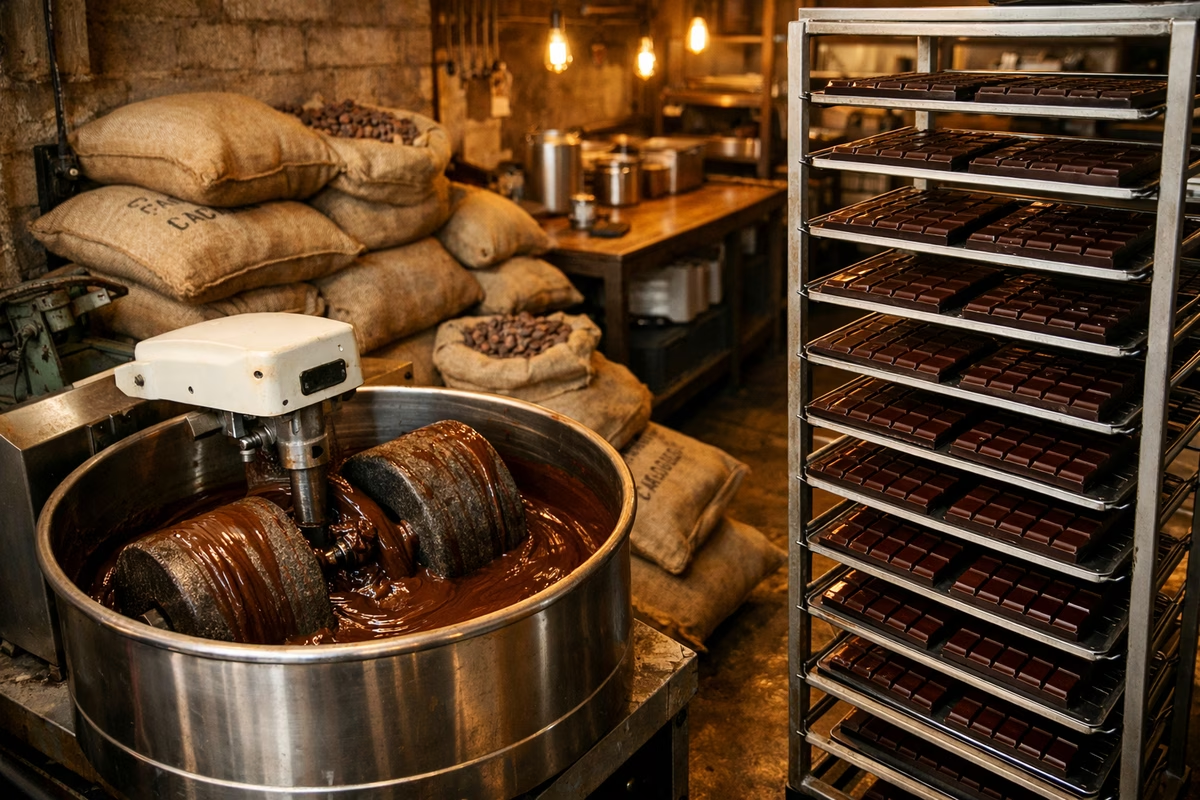
1879: Rodolphe Lindt invented the conche—a machine that grinds and aerates chocolate for hours or days, breaking down the particles until they’re smaller than the human tongue can detect. This is what gives modern chocolate its smooth, melting texture. Before conching, chocolate was gritty. After conching, it was silk.
1893: Milton Hershey attended the Chicago World’s Fair, saw German chocolate machinery, and decided to mass-produce milk chocolate for the American market. Hershey’s chocolate—with its distinctive slightly sour, tangy flavor (a result of partially lipolyzed milk)—became the taste of American childhood.
1900-2000: The industrial century
The 20th century turned chocolate from a luxury into a commodity. Mass production, standardized recipes, and global supply chains made chocolate bars available for pennies. Hershey, Cadbury, Mars, and Nestlé dominated the market with products designed for consistency, shelf stability, and broad appeal.
This was both a triumph and a loss. Chocolate became universally accessible—arguably the most popular flavor on Earth. But the industry’s focus on efficiency and cost reduction had consequences:
- Flavor standardization: Mass-market chocolate tastes the same every time because it’s designed to. The complex, variable flavors of single-origin cacao were blended away in favor of a uniform “chocolate” taste.
- Cacao farmer exploitation: As chocolate prices fell, the economic pressure on cacao farmers intensified. Today, most cacao farmers in West Africa earn less than $2 per day and have never tasted a finished chocolate bar.
- Lost varieties: The global industry consolidated around a single high-yielding cacao variety (CCN-51 and other hybrids), while rare, flavorful heirloom varieties declined.
By 2000, the average chocolate bar contained as little as 10% actual cacao (the FDA minimum for “milk chocolate”), padded with sugar, milk solids, vegetable fats, and artificial vanillin.
2005-present: The craft renaissance
Then something shifted.
A small but growing number of makers began doing what Joseph Fry had done in 1847—but in reverse. Instead of optimizing for scale and consistency, they optimized for flavor and origin. They bought cacao beans directly from farms, roasted and ground them in-house, and produced bars that tasted not like “chocolate” in the abstract, but like specific chocolate from a specific place.
The bean-to-bar movement had begun.
Scharffen Berger (founded 1997) and Valrhona (which had been pushing single-origin since the 1980s) were early pioneers. Dandelion Chocolate in San Francisco, Mast Brothers in Brooklyn, Amedei in Tuscany, and dozens of others followed, each approaching cacao the way craft wine makers approach grapes: as an agricultural product with terroir, expressed through careful processing.
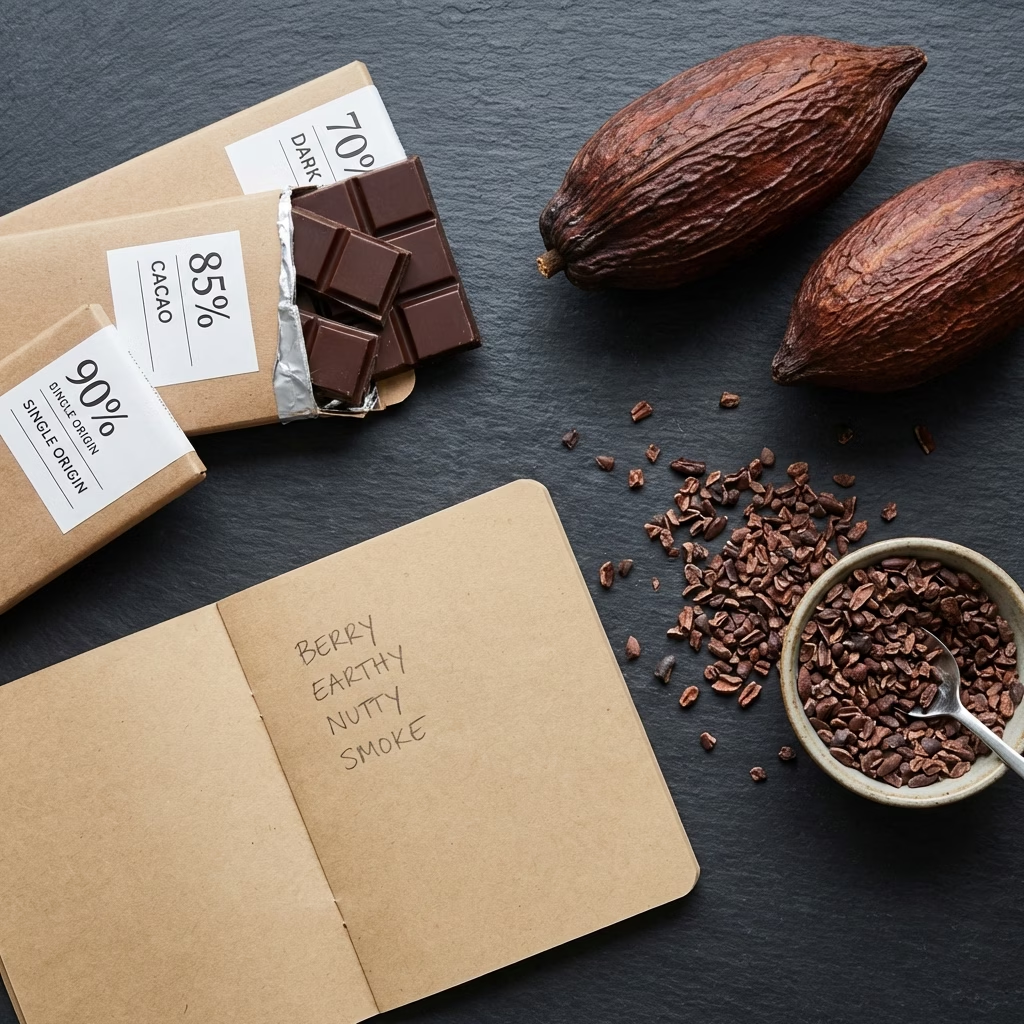
What the craft movement revealed is that cacao—like coffee, wine, and cheese—has an astonishing range of natural flavors that industrial processing had been erasing:
- Madagascar cacao: Bright, acidic, with red fruit (raspberry, cherry) and citrus notes
- Ecuador cacao (Nacional variety): Floral, with jasmine, orange blossom, and earthy depth
- Venezuelan cacao (Criollo): Nutty, caramelized, with almost no bitterness
- Belize cacao: Deep, fudgy, with brown sugar and tobacco notes
- Papua New Guinea cacao: Smoky, complex, with dried fruit and spice
A single-origin bar from a skilled craft maker doesn’t taste like “chocolate.” It tastes like a place. And that taste connects you—across 4,000 years and an ocean—to the same bean the Olmecs first fermented in the Mesoamerican heat.
The full circle
Here’s what strikes me most about chocolate’s history: it began as something sacred—a drink reserved for gods, kings, and warriors—became something industrial and cheap, and is now circling back toward reverence. The craft chocolate movement isn’t just about better flavor. It’s about paying attention to what chocolate actually is: a fermented, roasted, processed seed from a tropical tree, carrying 4,000 years of human ingenuity in every bite.
The next time you unwrap a chocolate bar—any chocolate bar—you’re holding the endpoint of the longest food transformation story in human history. From the Olmec stone grinder to Van Houten’s press to Lindt’s conche to whatever craft maker in Brooklyn or Tuscany or Kyoto made the bar in your hand. Every step changed the flavor. Every century added something.
Four thousand years of human creativity, compressed into a two-ounce bar that snaps when you break it. That’s chocolate.
Next steps
- Read Cacao Origins for how geography shapes flavor today
- Explore Bean-to-Bar Basics for the modern craft chocolate process
- See Chocolate Tasting for developing your palate
- Read How to Buy Craft Chocolate for finding the best modern bars
- Check Single-Origin Discovery Story for your first terroir tasting