The smell hit me before the door closed behind me.
It wasn’t the sweet, vanilla-heavy scent of a candy shop. It was deeper—earthy, slightly acidic, with a roasted warmth that reminded me of coffee but with something else underneath. Something fermented and alive and faintly fruity.
That smell, I would learn over the next two hours, is what chocolate actually smells like before someone adds sugar, vanilla, and lecithin and wraps it in foil. It’s the smell of roasted cacao beans—pure, unblended, unsweetened—and it’s the first thing that changes when you visit a bean-to-bar chocolate maker.
The second thing that changes is everything you thought you knew about chocolate.
What “bean to bar” actually means
Most of the chocolate you’ve eaten was made by large manufacturers who buy pre-processed cacao (cocoa liquor, cocoa butter, cocoa powder) and combine it with sugar, milk, and flavorings. The final chocolate maker never sees the bean.
Bean-to-bar makers start with the raw bean. They roast it, crack it, winnow it, grind it, refine it, conch it, temper it, and mold it—every step, in-house, often by hand or with small-batch equipment. The result is a bar where the maker controlled every variable from raw ingredient to finished product.
This is why bean-to-bar factories are interesting to visit. The entire transformation—from a dried, fermented seed to a polished bar—happens in one room. You can see the before and the after, and every step between.
The tour: from sack to bar
The sacks: where geography becomes flavor
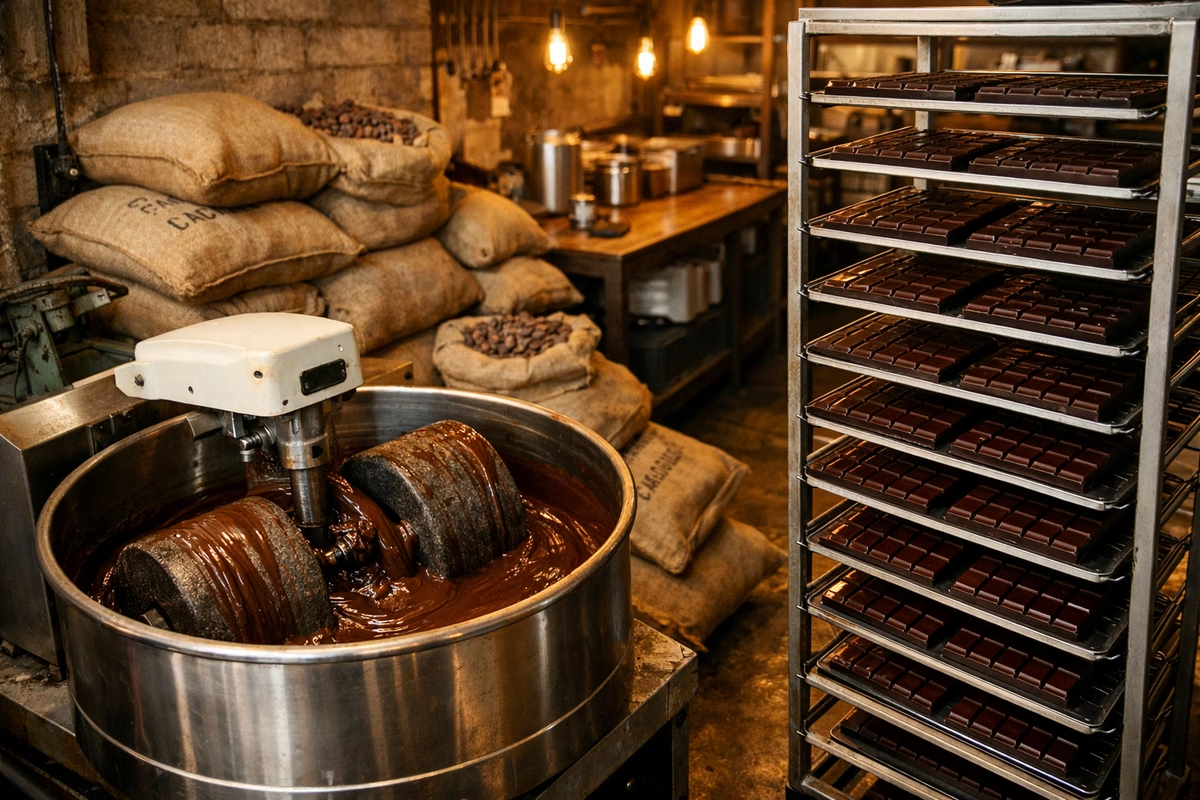
The factory I visited—a small operation in a converted warehouse—had ten burlap sacks along one wall, each labeled with an origin: Tanzania, Ecuador, Madagascar, Dominican Republic, Peru, Vietnam, Guatemala, Colombia, Papua New Guinea, India.
The maker, whose name was Elena, opened two sacks and poured raw beans into my hands.
The Tanzanian beans were smaller and darker. The Ecuadorian beans were larger, lighter, with a reddish-purple hue. They smelled different—the Tanzanian beans had a slight smokiness; the Ecuadorian beans smelled fruity, almost like dried cherries.
“These are already fermented and dried,” Elena explained. “Fermentation happens at the farm, before the beans ship to us. It’s the most important flavor step, and it’s the one we have the least control over.”
She told me that the same cacao variety, grown on the same farm, fermented differently—three days versus six, with different turning schedules—produces completely different chocolate. Fermentation develops the precursor compounds that roasting later converts into flavor. Under-fermented beans taste astringent and flat. Over-fermented beans taste sharp and vinegary.
Good bean-to-bar makers choose their farms carefully. They taste samples before committing to a harvest. The relationship between maker and farmer is the foundation of the entire enterprise.
For more on how origin shapes flavor, see Cacao Origins.
Roasting: the controlled transformation
Elena loaded a batch of Ecuadorian beans into a drum roaster—a machine roughly the size of a large barbecue that tumbles the beans through heated air.
“Roasting is where we make our biggest decisions,” she said. “Temperature, time, and airflow determine which flavors develop and which ones disappear.”
Lower, slower roasting preserves the delicate fruit and floral notes that fermentation created. Higher, faster roasting develops deep chocolate and nutty tones but burns off volatiles.
The Ecuadorian beans went in at 275°F for about 18 minutes. Elena monitored the temperature every few minutes, adjusting airflow twice.
When the beans came out, the smell changed dramatically. The raw, slightly vegetal aroma had been replaced by a rich, deep, toasted chocolate scent—warm and enveloping. Elena cracked a roasted bean and handed me a piece.
It was bitter. Intensely, unapologetically bitter. But underneath the bitterness was a bloom of cherry-like fruitiness and a whisper of something floral that faded as I chewed.
“That’s what chocolate tastes like without sugar,” she said. “Most people are shocked.”
Cracking and winnowing: separating the useful from the useless
After roasting, the beans pass through a cracker—a machine that breaks each bean into small pieces—and then a winnower, which uses airflow to separate the lighter shell fragments from the heavier nib pieces.
The nibs are the useful part: pure cacao, ready to be ground into chocolate. The shells are waste (though some makers use them for garden mulch or cacao-shell tea).
Elena poured a handful of winnowed nibs into my palm. They looked like irregular brown gravel. They tasted like concentrated, bitter, slightly fruity chocolate—the most honest expression of cacao I’d ever encountered.
“Everything we do from here is refinement,” she said. “The flavor is already in the nib. We’re just making it smoother and sweeter.”
Grinding and refining: where texture is born
The nibs went into a stone grinder—a machine called a melanger that uses heavy granite wheels to crush the nibs against a granite base. Over hours (sometimes days), the grinder reduces the nibs from coarse gravel to a smooth, liquid paste.
When the nibs first enter the grinder, the paste is gritty and thick. As grinding continues, the cocoa butter inside the nibs liquefies from the friction heat, and the cocoa solids get smaller and smaller until they’re too fine for the tongue to detect.
Elena showed me samples at different stages:
- After two hours: gritty, like peanut butter with sand in it
- After twelve hours: smoother, but still detectable grain on the tongue
- After twenty-four hours: completely smooth, velvety, with no perceptible grittiness
Sugar is added during grinding—usually just cane sugar, sometimes coconut sugar or brown sugar. The ratio of cacao to sugar defines the bar’s percentage: a 70% bar is 70% cacao mass, 30% sugar.
That’s it. Two ingredients. Bean-to-bar chocolate at its purest is cacao and sugar. Nothing else.
Conching: the patience step
After grinding, the chocolate enters the conching phase—extended mixing and aeration that smooths the texture further and drives off volatile acids that would make the chocolate taste harsh or sour.
Conching can last anywhere from a few hours to several days. Elena conched her Ecuadorian batch for 48 hours.
“Conching is like aging wine,” she said. “Time softens the edges. Under-conched chocolate tastes sharp and acidic. Over-conched chocolate loses its bright, interesting notes and becomes generic. The window is specific to every bean.”
I tasted the chocolate before and after conching. Before: sharp, bright, slightly acidic, with a rough energy. After: smoother, rounder, the cherry notes more integrated, the bitterness gentler, the finish longer.
Tempering and molding: the finish line
Tempering is the final step—heating and cooling the chocolate through precise temperature cycles to create the right crystal structure in the cocoa butter. Properly tempered chocolate is glossy, snaps cleanly, and melts smoothly on the tongue. Improperly tempered chocolate is dull, soft, and develops white streaks (bloom) over time.
Elena tempered a batch on a marble slab, spreading and folding the chocolate with offset spatulas in a hypnotic rhythm. (Some makers use tempering machines, but Elena preferred the hands-on method for small batches.)
The tempered chocolate went into polycarbonate molds. Elena tapped the molds against the counter to release air bubbles, then slid them into a cooling cabinet.
“In about thirty minutes, these will be bars,” she said. “From the sacks on that wall to the bars in these molds—about four days of work.”
For the full science of tempering, see Tempering Chocolate and Tempering Troubleshooting.
The tasting: side by side
After the tour, Elena set out six bars—three origins (Ecuador, Tanzania, Madagascar) in two cacao percentages each (70% and 85%)—and walked us through a tasting.
The differences were staggering.
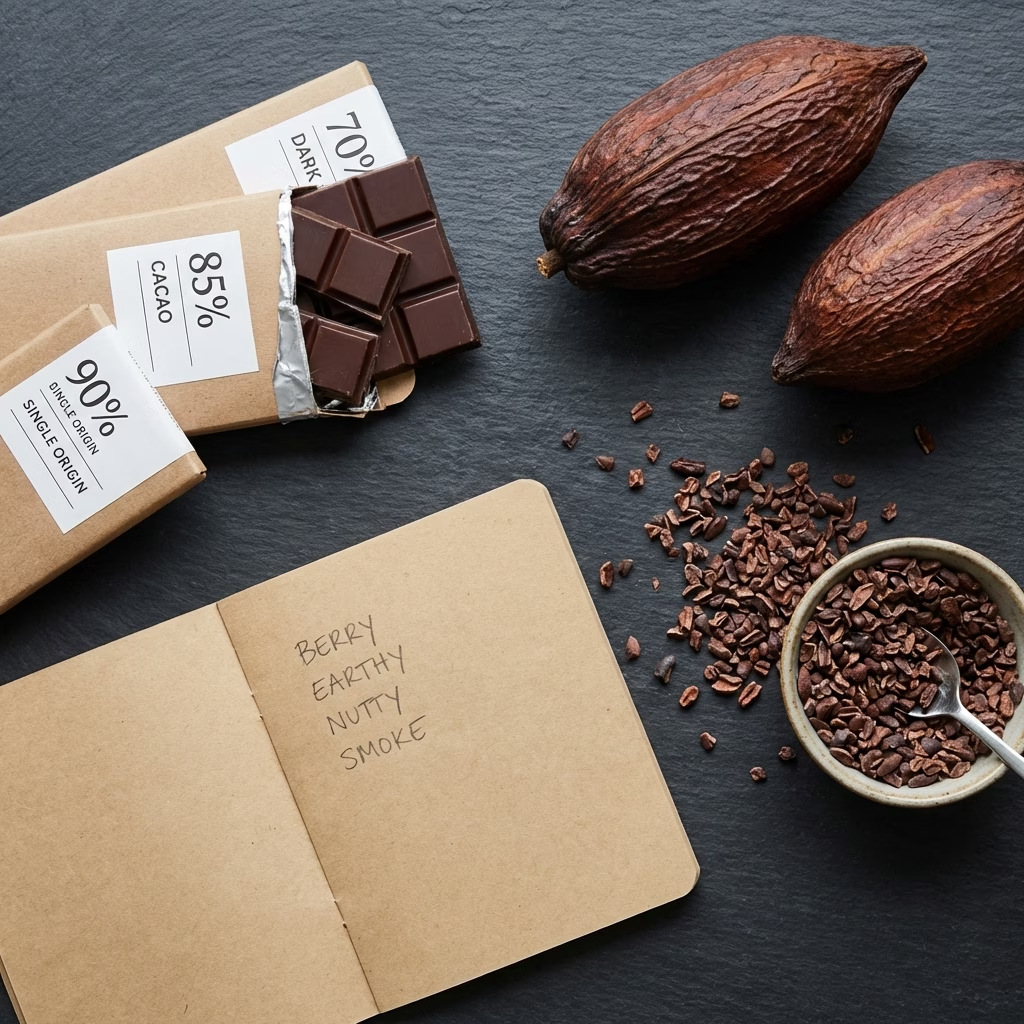
Ecuador 70%: Cherry, red fruit, a gentle nuttiness. Smooth and approachable. Ecuador 85%: The same cherry note, but darker, with bitter cocoa and a tannic finish like strong tea. Tanzania 70%: Earthy, with dried apricot and a slight smokiness. Completely different from the Ecuador. Tanzania 85%: Intensely earthy, almost savory, with a long finish that tasted like roasted coffee. Madagascar 70%: Bright citrus and raspberry—so fruity it was startling. Like biting into a berry disguised as chocolate. Madagascar 85%: The citrus sharpened, the sweetness retreated, and what remained was a complex, acidic, deeply concentrated chocolate experience.
Six bars. One ingredient (cacao) plus sugar. The only variable was geography and roast profile.
That’s the revelation of a factory visit: chocolate, made simply and well, is as complex and origin-specific as wine or coffee. The industrial chocolate industry flattens these differences by blending beans from dozens of sources and adding vanilla and lecithin to smooth out inconsistencies. Bean-to-bar makers preserve them.
What changes after you visit
You taste differently. Before the visit, chocolate was “sweet” or “dark” or “milk.” After, it’s “fruity” or “earthy” or “nutty” or “floral”—the origin vocabulary opens up because you’ve tasted the beans before they became bars.
You read labels. The origin, the cacao percentage, the ingredient list—these stop being marketing and start being information. A bar that says “Ecuador, Esmeraldas, 72%, cacao and sugar” is telling you something specific and verifiable. For label-reading guidance, see How to Buy Craft Chocolate.
You understand the price. A $10 bean-to-bar chocolate seems expensive until you’ve watched four days of handwork go into 50 bars. The $1.50 grocery-store bar and the $10 craft bar are genuinely different products made through genuinely different processes.
You smell things. Walking past a chocolate shop after visiting a factory is different. You recognize the roast. You notice whether the smell is cacao-forward or sugar-forward. Your nose has a reference point it didn’t have before.
How to find a factory to visit
Bean-to-bar chocolate makers are more common than you’d expect. Many offer tours, tasting sessions, or open-factory days.
Search for: “bean to bar chocolate” + your city or region. The Craft Chocolate Review database lists makers worldwide.
What to look for: Makers who roast and grind on-site (not just melting and remolding pre-made chocolate). Ask if you can see the equipment—roaster, winnower, melanger, tempering setup.
What to ask:
- “Where do you source your beans?”
- “How do you decide on your roast profile?”
- “Can I taste a nib?”
- “What’s your favorite origin right now?”
The best makers love these questions. They chose this work because they care about the craft, and they’re usually delighted to share it with someone who’s genuinely curious.
Next steps
- Read Bean-to-Bar Basics for the technical foundation behind everything you saw
- Explore Cacao Origins for the geography of flavor
- See Chocolate Tasting for developing the palate you started building at the factory
- Try Single-Origin Discovery for a narrative about tasting origins side by side at home
- Check How to Buy Craft Chocolate for shopping with your new knowledge