Why These Two Belong Together
Chocolate and coffee share more than a morning routine. They share terroir. Cacao and coffee both grow in tropical regions near the equator, both undergo fermentation that builds flavor complexity, and both develop their final character through careful roasting. When you pair them intentionally, the results can be extraordinary—flavors amplify, new notes emerge, and each one makes the other more interesting.
But “chocolate and coffee” isn’t automatically a good pairing. A generic milk chocolate bar with over-roasted diner coffee is just sugar and bitterness canceling each other out. The magic happens when you match specific flavor profiles with intention.
This guide teaches you the principles behind great chocolate–coffee pairings, gives you concrete combinations to try, and equips you to create your own pairings with confidence.
The Flavor Bridge Principle
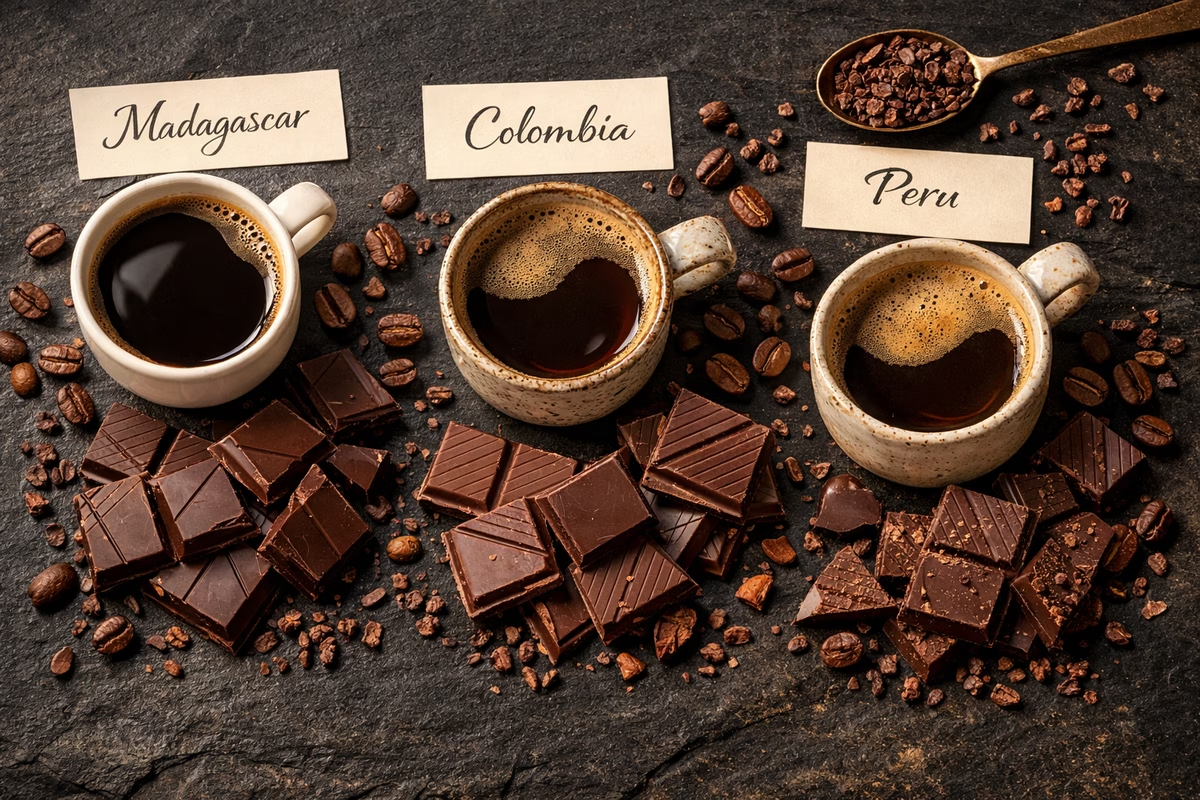
Great pairings work because of shared flavor compounds. When chocolate and coffee share at least one dominant note—fruit, nut, caramel, floral—that note acts as a bridge, pulling the two together while their unique characteristics provide contrast and complexity.
The Three Pairing Strategies
1. Complement — Match similar flavor profiles. A nutty, caramel-forward Brazilian coffee with a milk chocolate bar that has toffee notes. The shared warmth amplifies both.
2. Contrast — Pair opposing characters. A bright, fruity Ethiopian coffee with a dark, earthy chocolate from Papua New Guinea. The contrast creates tension that keeps your palate engaged.
3. Complete — Use one to fill gaps in the other. A single-origin chocolate that’s intensely fruity but thin in body pairs beautifully with a full-bodied, low-acid coffee that adds the weight the chocolate lacks.
Pairing by Chocolate Type
Dark Chocolate (70–85%)
Dark chocolate has the widest flavor range and the most to offer in a pairing. Its bitterness and intensity need a coffee that can stand alongside it without being overwhelmed.
Best coffee matches:
- Medium-roast Ethiopian (floral, berry) with a fruity Madagascar dark chocolate — the fruit notes in both amplify beautifully
- Full-bodied Sumatra (earthy, herbal) with an Ecuadorian dark chocolate — deep, grounding flavors that complement each other
- Medium Colombian (chocolate, caramel, nut) with a Peruvian dark chocolate — the classic “chocolate-on-chocolate” pairing
Avoid: Very light roast coffees with high-percentage dark chocolate. The acidity clash can be sharp and unpleasant.
Milk Chocolate (35–50%)
Milk chocolate is sweeter and creamier, which means it pairs with a broader range of coffees but is easily overwhelmed by anything too intense.
Best coffee matches:
- Medium-roast Brazilian (nutty, chocolate) — the most natural pairing; both are smooth and approachable
- Costa Rican honey-processed (sweet, caramel) — the sweetness harmonizes with milk chocolate’s creaminess
- Decaf or low-acid options — milk chocolate’s subtlety comes forward when the coffee doesn’t compete
Avoid: Aggressively fruity or acidic coffees. They overpower milk chocolate’s gentle sweetness.
White Chocolate
White chocolate is technically not chocolate (no cocoa solids), but good-quality white chocolate made with real cocoa butter has a creamy, vanilla-forward profile that can work in pairings.
Best coffee matches:
- Light-roast Kenyan (bright, citrusy) — the acidity cuts through the richness and creates a lively contrast
- Espresso — the concentrated bitterness of a well-pulled shot against white chocolate’s sweetness is a classic contrast pairing
Pairing by Coffee Origin
Ethiopia
Ethiopian coffees are often floral, berry-forward, and tea-like. Pair with chocolates that have fruit-forward profiles.
| Ethiopian Coffee Style | Chocolate Match | Why It Works |
|---|---|---|
| Yirgacheffe (floral, jasmine) | Madagascar 70% (citrus, red berry) | Shared brightness; floral meets fruit |
| Sidamo (blueberry, wine) | Tanzanian dark (dried fruit) | Berry-on-berry amplification |
Central America (Guatemala, Costa Rica, Honduras)
Central American coffees tend toward chocolate, caramel, and nut—making them the most intuitive pairing partners.
| Coffee | Chocolate Match | Why It Works |
|---|---|---|
| Guatemalan Huehuetenango | Peruvian 72% (cocoa, brown sugar) | Shared caramel warmth |
| Costa Rican Tarrazú | Milk chocolate with almonds | Nut-on-nut harmony |
Indonesia (Sumatra, Java)
Indonesian coffees are often earthy, herbal, and full-bodied. They stand up to the darkest, most intense chocolates.
| Coffee | Chocolate Match | Why It Works |
|---|---|---|
| Sumatra Mandheling | Papua New Guinea 85% (smoky, earthy) | Deep, grounding intensity |
| Java estate | Indonesian single-origin dark | Same-origin terroir pairing |
The Tasting Method
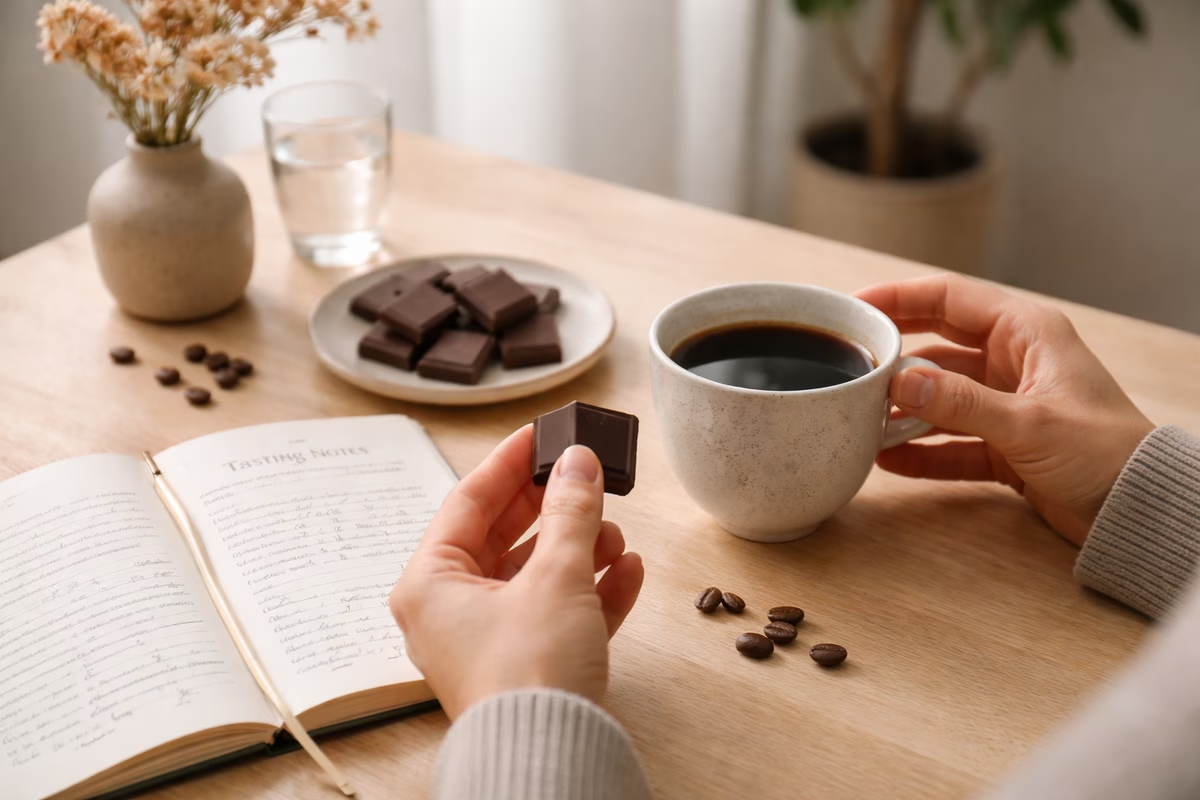
When you sit down to taste a pairing, follow this sequence for the best experience:
Step 1: Taste the Chocolate Alone
Break off a small piece and let it melt on your tongue. Note the dominant flavors—fruit, nut, earth, floral—and the texture and finish.
Step 2: Taste the Coffee Alone
Take a sip and pay attention to acidity, body, and the primary flavor notes. Let it coat your mouth.
Step 3: Taste Together
Take a small bite of chocolate and let it begin to melt, then sip the coffee while the chocolate is still coating your mouth. Notice what happens:
- Do new flavors appear that weren’t there before?
- Does one make the other taste sweeter, more complex, or smoother?
- Does anything clash—harsh bitterness, jarring acidity?
Step 4: Reverse the Order
Sip coffee first, then eat the chocolate. Often this produces a noticeably different experience. The coffee primes your palate differently than the chocolate does.
Common Mistakes
Over-roasting either ingredient. If the coffee tastes burnt or the chocolate tastes ashy, the pairing won’t work regardless of origin matching. Quality matters.
Ignoring sweetness levels. A very sweet milk chocolate with a very sweet flavored coffee is cloying. Balance sweet with bitter, or sweet with acidic.
Rushing. Let the chocolate melt; sip the coffee slowly. Speed kills subtlety.
Using flavored coffee. Vanilla hazelnut coffee with chocolate is a flavor collision, not a pairing. Stick to single-origin or well-crafted blends.
Your First Three Pairings to Try
If you want to experience the range of what’s possible, start with these three:
- The Classic Complement: Medium-roast Colombian + 55% milk chocolate. Smooth meets smooth.
- The Bright Contrast: Light-roast Ethiopian Yirgacheffe + 70% Madagascar dark chocolate. Fruit fireworks.
- The Deep Grounding: Full-bodied Sumatra + 80% dark chocolate. Earthy, intense, contemplative.
Next Steps
- Read the Chocolate Tasting guide to sharpen your palate for single-origin bars
- Explore Cacao Origins to understand how terroir shapes chocolate flavor
- Visit the Coffee Bean Origins guide on our sister Coffee site for deeper origin knowledge