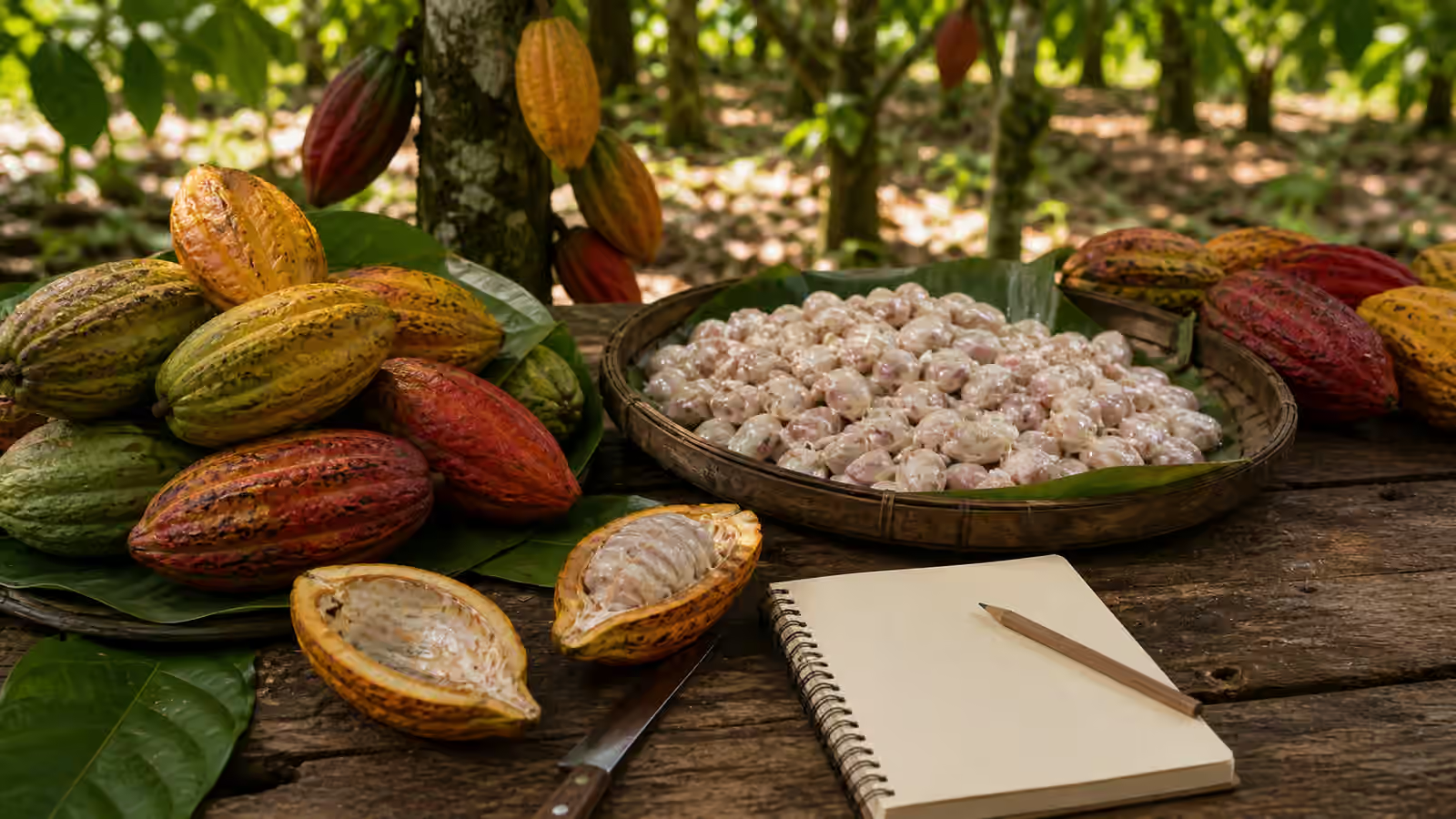
Chocolate flavor begins before chocolate exists. Long before a maker roasts beans, long before nibs meet sugar in a melanger, cacao has already gone through the most decisive flavor work of its life. The pod is opened on a farm, the wet seeds are scooped out with their pale pulp, and the farmer begins a transformation that looks humble from the outside: warm boxes, heaps under leaves, slow turning, sun, rain worries, and patience.
That post-harvest work is why two bars from the same country can taste completely different. It is also why origin is never just geography. The Cacao Origins guide explains how place, genetics, and climate shape the raw material. Fermentation and drying decide whether that raw material arrives at the chocolate maker with clean fruit, soft acidity, nutty depth, or a stubborn harshness that no careful roast can fully hide.
If you have only tasted finished bars, fermentation can sound like a romantic detail on a wrapper. It is more practical than that. Cacao beans do not taste like chocolate when they come out of the pod. They are bitter, astringent seeds wrapped in sweet, sticky mucilage. The pulp tastes bright and tropical, but the bean itself is waiting for heat, acid, enzymes, and time to make it useful. Fermentation is the bridge between fresh fruit and roastable cacao.
What Fermentation Is Actually Doing
Fresh cacao seeds are alive when they leave the pod. The goal of fermentation is not to make them alcoholic in the way grapes become wine. The goal is to let the pulp ferment around the beans, build heat inside the mass, and trigger changes inside the seed. Yeasts begin by feeding on the sugars in the mucilage. As the environment changes, lactic acid bacteria and acetic acid bacteria become more active. The pulp breaks down, drains away, and the bean absorbs heat and acid.
That sounds like a mess, and physically it is. A good fermentation box is sticky, warm, aromatic, and changing by the hour. But inside the bean, the process is precise enough to matter. The heat and acids kill the seed, stopping germination. Cell walls break down. Bitter and astringent compounds shift. Proteins and sugars become flavor precursors, the raw ingredients that roasting later turns into cocoa, nuts, fruit, caramel, toast, malt, flowers, spice, or earth.
This is why a roaster cannot simply “add” origin flavor later. Roasting develops what fermentation has made available. If fermentation is too weak, the maker may be left with beans that taste green, flat, woody, or aggressively tannic. If fermentation goes too far or drying is careless, the beans can carry vinegar, rot, smoke, mold, or dull heaviness. Skilled chocolate making matters enormously, as Bean-to-Bar Basics shows, but it cannot rewrite the farm stage from scratch.
The Shape of a Good Fermentation
Most cacao fermentation happens in wooden boxes, baskets, or covered heaps, depending on region, farm scale, and local practice. The exact method varies, but the sensory arc is recognizable. At first, the mass smells like fresh fruit, wet leaves, and sugar. Then it becomes warmer and more wine-like as yeasts work through the pulp. Later, sharper vinegar-like notes appear as acetic acid bacteria take over. Eventually the strongest acidity softens, the pulp drains away, and the beans begin to smell more rounded: fruit skin, warm bread, cocoa husk, dried flowers, or gentle spice.
Turning is one of the farmer’s main controls. When the fermenting mass is turned, oxygen enters and the beans move from hotter areas to cooler ones. That changes microbial activity and evens out the process. Turn too little and the mass can ferment unevenly, with some beans underdeveloped and others overworked. Turn too much or too early and the heat may never build properly. The right rhythm depends on the cacao variety, the size of the batch, the box design, the weather, and the flavor target.
Time is another control, but it is not a simple quality ladder. A short fermentation can preserve delicate acidity and freshness if the beans are suited to it, but it can also leave bitterness and a raw edge. A longer fermentation can deepen flavor and reduce astringency, but it can also push fruit toward vinegar or dull the top notes. Fine cacao producers often learn their own materials over many harvests. They are not chasing an abstract number of days. They are watching temperature, smell, drainage, color, cut tests, and experience.
For the reader tasting finished chocolate, this means acidity deserves careful judgment. Brightness is not automatically a flaw. A Madagascar-style bar with clean red fruit can owe part of its energy to good fermentation handled with restraint. Sourness is different. Sour chocolate feels sharp in a way that narrows the palate, often lingering as vinegar or unripe fruit rather than opening into aroma. The Chocolate Tasting method helps here: smell first, melt slowly, and ask whether the brightness becomes more interesting with time or simply grows harsher.
Drying Is Not Just Waiting
Once fermentation has done its work, the beans are still too wet to ship or store safely. Drying lowers moisture so the beans can travel without spoiling, but it also finishes the flavor. This stage can be gentle and clarifying, or it can undo much of the care that came before it.
Good drying is steady rather than violent. Beans are spread in a thin layer on raised beds, patios, or drying tables and moved regularly so moisture leaves evenly. Sun drying is common in many cacao regions, but direct sun is not automatically better than shade, and mechanical drying is not automatically worse. The important question is how evenly the beans dry, how well they are protected from rain and smoke, and whether the final moisture is low enough without baking the beans into a harsh, brittle state.
Dry too fast and the outside of the bean can harden while moisture remains trapped inside. That can lead to storage problems and muddy flavor later. Dry too slowly and the beans may become musty, moldy, or overly acidic. Dry over smoky heat and the beans can absorb smoke that follows them all the way into the finished bar. Some chocolate drinkers enjoy smoky notes in certain foods, but accidental smoke in cacao usually reads as a defect because it covers the quieter fruit, floral, and nut signals that careful fermentation created.
Drying also shapes how acidity settles. Freshly fermented beans can smell intensely sharp. During drying, some volatile acidity leaves, and the bean’s aroma becomes more legible. A clean drying process can turn a loud fermentation into a balanced raw material. A poor drying process can make that same lot taste stale before it reaches a roaster.
What This Means on a Chocolate Wrapper
When a maker names a farm, cooperative, estate, or fermentation style, they are giving you more than a travel detail. They are pointing to the part of the chain where flavor became possible. The How to Buy Craft Chocolate guide encourages label reading because specifics matter. “Peru 70%” is useful. “Ucayali, fermented in wooden boxes, sun dried on raised beds” tells you much more about the care behind the bar.
Still, wrapper language should be read with calm skepticism. A bar does not become good because it mentions fermentation, and a simple label does not mean the cacao was handled poorly. Some makers have long relationships with producers and choose not to crowd the package with every processing detail. Others use post-harvest language because it sounds serious. The proof remains in the chocolate.
As you taste, connect label clues to sensory evidence. Clean fermentation often shows up as flavor that has direction. Fruit notes feel ripe rather than sour. Bitterness has shape rather than roughness. Astringency may be present, especially in darker bars, but it should not dry the mouth so aggressively that aroma disappears. The finish should feel earned: cocoa, fruit, nuts, flowers, malt, or spice lingering after the sugar has faded.
Poor post-harvest handling is harder to name at first because several defects can overlap. Under-fermented beans can taste raw, woody, bitter, or peanut-shell dry. Over-fermented or badly dried beans can taste vinegary, compost-like, hammy, moldy, or flat. Those words are not meant to make tasting anxious. They give you a way to separate personal preference from processing problems. You may dislike a very bright bar while still recognizing that it is clean. You may enjoy a roasty bar while noticing that the roast is covering a rough fermentation.
Why Farmers and Makers Need Each Other
Fermentation and drying sit at an awkward place in the chocolate chain. They happen at origin, usually before the chocolate maker ever sees the beans, yet they determine how much freedom the maker will have later. A farmer who ferments carefully gives the maker choices. The maker can roast lightly to preserve fruit or develop more heat for nuts and cocoa. A farmer who sends unevenly fermented beans gives the maker fewer options. The roast may need to become heavier just to make the chocolate acceptable.
This is one reason direct relationships matter in craft chocolate. When makers buy from producers they know, feedback can move both ways. The maker can explain that a lot tasted sharp after roasting, that a drying issue created mustiness, or that a particular fermentation had unusually clear fruit. The producer can adjust turning, box size, harvest selection, drying depth, or sorting. Over time, flavor becomes a shared project rather than a one-time commodity transaction.
That does not mean every good bar must come from a tiny farm or a single estate. Cooperatives can produce excellent cacao when they have strong post-harvest systems. Larger fermentaries can bring consistency and technical skill that smallholders may not be able to manage alone. The important distinction is care, not romance. Good cacao needs clean fruit, clean boxes, controlled fermentation, careful drying, honest sorting, and buyers who value the work enough to pay for it.
How to Taste for the Farm Stage
To notice fermentation and drying, taste in pairs. Put two bars near the same percentage side by side, preferably without inclusions or heavy vanilla. Let one be bright and fruit-forward, and let the other be deeper or nuttier. Do not try to guess the exact fermentation schedule. Instead, ask what kind of acidity each bar carries, whether bitterness feels integrated, and whether the finish stays clean.
The farm stage often appears in the middle and finish rather than the first second. At first, sugar and cocoa intensity can dominate. As the chocolate melts, fermentation character begins to show. Clean fruit may rise. Floral notes may appear briefly and disappear. A drying flaw may show as dustiness after swallowing. Astringency may grip the sides of the mouth. A good bar does not need to be mild, but it should feel coherent. Its force should point somewhere.
This is where chocolate becomes more rewarding than a simple like-or-dislike judgment. The finished square is a record of decisions made far apart: a farmer opening pods at the right ripeness, a fermentation manager judging heat and aroma, a drying team moving beans before rain, a maker choosing a roast, and a taster giving the bar enough time to explain itself. Fermentation and drying are not background details. They are the first draft of chocolate flavor, written while the beans are still on the farm.