The letter arrived inside a box of chocolate.
I’d ordered a small batch from a bean-to-bar maker in Vermont—a company that listed their source farms on the wrapper. This particular bar was 72% dark, made from Arriba Nacional cacao grown on a family farm in the Los Ríos province of Ecuador. The bar cost $12, which I’d rationalized as “research” because I was three months into what my friends called a chocolate phase and what I called an education.
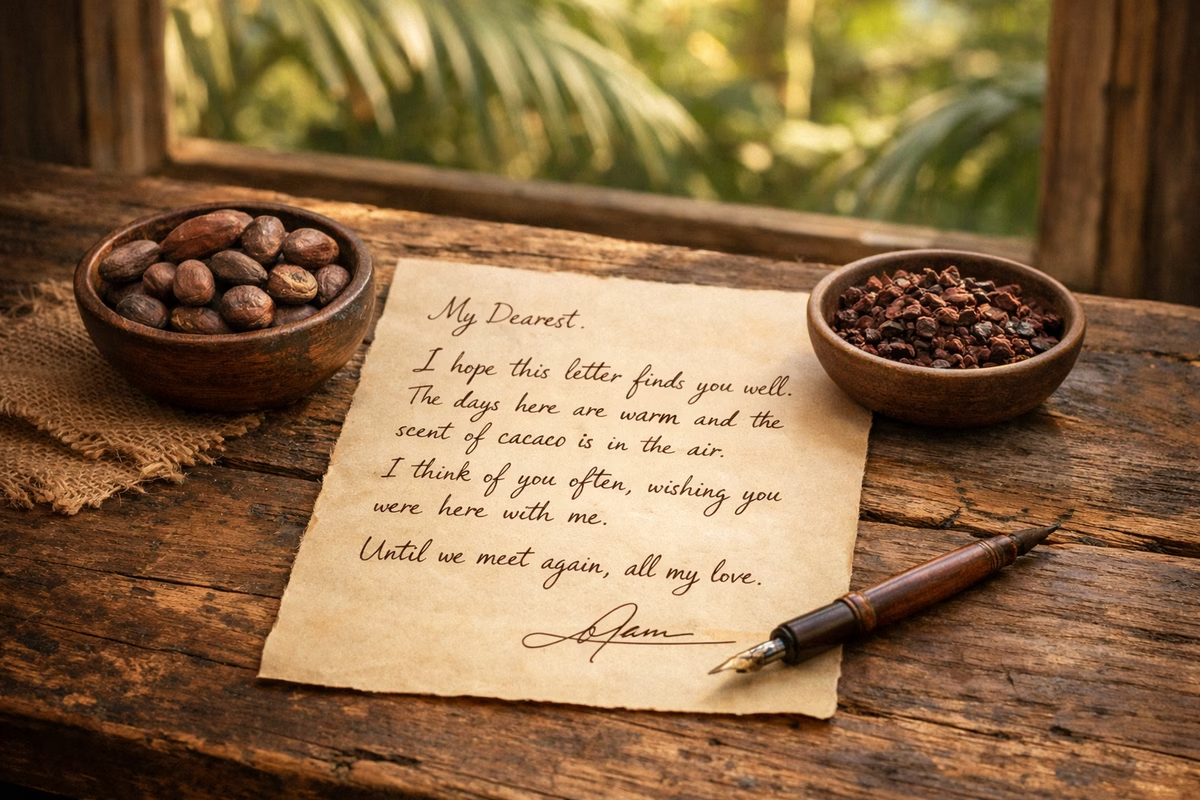
Inside the box, tucked between the bar and a small card describing the tasting notes (“citrus, tropical fruit, light floral, clean finish”), was a folded letter on thin, slightly wrinkled paper. It was handwritten. Translated into English at the bottom, with the original Spanish above.
It began: “My name is Daniela. I have been growing cacao on this farm for twenty-two years, and my mother grew it before me.”
I put the chocolate down and read the letter.
What the letter said
Daniela described her farm—twelve hectares in a river valley where the cacao trees grow under the shade of taller hardwoods. She talked about the harvest season, which runs from February to May in her region, when the pods turn from green to deep yellow and the workers know they’re ripe by the sound they make when tapped.
She described fermentation: piling the wet cacao beans in wooden boxes and covering them with banana leaves for five to six days, turning them by hand every 48 hours. The temperature inside the box rises to 120°F. The smell, she said, is “like wine turning to vinegar, then turning to something sweeter.”
She described drying: spreading the fermented beans on raised beds in the sun, raking them several times a day so they dry evenly. This takes another five to seven days. A sudden rainstorm during drying can ruin a week’s work.
She described the trees themselves: Theobroma cacao, the “food of the gods,” planted by her mother in the 1980s from seedlings of the Arriba Nacional variety that has grown in Ecuador for centuries. Some of the trees are forty years old. They produce fruit twice a year, about 30–40 pods per tree. Each pod contains 30–50 beans. It takes roughly 400 beans to make one pound of chocolate.
The letter ended: “When you taste this chocolate, you are tasting my valley—the river water, the volcanic soil, the shade of the trees, and the five days of fermentation that I watch over like bread rising in an oven. I hope it is good.”
I opened the bar. I tasted it slowly. And for the first time, I tasted the place.
What most chocolate doesn’t tell you
Walk into any grocery store and pick up a chocolate bar. The label might say “dark chocolate” or “70% cacao.” It might say “Belgian” or “Swiss,” which refers to where the chocolate was manufactured, not where the cacao was grown. It almost certainly won’t tell you:
- The country the cacao came from (most mass-market chocolate blends beans from multiple countries)
- The variety of cacao (there are dozens, with dramatically different flavor profiles)
- How the beans were fermented (the step that creates 60–80% of the flavor precursors)
- Who grew it (the farmer, the family, the community)
This opacity is a feature of the industrial chocolate system, not a bug. Large manufacturers buy commodity cacao on global markets, blend it for consistency, and process it at scale. The goal is a uniform product that tastes the same in every bar, every year, everywhere. Terroir—the unique expression of a specific place—is exactly what they’re trying to eliminate.
Bean-to-bar makers do the opposite. They buy beans from specific farms or cooperatives, roast and process them in-house, and make bars that taste like somewhere. When a bar says “Ecuador, Los Ríos, Arriba Nacional, 72%,” it’s not marketing. It’s a set of coordinates.
Daniela’s letter made those coordinates human.
The flavor of place: how origin shapes chocolate
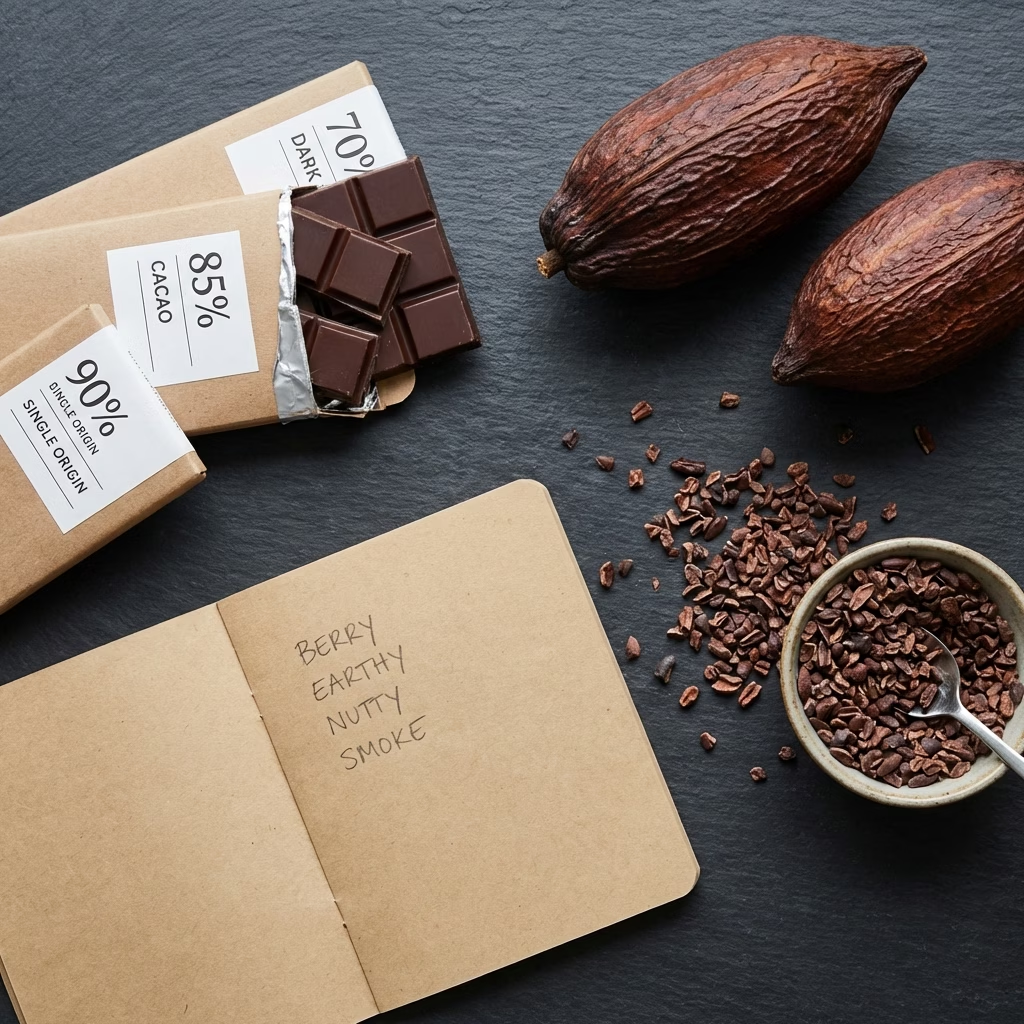
After reading the letter, I started buying single-origin bars from different regions and tasting them side by side. The differences were startling.
Ecuador (Arriba Nacional)
Floral, fruity, light. Jasmine and orange peel. Clean finish. The chocolate equivalent of a bright white wine.
Madagascar (Trinitario)
Intensely fruity—raspberry, red currant, citrus. High acidity. Tangy and vibrant. One of the most distinctive origins in chocolate.
Peru (Criollo blends)
Nutty, earthy, with notes of brown butter and dried fruit. Lower acidity. A rounder, warmer profile.
Tanzania (Forastero/Trinitario)
Dark fruit—plum, fig, raisin—with a faint smokiness. More body, less brightness. Evening chocolate.
Vietnam (Trinitario)
Unusual and complex—spice, warm fruit, sometimes a savory edge. A relatively new origin in the specialty market.
Dominican Republic (Hispaniola Trinitario)
Balanced. Brownie-like, with dried cherry, roasted nut, and a long chocolate finish. The origin that tastes most like what people expect chocolate to taste like—but with more depth.
Each bar was a different place. Same plant, same basic process (ferment, dry, roast, grind), but the soil, the climate, the variety, and the fermentation style produced six completely different flavor experiences.
For the full origin guide, see Cacao Origins: Where Great Chocolate Begins.
The supply chain: from pod to bar
Daniela’s letter described the first two links in a chain I’d never thought about:
1. Growing (the farmer’s work)
Cacao trees need shade, heat, moisture, and patience. They take 3–5 years to produce their first fruit. They’re vulnerable to disease, drought, and pests. A farmer manages the trees year-round—pruning, fertilizing, monitoring—for a harvest that happens in one or two concentrated seasons.
2. Harvesting
Pods are cut from the tree by hand (machete or pruning hook—never pulled, which damages the bark). Each pod is split open to reveal the beans surrounded by a sweet, tangy white pulp called mucilage. The pulp is essential: it’s the sugar source for fermentation.
3. Fermentation (the flavor step)
Beans and pulp are placed in wooden boxes or heaps, covered, and left to ferment for 3–7 days. During fermentation, the pulp liquefies and drains away. Inside the bean, chemical reactions transform bitter, astringent precursors into the aromatic compounds that roasting will later develop into chocolate flavor.
This step is where Daniela’s skill matters most. Fermentation temperature, duration, turning frequency, and the specific microbial cultures present in her boxes—all of these variables shape the final flavor. Two farms in the same valley, using the same cacao variety, can produce very different-tasting beans based on their fermentation practice.
4. Drying
Fermented beans are spread in the sun and dried to about 7% moisture content. Proper drying stabilizes the beans for shipping and prevents mold. It takes 5–7 days and requires constant attention to weather.
5. Shipping and selection
Dried beans are bagged and shipped to chocolate makers, who select lots based on samples. Bean-to-bar makers often visit farms, taste samples from multiple fermentation batches, and choose beans the way a winemaker chooses grapes—by quality, character, and the relationship with the grower.
6. Roasting, grinding, refining
The chocolate maker roasts the beans (developing the precursors into full flavors), cracks and winnows them (removing the shell), grinds them into a paste (cocoa liquor), and refines the paste with sugar until the texture is smooth and the flavor is balanced.
7. Tempering and molding
The finished chocolate is tempered (heated and cooled through precise temperature cycles to create stable cocoa butter crystals) and poured into molds. The result: a bar.
Each step is a decision. Each decision shapes the flavor. And at the very beginning of the chain—before the roaster, before the grinder, before the glossy mold—there’s a farmer turning beans in a wooden box and hoping the weather holds.
What $12 pays for
The $12 bar I’d bought was four ounces of chocolate. By grocery store standards, that’s expensive. By the standards of what went into it, it’s surprisingly modest.
Bean-to-bar makers who source directly from farms typically pay $3,000–$5,000 per metric ton for specialty cacao—roughly 2–3× the commodity market price. This price difference reaches the farmer, and it matters: the commodity price for cacao has historically hovered around $2,000–$2,500/ton, which in many regions barely covers production costs.
When you buy a $12 single-origin bar, you’re not paying a premium for marketing. You’re paying for:
- A farmer who was paid enough to invest in quality fermentation
- A maker who roasted and processed the beans with individual attention
- A supply chain short enough that flavor and origin are traceable
- A bar that tastes like a specific place on Earth, not a generic blend
This isn’t charity. It’s economics aligned with quality: farmers who earn more produce better beans, which make better chocolate, which commands a fair price, which flows back to the farmer. The cycle works when the consumer understands what they’re buying.
What changed after the letter
I wrote Daniela back. I wasn’t sure the letter would reach her—the chocolate maker served as an intermediary—but I wanted to say that her chocolate had tasted like citrus and flowers and that reading about her farm while eating it had changed the experience entirely.
She replied two months later. A short note, again translated, that said: “Thank you for tasting carefully. Most people eat chocolate fast. When someone tastes slowly, the farmer’s work arrives.”
That sentence has stayed with me.
After the letter, I started:
Reading wrappers. The origin, the variety, the maker’s notes about fermentation—these stopped being decoration and became information I could taste.
Tasting slowly. Letting a piece of chocolate melt on my tongue instead of chewing. The flavors unfold over 30–60 seconds in a way that chewing in five seconds misses entirely.
Buying from makers who name their sources. Not every bar needs to come with a letter. But a bar that says “Hacienda Victoria, Ecuador, Arriba Nacional, fermented 5 days, dried in sun” is telling me things that a bar labeled “dark chocolate” is not.
Appreciating the price. The $12 bar stopped feeling expensive and started feeling like a reasonable exchange for twenty-two years of expertise, five days of fermentation, a week of drying, and a journey across the equator to my kitchen table.
The ending: the second bar
A few months later, I ordered from the same maker again. Same farm, same variety, but a new harvest.
The bar tasted different. Subtly—the citrus was brighter, the floral note slightly more pronounced, and the finish was longer. Same farm, same farmer, same process. Different season, different weather, different year.
Terroir isn’t static. It’s a living conversation between a place, a plant, and the people who tend it. Every bar is a snapshot. Every harvest is new.
I ate that bar by the window, reading Daniela’s first letter again, imagining a river valley in Ecuador where the pods were turning yellow and someone was deciding when to harvest.
Next steps
- Read Cacao Origins: Where Great Chocolate Begins for the complete geography of chocolate flavor
- Explore Bean-to-Bar Basics to understand the making process end to end
- See How to Buy Craft Chocolate for finding bars with traceable origins
- Try Chocolate Tasting for building the palate to detect origin differences
- Read The Morning at the Chocolate Factory for seeing the maker’s side of the chain