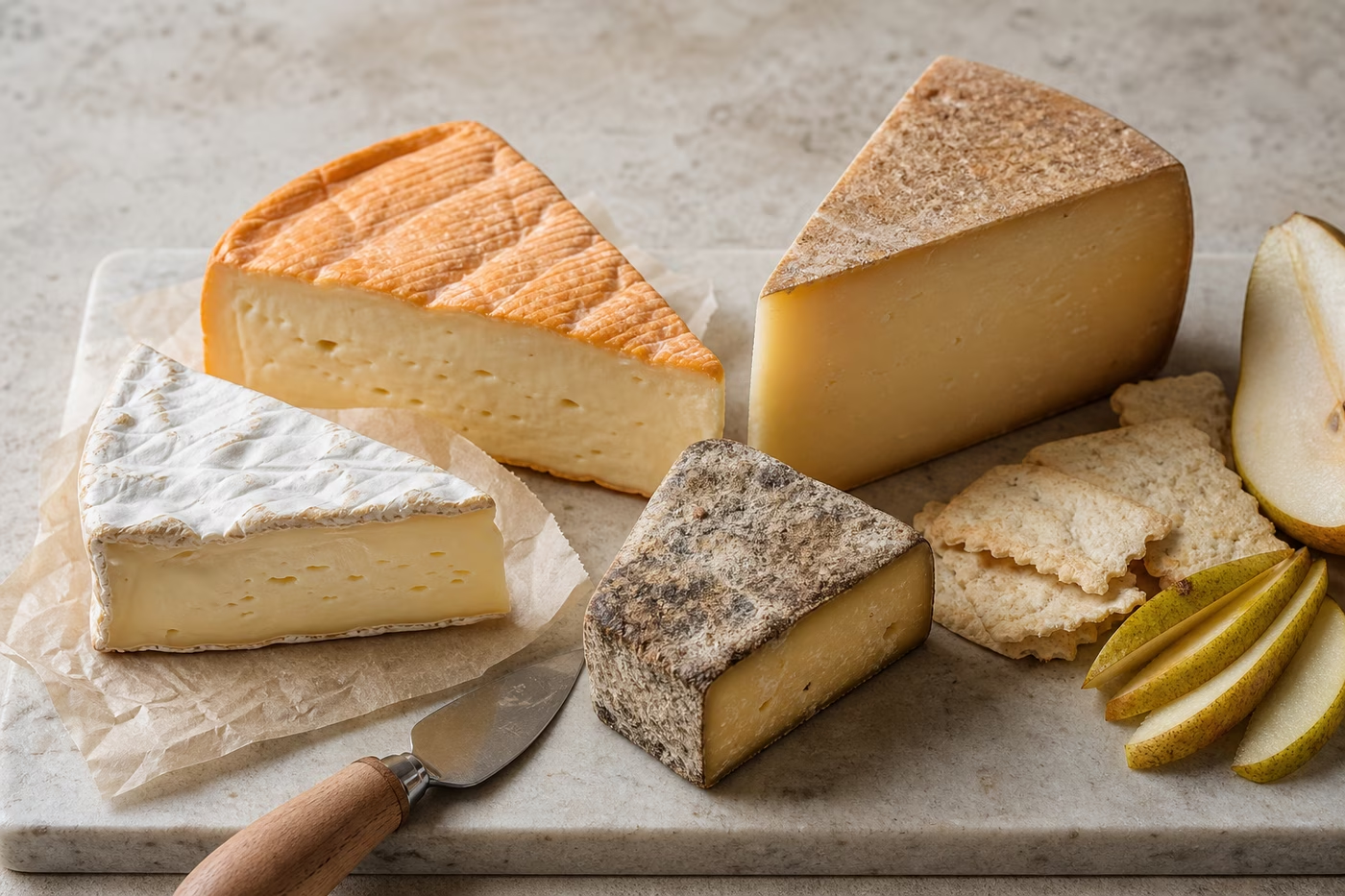
The supermarket cheese case can feel less romantic than a staffed cheese counter, but it is where many people actually buy cheese. The case rewards a different kind of attention. You cannot always ask when a wheel was opened, and you may not be able to taste before buying, so the package becomes the conversation. The plastic, paper, cut face, rind, and moisture all offer clues if you slow down enough to read them.
This guide sits beside How to Buy Cheese Like a Cheesemonger rather than replacing it. A good cheese shop gives you human help. A supermarket case gives you repetition, convenience, and sometimes excellent value. The trick is learning which packaged wedges are likely to taste lively and which ones have already spent too long under lights, cold air, or tight plastic.
Start with the cut face
The cut face tells you more than the label does. A healthy cut face should look like the cheese it came from. A firm aged cheese may have tiny crystals, a dry but not cracked surface, and a color that looks even from edge to center. A semi-soft cheese should look supple, not wet in a trapped way. A bloomy rind cheese should not look collapsed unless it is meant to be very ripe. Fresh cheese should look moist and clean, but not swimming in loose liquid unless it belongs in brine.
Dry edges are the most common supermarket problem. A wedge can sit exposed to cold air before it is wrapped, then keep drying slowly in the case. On aged cheese, a slightly darker edge is not always a disaster, but a hard, leathery face means you are paying for cheese that has already lost some pleasure. On softer cheese, a cut face that looks wrinkled or shrunken usually points to time and poor wrapping. If there are several pieces of the same cheese, compare them. The freshest-looking piece is often obvious once your eye knows what to seek.
Moisture under the plastic is another clue. A little condensation can happen when cheese moves between temperatures, but puddles, greasy smears, or cloudy liquid usually mean the cheese has been trapped too tightly or has warmed and cooled repeatedly. That matters because trapped moisture changes the surface. It can make rind flavors louder, soften textures unevenly, and encourage off aromas. The goal is not a perfectly dry package. The goal is a package that looks stable.
Read the package as a handling record
The best packaged cheese looks as if someone cared about the cut. The wedge is clean, the corners are not crushed, the wrap is snug but not strangling, and the label is placed without hiding the most useful visual information. A sloppy wrap does not always mean bad cheese, but it often means the piece has been handled casually. Cheese is sensitive enough that casual handling shows.
Look for the cut or packed date if the store provides one. A sell-by date can be useful, but it is not the same thing as freshness. A hard grating cheese may be perfectly fine for a long stretch, while a bloomy rind cheese can change dramatically in a few days. If the only date is far away, do not assume the cheese is at its best. Use the date with the visual clues, not instead of them.
Package size also matters. Supermarkets often sell wedges that are convenient for inventory rather than ideal for your refrigerator. A large piece can be a good value if you will cook with it, grate it, or serve it soon. For blue cheese, washed rind, fresh goat cheese, and very ripe soft cheese, a smaller piece is often the better buy because strong or fragile cheese changes faster after opening. The Cheese Storage guide can help once the wedge is home, but smart storage starts with not buying more than the cheese can survive.
Match the cheese to the store
Every supermarket has strengths. Some do a good job with everyday cheddars, goudas, alpine-style wedges, and fresh mozzarella. Others carry ambitious soft-ripened or washed-rind cheeses but do not turn them over quickly enough. The case will tell you. If the fresh mozzarella looks plump, the cheddars look clean, and the blues look moist but not wet, the store probably manages that section well. If half the bloomy rinds are collapsed and the goat cheese logs look dried at the ends, treat the delicate choices cautiously.
For a reliable supermarket board, lean into styles that tolerate packaging. Aged firm cheese, semi-soft cheese, and many alpine-style wheels can handle a little time in the case better than very delicate fresh or ripe soft cheeses. That does not mean you should avoid soft cheese entirely. It means the soft cheese has to earn your trust visually. A brie-style wedge with an even rind, a gentle give, and no trapped liquid may be lovely. One with a bulging package, wet rind, and sharp smell waiting behind the plastic is a risk you do not need to take.
Pre-cut cubes and shredded cheese serve a different purpose. They are convenient, but they give away aroma and texture quickly because there is so much exposed surface area. For cooking, shredded cheese can be practical, though anti-caking starches may affect sauces. For a board, a wedge almost always tastes better because you can cut it fresh and control the texture. If you want more on cut shape, Grating, Shaving, and Crumbling Cheese explains why the same cheese changes when you change its surface area.
Use labels without being ruled by them
Labels can help, especially when they name milk type, age, origin, rind style, or whether the cheese is raw milk or pasteurized. The problem is that labels also use vague comfort words. “Artisan,” “premium,” and “farmhouse style” may be meaningful in context, but they do not guarantee flavor. A precise label is more useful than an impressive one. “Aged twelve months,” “sheep milk,” “clothbound,” or “washed rind” tells you something you can taste.
The How to Read Cheese Labels guide goes deeper, but the supermarket version is simple. Ask what the label helps you predict. Milk type can hint at flavor and richness. Age can hint at firmness and salt concentration. Rind style can hint at aroma. A cheese that gives you none of those clues may still be fine, but then you are buying mostly on appearance and brand familiarity.
One useful habit is to compare similar cheeses across the case. If three aged goudas sit side by side, look at color, crystal visibility, cut cleanliness, package tightness, and price per weight. You may notice that one looks drier, one looks younger, and one looks like the sweet spot. That comparison teaches faster than reading a single label in isolation.
Plan the first hour at home
Supermarket cheese often goes straight from case to car to refrigerator. That trip can stress it, especially in warm weather. When you get home, do not leave it sealed in a sweaty bag. Move it to the refrigerator promptly, then rewrap after opening. If the store wrap is tight plastic and you plan to keep the cheese for more than a quick meal, transfer it to parchment or cheese paper with a protective outer layer. That one step can turn a decent packaged wedge into a much better eating experience two days later.
Before serving, give the cheese time to relax. A supermarket wedge served fridge-cold often tastes less interesting than it is. The Cheese Serving Temperature guide covers timing by style, but even twenty minutes can help a firm cheese show more aroma and less waxiness. Cut only what you need, keep the rest wrapped, and let the cheese prove itself in a clean setting before you judge it.
The supermarket case is not a lesser path into cheese. It is a different path. It asks you to notice cut faces, moisture, package pressure, dates, style, and turnover. Once you do, the case becomes readable. You stop grabbing the most familiar wedge and start choosing the piece that looks alive, stable, and suited to the meal in front of you.