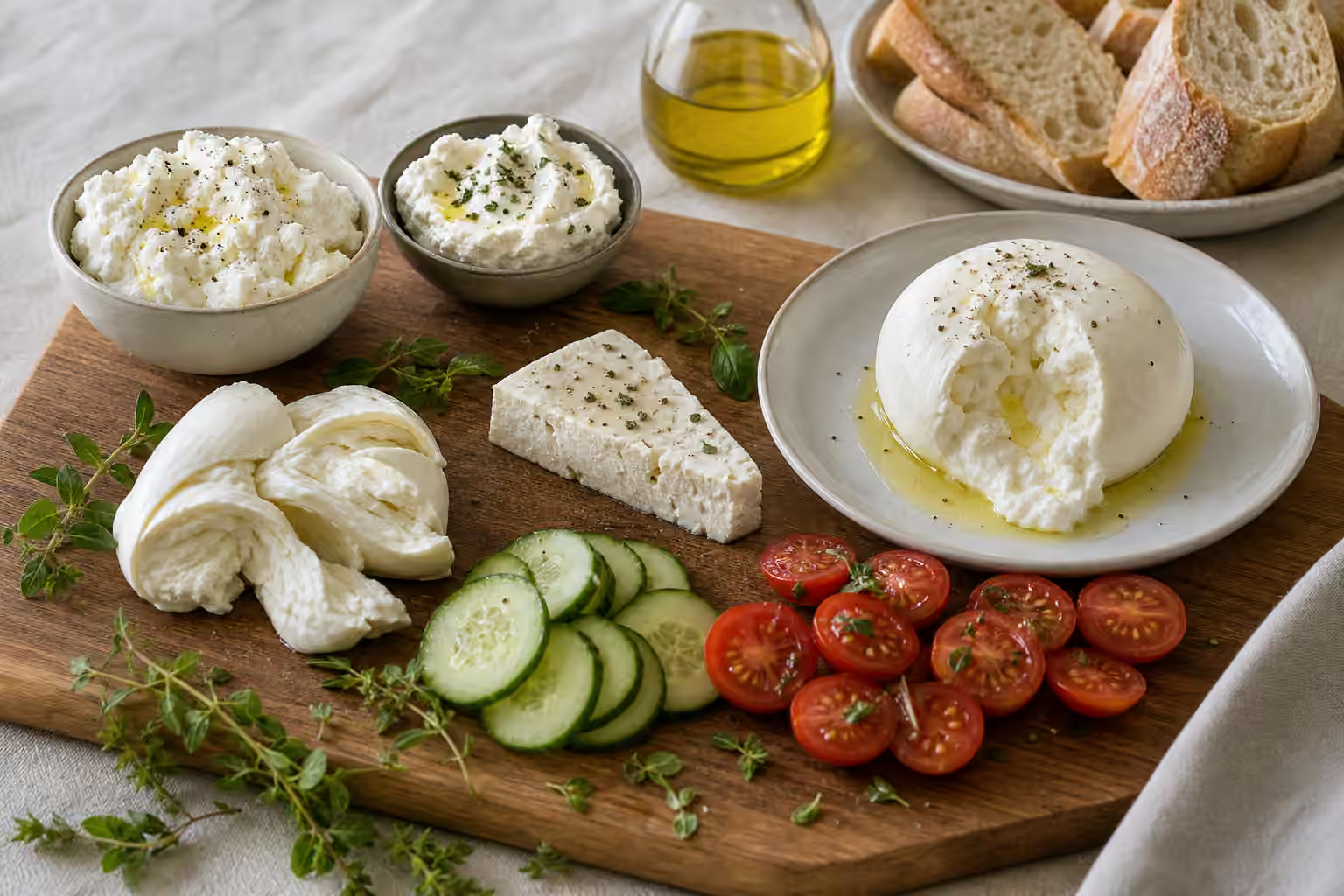
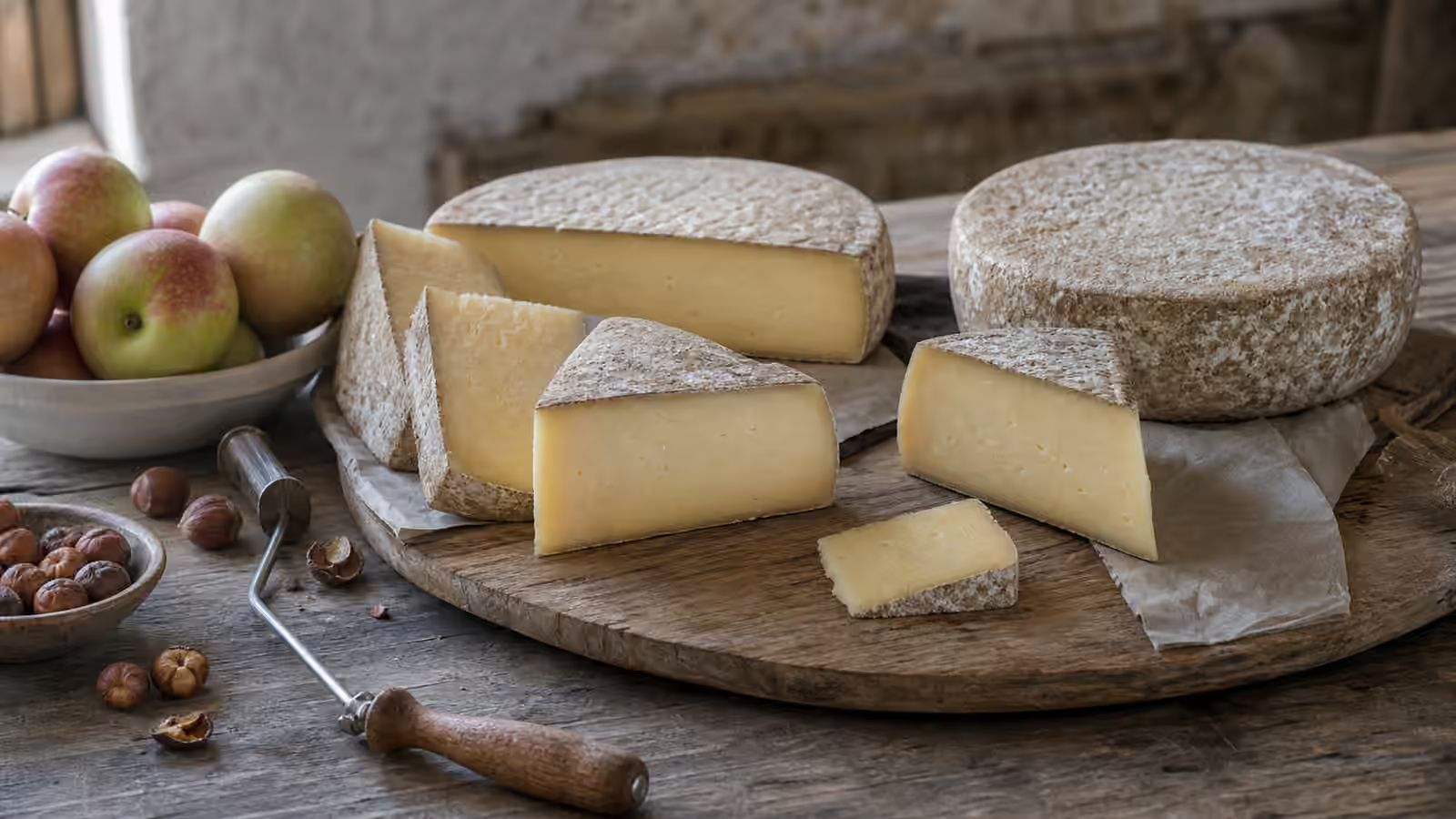
Semi-soft cheese is the quiet middle of the cheese counter. It is not as fleeting as ricotta or fresh mozzarella, not as dramatic as a ripe bloomy rind, and not as concentrated as an old cheddar. It usually arrives as a wedge that yields to the knife without crumbling, slices without shattering, and warms into a generous, elastic bite. That middle quality is exactly why it is so useful.
This is the family you reach for when you want a cheese that can sit on a board without frightening anyone, melt into a sandwich without turning grainy, and still taste more interesting than a plain block from the dairy aisle. Havarti, Fontina-style cheeses, young Gouda, butterkase, many tommes, young Jack, and mellow farmhouse wedges all live near this part of the map. Some are rindless and polished. Some have natural rinds and a cellar edge. Some taste like cream and butter. Others lean toward mushrooms, nuts, hay, or warm milk.
If Cheese Types gives you the broad categories, semi-soft cheese is where those categories start to overlap. A young Gouda may behave like an easy everyday cheese, while a small tomme may point toward the rustic world of natural rinds. Fontina can be both a table cheese and one of the great melting cheeses. The useful lesson is not that all semi-soft cheeses taste alike. It is that they share enough texture and moisture to solve similar problems at the table.
What semi-soft really means
Semi-soft is a texture description before it is a flavor description. These cheeses hold more moisture than aged firm cheeses, but less than fresh cheeses. They are usually sliceable rather than spoonable. When you press them gently, they give. When you cut them, the knife moves through the paste with a soft resistance rather than a brittle snap. At room temperature, many become more aromatic and slightly more elastic, which is why they can seem plain when cold and surprisingly expressive after thirty minutes on a board.
That moisture changes everything. It makes the cheese feel lush on the tongue, but it also shortens the distance between “pleasantly supple” and “tired.” A semi-soft wedge can dry at the cut face if it is left exposed, or become sweaty if it is sealed too tightly. It will not usually age at home into something better once it has been cut. Your job is to protect the texture it already has.
The category also sits in a useful flavor range. Many semi-soft cheeses are mild enough for everyday eating, but they are not empty. A young Gouda can be milky and faintly caramel. Havarti can be buttery, tangy, and soft around the edges. Fontina-style cheeses may bring cream, grass, and mushroom. Tommes can be rustic and savory without becoming as loud as a washed rind. If you are building a board for people with mixed tastes, semi-soft cheese is often the bridge between the safe wedge and the adventurous one.
The names you are likely to meet
Havarti is one of the easiest entry points. It often has tiny openings in the paste, a gentle tang, and a creamy texture that becomes especially pleasant as it warms. It can be plain, dill-flecked, or flavored in many shop cases, but the plain version teaches the style best. It slices cleanly for sandwiches, softens nicely on toast, and does not demand complicated pairings.
Fontina is a little more serious, especially when it comes from a traditional or carefully made source. It can be buttery, nutty, earthy, and faintly mushroomy, with a texture that melts beautifully. In the kitchen, it is one of the cheeses that proves why moisture matters: it relaxes under heat instead of tightening immediately. That makes it a natural link to the techniques in Cooking with Cheese , where choosing a cooperative melting cheese is often the difference between silk and grease.
Young Gouda belongs here before age turns it dense and crystalline. At this stage it is smooth, sweet, and easy to cut, with a round milk flavor that works for snacks, sandwiches, and boards. Once Gouda ages far enough to develop crunch and deep caramel notes, it moves closer to the world described in Aged Firm Cheese . The name stays the same, but the eating logic changes.
Tomme is less one exact cheese than a family feeling. Many tommes are small or medium wheels with natural rinds, made in mountain or farmhouse traditions. The paste may be semi-soft to semi-firm, and the flavor can range from mild cream to cellar, earth, grass, or toasted grain. A tomme is often the semi-soft cheese that teaches rind awareness. The center may taste gentle while the edge tastes more rustic, so the notes in Cheese Rinds matter more than they do with a rindless Havarti.
Butterkase, young Monterey Jack, young brick-style cheeses, and many regional washed or lightly ripened wheels can also sit in this zone. The names vary, but the question stays steady: is the cheese supple, sliceable, and moist enough to melt or bend rather than crumble? If yes, you are probably dealing with the semi-soft logic.
How to buy it
When buying semi-soft cheese, start with purpose. For a board, ask for a wedge that is in good condition now, not one that needs a week of guessing in your fridge. For sandwiches, ask for something that slices and melts cleanly. For cooking, ask whether the cheese becomes smooth under heat or releases too much oil. The shopping habits in How to Buy Cheese Like a Cheesemonger apply especially well here because this category rewards plain, practical language.
Look closely at the cut face. A good semi-soft cheese should look moist but not wet, coherent but not rubbery, and relaxed without sagging. Tiny eyes can be normal in Havarti or related cheeses. A natural rind may look rustic, but the paste should still look appetizing. Deep cracks, a dry yellowed face, slime under plastic, or an aroma that feels harshly chemical are signs to slow down and ask questions.
Smell matters, but it needs context. Rindless semi-soft cheeses should usually smell milky, buttery, lightly tangy, or gently savory. Natural-rind tommes may smell earthier near the rind. Washed or smear-ripened semi-soft cheeses can smell stronger, but the aroma should still make sense as food. A cheese can be assertive without smelling rotten. If you are unsure, ask for a taste or buy a smaller piece. Semi-soft cheese is common enough that you do not need to gamble on a large wedge.
Serving temperature and cutting
Semi-soft cheese often shows badly when it is refrigerator-cold. The paste firms up, the aroma hides, and the flavor can feel flatter than it really is. Give most pieces about thirty to forty-five minutes at room temperature before serving, less if the room is warm or the cheese is cut thin. The goal is a supple texture, not sweating or collapse.
Cutting should match the cheese’s texture. Rindless semi-soft cheeses are friendly in slices, slim wedges, or small rectangles. They do not need to be broken like old Gouda, and thick cubes can feel clumsy because the cheese is dense enough to fill the mouth but not concentrated enough to justify such a large bite. Natural-rind semi-soft cheeses deserve a little more attention. Trim a rind if it tastes dusty, bitter, or distractingly rough, but keep it if it adds a pleasant cellar note. When serving a wedge, try to give each person some center and some edge so one guest does not get all mild paste while another gets only rind.
On a board, semi-soft cheese is often the stabilizer. Put it between a fresh cheese and a stronger cheese, and people will return to it between bolder bites. It also teaches temperature clearly. Taste a slice cold, then taste another after it has relaxed. The second bite usually feels rounder, less waxy, and more aromatic. That exercise fits neatly with the approach in Cheese Board for Learning , where a board is not decoration but a way to notice contrast.
Pairing the supple middle
Because semi-soft cheese often has moderate salt and gentle richness, pairings should sharpen, echo, or add texture rather than bury it. Apples and pears brighten Havarti, young Gouda, and Jack-style cheeses without turning the bite sugary. Toasted hazelnuts or walnuts echo the mild nuttiness in Fontina and tomme. A small swipe of mustard can wake up buttery cheeses, especially in a sandwich or on a board with cured meats. Pickles work when the cheese is rich enough to need acidity.
Honey and jam can work, but they are easy to overuse. With a mild semi-soft cheese, too much sweetness makes the cheese disappear. Use sweet pairings sparingly unless the cheese has enough tang, rind character, or salt to push back. Plain bread, seeded crackers, and roasted vegetables often do more useful work than heavily flavored crackers because they let the cheese remain the main flavor.
For drinks, the same principle applies. Crisp cider, lighter beer, black tea, sparkling water with citrus, or a dry white wine can all reset the palate. The broader guide to Cheese Pairing Beyond Wine is helpful here because semi-soft cheese rarely needs a grand match. It needs something that keeps the richness from becoming sleepy.
Cooking with semi-soft cheese
This is where the category becomes especially practical. Many semi-soft cheeses melt more kindly than very aged cheeses because they still carry enough moisture for the protein network to relax. Fontina, young Gouda, young Jack, and Havarti can all make excellent grilled cheese sandwiches, gratins, omelets, baked potatoes, and simple sauces when handled with gentle heat.
The same warning still applies: semi-soft does not mean impossible to break. High heat can squeeze out fat, especially if the cheese is held hot for too long. Grate or slice it thinly, add it gradually when making a sauce, and avoid boiling after the cheese goes in. If you want strong flavor, blend a semi-soft melter with a smaller amount of aged cheese. The semi-soft cheese gives the sauce body and flow; the aged cheese gives the finish.
Semi-soft cheeses are also good in foods where you want melt without extreme stretch. Mozzarella pulls. Fontina flows. Havarti relaxes. Young Gouda softens into a mellow blanket. Those behaviors are not interchangeable. A pizza may need low-moisture mozzarella, but a mushroom toast may be better with Fontina because it becomes creamy without taking over the whole bite.
Storage without suffocation
Semi-soft cheese needs the same balance described in How to Store Cheese : humidity, but not wetness; protection, but not suffocation. Parchment or cheese paper against the cut face, then a loose outer layer or a small container, is usually a better home than tight plastic pressed hard against the paste. If condensation forms, give the cheese more breathing room and rewrap it in fresh paper.
Rindless semi-soft cheeses are fairly forgiving, but they dry out faster than they look. Natural-rind versions need a little more air because the rind can become tacky or stale when trapped. Stronger semi-soft cheeses should be stored in a container so their aroma does not travel through the refrigerator. If the cut face dries, trim a thin layer before serving. If the surface becomes slimy or the smell turns sharply unpleasant, be conservative.
Buy amounts that match your week. A small wedge eaten while it is still supple will teach you more than a large bargain piece that slowly becomes refrigerator cheese. Semi-soft cheese is at its best when it still has the texture that made you buy it: yielding, sliceable, and generous.
Why this category matters
Semi-soft cheese does not always get the attention because it rarely performs a dramatic trick. It does not run across the board, sparkle with crystals, or challenge the room with blue veins. Its strength is steadiness. It can make a simple lunch feel considered, give a cheese board a friendly center, and rescue a sauce that would be harsh if built only on aged cheese.
Once you learn the style, the counter becomes easier to read. You start noticing moisture, rind, elasticity, and the way a cheese responds to warmth. You can choose Havarti when you want comfort, Fontina when you want melt, young Gouda when you want sweetness, and tomme when you want a little rustic edge without leaving the middle of the board. That is the quiet value of semi-soft cheese: it teaches you how useful the middle can be.