The cheesemonger at my neighborhood shop was named Elena. She had worked behind the counter for eleven years, and she never sold cheese without making you taste it first.
She did it because she thought cheese made more sense with context. Without it, cheese is just food. With it, it becomes a place, a season, and a person.
One slow Tuesday, she looked at me and told me I had been buying the same cheddar and brie for too long.
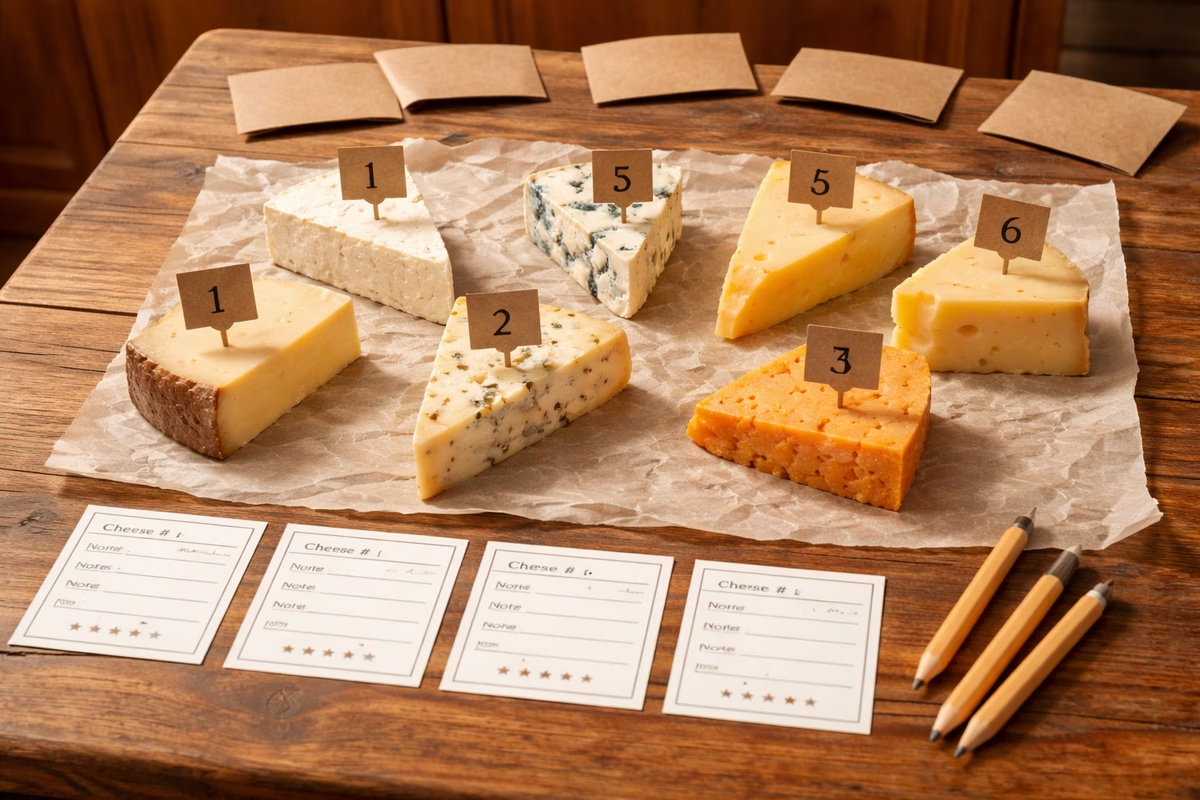
She told me to come back every day for a week. She would pick one region per day, and I would taste three cheeses from that region.
That week changed how I buy cheese. This guide is what she taught me.
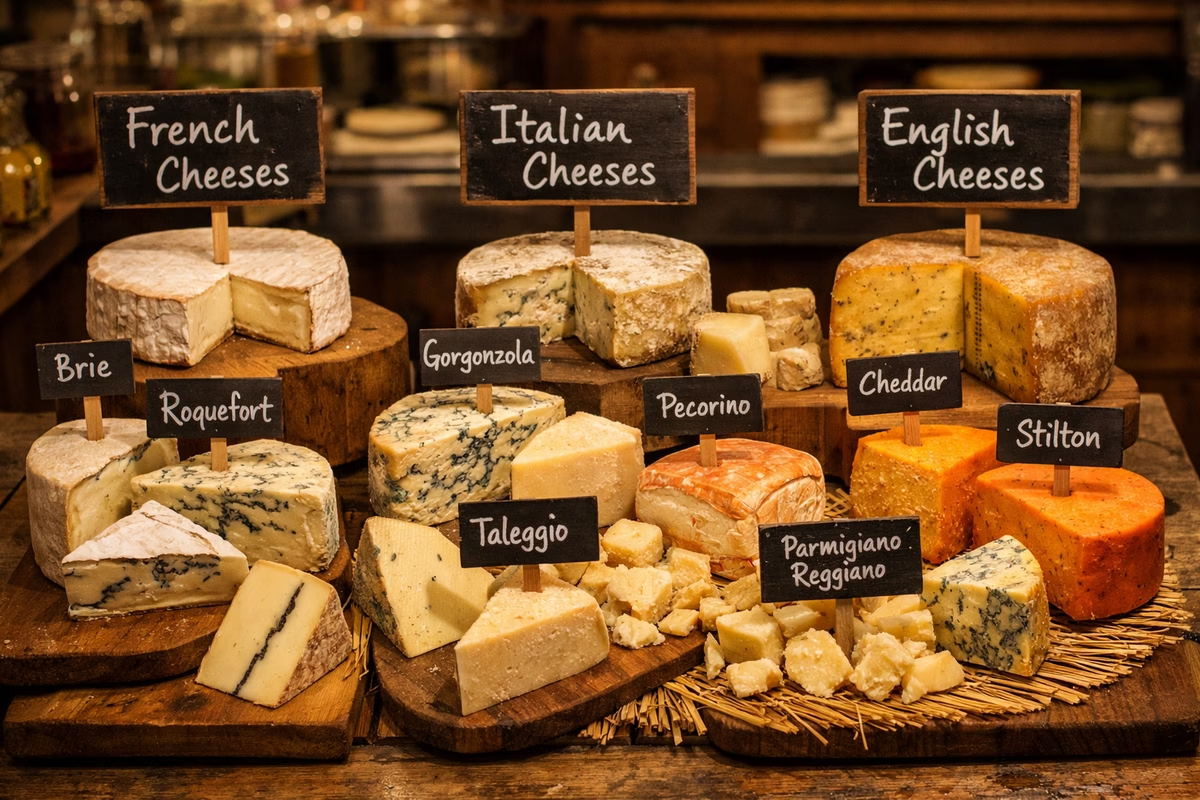
Monday: France (where terroir means everything)
Elena started with France because, she said, France invented the idea that cheese should taste like the place it was made.
The philosophy
French cheese is about place. Soil, climate, animals, and tradition all show up in the flavor. France also protects many cheeses with Appellation d’Origine Contrôlée (AOC) rules that define where and how they are made.
The three cheeses Elena chose
Comté. A firm pressed cow’s milk cheese from the Jura mountains. A young wheel tastes sweet and buttery. An older one tastes nuttier and more crystalline. Elena gave me both, and the difference was obvious.
Époisses. A washed-rind cow’s milk cheese from Burgundy. It smells strong, but the taste is rich and savory.
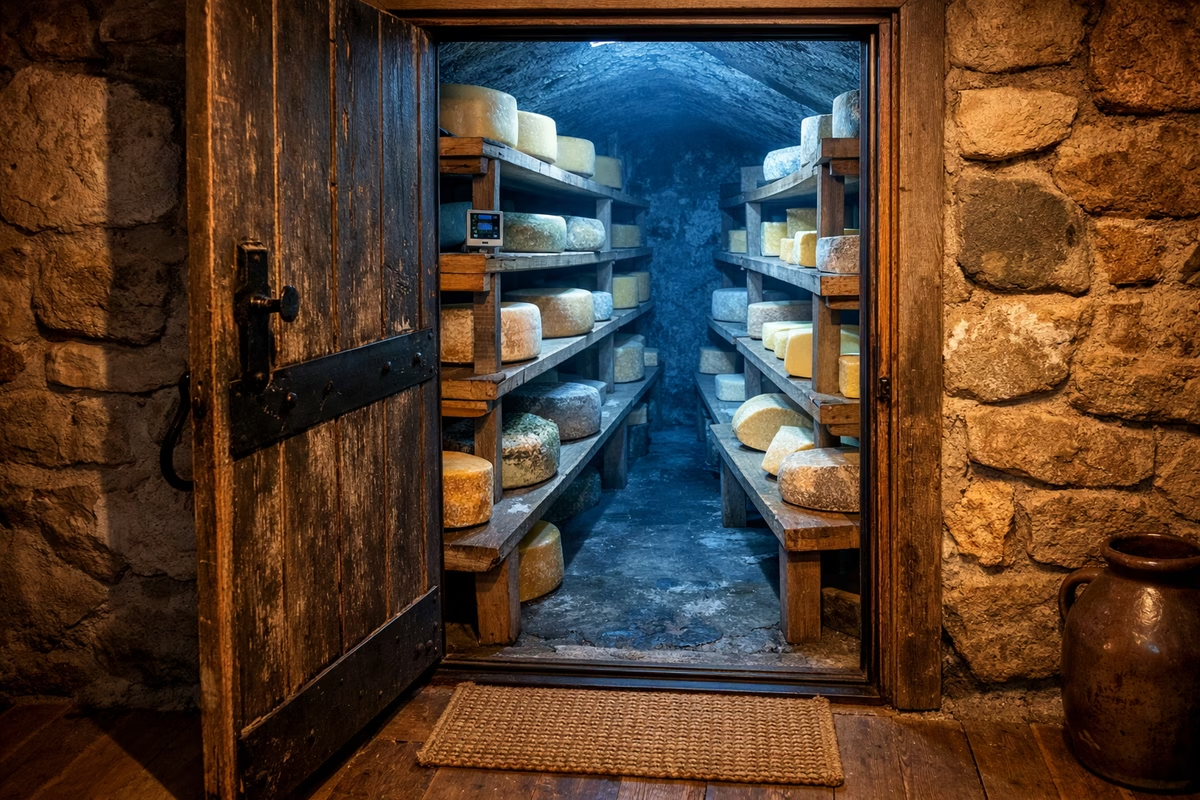
Roquefort. A blue sheep’s milk cheese aged in caves in southern France. It is creamy, tangy, and sharp.
What France taught me
French cheese is specific. Each cheese tastes like the place that made it.
Tuesday: Italy (where simplicity is the art)
If French cheese is about terroir and tradition, Elena said, Italian cheese is about ingredient and technique. It uses very few things and makes them extraordinary.
The philosophy
Italian cheese is simple on purpose. Many of the best ones use only milk, salt, and rennet. The result comes from the milk, the aging, and the technique. Italy protects its cheeses through Denominazione di Origine Protetta (DOP) rules.
The three cheeses Elena chose
Parmigiano-Reggiano. A raw cow’s milk cheese from Emilia-Romagna aged 12 to 36 months. It is granular, nutty, and full of umami. Elena gave me a chunk and said it was nothing like the cheese in the green can.
Burrata. Fresh mozzarella filled with cream and shredded curds. It is rich, sweet, and best eaten the day it is made.
Taleggio. A washed-rind cow’s milk cheese from Lombardy. It is soft, mild inside, and a good starting point for people who want to try washed-rind cheese.
What Italy taught me
Italian cheese rewards simple ingredients and careful work. Freshness matters a lot.
Wednesday: Spain (where time is the secret ingredient)
Spain, Elena said, is the country that understands what patience does to milk.
The philosophy
Spanish cheese leans on sheep’s and goat’s milk, long aging, and a dry climate that concentrates flavor. Spain has fewer famous cheeses than France or Italy, but its best are excellent.
The three cheeses Elena chose
Manchego. Spain’s best-known cheese. Young Manchego is mild and buttery. Aged Manchego is firmer, nuttier, and more savory.
Idiazábal. A smoked sheep’s milk cheese from the Basque Country. The smoke sits on top of a firm, rich cheese.
Cabrales. A blue cheese from Asturias aged in mountain caves. It is sharp, intense, and rustic.
Elena wrapped Cabrales in quince paste and handed it to me. The sweetness softened the bite.
What Spain taught me
Spanish cheese is about time and climate. The dry landscape concentrates flavor, and patience does the rest.
Thursday: The British Isles (where cloth-bound tradition persists)
I expected Elena to skip to Switzerland or the Netherlands. Instead, she chose Britain.
“Most people underestimate British cheese,” she said. “That’s a mistake.”
The philosophy
British and Irish cheese comes from old, steady traditions. Cloth-bound territorial cheeses are the classic example: cheese named for its county, wrapped in cloth, and aged in caves or cellars.
The three cheeses Elena chose
Montgomery’s Cheddar. A raw-milk, cloth-bound cheddar from Somerset. It is crumbly, tangy, and much deeper than the block cheddar most people know.
Stilton. England’s classic blue cheese. It is creamy, rich, and assertive without being harsh. Elena served it with honey instead of port.
Cashel Blue. A semi-soft blue from Tipperary, Ireland. It is milder and creamier than Stilton.
What Britain taught me
British cheese is straightforward. It aims for depth through simplicity and time.
Friday: The new world (everywhere else is catching up)
For the last day, Elena chose cheeses from outside Europe.
“The most exciting cheesemaking in the world right now is happening in places you wouldn’t expect,” she said.
The philosophy
Cheesemakers outside Europe are building on old traditions and making them local. Milk, climate, and technique all change the result.
The three cheeses Elena chose
Jasper Hill Harbison. A bark-wrapped cow’s milk cheese from Vermont. It is creamy, woodsy, and spoonable when ripe.
Rogue River Blue. An Oregon blue wrapped in grape leaves soaked in pear brandy. It is sweet, fruity, and rich.
Bay of Fires Cloth Cheddar. A cloth-aged cheddar from Tasmania. It is nutty, creamy, and slightly mineral.
What the new world taught me
Good cheese can come from anywhere. What matters is the milk, the maker, and the choices behind it.
The lesson Elena was really teaching
By Friday evening, I had tasted fifteen cheeses from five regions. The real lesson was not geography. It was attention.
Each cheese had a story behind it. Even a little context made me slow down and notice more.
I still buy cheddar and brie. I also buy something new once a month, and I ask the cheesemonger what it is.
They always know.
Next steps
- Read Cheese Types for the systematic breakdown of texture and milk type
- Explore Wine Pairing and Pairing Beyond Wine for what to drink alongside these regional cheeses
- See How to Buy Cheese for practical shopping confidence
- Try Your First Cheese Board to turn these regional discoveries into a board guests will love