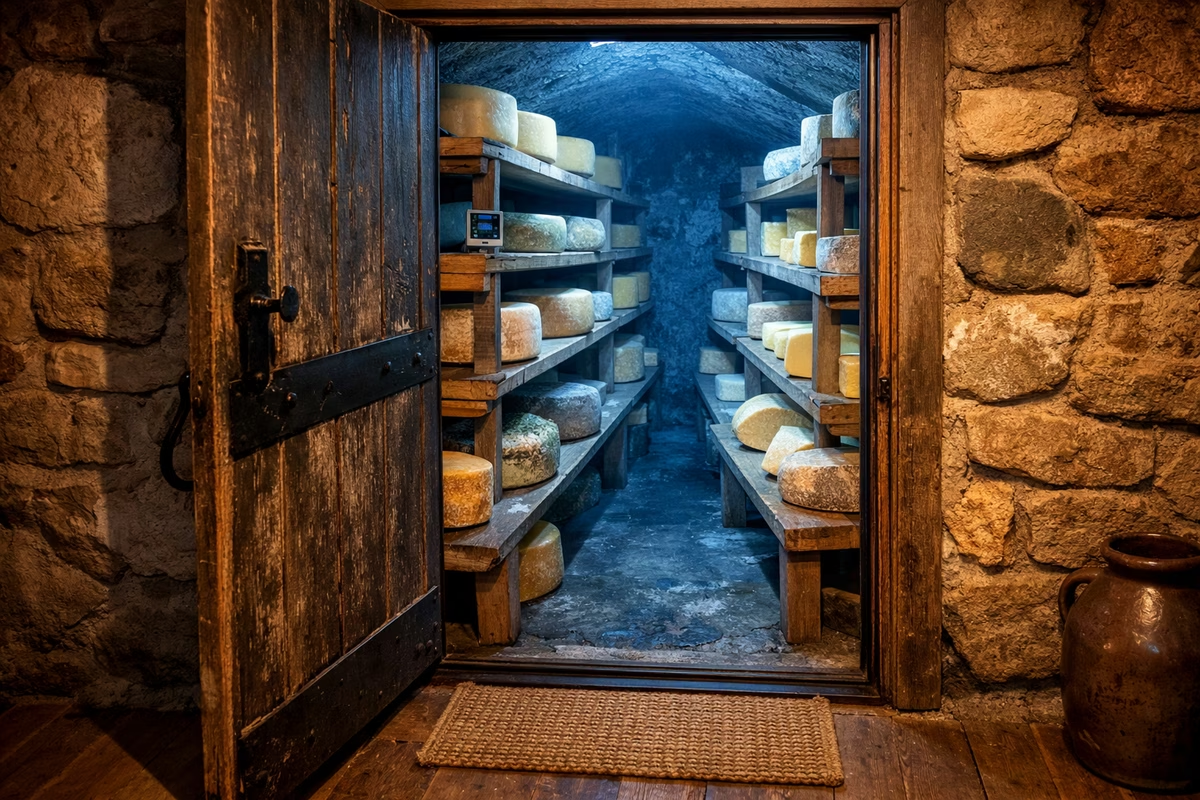
The cheesemonger at my neighborhood shop was named Elena. She had worked behind the counter for eleven years, and she had a habit that annoyed and delighted her customers in equal measure: she would never just sell you cheese.
She would make you taste it first.
Not because she was upselling. Because she believed that cheese without context was just food, and cheese with context was a story about a place, a season, a tradition, and someone’s entire livelihood.
One slow Tuesday afternoon, she looked at me—a regular who always bought the same cheddar and brie—and said, “You’ve been coming here for a year. You always buy the same two things. What if we fixed that?”
I said yes, mostly out of guilt.
She said, “Come back every day this week. I’ll pick one region per day. You taste three cheeses from that region, and I’ll tell you why they taste the way they do.”
That week changed how I eat cheese. This guide is what Elena taught me.
Monday: France (where terroir means everything)
Elena started with France because, she said, France invented the idea that cheese should taste like the place it was made.
The philosophy
French cheese is defined by terroir—the combination of soil, climate, altitude, animal breed, and tradition that makes a cheese from one valley taste different from a cheese made ten miles away. France has more named cheeses than any other country, and many of the most famous are protected by Appellation d’Origine Contrôlée (AOC) laws that dictate exactly where and how they can be made.
The three cheeses Elena chose
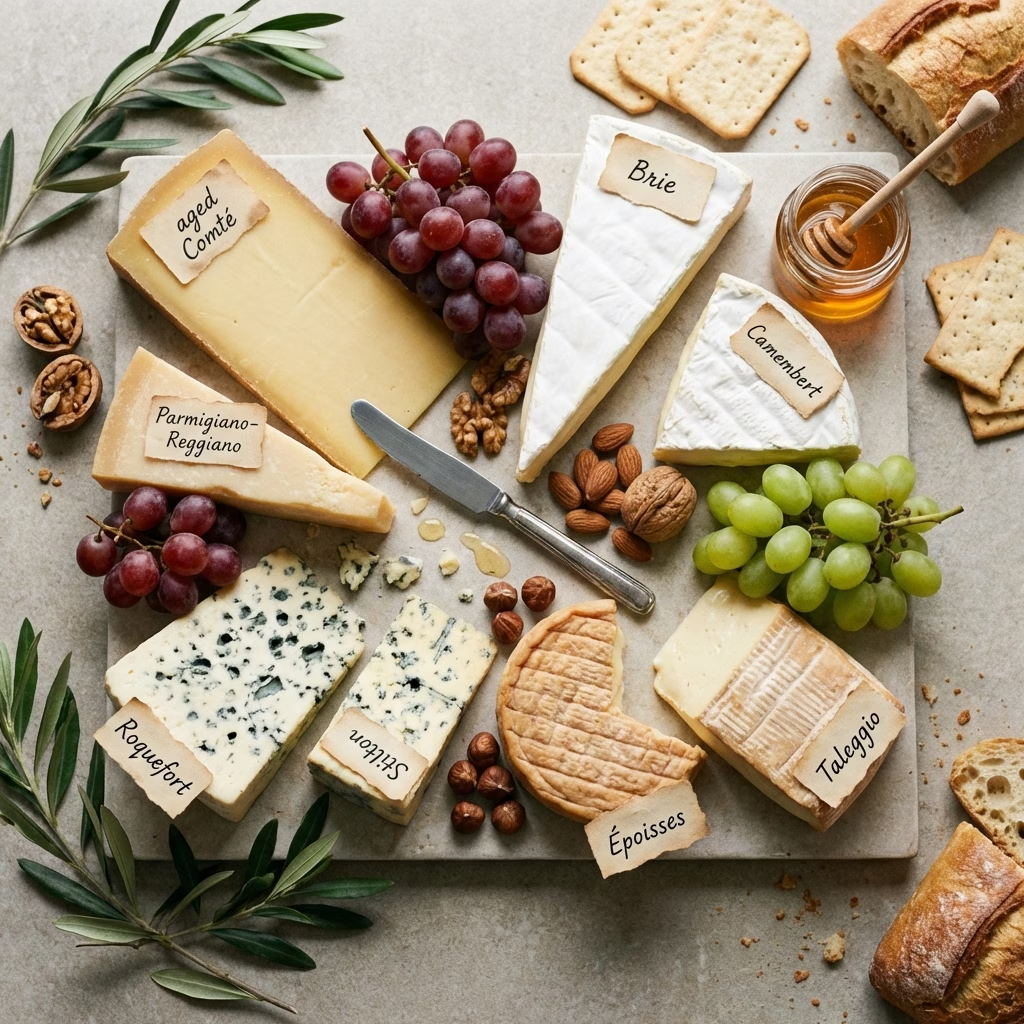
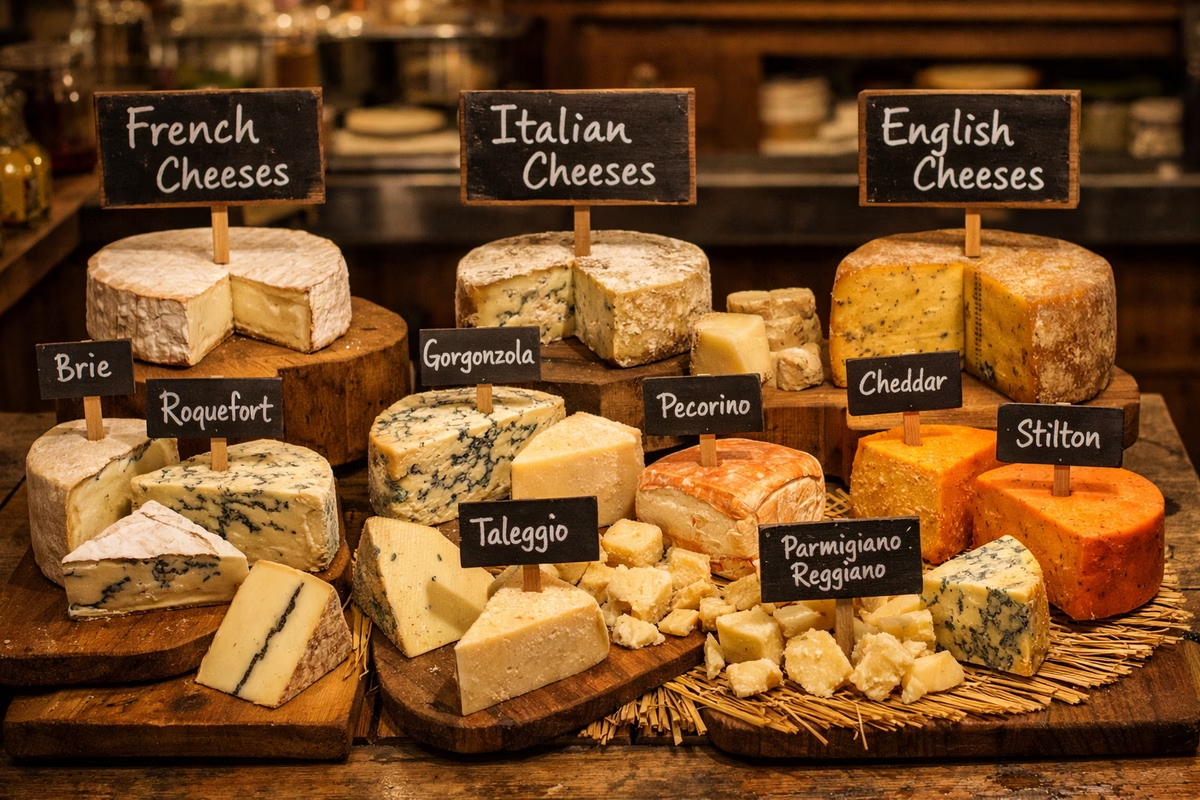
Comté — A firm, pressed cow’s milk cheese from the Jura mountains. Aged 8–24 months, it develops a flavor spectrum that runs from sweet and buttery (young) to nutty and crystalline (old). Elena gave me a young Comté and an aged one side by side. The difference was staggering: same recipe, same region, but time had turned one into something entirely different.
Époisses — A washed-rind cow’s milk cheese from Burgundy. The rind is bathed in Marc de Bourgogne (a grape spirit), which develops the orange color and the pungent aroma that makes people either fascinated or nervous. Inside, it’s creamy, rich, and deeply savory with a long finish.
“Smell it,” Elena said. “Now taste it. They’re two different experiences.”
She was right. The smell was intense; the taste was elegant.
Roquefort — A blue sheep’s milk cheese from caves in southern France. The mold (Penicillium roqueforti) grows naturally in the limestone caves where the cheese ages, and the result is a blue that’s creamy, tangy, and mineral with a distinctive sharpness.
What France taught me
French cheese is about specificity. Each cheese is a portrait of its place. When a French cheese is great, it tastes like nowhere else on earth.
Tuesday: Italy (where simplicity is the art)
If French cheese is about terroir and tradition, Elena said, Italian cheese is about ingredient and technique—taking very few things and making them extraordinary.
The philosophy
Italian cheeses tend toward elegance through simplicity. Many of the greatest Italian cheeses use only milk, salt, and rennet. The magic comes from the animal’s diet, the aging process, and centuries of refined technique. Italy protects its cheeses through Denominazione di Origine Protetta (DOP) designations.
The three cheeses Elena chose
Parmigiano-Reggiano — The king of cheese. Made from raw cow’s milk in Emilia-Romagna and aged 12–36 months. True Parmigiano is granular, crystalline, and umami-rich, with flavors of toasted nuts, fruit, and a savory depth that builds as you chew. Elena broke off a chunk with a proper Parmigiano knife and said, “This is not the cheese in the green can.”
She was right about that too.
Burrata — Fresh mozzarella filled with cream and stracciatella (shredded mozzarella curds swimming in cream). When you cut it open, the inside pours out. It’s milk in its most luxurious form: rich, sweet, and ephemeral. Burrata should be eaten the day it’s made. Even two-day-old burrata is a shadow.
Taleggio — A washed-rind cow’s milk cheese from Lombardy. Semi-soft, pungent on the outside, mild and fruity inside. It’s the gateway to washed-rind cheeses for people who find Époisses too intense.
What Italy taught me
Italian cheese rewards simplicity. The ingredients are humble; the attention is not. And freshness matters in Italian cheese more than almost any other tradition.
Wednesday: Spain (where time is the secret ingredient)
Spain, Elena said, is the country that understands what patience does to milk.
The philosophy
Spanish cheese culture revolves around sheep’s and goat’s milk, long aging, and the dry, warm climate that concentrates flavor. Spain has fewer internationally famous cheeses than France or Italy, but its best are world-class.
The three cheeses Elena chose
Manchego — Spain’s most recognized cheese, made from Manchega sheep’s milk in La Mancha. Young Manchego (3 months) is mild and buttery. Aged Manchego (12+ months, called viejo) is firm, nutty, slightly granular, with a long savory finish. The zigzag rind pattern comes from traditional esparto grass molds.
Idiazábal — A smoked sheep’s milk cheese from the Basque Country. The smoking tradition comes from shepherds aging cheese in mountain huts where fires burned. The result is a firm cheese with a pronounced smoky character layered over lanolin-rich sheep’s milk.
Cabrales — A blue cheese from Asturias, traditionally aged in mountain caves. Made from a mix of cow’s, goat’s, and sheep’s milk, Cabrales is intense, sharp, and complex. It’s Spain’s Roquefort—but wilder, less refined, and more rustic.
Elena wrapped a piece of Cabrales in a thin slice of quince paste and handed it to me. The sweetness tamed the sharpness. It was perfect.
What Spain taught me
Spanish cheese is about time and climate. The arid landscape concentrates flavor. Patience turns good milk into something dense and resonant.
Thursday: The British Isles (where cloth-bound tradition persists)
I expected Elena to skip to Switzerland or the Netherlands. Instead, she chose Britain.
“Most people underestimate British cheese,” she said. “That’s a mistake.”
The philosophy
British cheese—and Irish cheese—represents some of the oldest continuous cheesemaking traditions in Europe. The cloth-bound territorial cheeses are the backbone: cheeses named after their county of origin, wrapped in cloth, and aged in caves or cellars.
The three cheeses Elena chose
Montgomery’s Cheddar — Not the mass-produced block you’re imagining. A raw-milk, cloth-bound, farmhouse cheddar from Somerset. Aged 12–18 months, it’s crumbly, deep, tangy, and layered—with a complexity that would surprise anyone who thinks they know cheddar.
“This is what cheddar was before factories got involved,” Elena said.
Stilton — England’s great blue cheese. Creamy, rich, with a blue mold that’s assertive but not aggressive. Traditionally eaten with port, but Elena paired it with a drizzle of honey.
Cashel Blue — From Tipperary, Ireland. A semi-soft blue that’s milder and creamier than Stilton, with a grassy, pastoral quality that tastes like the Irish countryside smells.
What Britain taught me
British cheese is honest. It doesn’t try to be complex or exotic. It aims for depth through simplicity and time—and when it’s made well, it has a quiet dignity that’s impossible to fake.
Friday: The new world (everywhere else is catching up)
For the last day, Elena chose cheeses from outside Europe.
“The most exciting cheesemaking in the world right now is happening in places you wouldn’t expect,” she said.
The philosophy
American, Australian, and South American cheesemakers are building on European traditions while adding their own terroir, their own milk, their own climate. The results are increasingly stunning—and increasingly winning international competitions.
The three cheeses Elena chose
Jasper Hill Harbison — A bark-wrapped, bloomy-rind cow’s milk cheese from Vermont. Spruce bark gives it a woodsy aroma, and the interior is creamy and spoonable when ripe. It’s one of the most awarded American cheeses, and it tastes like New England forest.
Rogue River Blue — From Oregon. Wrapped in grape leaves soaked in pear brandy, this seasonal blue cheese won the World Cheese Awards in 2019. It’s sweet, fruity, and hauntingly complex.
Bay of Fires Cloth Cheddar — From Tasmania, Australia. Aged in cloth in the British tradition, but with Australian milk and climate. It’s nutty, creamy, and has a mineral finish that speaks to its island origin.
What the new world taught me
Great cheese can come from anywhere. What matters is the quality of the milk, the skill of the maker, and the willingness to let tradition inform rather than constrain.
The lesson Elena was really teaching
By Friday evening, I had tasted fifteen cheeses from five regions. But the real lesson wasn’t about geography.
It was about attention.
Every cheese Elena gave me had a story: the animal, the pasture, the cave, the maker’s decisions, the season it was made. Knowing even a little of that story changed how each bite tasted—not because the information was magic, but because it slowed me down. It made me chew longer, notice more, remember better.
I still buy cheddar and brie. But now I also buy something I’ve never tried, at least once a month. And when I do, I ask the cheesemonger for the story.
They always have one.
Next steps
- Read Cheese Types for the systematic breakdown of texture and milk type
- Explore Wine Pairing and Pairing Beyond Wine for what to drink alongside these regional cheeses
- See How to Buy Cheese for practical shopping confidence
- Try Your First Cheese Board to turn these regional discoveries into a board guests will love