
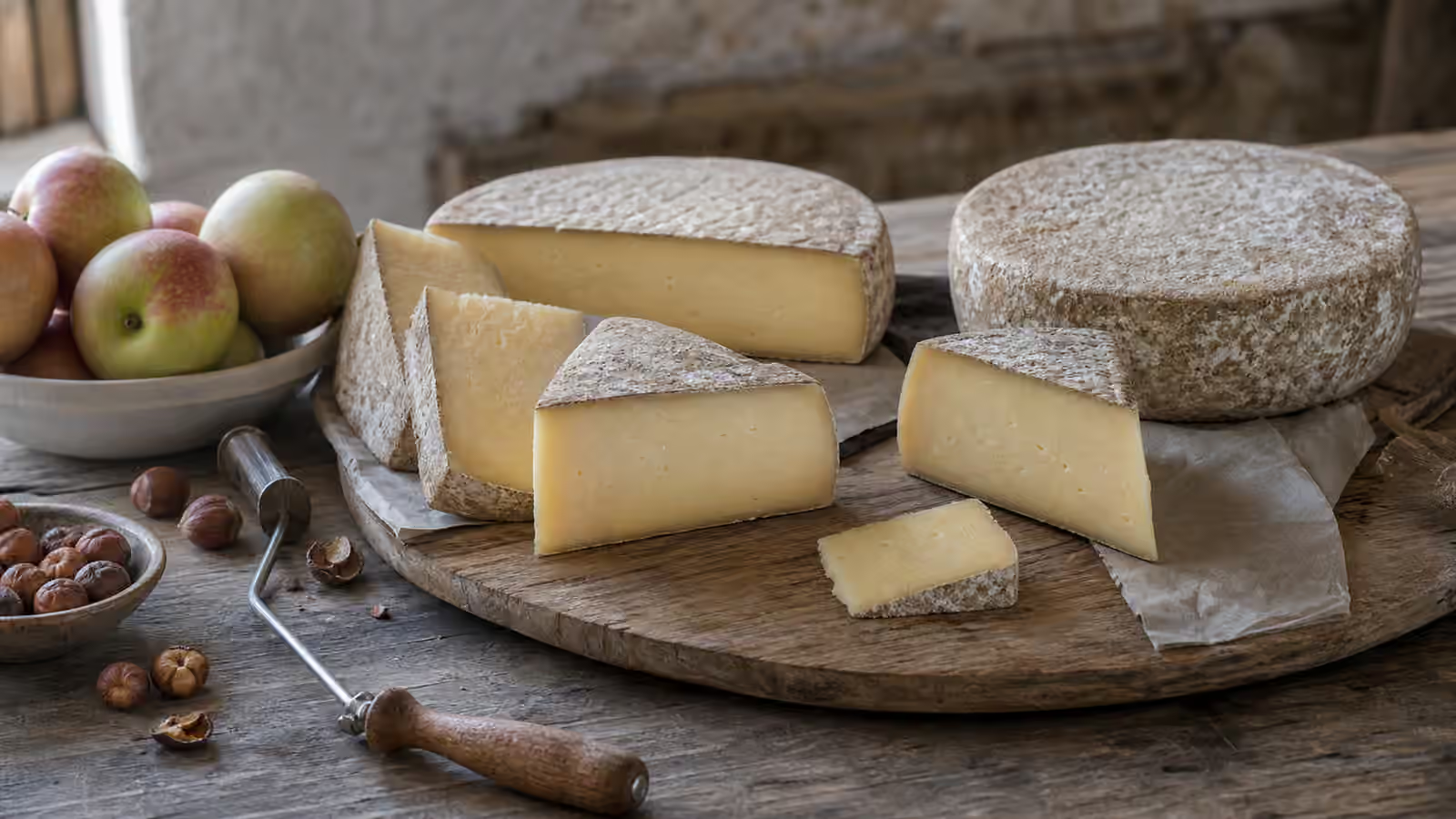
Natural-rind tommes are often the quiet cheeses in the case. They may not have the white velvet of a bloomy rind, the orange glow of a washed rind, or the dramatic veins of a blue. They sit as small or medium wheels with gray, brown, tan, or dusty-looking surfaces and a paste that can range from supple to firm. At first glance they can look rustic rather than inviting. In the mouth, they can be some of the most useful cheeses on a table: nutty, earthy, grassy, milky, mushroomy, or gently brothy without demanding all the attention.
The word tomme is not one exact recipe. It often points to a family of modest wheels, many from mountain or farmhouse traditions, with natural rinds and a practical scale. Some are young and elastic. Some are firmer and more savory. Some taste clean and buttery. Others carry cellar, hay, damp stone, or toasted grain. Their appeal is in the middle register, where cheese becomes interesting without becoming theatrical.
This guide gives a focused home to a style that appears throughout Semi-Soft Cheese , Cheese Rinds , and How to Read Cheese Labels . Natural rinds deserve their own attention because the edge often tells as much of the story as the center.
What a Natural Rind Is Doing
A natural rind forms as the cheese ages in contact with air, salt, humidity, handling, and the aging room. It may be brushed, turned, rubbed, or simply tended so the surface dries into a protective boundary. Unlike wax or plastic, it is not a separate package placed around the cheese. It is part of the cheese’s life. It helps manage moisture and shapes the aroma of the paste near the edge.
That does not mean every natural rind is meant to be eaten. Some are delicious or at least interesting, with flavors of nuts, earth, mushrooms, hay, or toasted grain. Others are gritty, bitter, dusty, or too hard. The question is sensory, not ideological. Taste a tiny bit if the rind is presented as edible and smells clean. If it makes the bite worse, leave it. You can respect a rind without chewing every millimeter.
The paste near the rind often tastes different from the center. It may be firmer, more aromatic, saltier, or earthier because it lived closer to air and surface activity. A good cut lets you experience that gradient. A cube from the center hides the main lesson. A wedge from rind to center shows how the cheese changed as it aged.
Tomme Texture Sits in the Useful Middle
Many tommes live between soft and hard. They may bend slightly under the knife, slice cleanly, or break with a gentle crumble depending on age and make. This middle texture is practical. It works on boards, in sandwiches, with fruit, beside cured meats, and sometimes in cooking. It has enough structure to be handled, but enough moisture to taste rounded.
Young tommes can be mild, lactic, buttery, and lightly elastic. They are good for people who want more character than a rindless supermarket cheese but are not ready for a loud washed rind or blue. Older tommes can become denser, nuttier, and more savory. They may show small eyes, a darker paste near the rind, or a drier cut face. Those signs are not automatically problems. They are clues.
The cut face should still look alive. Moist but not wet, firm but not cracked, and coherent rather than rubbery. A natural rind can look rustic while the paste looks clean. Deep cracks, excessive dryness, slime under wrapping, or an aroma that feels stale rather than earthy should slow you down. Natural does not excuse tired storage.
Aroma Needs Context
Natural-rind cheeses can smell like cellars, mushrooms, damp stone, hay, nuts, or soil after rain. Those words sound odd until you taste them beside the paste. The aroma should make sense as food. It can be rustic without being dirty. It can be earthy without smelling rotten. A good cheesemonger can help separate character from decline, but your own nose can learn the difference with repetition.
Smell the cut face as well as the rind. The rind may be stronger than the paste. If the paste smells clean and inviting while the rind smells rustic, the cheese may simply need a thoughtful cut. If both smell harsh, chemical, or stale, choose something else. Cheese should not require you to argue yourself into wanting it.
Temperature changes aroma. A tomme served straight from the refrigerator may taste muted and firm. As it warms, the rind edge opens and the paste becomes more expressive. Let it come up gently, but do not leave a small wedge out so long that the cut face dries. Cheese Serving Temperature is especially useful for these cheeses because subtle aroma can disappear when cold and become dusty when neglected.
Pairings Should Echo and Lift
Natural-rind tommes pair well with foods that echo their quiet depth or lift their earthy side. Apples, pears, hazelnuts, walnuts, almonds, country bread, seeded crackers, mushrooms, roasted potatoes, mustard, pickles, honey in small amounts, and dry cider all make sense. The pairing does not need to be elaborate. A slice of tomme, a piece of apple, and a nut can show the cheese more clearly than a crowded board.
Acid is useful because many tommes are savory and moderately rich. Pickles, mustard, crisp apples, pears, or lightly dressed greens can keep the bite from becoming dull. Sweetness should be modest. Too much jam can flatten the rind character and make the cheese taste like background dairy. If the tomme is young and mild, fruit can lead. If it is older and earthier, nuts, bread, mushrooms, or mustard may be better partners.
Cured meats can work, but choose carefully. A delicate tomme may disappear beside spicy salami. A firmer, nuttier tomme may be excellent with ham or mild cured sausage. The board balance in Cheese with Cured Meats applies strongly here because salt and rind aroma need space.
Cutting Changes the Experience
A natural-rind wheel or wedge should be cut so each person gets some path from rind to center when the rind is part of the experience. Thin wedges or narrow slices often work better than cubes. Cubes hide the rind, dry quickly, and make the cheese feel ordinary. A wedge shows the gradient and lets the eater decide how much rind to include.
For a board, cut a few starter pieces and leave the rest of the wedge intact. This shows people how to approach it without drying the entire piece. If the rind is tough, trim only what makes the bite better. Do not shave away the entire edge automatically, because the paste near the rind may carry the most interesting aroma.
For sandwiches, slice thinly and consider where the rind will land. A thick rind strip can tug awkwardly in a sandwich. A thin slice with a small rind edge can be pleasant with mustard, ham, apples, or greens. For cooking, tommes can melt or soften depending on moisture and age, but they are not all interchangeable. Test a small piece before asking a special wedge to become a sauce.
Storage Should Protect the Edge
Natural-rind tommes need wrapping that protects moisture without sealing them into a wet surface. Cheese paper or parchment inside a loose container often works better than tight plastic pressed against the rind. The cut face needs protection from drying, while the rind needs enough breathing room that it does not become damp and stale.
Check the cheese before serving. Trim a dry cut face if needed. Smell the rind. Let the wedge warm enough to taste alive. Rewrap it cleanly after cutting. These small habits matter because natural-rind cheeses often change gradually rather than dramatically. Neglect makes them seem dull, when the problem was the home handling rather than the style.
Natural-rind tommes reward people who like cheese in a quieter register. They teach rind awareness, texture gradients, and the pleasure of moderate flavor. They are not showpieces in the obvious sense, but they can hold a board together: one slice for fruit, one for bread, one for cured meat, one for a careful plain bite. Their strength is not volume. It is the way milk, rind, air, and time meet in the middle.


