
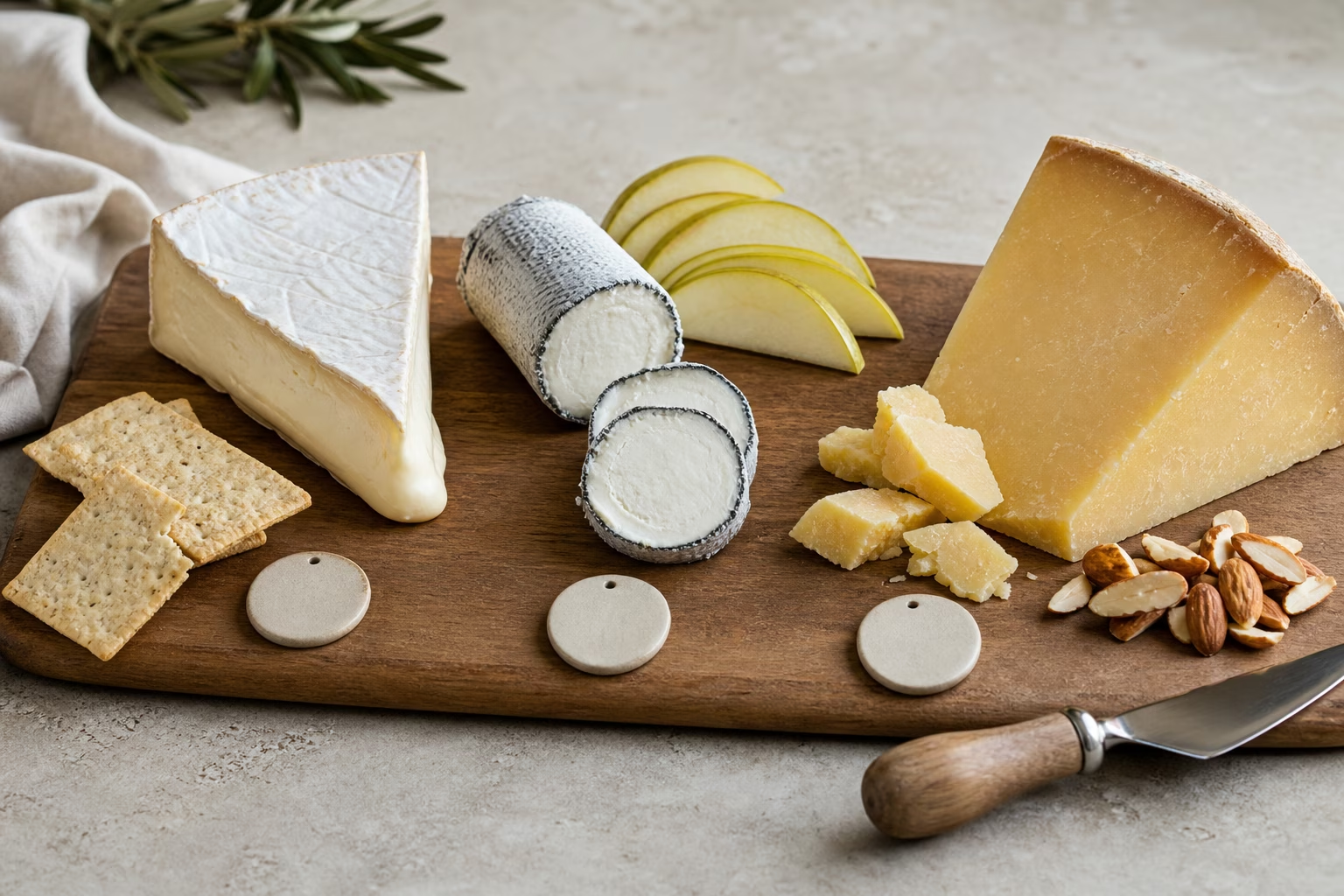
Milk type is one of the quiet clues on a cheese label. Texture tells you how a cheese will feel. Rind tells you how it ripened. Age tells you how concentrated it may taste. Milk type tells you where the flavor begins, before the cheesemaker adds culture, salt, time, and care.
That beginning matters. A cow’s milk brie, a goat’s milk log, and a sheep’s milk wedge can all sit on the same board and seem to be doing the same job: creamy, sliceable, good with bread. Then you taste them side by side and the differences become obvious. One feels buttery and broad. One feels bright and clean. One feels dense, sweet, and savory, even before it has much age on it.
If you already use Cheese Types as your map, milk type is the next useful layer. It will not replace style, age, or rind. A young goat cheese and an aged goat gouda have little in common at the table. A fresh cow’s milk mozzarella and an old alpine wheel are both cow cheeses, but they behave like different species in the kitchen. Still, milk type gives you a starting expectation, and starting expectations make shopping calmer.
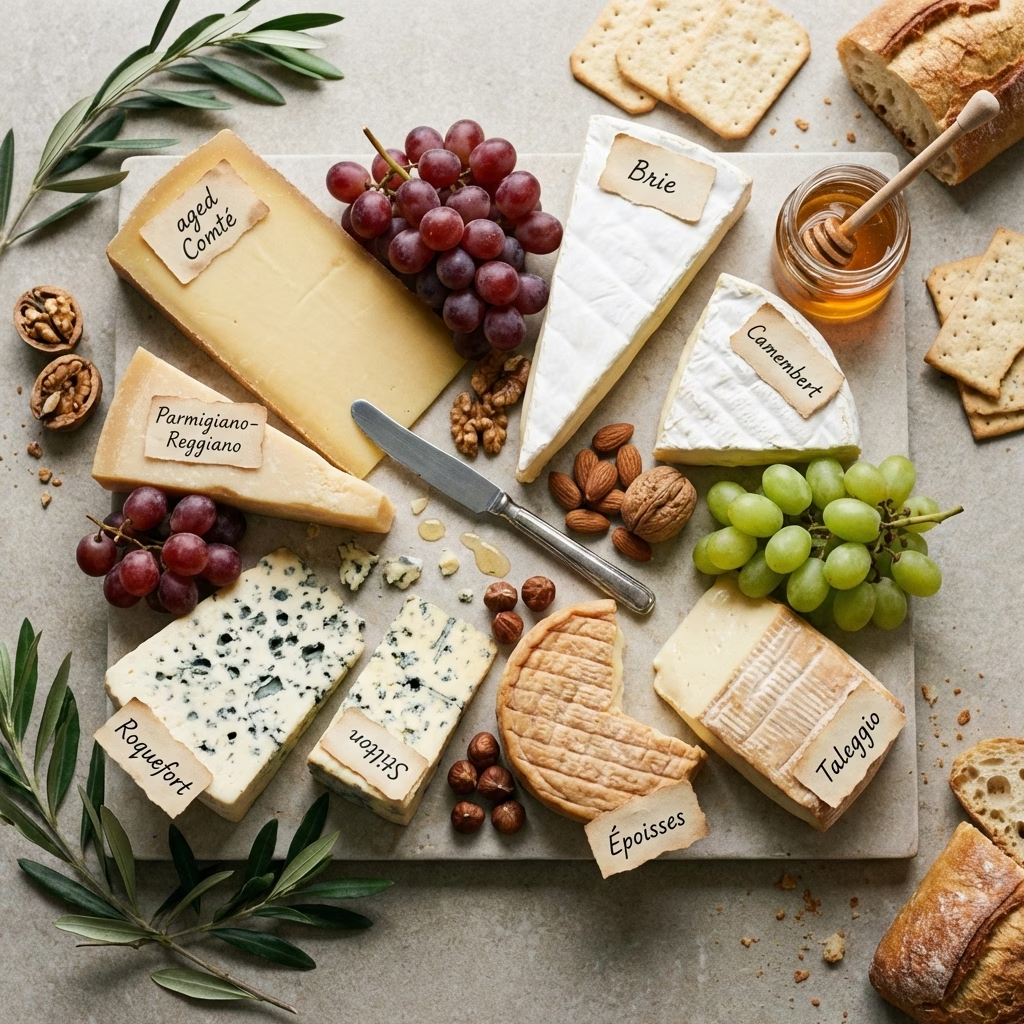
Cow milk: broad, buttery, and flexible
Cow’s milk is the most familiar base for cheese in many markets, which can make it seem neutral. It is not neutral. It is simply versatile. Cow’s milk can become delicate mozzarella, mushroomy Camembert, elastic Fontina, sharp cheddar, nutty Gruyere, crystalline aged Gouda, and dozens of other styles. Its range is the reason it can fade into the background as a category.
The flavor often begins with butter, cream, cooked milk, or mild sweetness. As cow’s milk cheeses age, those soft notes can move toward caramel, toasted nuts, broth, onion, hay, or browned butter. In young cheeses, cow’s milk usually feels round rather than sharp. In aged cheeses, it can become deep without becoming piercing. That is why cow’s milk cheeses often make dependable board anchors. They give people something generous to return to between brighter or stronger bites.
Color is one useful clue, though not a perfect one. Many cow’s milk cheeses lean ivory to yellow because cows can pass some plant pigments from pasture into the milk fat. A summer alpine cheese may look warmer than a winter one. A young bloomy cow cheese may still be pale, and some cheesemakers use annatto for color, so the eye cannot prove everything. But when you see a golden paste in a firm cheese, cow’s milk or a colored style is often part of the story.
Cow’s milk also gives cooks a wide set of tools. Semi-soft and semi-hard cow cheeses often melt smoothly because they carry enough moisture and fat to relax under heat. Young Gouda, Fontina, Havarti, Monterey Jack, and many alpine styles can make a sauce or grilled sandwich feel easy. Very aged cow cheeses can be excellent in cooking too, but they act more like seasoning than like silk. The melting habits in Cooking with Cheese matter more than milk type alone.
Goat milk: bright, clean, and more varied than its reputation
Goat cheese is often reduced to one idea: tang. That reputation has a reason. Fresh chevre can taste lemony, grassy, chalky, mineral, or gently lactic, and that brightness is part of its charm. But goat milk is not only one flavor. It can be young and spreadable, aged and wrinkled, bloomy and creamy, ash-coated and dense, firm and nutty, or even Gouda-like when made in that style.
The brightness in goat cheese makes it useful on a board because it wakes up richer foods. Put fresh goat cheese beside pear, honey, herbs, roasted beets, citrus, or toasted bread and it behaves almost like a seasoning. It gives lift. It cuts through fat. It can make a simple board feel fresher without adding pickles or a sharp sauce.
Goat cheeses are often very white because goats convert much of the beta carotene in their feed into vitamin A rather than passing the pigment into the milk fat in the same way cows often do. That is why a fresh goat log can look almost snow white next to a golden aged cow wedge. The color is not a quality score; it is a clue.
Texture changes goat cheese dramatically. Fresh goat cheese can feel soft, moist, and slightly chalky. A small aged goat cheese can become dense at the center and creamy near the rind. A firmer aged goat cheese can taste nutty and caramelized, with a clean finish that is very different from the loose tang of fresh chevre. If you tried one supermarket goat log years ago and decided goat cheese was not for you, it may be worth tasting a different format before closing the door.
Rind matters here too. Some goat cheeses carry ash, bloomy rinds, wrinkled geotrichum surfaces, herbs, or leaves. Those surfaces are not just decoration. They can dry the cheese slightly, shape the aroma, and change the way the paste ripens from edge to center. The surface-reading habits in Cheese Rinds help especially with goat cheeses because small formats make the rind-to-paste ratio high. A little rind can change the whole bite.
Sheep milk: dense, sweet, and quietly powerful
Sheep milk tends to make cheese feel concentrated. It usually carries more solids than cow or goat milk, which means more fat and protein are available to become texture and flavor. That is why many sheep milk cheeses feel dense, rich, and satisfying even when the piece is small. A modest wedge of Manchego can seem more filling than a larger piece of a young cow cheese. A little Pecorino can season a whole bowl of pasta. A piece of Roquefort can anchor a board with only a few bites.
The flavor often leans sweet, nutty, lanolin-like, toasted, or savory. “Sheepy” is a real tasting word at many counters, but it should not be treated as an insult. In a good cheese, that character can feel warm and woolly in the best sense: round, aromatic, and deep. It can also be too much for some palates, especially in very aged or salty styles. The useful move is to buy smaller pieces until you know where your preference sits.
Sheep milk cheeses are natural partners for sweetness and acid. Quince paste, figs, honey, pears, almonds, olives, and tomatoes all make sense because they either echo the cheese’s sweetness or cut its density. Manchego with quince is famous for a reason, but the principle travels. Aged sheep cheese with a little honey can feel generous rather than salty. A brined sheep cheese with tomatoes and olive oil can taste clean and sunny instead of heavy.
In cooking, sheep milk cheese often brings intensity faster than volume. Pecorino Romano, aged sheep tommes, and firm Spanish sheep cheeses can be salty and assertive, so the cook should add them with attention. They are wonderful when used as a finishing ingredient or flavor booster. They are less forgiving when treated like a mild melting cheese. If a sauce turns harsh, the problem may not be sheep milk itself; it may be that the cheese was too aged, too salty, or heated too hard.
Mixed milk is not a compromise
Mixed-milk cheese can sound vague, as if the maker used whatever was left in the pail. In good cheesemaking, a blend can be deliberate. Cow milk can bring volume and cream. Goat milk can bring brightness. Sheep milk can bring density and sweetness. Together they can create a cheese that tastes more balanced than any one milk might on its own.
Some mixed cheeses are gentle and crowd-friendly. Others are complex, aromatic, and hard to summarize from the label alone. This is where tasting matters. If the counter offers a sample, taste it without trying to identify every animal in the blend. Ask what the milk mix contributes. A good monger may say the sheep milk gives richness, the goat milk gives lift, or the cow milk softens the texture. Those practical comments are more useful than a percentage printed on a tag.
Mixed milk also teaches a helpful humility: milk type is never the whole answer. Breed, feed, season, pasteurization, culture, curd handling, salt, rind care, and age all shape the finished cheese. A pasture-fed cow cheese from one region may taste more herbal than a goat cheese from another. A young sheep cheese may taste gentler than an old cow cheddar. Milk type gives you a path into the cheese, not the final verdict.
How to taste milk type without turning it into homework
The cleanest way to learn milk type is to compare similar textures. Do not taste fresh chevre against aged Gouda and decide you have compared goat with cow. You have compared fresh with aged, moist with dry, tangy with caramelized. That can be delicious, but it does not isolate the question.
Instead, set up a small board where the cheeses share a rough role. Compare a cow’s milk bloomy rind with a goat’s milk bloomy rind. Compare a cow’s milk semi-hard wedge with a sheep milk semi-hard wedge. Compare young fresh cheeses with other young fresh cheeses. The closer the style, the clearer the milk difference becomes. This is the same habit that makes Cheese Board for Learning useful: change one variable at a time and the cheese starts explaining itself.
Taste plain first. Notice color, aroma, texture, and finish before adding fruit or bread. Cow milk may feel round and buttery. Goat milk may feel bright and mouthwatering. Sheep milk may feel dense and sweet, with a longer savory finish. Those are tendencies, not laws. The point is not to pass a blind tasting exam. The point is to build a memory bank that helps the next time you stand in front of a case.
Then add one bridge food and taste again. Pear may make goat cheese seem cleaner. Honey may soften sheep cheese. Almonds may echo aged cow or sheep cheeses. A plain cracker may show how much salt is really present. If you are choosing drinks, the matching principles in Cheese and Wine Pairing and Cheese Pairing Beyond Wine still apply. Milk type changes the starting point, but acid, sweetness, tannin, bitterness, bubbles, and body still decide whether the pairing feels alive.
Using milk type at the cheese counter
Milk type becomes most useful when you combine it with purpose. If you want an easy board for cautious guests, a creamy cow cheese, a firm cow or sheep cheese, and a small bright goat cheese will usually feel balanced. If you want a board that teaches contrast, choose one texture and compare milks. If you want cooking cheese, start by asking about melting behavior, then use milk type to choose flavor. A goat cheese that softens beautifully may be perfect on a tart, while a young cow cheese may be better for a smooth sauce.
At the counter, ordinary language works. Ask for a sheep milk cheese that is nutty but not too salty. Ask for a goat cheese that is creamy rather than chalky. Ask for a cow’s milk cheese with a buttery center and a mild rind. These requests give the monger enough to work with, and they keep the conversation grounded in eating rather than performance. The habits in How to Buy Cheese still hold: name the purpose, name the texture, name the intensity, and buy an amount you can finish while the cheese is still at its best.
The more you taste, the less milk type feels like a label and the more it feels like orientation. Cow does not mean plain. Goat does not mean sharp. Sheep does not mean difficult. Mixed milk does not mean confused. Each one gives the cheesemaker a different starting material, and each can become many things. Learn the tendencies, then let the actual cheese correct you. That is where the pleasure is.


