Buying cheese can feel oddly high-stakes.
You walk up to the case and suddenly everything is unfamiliar. The names are poetic and foreign. The prices look like a dare. The person behind the counter seems fluent in a language you don’t speak—Alpine, washed rind, affinage—and you’re trying to choose something that your guests (or your future self) will actually enjoy.
Here’s the secret: cheesemongers aren’t judging you. They’re waiting for useful information, because useful information lets them do what they’re good at.
If you learn how to speak “useful” at the counter, cheese shopping stops being a gamble. It becomes one of the easiest ways to bring beauty into your week.
Start with purpose (the question that changes everything)
Before you think about names, decide what you’re trying to do.
If you’re buying cheese for snacking, you want something that behaves kindly in real life: sliceable, pleasant from fridge-cool to room temperature, and not so intense that you need a plan for it. This is where young goudas, mild cheddars, and many Alpine-style cheeses shine.
If you’re buying cheese for a board, your job is not to buy “the best cheese.” Your job is to create contrast so the board tastes like a journey rather than a monotone: creamy next to firm, gentle next to bold, sweet next to savory.
If you’re buying cheese for cooking, you’re not buying flavor first. You’re buying behavior: how it melts, how salty it is, whether it becomes silky or grainy under heat. The most expensive cheese is not always the best cooking cheese; the right cheese is the best cooking cheese.
Once you know the purpose, the rest becomes surprisingly simple.
Learn to describe what you like (without learning jargon)
Most shoppers freeze because they think they need the right vocabulary. You don’t.
The best cheese-language is ordinary: “creamy,” “firm,” “nutty,” “tangy,” “mild,” “bold.” If you can give a monger a sentence like, “I want something creamy and mild, like brie, but not too funky,” you’ve already given them enough to steer you well.
If you want a quick internal template, build your request from three parts.
First, name a texture: creamy/spreadable, firm/sliceable, or hard/crumbly.
Second, name an intensity: mild, medium, or bold.
Third, name a flavor direction: buttery, nutty, tangy, savory/brothy, or funky.
That’s it. Those are not “cheese words.” Those are human words.
The four questions that turn a counter visit into a win
When you’re standing at the counter, you can ask hundreds of questions, but only a few reliably move you toward good outcomes.
The first is the most powerful: “Is it at peak right now?” Some cheeses have a narrow window where they’re glorious. Bloomy rinds, in particular, can go from firm to perfect to ammonia-fast. Asking about peak tells you whether the cheese is meant for tonight, this weekend, or next week.
The second is the question that prevents serving mistakes: “How should I serve it?” A good monger will tell you whether to slice, break, or scoop, how long to let it sit out, and whether it will get runny. This is not etiquette; it’s engineering.
The third is the question that makes hosting easier: “What’s the easiest pairing?” You’re not asking for a PhD-level pairing. You’re asking for one safe companion that makes the cheese taste good. Often the answer is something humble—apples, honey, pickles, toasted nuts, crusty bread. Great cheese doesn’t need fireworks; it needs a bridge.
The fourth is the one that prevents regret: “Can I taste it?” A tiny sample can save you from buying a beautiful cheese that simply isn’t your style.
If a shop doesn’t offer samples, don’t panic. Just buy smaller pieces and stay closer to familiar styles until you build confidence.
Buying amounts: the quiet art of not wasting money
The most common cheese mistake is not choosing the “wrong” cheese. It’s buying too much.
For a board that’s an appetizer (not the whole meal), a practical guideline is roughly one to two ounces per person per cheese. That means a three-cheese board for six people is often surprisingly small: perhaps six to eight ounces of a creamy cheese, six to eight ounces of a firm cheese, and a smaller four to six ounce piece of a bold accent.
If cheese is the main event—picnic dinner, wine-and-cheese night—plan more like four to six ounces per person total, depending on what else is served.
For home snacking, the best practice is counterintuitive: buy smaller pieces more often. Cheese is at its best early after cutting. Frequency beats volume.
Building a board that tastes like it was curated
If you want a board that feels intentional without being complicated, build it like a sentence with three clauses.
Start with something creamy and gentle. This is the “welcome.” A brie-style cheese or a soft goat cheese works well.
Then add something firm and savory. This is the “body.” Alpine cheeses, goudas, and cheddars are dependable here.
Then add a bold accent. This is the “ending.” A small piece of blue or washed rind can make the whole board feel more interesting.
If your group is cautious, you can still get that “ending” energy without going full funk: choose a smoked gouda, a peppered cheese, or an aged cheese with a sweet edge.
Here’s what matters more than the specific names: the contrast. If you can feel the contrast in your mind—creamy next to firm, gentle next to bold—you can build a board anywhere.
Budget shopping: how to make modest cheese feel luxurious
Cheese can get expensive fast, but you don’t need a high budget to make a board feel special.
The easiest strategy is to choose one cheese as the “star” and let the rest be supportive. Spend on one wedge you’re genuinely excited about, then fill out the board with a good everyday cheddar and a simple gouda.
Also, buy less of the intense cheeses. Blues and washed rinds are powerful; you can buy a small wedge and still get the effect.
Skip pre-made boards if you can. They’re often less fresh and more expensive than buying a few well-chosen pieces.
Then use bridge foods—things that make everything feel more complete. Toasted nuts, good bread, apples or pears, olives, mustard: these aren’t filler. They’re the supporting cast that makes the cheese feel like the lead.
How to read a wedge like a monger
You don’t need to be suspicious, but you should be observant.
Healthy cheese generally looks appetizing and coherent. The cut face shouldn’t look extremely dried out (unless it’s a very hard aged cheese), and a normally creamy cheese shouldn’t show deep cracks. If a bloomy rind smells sharply of ammonia through the wrap, it may be past its best moment.
Some surface mold is normal on certain cheeses. If you’re unsure, ask. A good monger will tell you what’s expected and what’s not.
Serving: the part that makes cheese taste expensive
Even great cheese tastes underwhelming when served cold. Flavor lives in aroma, and cold mutes aroma.
As a baseline, most cheeses benefit from thirty to sixty minutes at room temperature. Fresh cheeses often need less. Very ripe soft cheeses may need less because they can become runny.
Cutting matters too. If you cut cheese before guests arrive, you remove the awkward “who cuts it?” moment and you allow the cheese to breathe. Soft cheeses often slice cleanest with a wiped knife; hard cheeses can be broken into rustic pieces that look generous.
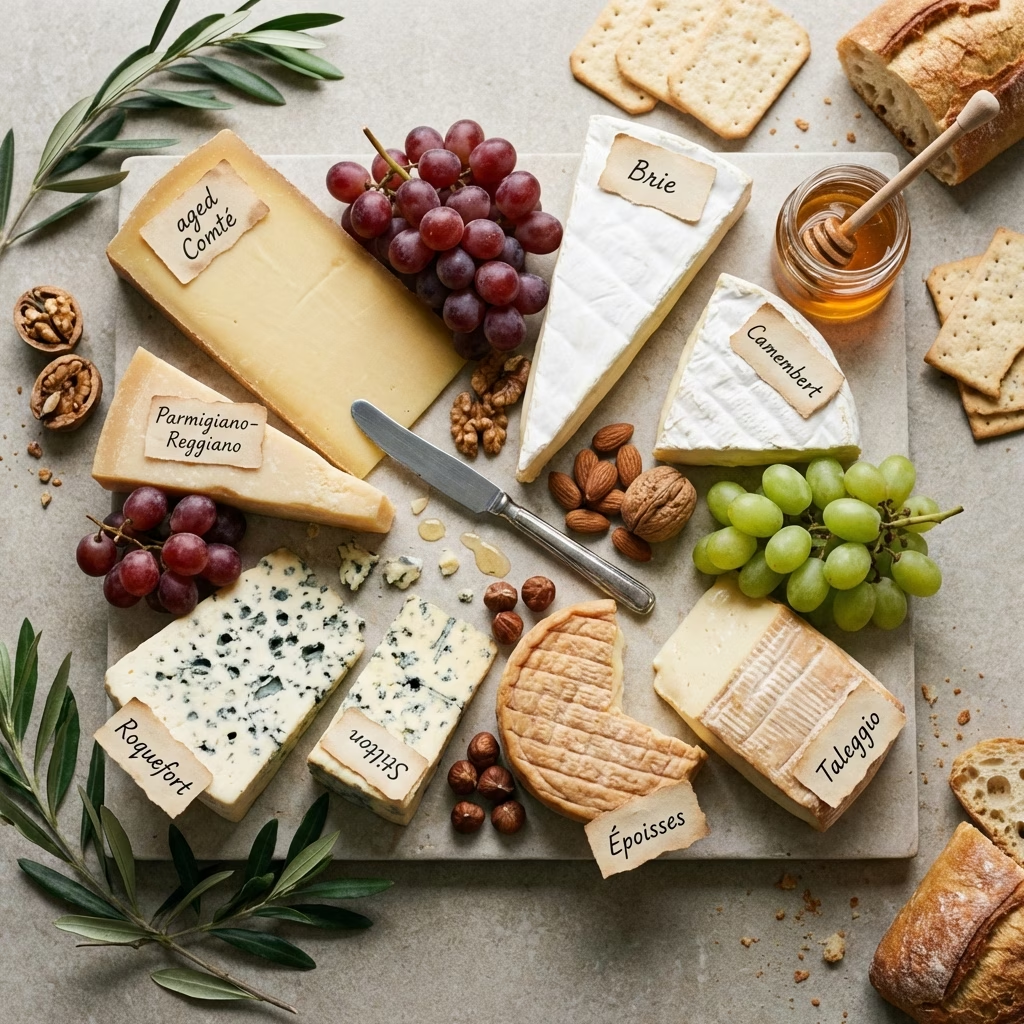
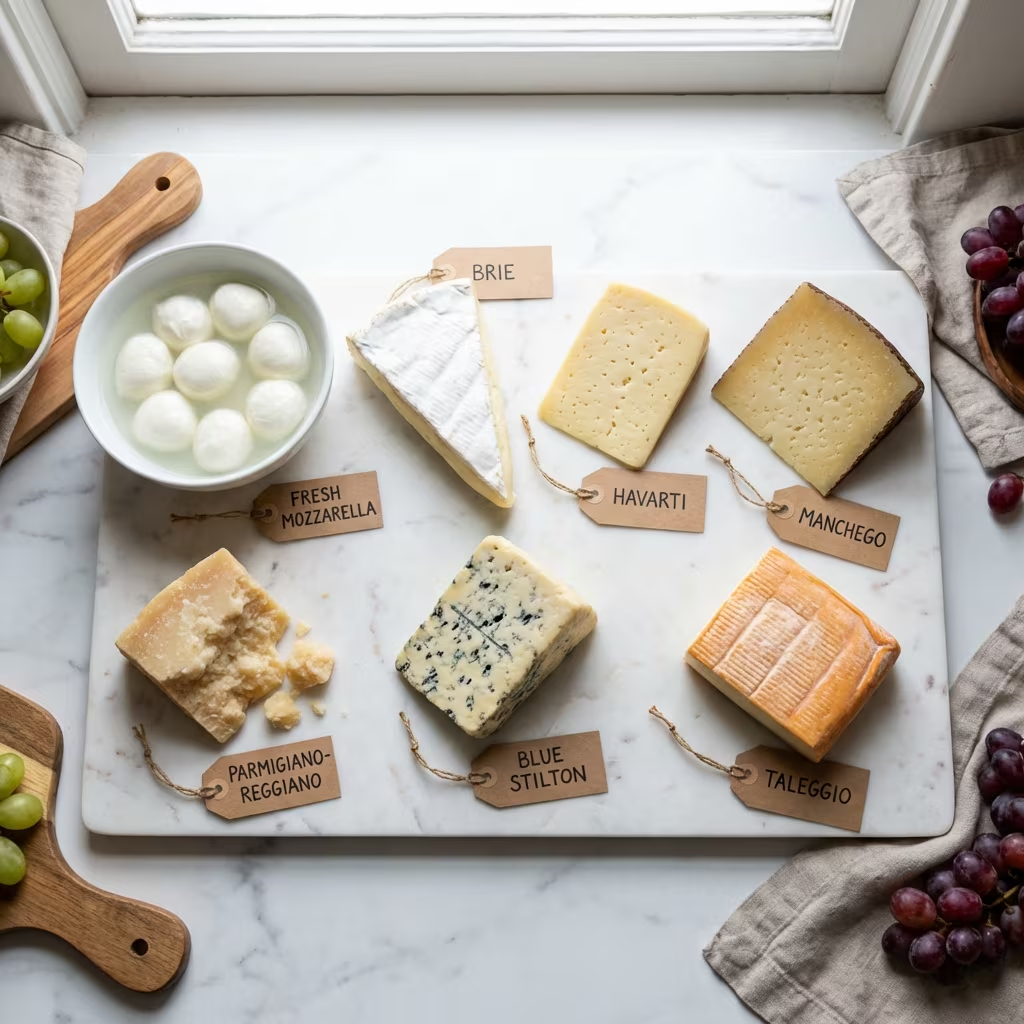
If you want a board to feel curated, a small label goes a long way—name, milk type, and one flavor word. Not a paragraph; just a small invitation.
The takeaway
Buying cheese like a cheesemonger is not about mastering a catalog. It’s about showing up with a purpose, speaking in human words, and letting the counter do what it’s good at.
If you want a reliable shopping script, keep it this simple: decide what you’re buying for, ask if each cheese is at peak, buy smaller amounts than you think (especially for bold cheeses), and serve everything at a temperature where aroma can show up. Do that and you’ll leave the shop with cheese you’re excited to eat—and you’ll actually eat it at its best.
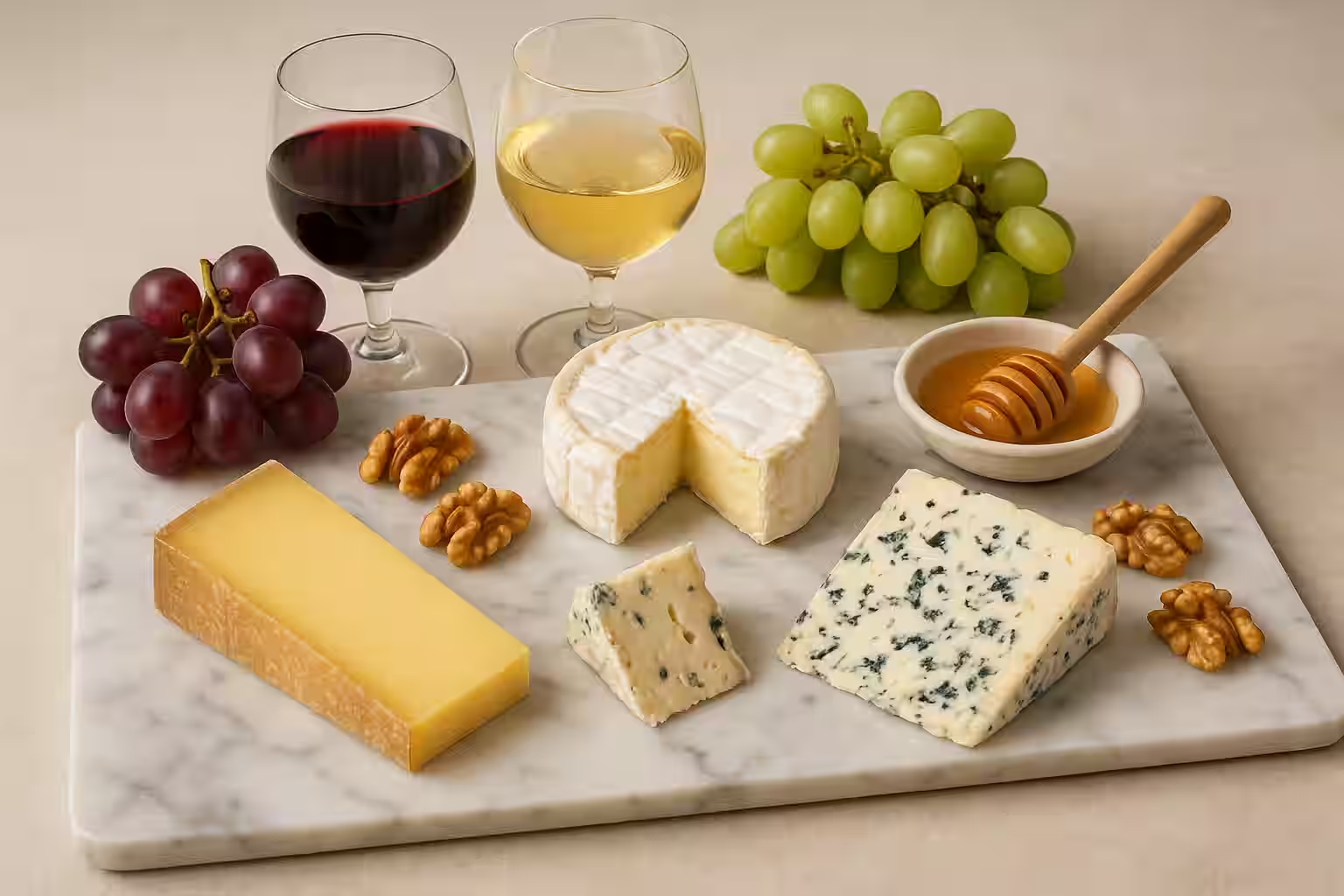
To make a board feel complete, add one or two “bridge” foods that change how cheese lands on the palate. Crunch (toasted nuts, crackers, sliced baguette) adds texture. Sweetness (honey, jam, dried fruit) makes salty and blue cheeses feel friendlier. Fresh fruit (apples, pears, grapes) keeps the board bright. But the most consistently useful bridge is acid: pickles, mustard, olives, or anything tart that cuts richness and resets the mouth.
If you want a “walk into any shop and succeed” blueprint, ask for three cheeses with clear contrast: one creamy (brie-style or goat), one firm and savory (Alpine or gouda), and one bold accent (a small blue or washed rind). Then make it easy to eat: add bread, a piece of fruit, and either honey or mustard depending on whether you want sweetness or bite.